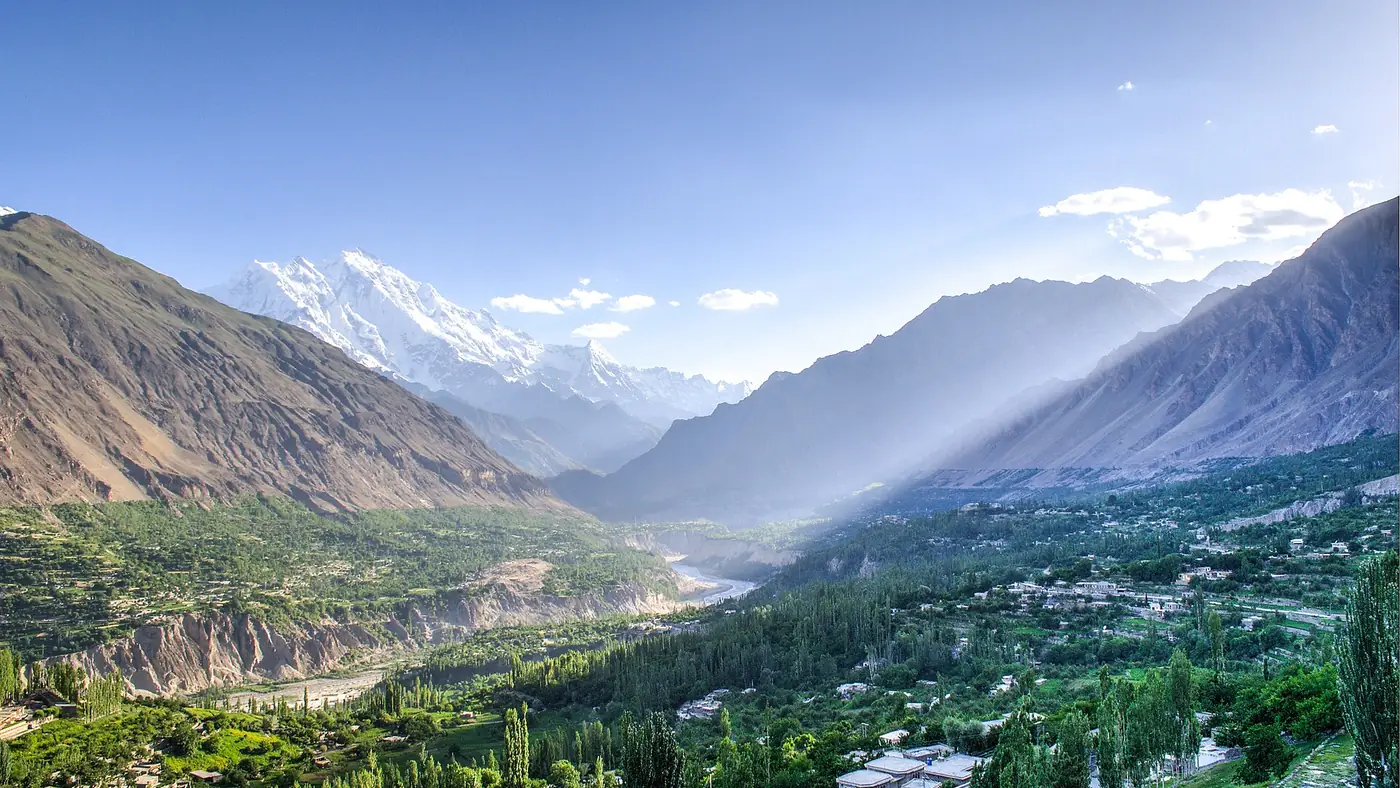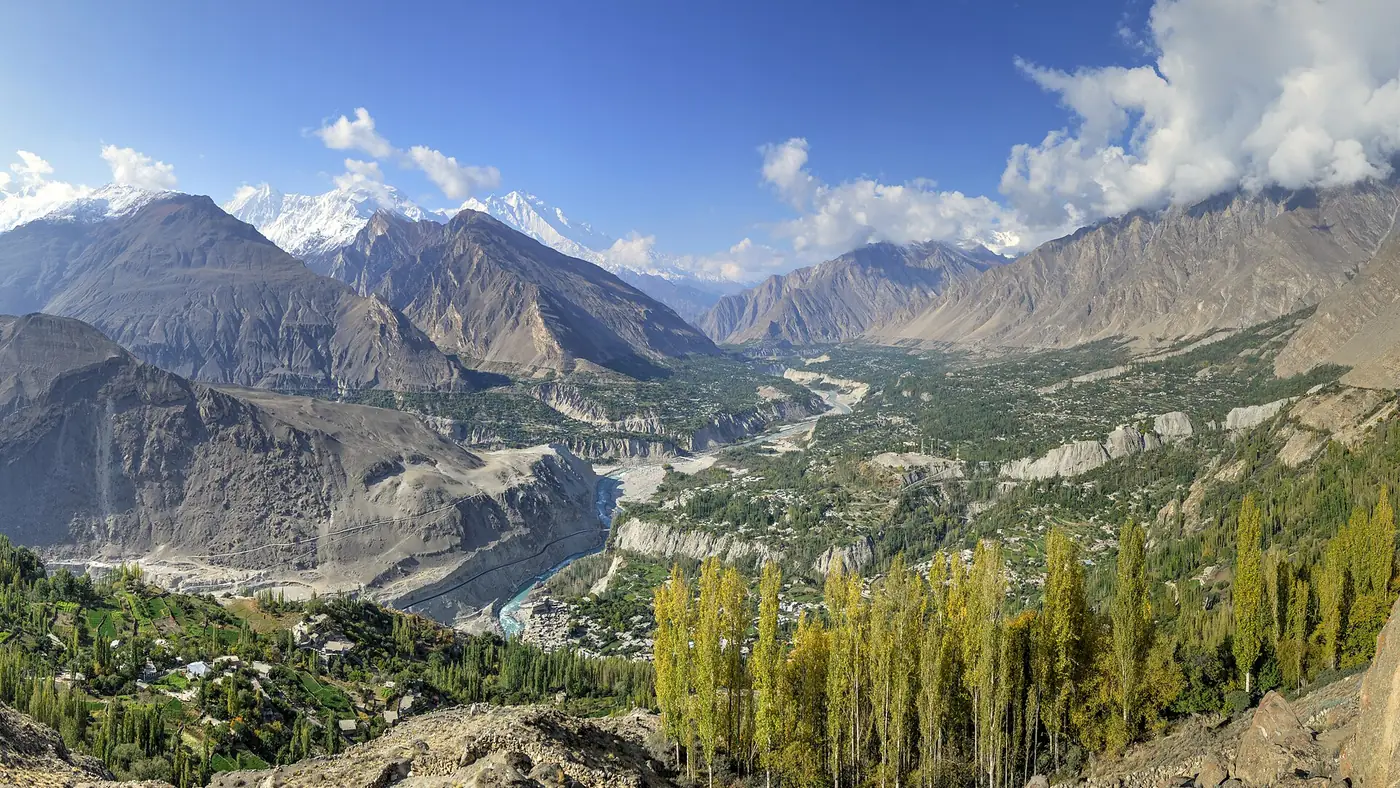
Hunza is famous for its scenery and its history in roughly equal measure: the turquoise water of Attabad Lake, the old forts of Baltit and Altit, orchards of apricot and cherry that turn the valley pink in spring, and a set of Karakoram peaks, Rakaposhi chief among them, that crowd the skyline from almost every point in the valley. It is also known, more loosely, for a claim about long life that does not hold up well under scrutiny.
This is a quick answer for anyone trying to work out what the fuss is about before they book a trip. Our Gilgit-Hunza destination guide is the place to start planning; for a full list of places, see places to visit in Hunza, and for the story behind it all, our history of Hunza goes into more depth.
The forts of Baltit and Altit
Hunza was an independent princely state until 1974, ruled for centuries by the Mirs from their seat at Baltit Fort, the stone and timber palace on the hill above Karimabad. The older of the two, Altit Fort, sits lower down the slope and dates back further, to around the 11th century by some estimates. Both are now museums, restored with support from the Aga Khan Trust for Culture, and both are usually the first stop on any visit.
Attabad Lake
Attabad Lake did not exist before 2010. On 4 January that year, a landslide above the village of Attabad blocked the Hunza River, and the water that backed up behind it flooded several kilometres of valley and the Karakoram Highway itself. What formed is now the deep blue-green lake that most visitors' photographs of Hunza are taken from, with boat rides, zip lines and lakeside cafés built up around it since. Our Attabad Lake guide covers boating and where to stay.
Rakaposhi and the peaks around it
Rakaposhi, at 7,788 metres, is the mountain most people associate with Hunza. It rises almost directly above the Karakoram Highway near Ghulmet, with one of the greatest vertical rises from base to summit of any mountain on earth, and it is visible from Karimabad, Aliabad and much of the lower valley on a clear day. Ultar Sar and Lady Finger Peak stand above Karimabad itself, and further up the valley the Passu Cones and Batura peaks dominate the view around Passu and Gulmit.
Apricots, cherries and Hunza's orchards
Hunza's orchards produce apricots, cherries, mulberries and apples, and dried apricots in particular are sold across Pakistan as a Hunza specialty. Apricot blossom in spring, usually April, draws visitors on its own, and our Hunza blossom season guide covers timing. The apricot kernel oil and dried fruit sold in Karimabad's bazaar are genuine local produce, whatever health claims are printed on the packaging.
The "world's longest-living people" story
Hunza has a long-running reputation, especially outside Pakistan, as a place where people live unusually long lives, sometimes to 120 or more, thanks to apricots, glacier water and a simple diet. The claim traces to a 1948 book by an American publisher who had not visited Hunza, and it was popularised further in the 1970s. There is no credible record-keeping from the period that supports it, and the one doctor who lived in Hunza for an extended stretch, in the 1950s, described treating widespread malnutrition and disease rather than an unusually healthy population. Treat the story as folklore, not fact, and enjoy the apricots on their own merits.
Culture, forts and villages beyond Karimabad
Hunza's identity also rests on things that don't photograph as easily: the Burushaski language, spoken almost nowhere else in the world and covered in our guide to Burushaski; Wakhi communities further up the valley in Gojal; and old settlements like Ganish, with fortified towers and a mosque older than Baltit Fort itself.
Frequently asked questions
Is Hunza worth visiting?
Yes, for most travellers it is the single most rewarding part of northern Pakistan to visit, combining accessible scenery, forts, good food and comfortable places to stay with a paved road the whole way from Gilgit.
Is it true that people in Hunza live to 120?
No. The claim is not supported by any reliable record and was popularised by writers who had not visited the valley. Life expectancy in Hunza is not verifiably different from the rest of Gilgit-Baltistan.
What is the best time to see Hunza at its best?
April for apricot and cherry blossom, and September to October for autumn colour, are generally considered the most photogenic months; see our best time to visit Hunza guide for a full month-by-month breakdown.
What is the highest mountain visible from Hunza?
Rakaposhi, at 7,788 metres, is the peak most visible from the valley floor, though several other 7,000-metre peaks, including Distaghil Sar deeper in the range, also lie within Hunza's boundaries.
Can I visit Hunza in a day?
Not really. Karimabad, Attabad and Passu alone take more than a day to see properly; most people spend at least three nights, and our Hunza itinerary guides set out how to use that time.