This Hunza itinerary for 3 days is built for people who fly into Gilgit. Day one is the drive up and a sunset over Karimabad, day two is Baltit and Altit forts, and day three is Attabad Lake, the Hussaini bridge and the Passu Cones, or Khunjerab Pass instead if the road is open and everyone is well. Book three nights in Hunza with the flight out on the fourth morning, and if you possibly can, hold one spare day for the weather.
It is a tight plan. It shows the valley properly, but it leaves no room for long hikes or side valleys, and it depends on a car and driver waiting for you at Gilgit airport.
| At a glance | |
|---|---|
| Getting there | Fly Islamabad to Gilgit, then 2 to 2.5 hours by road to Karimabad |
| Where to stay | Karimabad, all three nights |
| Day 1 | Gilgit to Karimabad, Rakaposhi viewpoint, sunset at Duiker |
| Day 2 | Baltit Fort, the old lanes of Karimabad, Altit Fort |
| Day 3 | Attabad Lake, Hussaini bridge, Passu Cones, or Khunjerab Pass |
| Day 4 | Early drive to Gilgit for the flight |
| Best months | May to October; Khunjerab most reliable June to September |
| Transport | A car with a local driver for the whole stay |
Before you book: how the three days fit together
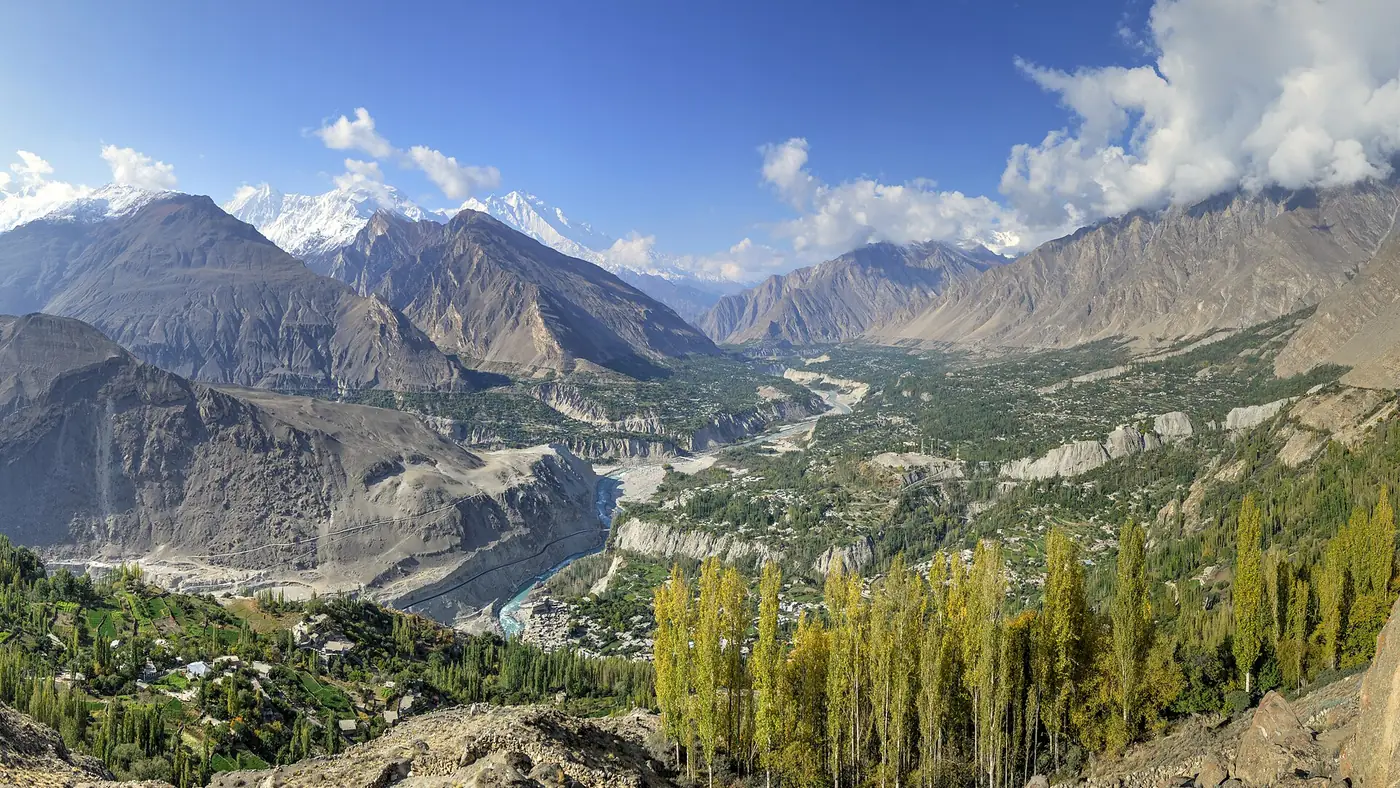
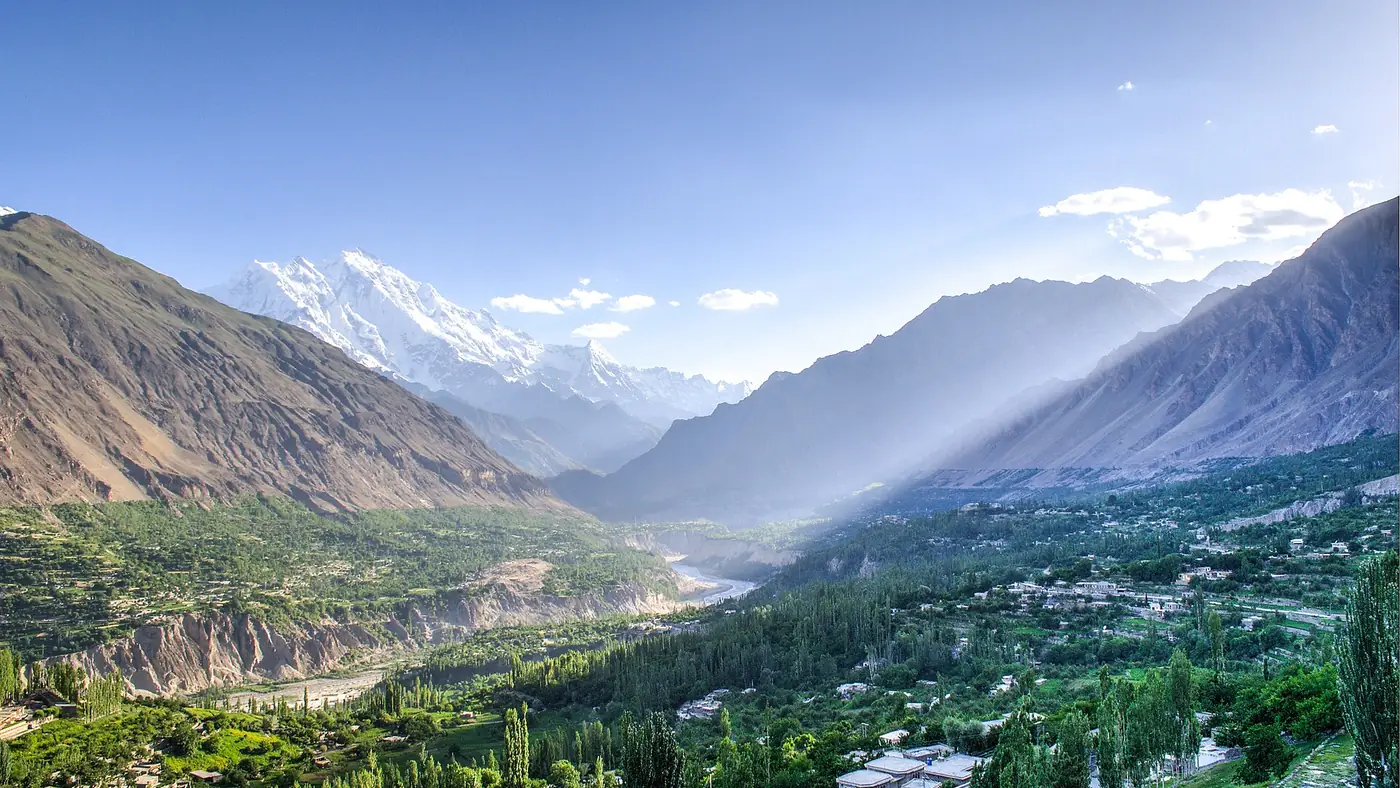
The plan works because everything is done from one base. Karimabad is in the middle of the valley: an hour or so from Attabad, about an hour and a half from Passu, and two to two and a half hours from Gilgit airport. Staying there all three nights means no packing and unpacking, and an easy start on the last morning.
Three practical decisions make or break the trip:
- Hire a car with a driver for all four days, collected at Gilgit airport. Hotels in Karimabad can arrange one. It is the only way to fit day three in, and it means nobody in your group is driving after a long day.
- Take the morning flight into Gilgit. PIA's Gilgit flights tend to leave Islamabad in the morning, and they only fly in good weather. If you are coming from Karachi or Lahore, fly to Islamabad the evening before. Our guide to flying from Karachi to Hunza compares the options.
- Keep a spare day. Put it at the end. If the Gilgit flight is cancelled on the way in, you lose a day in Hunza; if it is cancelled on the way out and you have no spare day, you miss your connection home.
Day 1: Gilgit to Karimabad
- Land in Gilgit in the late morning. Meet your driver and head straight out; there is time for lunch in Gilgit or on the road.
- Drive north on the Karakoram Highway, about 100 km. The road is good and the valley opens out quickly.
- Stop at Ghulmet for Rakaposhi. At 7,788 metres it rises almost straight out of the valley here, and the roadside viewpoint is the best place to see it on the whole drive.
- Check in at Karimabad by mid-afternoon. You are now at about 2,500 metres. Rest for an hour, drink water, and don't plan anything strenuous for the first afternoon.
- Sunset at Duiker, the viewpoint above Altit often called Eagle's Nest, 15 to 20 minutes by car from the Karimabad bazaar. From the top you see Rakaposhi, Ultar, Lady Finger and the whole valley turning orange. Go up an hour before sunset and take a warm layer.
- Dinner in Karimabad. The bazaar road has plenty of small restaurants serving Hunza food alongside the usual Pakistani dishes.
Day 2: Karimabad, Baltit and Altit
Today is spent within a few kilometres of your hotel, mostly on foot.
- Baltit Fort at opening time, around 9 am. Visits are by guided tour, which takes about 45 minutes to an hour, and the roof gives the best view in Karimabad. Early is quieter and cooler. Our guide to Baltit Fort covers tickets, timings and what the tour shows you.
- Walk down through old Karimabad. The lanes below the fort, with their stone houses and irrigation channels, are worth an unhurried hour.
- Altit Fort and the Royal Garden, a short drive or a longer walk away. Altit is the older of the two forts and sits on a cliff straight above the river. It is also visited by guided tour.
- Lunch at Altit, then back to the hotel for an hour. It is easy to underestimate how tiring a full day at 2,500 metres is.
- Late afternoon: walk along the irrigation channel above Karimabad for evening light on the valley, or browse the bazaar for dried apricots, gemstones and woollen caps.
If you would rather see a glacier than a second fort, drive across the river into Nagar for the Hopper glacier instead of Altit. It adds a few hours and a rougher road, so leave straight after Baltit.
Day 3: Attabad Lake, Hussaini and Passu
This is the longest day, and the one most people remember.
- Leave Karimabad at about 8 am and drive north. Attabad Lake is roughly an hour away.
- Attabad Lake, formed when a landslide dammed the Hunza river in January 2010. Take a boat out in the morning, when the water is usually calmer. Our guide to Attabad Lake boating covers prices, life jackets and the jet skis.
- Through the tunnels to Gulmit. The road now runs through a string of tunnels along the lake. Gulmit, the main village of upper Hunza, is a good place for lunch.
- The Hussaini suspension bridge, a few kilometres beyond Gulmit. Walking across it is optional; looking at it is not. It is less alarming than the photographs, though still not for anyone with a fear of heights.
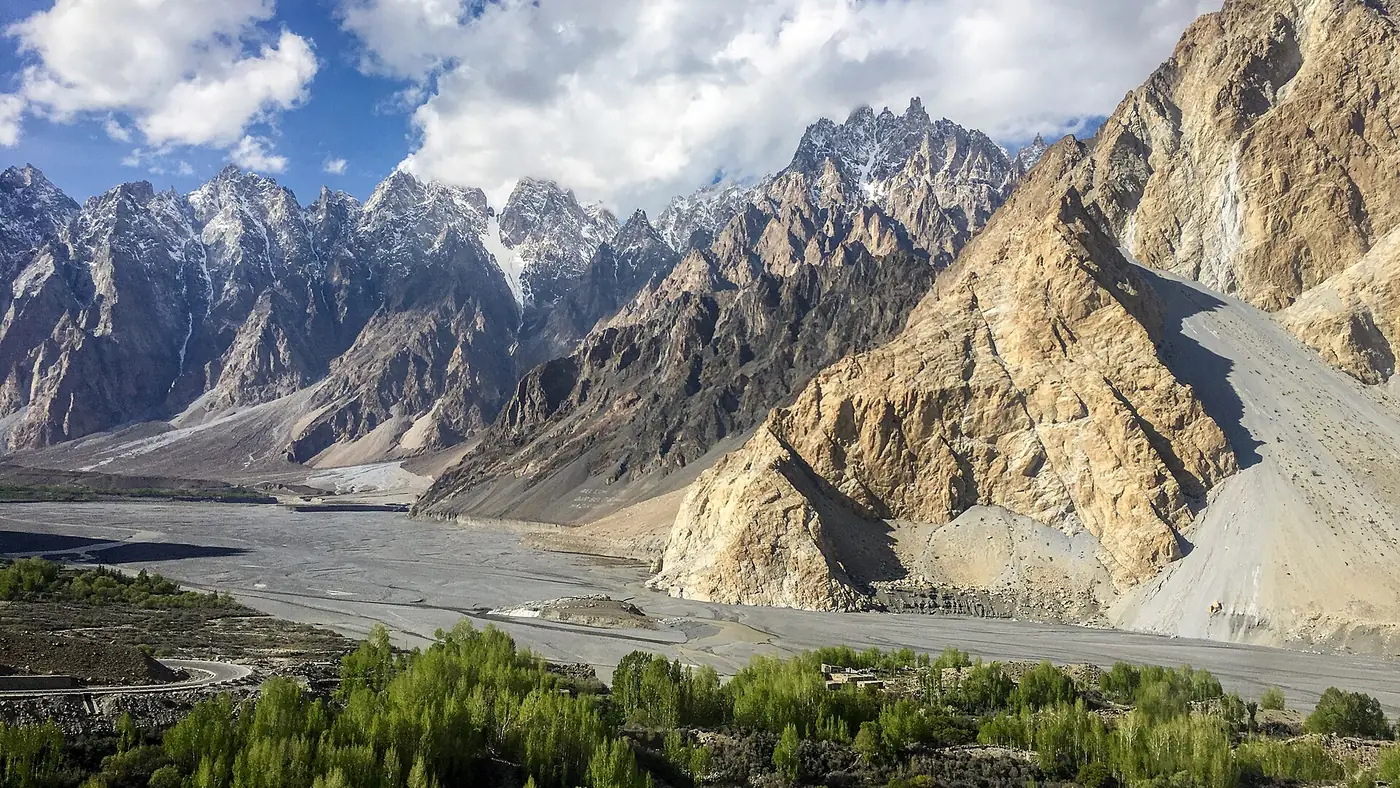
- The Passu Cones, the saw-toothed ridge above Passu, about 20 km from Gulmit. The roadside viewpoint gives the classic view; the light is best from mid-afternoon.
- Back to Karimabad by dusk, about an hour and a half. Stop at Attabad again on the way back if you missed the colour in the morning.
The Khunjerab option
If the road is open and everyone in the group is fit and well, you can swap day three for Khunjerab Pass, the Pakistan–China border at 4,693 metres. It is a full day: three and a half to four hours each way from Karimabad, eight to ten hours in total, with Attabad and Passu seen from the car and perhaps a short stop on the way back.
Only choose it if:
- It is the season. The road to the top is usually open to visitors from early May into November, and June to September is the most reliable window.
- Nobody in the group is likely to struggle with altitude. You climb more than 2,000 metres in a few hours. Doing it on day three, after two nights at 2,500 metres, is better than on day one.
- You leave by 7 or 8 am, so you are back before dark.
Our Khunjerab Pass guide covers the checkpoint, the park fee and what to carry. If you can add one day to the trip, do both: Attabad and Passu on one day, Khunjerab on the next.
Day 4: back to Gilgit for the flight
Leave Karimabad early, around 6 am for a morning flight, and allow two and a half hours to the airport. Check the flight status the evening before and again before you set off, because a cancellation announced the night before saves you a wasted drive.
If the flight is cancelled and you have no spare day, your options are to wait for the next flight, to drive to Islamabad (two days by road), or to drive to Skardu, six to seven hours away, where there are more flights. None is quick, which is why the spare day matters.
Making three days work
- Start early every day. The light is better, the roads are emptier, and you finish before you are tired.
- Don't add more. Naltar, Shimshal, the Ultar meadows and the side valleys all need time of their own. Trying to fit them into three days turns the trip into a drive.
- Carry cash. Card payment is not accepted everywhere in Hunza, and the boat operators and fort gates take cash.
- Pack for cold evenings, even in summer. Our guide to Hunza weather by month has the temperatures for each month.
- Match the season to the plan. In April the orchards are in blossom but Khunjerab is closed. In late October the poplars turn gold and the nights are near freezing. From December to March, flights are least reliable and the Khunjerab option is off.
Is three days in Hunza enough?
For the highlights, yes. Three days covers the forts, the lake, Passu and the main viewpoints, and it gives you a real sense of the valley rather than a glimpse from a car window.
It is not enough for walking. The Ultar meadows, Rush Lake, the Passu glacier trails and the upper valleys such as Shimshal and Chipursan all need extra days. It is also a rushed pace for older parents or small children, who will enjoy the valley more at half the speed.
If you are driving up from Islamabad rather than flying, three days in Hunza means a week in total, with four days on the road. At that point it is worth adding days in Hunza rather than cutting them. Our Gilgit, Hunza and Khunjerab tour spreads the same sights, plus Gilgit, Nagar and Naltar, over nine days, with Khunjerab on its own day and a spare day built in.
Frequently asked questions
Is 3 days enough for Hunza?
Three days is enough to see Karimabad, Baltit and Altit forts, Attabad Lake and Passu if you fly into Gilgit. It is not enough for hiking or the side valleys; for those, plan five days or more.
What is the best 3-day itinerary for Hunza?
Day one: fly to Gilgit, drive to Karimabad and watch the sunset from Duiker. Day two: Baltit and Altit forts. Day three: Attabad Lake, the Hussaini bridge and the Passu Cones. Fly out on the fourth morning.
Can I visit Khunjerab Pass on a 3-day trip to Hunza?
Yes, in season, by swapping it for the Attabad and Passu day. It takes eight to ten hours from Karimabad, so leave early, and only go if everyone is well enough for 4,693 metres.
Where should I stay for 3 days in Hunza?
Karimabad, for all three nights. It is central, close to both forts, and within a day trip of Attabad, Passu and Khunjerab, so you never need to move hotel.
How do I get from Gilgit airport to Hunza?
By car, about 100 km and two to two and a half hours to Karimabad. Arrange a car and driver through your hotel before you fly, so someone is waiting when you land.
What happens if my Gilgit flight is cancelled?
You wait for the next flight or go by road, which takes two days to Islamabad. That is why we recommend a spare day at the end of any trip that relies on the Gilgit flight.