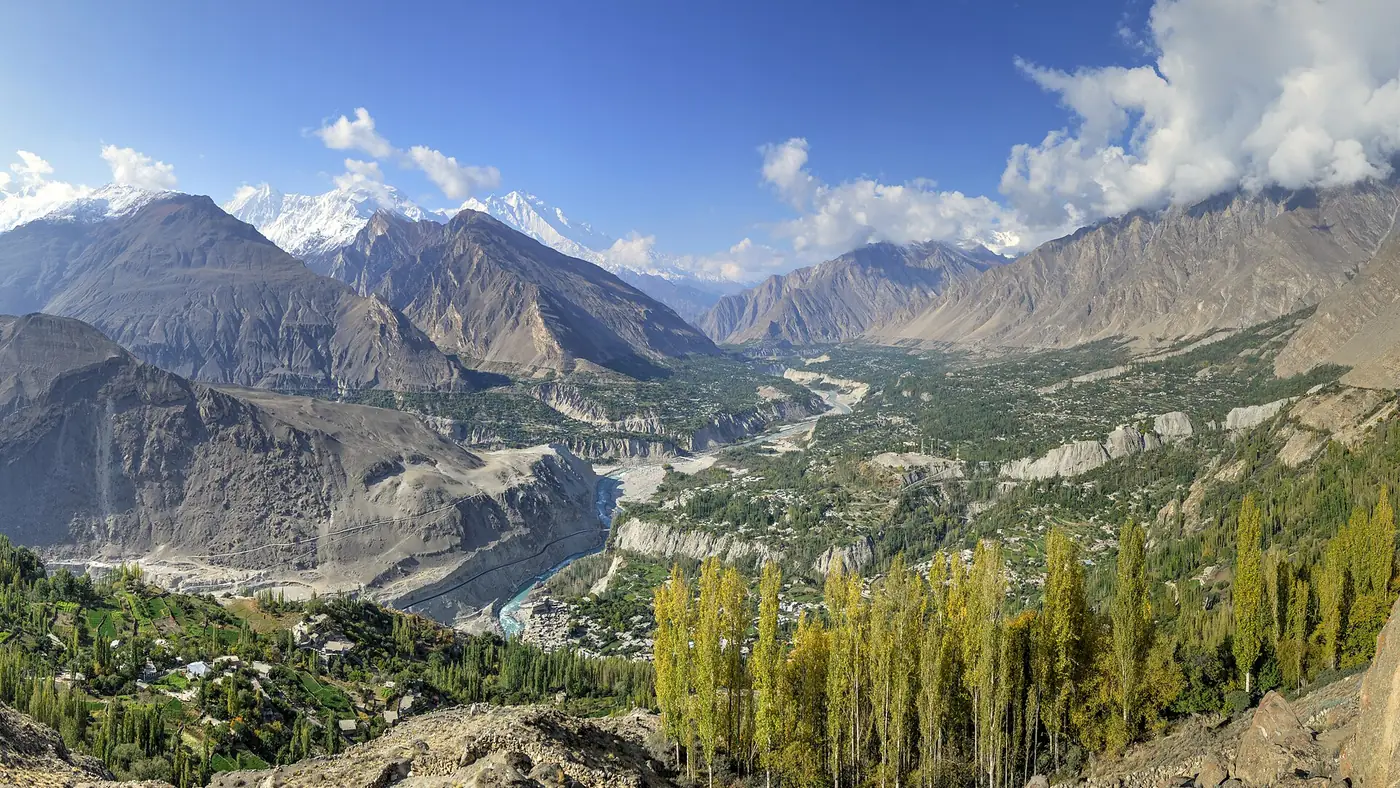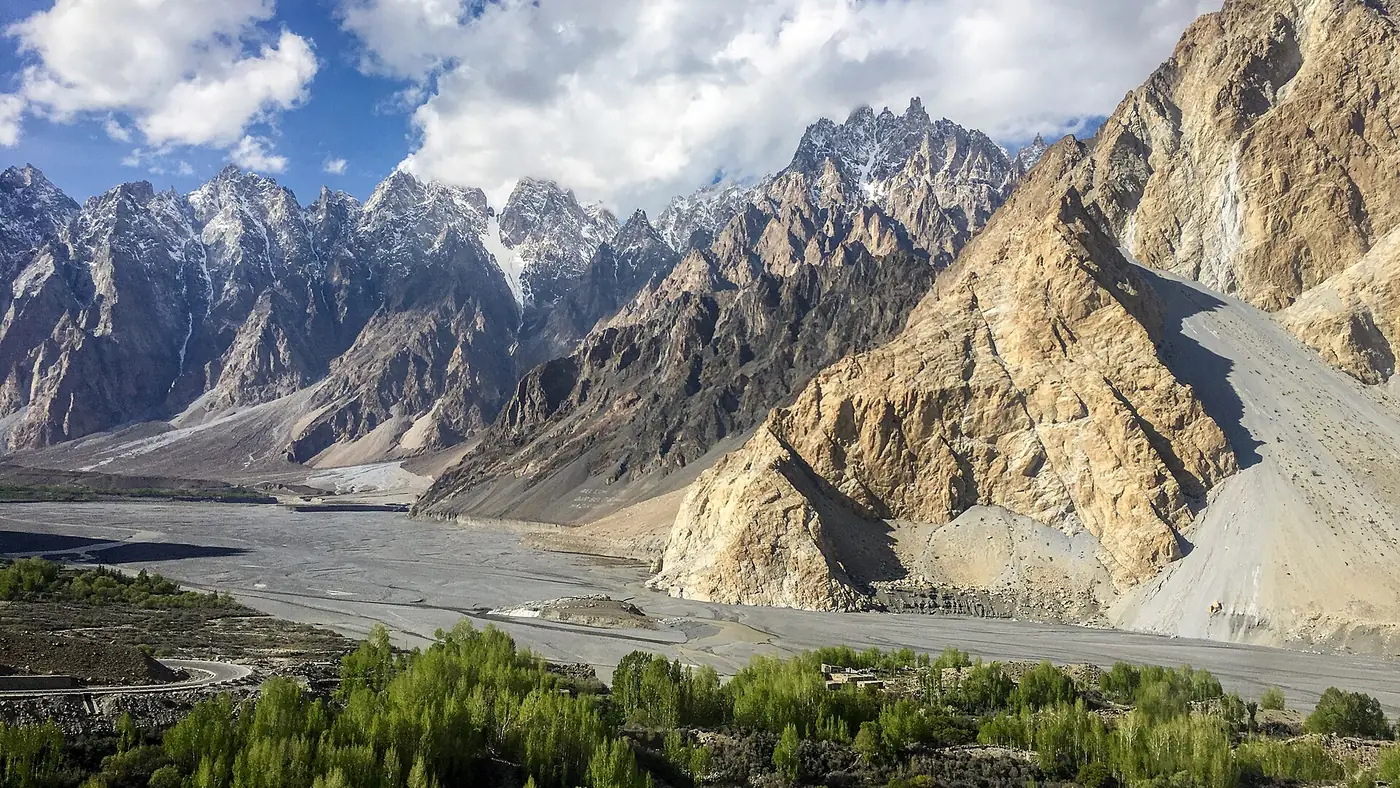
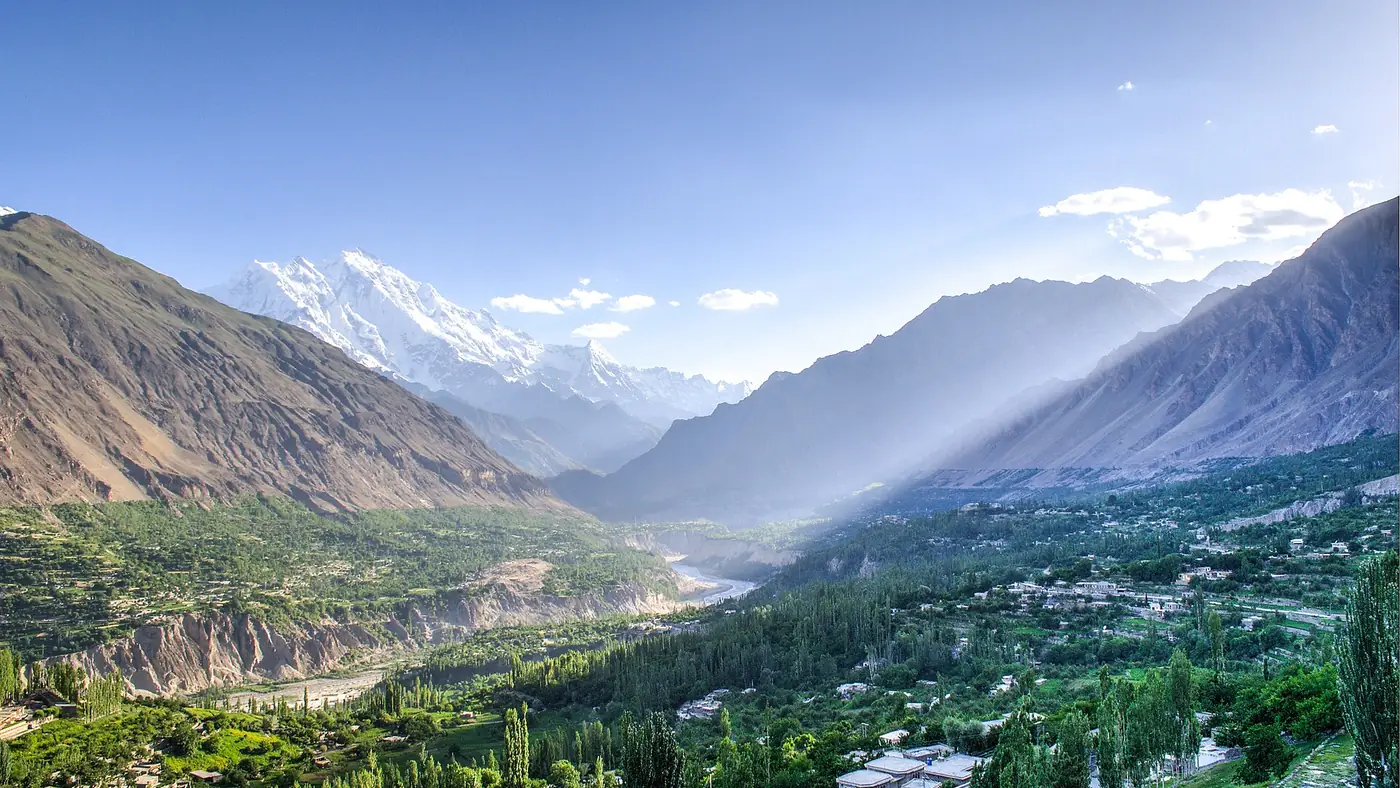
Hunza weather by month follows a clear pattern. July and August are warm and dry, with days in the high 20s in Karimabad and Gulmit and nights around 15 °C. January is the coldest month, with days close to freezing and nights near -10 °C. Spring and autumn sit in between: pleasant days, cold nights, and frost at both ends of the season.
The valley gets very little rain, but it sits at about 2,500 metres, so the nights are colder than most people from the plains expect in every month of the year. Below are the average temperatures, how Karimabad compares with Gojal and the higher villages, and what to wear in each season.
| At a glance | |
|---|---|
| Warmest months | July and August: about 28 to 29 °C by day, 15 °C at night |
| Coldest month | January: about -1 °C by day, -10 °C at night |
| Wettest months | April and May, though still dry by Pakistani standards |
| Snow in the valley | Usually December to February |
| Frost | Common at night from late October to early April |
| Altitude | Karimabad about 2,500 m; Gulmit 2,465 m |
Hunza temperatures month by month
The table gives average daily highs and lows. The Hunza column is for Gulmit, in Gojal, which sits at almost exactly the same height as Karimabad; the figures are long-term averages from Climate-Data.org. The Gilgit column, from the Pakistan Meteorological Department, shows how much cooler Hunza is than the town most visitors fly into.
| Month | Hunza (Gulmit) high / low | Gilgit high / low |
|---|---|---|
| January | -1 / -10 °C | 10 / -3 °C |
| February | 2 / -8 °C | 13 / 0 °C |
| March | 8 / -2 °C | 18 / 5 °C |
| April | 15 / 4 °C | 24 / 9 °C |
| May | 20 / 8 °C | 29 / 12 °C |
| June | 25 / 12 °C | 34 / 15 °C |
| July | 29 / 15 °C | 36 / 18 °C |
| August | 28 / 15 °C | 35 / 18 °C |
| September | 23 / 10 °C | 32 / 12 °C |
| October | 16 / 4 °C | 26 / 6 °C |
| November | 9 / -2 °C | 18 / 0 °C |
| December | 2 / -7 °C | 12 / -2 °C |
Averages hide the swings. On a clear day the gap between afternoon and night is often 12 to 15 degrees, and a cold spell in spring or autumn can push the night well below the figure in the table. Plan your clothes around the low, not the high.
Karimabad, Gojal and the high places
Karimabad and the Gojal villages (Gulmit, Passu, Hussaini) are at much the same altitude, so the table works for both. The differences come from position rather than height:
- Karimabad faces south across the valley towards Rakaposhi and catches the winter sun. Its winter days tend to be a little milder than Gojal's, and locally quoted January highs are a few degrees above freezing.
- Gojal is more open to the wind that blows down the valley from the glaciers. Passu in particular can feel colder than the thermometer suggests, especially in the late afternoon.
- The Nagar side, across the river from Karimabad, gets less direct sun in winter and holds its snow and frost longer.
- Sost is higher again, and noticeably colder at night in spring and autumn.
- Khunjerab Pass, at 4,693 metres, is in a different climate altogether. It can be close to freezing at the top on a July afternoon. Our guide to Khunjerab Pass covers what to wear up there.
Winter: December to February
These are the cold months. Days in Gulmit average around freezing and nights sit between -7 and -10 °C, with colder snaps. Karimabad gets snow in most winters, and when a heavy fall comes it can close roads for a day or two. In January 2026 the Gilgit-Baltistan Tourism Department issued an advisory after heavy snow across Hunza, Nagar and other districts, asking travellers to check road status before setting out, carry chains and warm clothing, and use a four-wheel drive where possible.
The upside is clear, still air and very few visitors. Parts of Attabad Lake freeze in the coldest weeks, and the valley under snow looks nothing like it does in summer. The downsides are practical: some hotels close for the season, and power cuts tend to be longer in winter, when the small hydropower stations that supply the valley run low. Ask your hotel how the rooms are heated and whether there is backup power before you book.
Flights to Gilgit are also at their least reliable in winter, so anyone flying in should keep a spare day at each end.
Spring: March to May
March is still cold. Days reach about 8 °C and most nights are below freezing. The first blossom usually appears in the lower villages towards the end of the month.
April is the blossom month. Days are mild, around 15 °C, but nights are still only a few degrees above zero, and a cold night can damage the flowers. Our Hunza blossom season guide explains how the bloom moves up the valley from village to village.
May is pleasant by day, about 20 °C, and one of the two wettest months, though "wet" in Hunza means a few showers rather than days of rain. It is a good month for walking, before the summer heat reaches the lower valleys.
Spring is also when rain and snowmelt set off slides on the lower Karakoram Highway, particularly in Kohistan. Anyone driving up should check the road before leaving; our guide to checking Karakoram Highway road status explains how.
Summer: June to August
Summer days in Karimabad and Gulmit are warm rather than hot, in the mid to high 20s, and the sun at this altitude is strong. Nights cool to around 12 to 15 °C, which is comfortable for sleeping but cool enough for a fleece on a hotel terrace after dinner.
Rain is rare, but summer has its own weather risk. This is when the glaciers melt fastest, and a hot spell or a burst of heavy rain can send floods and debris down the side streams. In July 2025 a glacial lake outburst from the Shishper glacier flooded parts of Hassanabad, just below Aliabad, and in August 2025 flooding near Gulmit blocked the Karakoram Highway. These events are local and usually cleared within days, but they are the reason we keep a spare day in any summer itinerary.
Summer is the only season when everything is open: Khunjerab, the high pastures and the side valleys. If you are planning the whole trip around the seasons, our guide to when to go sets Hunza against the rest of the north.
Autumn: September to November
September is settled and clear, with days in the low 20s and nights around 10 °C. The summer flood season is winding down and the crowds thin out after the school holidays.
October brings the colour. Days fall to about 16 °C and nights to a few degrees above zero, with the first frosts towards the end of the month. The skies are usually at their clearest, which is why photographers choose it. Our guide to Hunza in autumn covers when the poplars turn in each part of the valley.
November is cold, with days under 10 °C and nights below freezing. Most leaves have fallen by mid-month, the high road to Khunjerab closes with the first heavy snow, and the valley starts to settle into winter.
What to pack for each season
Hunza is dry, sunny and cold at night, so layers matter more than rain gear. As a rough guide:
- June to August: light clothes for the day, a fleece or light jacket for evenings, a sun hat, sunglasses and high-factor sunscreen. Add a warm jacket if you are going to Khunjerab.
- April, May, September and October: a warm jacket, a fleece or jumper, a hat and light gloves for mornings and evenings, and shoes that can take a dusty or muddy path.
- March and November: a proper winter jacket, thermal base layers, a warm hat and gloves. Rooms can be cold, so a hot-water bottle or thick socks for the night are worth packing.
- December to February: full winter clothing, waterproof boots with a good grip for icy lanes, and a power bank for the long power cuts. Drivers need chains and should carry extra fuel and food.
Lip balm and moisturiser help in every season. The air is dry enough to crack skin within a few days.
Which month has the best weather?
For warm, reliable weather and every road open, June to September is the answer, with the proviso that July and August carry the highest risk of flood-related road closures. September is arguably the best single month: warm days, cool nights, clear skies and fewer visitors.
October is the choice if you care more about light and colour than warmth, and don't mind packing a winter jacket. April is for blossom, with cold nights attached.
December to February suits people who want snow, silence and low hotel prices, and who are prepared for cold rooms, power cuts and the chance of a road closure. It is not a good first trip for a family with small children or anyone who feels the cold badly.
Whatever the month, the cold at night and the strength of the sun are the two things to plan for. Our travel guide has more on health and altitude across the north.
Frequently asked questions
Does it snow in Hunza?
Yes. Karimabad and the Gojal villages usually get snow between December and February, and heavy falls can close roads for a day or two. The surrounding peaks keep snow all year.
Is Hunza cold in summer?
Not by day: July and August afternoons reach the high 20s. Nights drop to around 15 °C, so bring a fleece for the evenings and a warm jacket for any trip to Khunjerab Pass.
What is the coldest month in Hunza?
January. Average highs in Gulmit are around -1 °C and lows around -10 °C, with Karimabad a little milder by day.
Does it rain much in Hunza?
Very little. April and May are the wettest months but still see only occasional showers. The bigger summer risk is flash flooding from glacier melt, which can block roads for a day or more.
What is the weather like in Hunza in October?
Clear and cool. Days average about 16 °C and nights about 4 °C, with frost becoming common late in the month. It is the best month for autumn colour.
How much colder is Hunza than Gilgit?
Roughly 8 to 10 degrees colder by day, because Karimabad and Gulmit are about 1,000 metres higher. Nights are colder too, though the gap is smaller.