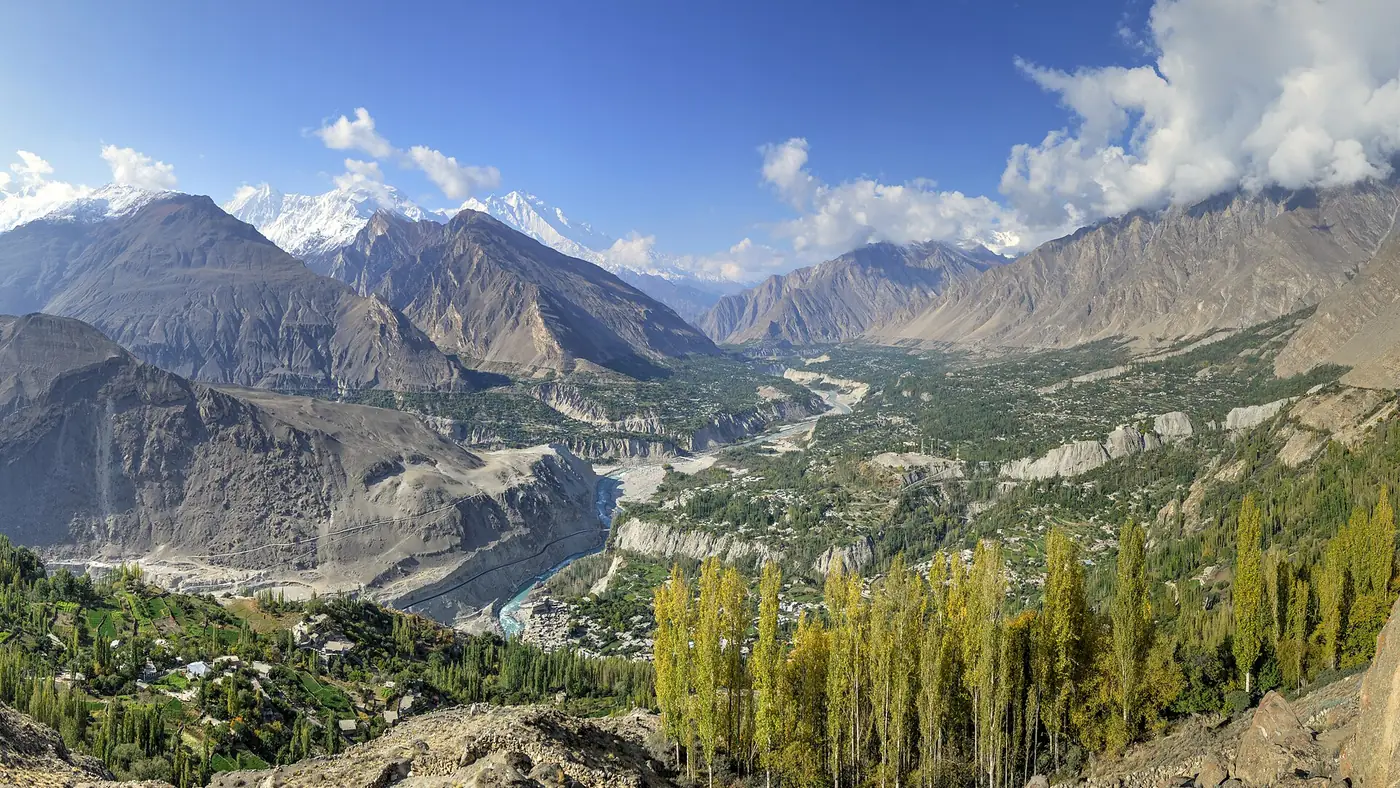
Hunza in autumn is at its most colourful from mid-October to early November. The colour starts in Gojal, around Passu and Gulmit, in the middle of October, and reaches Karimabad, Altit and the Nagar side in the last week of October and the first days of November, when the poplars turn gold and the apricot and cherry leaves go orange and red. By the middle of November most of the leaves are down.
The days are clear and cool, around 16 °C in October, but the nights fall to freezing by the end of the month, so this is a trip to pack for carefully. This guide covers when each part of the valley turns, where to photograph it, and what to bring.
| At a glance | |
|---|---|
| Colour season | Mid-October to early November |
| Gojal (Passu, Gulmit) | Mid to late October |
| Karimabad, Altit and Nagar | Last week of October to the first days of November |
| Leaves mostly gone | Mid-November |
| October weather | About 16 °C by day, 4 °C at night; first frosts late in the month |
| November weather | Under 10 °C by day, below freezing at night |
| Crowds | Quieter than summer; busier at weekends in the peak week |
When do the colours peak in Hunza?
The turn follows the cold. Gojal is further north and more exposed to the wind off the glaciers than central Hunza, so its poplars and orchards turn first, in the middle of October. The colour then works its way down the valley, reaching Karimabad, Altit and the villages across the river in Nagar in the last days of October, and the lower valley towards Gilgit a little later.
In any one village the best of it lasts about a week to ten days. A windy spell or an early frost can strip the trees faster; a mild autumn can stretch the season. As with the spring blossom, treat any date as the middle of a window rather than a fixed day.
If you have a week, the last week of October is the safest single bet for seeing central Hunza at its best, with Gojal just past its peak. If you want Gojal at its best, go a week earlier.
Autumn colour by area
| Area | Villages | Usual peak |
|---|---|---|
| Gojal | Passu, Hussaini, Gulmit, Ghulkin | Mid to late October |
| Central Hunza | Karimabad, Altit, Ganish, Aliabad | Last week of October to early November |
| Nagar side | The villages across the river from Karimabad | Around the same time as central Hunza |
| Lower valley | Down towards Gilgit | Early November |
The colour comes mostly from three kinds of tree:
- Poplars, planted in tall lines along every channel and field edge, turn a clear yellow-gold. They are what gives the valley its autumn look from a distance.
- Apricot trees on the terraces turn orange and red, and give the villages their warmth up close.
- Cherries, walnuts and willows add reds, browns and a softer yellow.
Along the river and the stony stream beds, sea buckthorn bushes carry bright orange berries at the same time.
Where to photograph the colour
The air in autumn is at its clearest all year, and the peaks usually have a fresh dusting of snow. Some places to plan around:
- Duiker, above Altit, at sunrise. The classic view down over the gold terraces of Altit and Karimabad to the river, with Rakaposhi and the Nagar peaks lit by the first sun. Go up in the dark and take every warm layer you have.
- Altit Fort and the old village. Poplars and apricot trees crowd around the fort, and the cliff it stands on drops straight to the river. Mid-morning light works well here.
- The roof of Baltit Fort, for the whole of central Hunza in colour. Our Baltit Fort guide covers the tour and timings.
- The lanes of old Karimabad and Ganish, for close-up pictures of carved doors, stone walls and leaves on the channels.
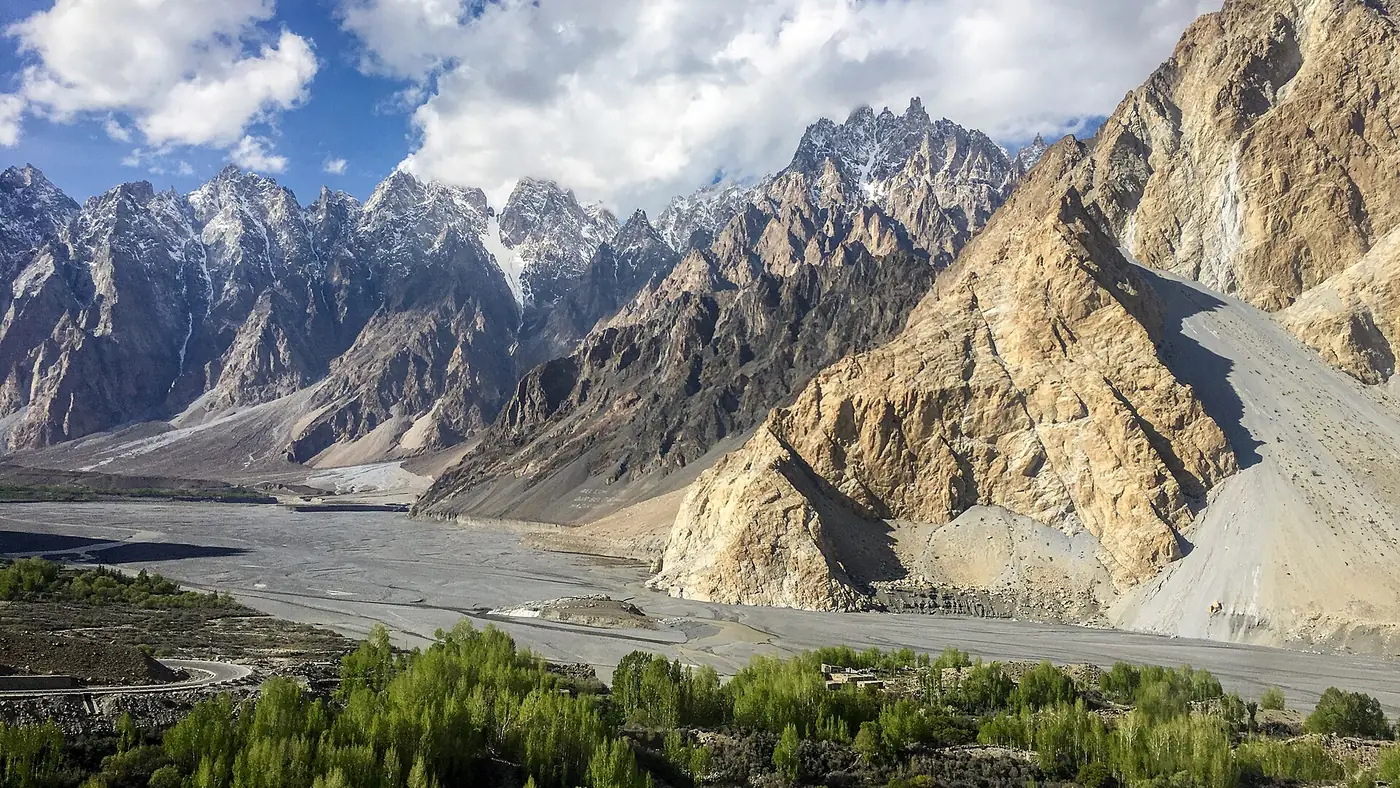
- The Passu Cones, with lines of yellow poplars in front of the grey ridge. Mid-afternoon to late afternoon, when the sun is on the Cones.
- Gulmit and Ghulkin, where the orchards and fields sit against the bare slopes of Gojal. Quieter than Karimabad, and good for a slow morning walk.
- Borith Lake, above Hussaini, for reflections on a still morning.
A practical point for photographers: the valleys are deep and the sun is low in autumn, so the valley floor falls into shadow well before sunset. Plan your afternoon shots for mid-afternoon, and use the last hour for the high ground and the peaks.
Please remember that the fields and orchards are private. Ask before walking into one, stay on the paths, and don't climb walls or terraces for a better angle. Autumn is also harvest time, and people are busy.
Weather: bright days, cold nights
In Gulmit, October averages about 16 °C by day and 4 °C at night, and November about 9 °C by day and -2 °C at night. Karimabad is similar, a little milder in the afternoon. The skies are usually clear, and rain is rare.
The cold arrives quickly once the sun goes. On a clear night in late October it can drop well below the average, and frost on the car in the morning is normal by the end of the month. November can bring the first snow to the valley floor, and early snow on the high ground above Karimabad and Passu is common. Our guide to Hunza weather by month has the figures for every month.
What to pack for chilly autumn nights
The difference between an enjoyable autumn trip and a miserable one is mostly what is in the bag. Pack as if for winter evenings:
- A properly warm jacket, down or synthetic insulated, not just a fleece
- Thermal base layers, top and bottom, for the evenings and for sleeping
- A warm hat, gloves and a scarf or neck gaiter, for sunrise shoots and evenings outside
- Wool socks and indoor shoes or slippers, because stone and wooden floors are cold
- A hot-water bottle, which weighs almost nothing and makes a cold room bearable
- Lip balm and moisturiser, for the dry air
- Sunglasses and sunscreen, because the midday sun is still strong at this altitude
- Spare camera batteries and a power bank. Cold drains batteries fast, and power cuts get longer as the weather cools.
- A headtorch, for pre-dawn walks to viewpoints and for power cuts
Before you book, ask how the rooms are heated and whether the hotel has backup power. Rooms that are comfortable in September can be very cold in November.
Roads, flights and what is still open
Autumn is usually one of the most dependable times to travel in the north. The summer flood season is over, and September and October generally see fewer landslide closures on the Karakoram Highway than the summer months.
- The Babusar road usually stays open into the autumn and closes once the heavy snow arrives. Check before relying on it late in the season.
- Khunjerab Pass is usually open to visitors into November, but it is bitterly cold at the top, and snow can close the road for a day or two at a time in October and November. Our Khunjerab Pass guide covers the season.
- Boating on Attabad Lake runs until about mid-October and is cold on the water.
- Flights to Gilgit depend on clear weather, which autumn often provides, but keep a spare day anyway.
- Some hotels start closing in November. Check that yours is open for your dates.
Crowds and prices
Once the summer holidays end, Hunza goes quiet, and most of October feels calm. The peak colour week has become popular with photographers and with couples, so the best-known hotels with valley views fill at weekends, but it is nothing like June or Eid. Hotels are generally cheaper than in the summer peak.
Is autumn the best time to visit Hunza?
For photographers, couples and anyone who likes clear air and quiet lanes, late October is hard to beat. The valley looks its best, the mountains are sharp, and there are far fewer people than in summer. It is also a good time for day walks, when the heat of summer has gone but the paths are still clear of snow.
It suits families with small children and older parents less well. The evenings are cold, many rooms are not well heated, and nobody enjoys a sunrise shoot at freezing point. It is also no time for the high pastures or long treks, which are closing down for the year.
If you can't come in autumn, April's blossom is the other short season when the valley changes colour: our Hunza blossom season guide covers it. Our guide to when to go sets all the seasons side by side.
Frequently asked questions
When do the leaves change colour in Hunza?
The colour starts in Gojal in the middle of October and reaches Karimabad and Altit in the last week of October and the first days of November. Most leaves have fallen by mid-November.
What is the best week to see autumn colours in Hunza?
For Karimabad and Altit, the last week of October is usually the best single week. For Passu and Gulmit, go about a week earlier.
How cold is Hunza in October?
Days are pleasant, around 16 °C, but nights drop to about 4 °C on average and to freezing by the end of the month. Bring a warm jacket and thermal layers.
Is November a good time to visit Hunza?
Early November can still have good colour around Karimabad and the lower valley, with very few visitors. By mid-November the leaves are mostly gone, nights are well below freezing, and some hotels have closed.
Is Khunjerab Pass open in autumn?
Usually, into November, but it is very cold at the top and snow can close the road for a day or two at a time. Keep a spare day if the pass matters to you.
Is Hunza crowded in autumn?
Far less than in summer. The peak colour weekends in late October are busier, but the valley is generally quiet, and hotels are cheaper than in June to August.