Hunza blossom season usually runs from the last days of March to the end of April. The apricot trees flower first, in the lower villages and around Karimabad and Altit from late March into the first half of April. The cherries follow a little behind, and the bloom then climbs to Gulmit, Passu and the rest of Gojal in the second half of April. In any one village the trees are at their best for only a week or two, so it pays to know which part of the valley flowers when.
The exact dates move with the winter: a warm March brings everything forward, and a late cold spell holds it back. This guide covers the timing by village, the spring weather, crowds and hotels, and how to get there while the high passes are still closed.
| At a glance | |
|---|---|
| Season | Usually late March to late April |
| First to flower | Apricots, in the lower villages and central Hunza |
| Karimabad and Altit | Late March to mid-April, often best in the first half of April |
| Gojal (Gulmit, Passu) | Second half of April |
| Weather | Days about 15 °C in April, nights close to freezing |
| Crowds | Quieter than summer, busier at weekends |
| Closed at this time | Khunjerab Pass and the Babusar road |
When is blossom season in Hunza?
In a typical year the first apricot flowers open in the last week of March and the last of the Gojal orchards finish in late April or the first days of May. Across the whole valley that gives about five weeks of blossom somewhere, but no single village flowers for all of it.
The bloom moves in two directions at once: upwards, from the warmer lower villages to the higher ones, and northwards, from central Hunza into Gojal, which is colder at the same height. So a trip in the first days of April finds Karimabad in flower and Passu still bare, while a trip at the end of April finds Karimabad in leaf and Gojal at its peak.
Sources and visitors' accounts differ by a week or two on the dates, and that reflects real variation from year to year. Treat any date, including the ones here, as the centre of a window rather than a fixed day.
Blossom timing by village
| Area | Villages | Usual peak |
|---|---|---|
| Lower Hunza and Nagar | Aliabad, Hassanabad and the villages along the river below Karimabad; the Nagar side across the river | Late March to early April |
| Central Hunza | Karimabad, Altit, Ganish | Late March to mid-April, often best in the first half of April |
| Gojal | Gulmit, Ghulkin, Hussaini, Passu | Second half of April |
| Upper Gojal | Sost and the side valleys beyond | Late April, sometimes into early May |
Two things shift these windows:
- Aspect. Karimabad and Altit face south and get the spring sun early. The Nagar villages across the river face north, get less sun in late winter, and can flower a few days later than their height alone would suggest.
- The winter just gone. After a mild winter the first apricots can open in mid-March. After a cold one, or a late snowfall, everything slips back by a week or more.
If you want to see both central Hunza and Gojal in flower on one trip, aim for the middle of April. You are likely to catch the end of the bloom around Karimabad and the start of it in Gulmit and Passu.
Apricot, cherry and the rest: what flowers when
Apricots are the trees that define Hunza, grown on every terrace and around every house. They flower first, with white to pale pink blossom on bare branches, and they are the main event.
Cherries flower a little after the apricots in the same village, usually with whiter, denser blossom. Hunza's cherry orchards have grown a great deal in recent years, and in April they add a second wave to the season. The fruit itself ripens in early summer, which is a separate reason to visit.
Almonds, apples and pears also flower in spring. A few almond trees open before everything else; apples and pears come after the apricots and carry the colour into late April in some villages.
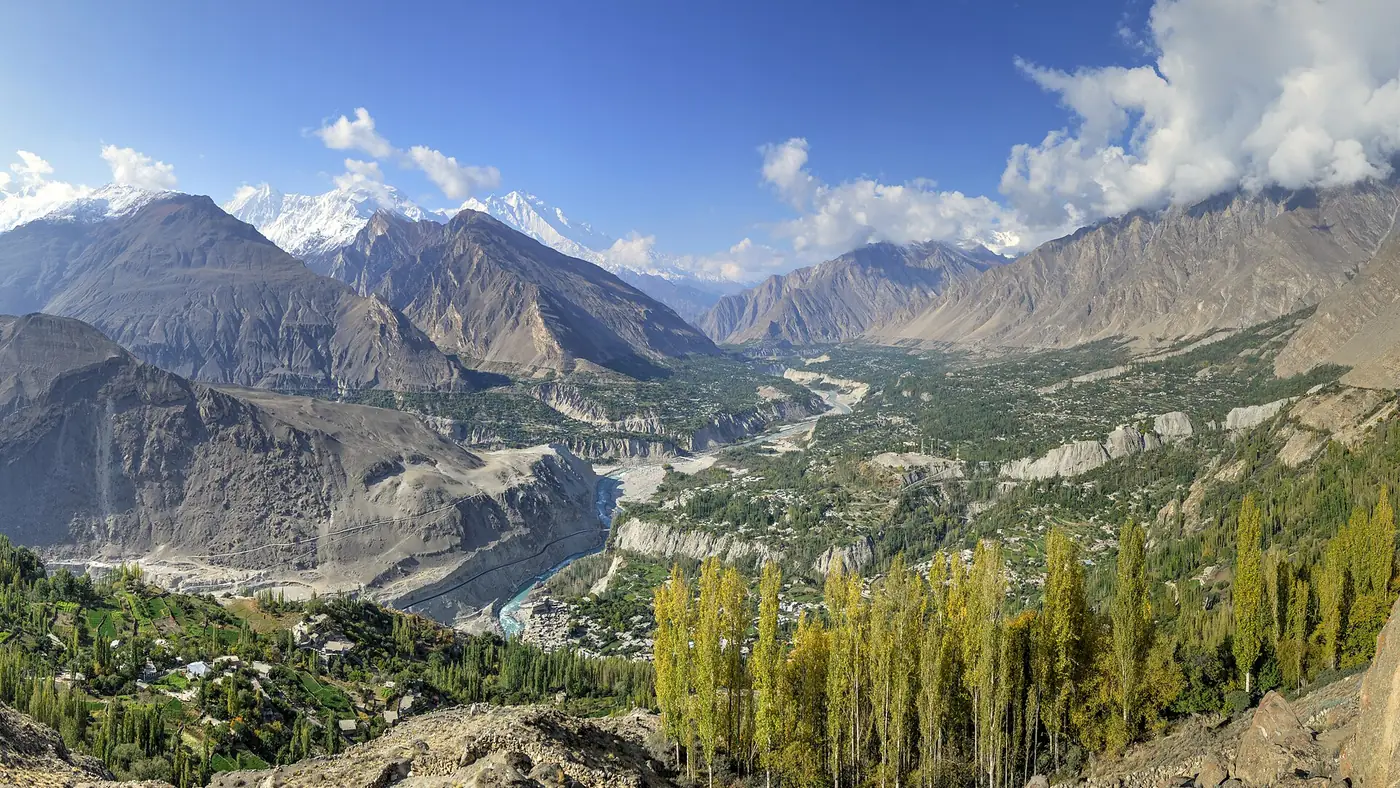
The poplars and willows along the channels come into leaf at the same time, so by the end of the blossom the valley has turned from grey-brown to a fresh, light green.
What is the weather like during blossom season?
Spring days in Hunza are pleasant and spring nights are cold. In Gulmit, April averages about 15 °C by day and 4 °C at night; in March the figures are closer to 8 °C and -2 °C. Karimabad is similar, a little milder by day. Our guide to Hunza weather by month has the full figures.
What that means for a visit:
- Pack for winter evenings. A warm jacket, a hat, gloves and warm layers for the night. Rooms can be cold, and not every guesthouse heats well.
- Expect some showers. Spring is the wettest time of year in Hunza, though that means occasional rain rather than grey weeks. Snow on the peaks around the valley is normal, and a late fall on the valley floor is possible in March.
- Frost is the risk to the blossom. A hard frost at the wrong moment can brown the flowers overnight. It is one reason the peak can be shorter in some years than others.
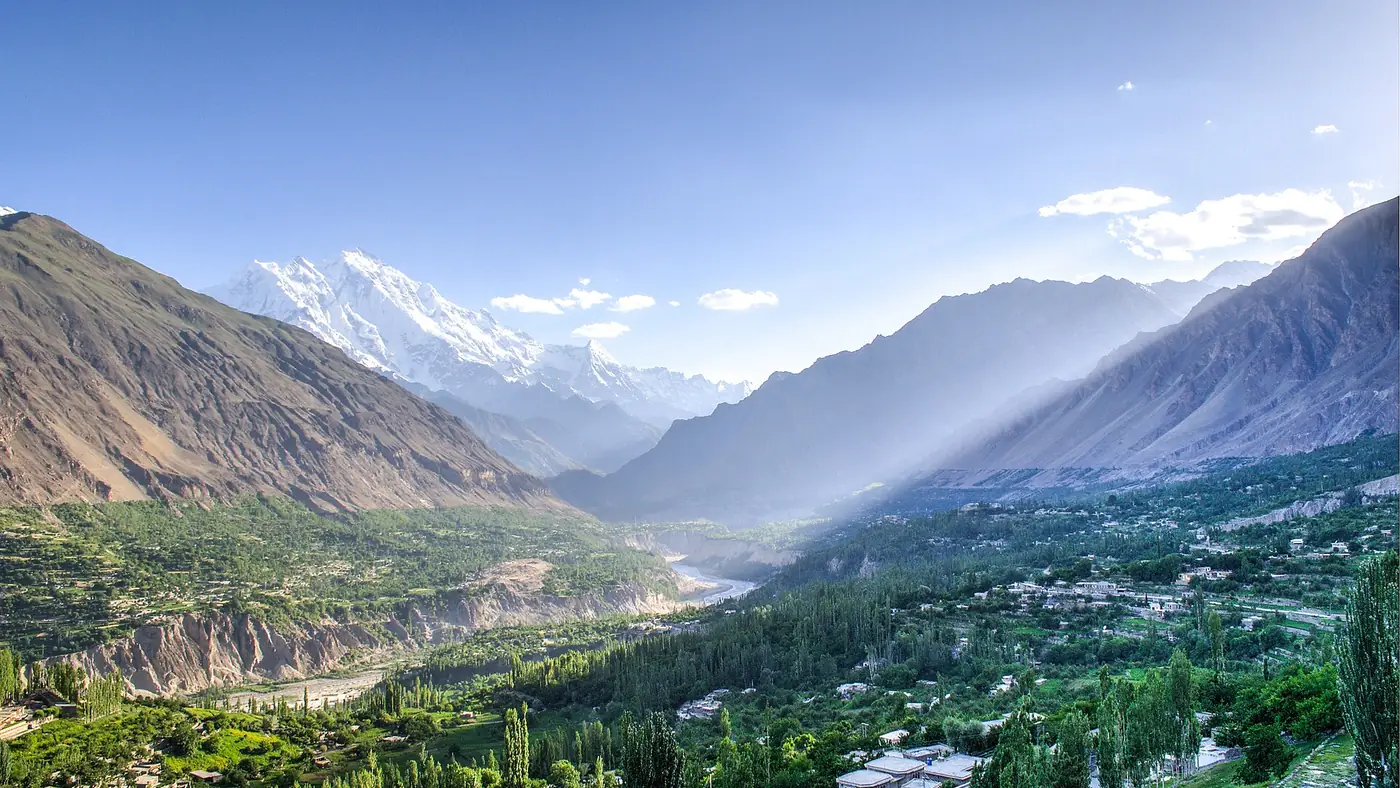
- The light is good. Clear spring mornings, with fresh snow on Rakaposhi and blossom in the foreground, are why photographers come.
Crowds, hotels and prices
Blossom season is quieter than June to August, and most of the time the valley feels calm. Hotels are generally cheaper than in the summer peak, and the lanes of Karimabad and Altit are empty in the early morning.
It is no longer a secret, though. The best-known hotels with orchard and mountain views fill up for the peak weekends in early and mid-April, and photographers book them well ahead. Some things to know:
- Travel midweek if you can. Weekends bring visitors up from Gilgit and Islamabad.
- Book the peak week early if you want a particular hotel, and choose one that lets you move dates if the bloom is late.
- Check which hotels are open. Some places that close for the winter may not have reopened by late March, so confirm before you book.
- Ask your hotel for photos in the week before you travel. The people living among the trees know better than any website how far the bloom has got.
Getting there in spring
Spring is the season with the fewest routes open, so plan the journey carefully:
- Driving: the Babusar Pass is closed until late May or June, so the only road north is the Karakoram Highway through Besham, Dasu and Chilas. Spring rain brings slides in Kohistan: in March 2026 the highway was blocked between Pattan and Bursin. Our Lahore to Hunza road guide covers the route and where to stop, and our guide to checking Karakoram Highway road status explains how to find out whether it is open.
- Flying: flights to Gilgit are more reliable than in winter but still depend on clear weather. Keep a spare day at the end of the trip.
- Khunjerab Pass is closed to visitors until around early May, so it can't be part of a blossom trip.
Where to see the best of it
- Duiker, above Altit, at sunrise or sunset, looking down over the orchards of Altit and Karimabad with Rakaposhi behind.
- Altit and the Royal Garden, where the old orchards come right up to the fort walls.
- The roof of Baltit Fort, for the whole of central Hunza in flower. Our Baltit Fort guide covers opening times.
- The lanes of old Karimabad and Ganish, where the blossom hangs over the stone houses and channels. Walk them early, before anyone else is about.
- Gulmit and Ghulkin in the second half of April, with the orchards against the bare peaks of Gojal.
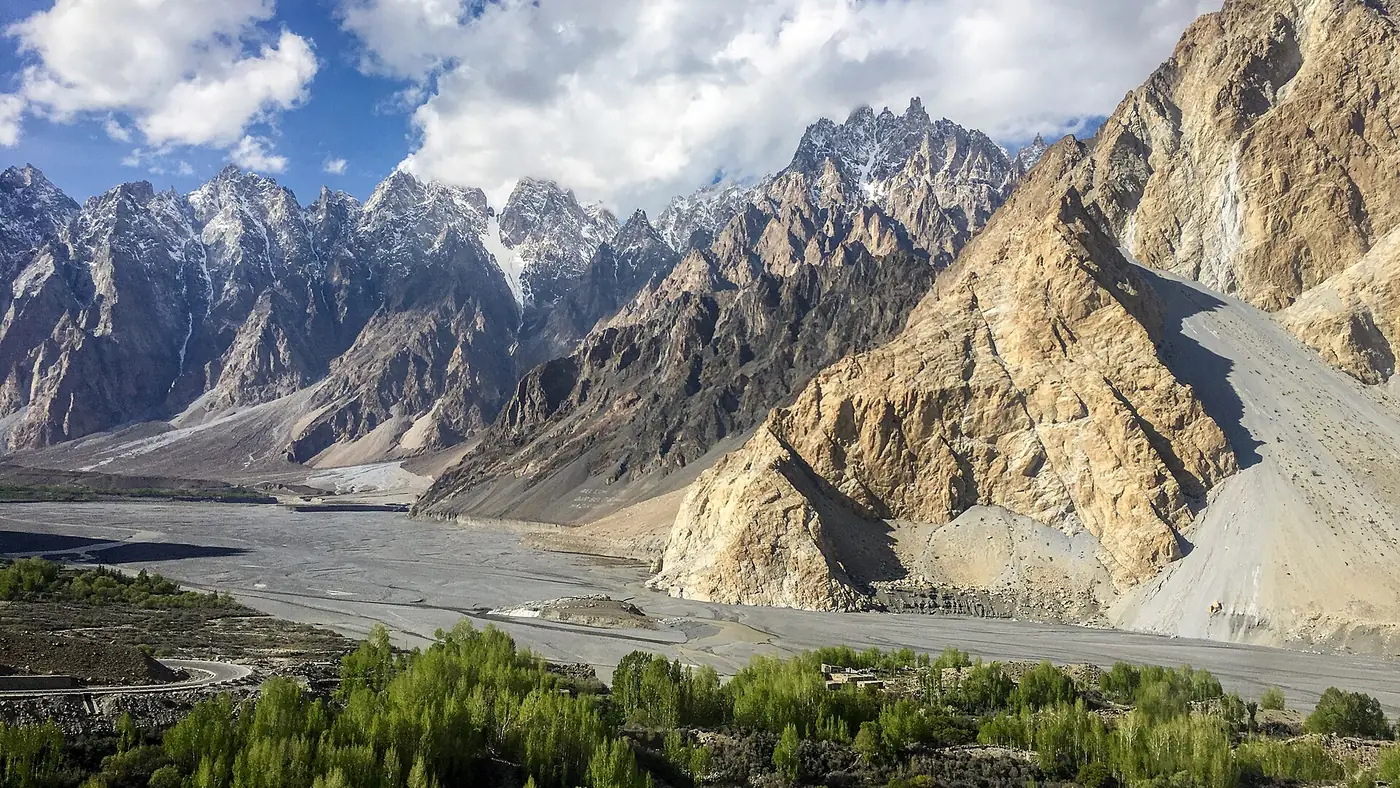
- Passu, where a few blossoming trees in front of the Passu Cones make one of the valley's classic spring pictures.
Please remember that the orchards are private land and people's livelihoods. Ask before walking into one, don't climb the terraces or shake branches for photographs, and never pick blossom.
Is blossom season the right time for your trip?
It is the right time if you care most about the look of the valley and don't mind cold evenings. Couples, photographers and anyone who wants Hunza calm will get the most from it. It also suits people who have seen Hunza in summer and want to see it differently.
It is the wrong time if you want the high places. Khunjerab, the high pastures and the long hikes are closed or snowbound, the Babusar route is shut, and the nights can be hard going for small children and older parents in a cold room.
If you can't make April, late October is the other short season when the valley changes colour, as the poplars and orchards turn gold. Our guide to when to go sets the seasons side by side, and our guide to Hunza in autumn covers the colour.
Frequently asked questions
When is cherry blossom season in Hunza?
Cherries usually flower in April, a little after the apricots in the same village: early to mid-April around Karimabad and later in the month in Gojal. The exact week varies with the spring weather.
What is the best week to see blossom in Hunza?
For Karimabad and Altit, the first half of April is usually the safest bet. For Gulmit and Passu, the second half. The middle of April often gives you some of both.
Does Hunza blossom start in March?
The first apricot blossom often opens in the last week of March in the lower and central villages, and in a warm year it can start in mid-March. Most of the valley flowers in April.
How cold is Hunza in April?
Days are mild, around 15 °C, but nights fall close to freezing, and March is colder still. Pack a warm jacket, a hat and layers for the evenings.
Is Khunjerab Pass open during blossom season?
No. The road to the pass usually opens to visitors in early May, after the blossom around Karimabad has finished. Late April is sometimes close, but don't plan a blossom trip around it.
Is the Babusar road open in April?
No. The Babusar Pass is closed by snow until around late May or June, so in spring the only road route to Hunza is the Karakoram Highway via Besham and Chilas.