Hunza in winter, from December to February, is cold, quiet and open. The Karakoram Highway into the valley is kept clear through the season, Karimabad and Aliabad have hotels open, and in a cold year the edges of Attabad Lake and the ponds around Altit freeze hard enough for skating and ice hockey. What you give up is the high country: the Babusar route is shut, the Khunjerab Pass is at the mercy of the snow, and nights are well below freezing, with long power cuts.
This guide is about Hunza itself in those three months: how to get in, what the roads within the valley are like, how to choose a hotel that is actually warm, what the ice is really like, and who a winter trip suits.
| At a glance | December to February |
|---|---|
| Road in | Karakoram Highway via Chilas only; Babusar closed |
| Flights | Islamabad to Gilgit, often cancelled for weather |
| Within Hunza | KKH open to Sost, weather permitting |
| Khunjerab Pass | Kept open since December 2024, but often snowbound |
| Nights | Well below freezing; colder in Gojal |
| Power | Long daily cuts; ask about generators |
| Ice hockey and skating | Mostly January, when the ice allows |
| Vehicle | 4x4 with an experienced local driver, and chains |
Can you get to Hunza in winter?
Yes, but only one way by road, and with more slack in the plan than in summer.
By road, the only route from Islamabad is the Karakoram Highway through Besham, Dasu and Chilas; the Babusar Pass closes in November and does not reopen until late May or June. The highway is kept open, but snow, rockfall and ice can close sections for hours or days. On 24 December 2025, a rockfall at Chanas cut road access to Hunza and Nagar for most of a day and stranded thousands of travellers, in freezing temperatures. Drive only in daylight, which in December means leaving at first light and stopping by mid-afternoon. Our Islamabad to Hunza road guide covers the route and overnight stops.
By air, PIA flies from Islamabad to Gilgit, and a car takes you on to Karimabad in two to three hours. The flight needs clear weather and is cancelled often in winter, sometimes several days running. Keep a spare day at each end, and never book the return on the same day as a connection or a fixed commitment.
For the rest of Gilgit-Baltistan in the same months, including Skardu and Naltar, see our wider guide to Gilgit-Baltistan in winter.
Getting around Hunza in winter
Inside Hunza, the Karakoram Highway is the one road that is reliably kept open, from Aliabad up through the Attabad tunnels to Gulmit, Passu and Sost. It is paved and wide, and on a clear day after snow it is usually cleared quickly.
The trouble is the side roads:
- The climb to Karimabad from the highway and the lanes around the bazaar are steep, and they ice over in the shade. Walk rather than drive around town where you can.
- Duikar and the Eagle's Nest viewpoint are up a narrow, steep road that can be icy or closed after snow. Ask locally before going up, and go with a local driver.
- Borith Lake, the Shimshal road and other jeep tracks can be blocked for days after heavy snow.
- Khunjerab Pass is the one people ask about. Since December 2024 the border has been kept open through the winter, mainly for trade, and the Gilgit-Baltistan tourism department said at the time that winter visitors could go up too. In practice the road above Sost is often snowbound, the top can be around −20°C, and clearing it after a storm takes days. A winter visit is something to try on a clear, settled day with local advice, not something to plan a trip around. Our Khunjerab Pass guide covers the pass in its normal season.
If you drive yourself, a 4x4 is the sensible choice, with snow chains in the boot and someone who has fitted them before. A normal car is manageable on the highway in a dry spell, but not on the side roads after snow. Many people leave their own car in Gilgit or Aliabad and hire a local driver for the valley, which is often the safer and cheaper choice.
How cold is Hunza in winter?
Karimabad sits at about 2,500 metres. On a clear winter day the sun is warm on the south-facing slopes and the afternoon can feel mild, but it drops below freezing as soon as the sun goes behind the mountains, and nights are well below zero. Gulmit and Passu in Gojal are colder again; Gulmit's January average is around −5.5°C.
The amount of snow varies a great deal from year to year. Some winters bring snow down to the orchards in Karimabad several times; recent ones have been drier and milder. Don't plan a trip on the promise of deep snow in the valley. It is more reliable higher up.
Heated hotels and power cuts
This is the part of a winter trip that decides whether you enjoy it.
Most of the electricity in Gilgit-Baltistan comes from hydropower, and when the streams freeze, output drops. In January 2025 people in Hunza reported getting only one or two hours of electricity a day, and protesters blocked the Karakoram Highway at Aliabad demanding a solution. A hotel's heating is only as good as its backup, so ask specific questions before you book:
- What heats the room? Electric heaters, gas heaters, a wood or gas stove (bukhari), or central heating. Electric heaters are useless in a power cut unless there is a generator.
- Is there a generator or solar backup, and when does it run? Larger hotels usually have one or both; smaller places may not.
- Is there hot water in the morning? And does it depend on the power?
- Is the hotel actually open? Not every guesthouse stays open through the winter, and small places without proper heating struggle when their pipes freeze. Karimabad and Aliabad have the most choice. Confirm by phone a day or two before you arrive.
Never sleep with a gas heater or gas stove burning in a closed room. Turn it off before you sleep, or leave a window open a crack. Carbon monoxide poisoning from room heaters is a real winter risk in the north.
Keep your phone and power banks charged whenever the electricity is on, and carry a head torch.
Frozen Attabad Lake: what to expect
Photographs of people skating on a frozen Attabad Lake make it look like a winter certainty. It isn't.
In a cold winter, large parts of the lake freeze over in January, and in good years the ice has been thick enough for young skaters from Gulmit to train on it. It is a remarkable sight when it happens: a white lake between dark mountains.
In milder winters much less of it freezes. In January 2026 the ice was poor across Hunza, and Attabad was only partly frozen. Some recent winters in the region have been two to three degrees warmer than they used to be, with less snow, and the ice is less dependable than older photographs suggest.
If you do find ice:
- Only walk on it where local people are already skating, and ask them first.
- Keep off it after midday in sunny weather, when the surface softens.
- Keep children at the edge. The water under the ice is deep and very cold.
Our guide to Attabad Lake covers the lake through the rest of the year.
Ice hockey, skating and winter events
Hunza has a real ice-hockey culture, built by volunteers on natural ice. The best-known event is Karakoram Winterlude, a community-run tournament and festival based in Altit, held in January on a natural rink beside Altit Fort, with ice hockey, skating and music. Teams come from villages across the region.
It depends entirely on the ice. In January 2026 the rink at Altit failed to freeze properly, and the organisers moved the hockey north towards Sost, where the ice was still poor. Dates are announced locally and can shift at short notice, so if an event is the reason for your trip, check with the organisers or your hotel before you book, and plan the rest of the trip so it is worth making even if the ice lets you down.
Outside organised events, you will often find children skating on frozen ponds and channels in Altit, Karimabad and the Gojal villages on cold mornings. Watch from the side and ask before taking photographs.
What is open and what is closed?
Usually open:
- Karimabad, Altit, Aliabad and Ganish, with a smaller choice of hotels and restaurants
- Baltit and Altit forts, usually; check opening hours locally
- The Karakoram Highway north through the Attabad tunnels to Gulmit, Passu and Sost
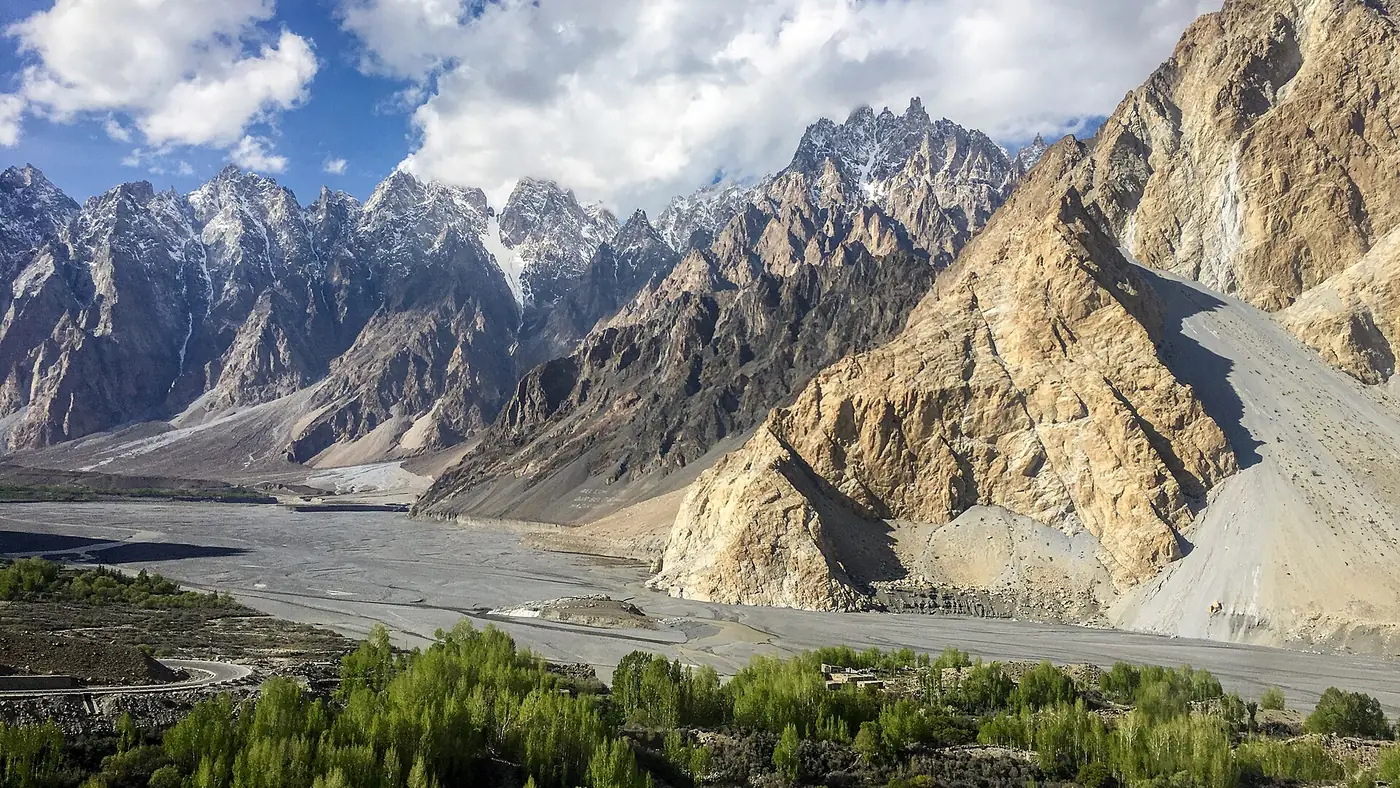
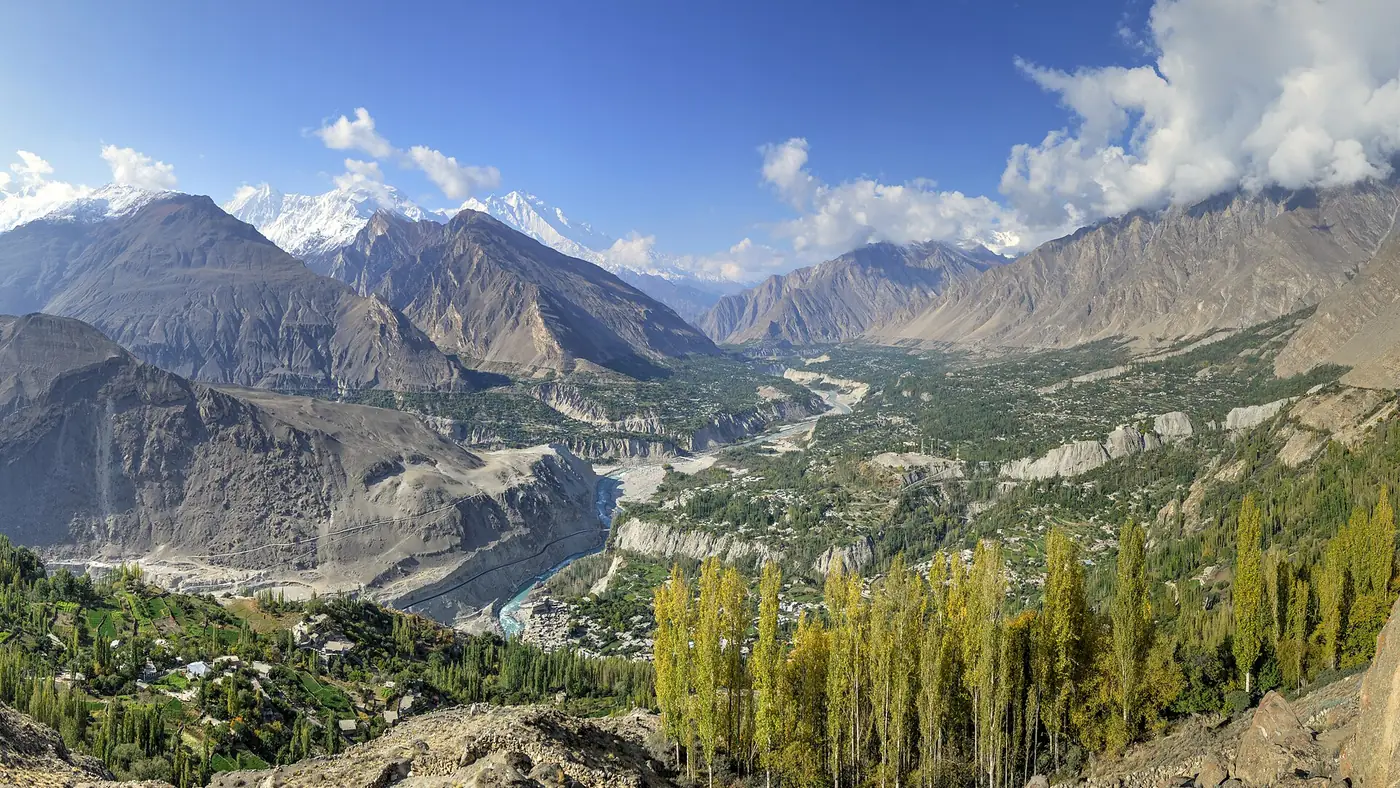
- Views of Rakaposhi, Ultar and the Passu Cones, often at their clearest
Closed or unreliable:
- The Babusar route into Gilgit-Baltistan
- A day trip to the Khunjerab Pass, which depends on the snow
- High walks such as Ultar meadows and most glacier paths, which are under snow and ice
- Boats and jet skis on Attabad Lake
- Many guesthouses and cafés in Gojal, and some in Karimabad
Is Hunza worth visiting in winter?
For the right people, yes. The valley is empty, the light is clear, the mountains are white to their feet, and you see Hunza as the people who live there do. Hotels are cheaper and far less busy than in summer.
It suits couples, photographers and small groups of adults with flexible dates, good winter clothing and an interest in quiet more than sightseeing. It is a harder trip with babies, small children or older parents, because of the cold nights, the power cuts and the chance of being stuck an extra day or two. It is the wrong choice for a first visit if you want to see everything, since Khunjerab is uncertain and the high walks and lake boats are off the table.
If you would rather see Hunza at its busiest and most open, look at summer or autumn instead; our guide to when to go compares the seasons across the north.
Frequently asked questions
Is Hunza open in winter?
Yes. The Karakoram Highway into Hunza is kept open all winter, and hotels in Karimabad and Aliabad stay open. Snow and rockfall can close the road for hours or days, so keep spare days.
Does it snow in Hunza in winter?
Usually, between December and February, but the amount varies a lot, and recent winters have been drier and milder. Snow is more reliable higher up and in Gojal than on the valley floor in Karimabad.
Is Attabad Lake frozen in winter?
In cold winters, large parts of it freeze, usually in January. It does not freeze every year, and in January 2026 it was only partly frozen, so don't plan a trip around the ice.
Can I go to Khunjerab Pass in winter?
Sometimes, but don't plan on it. The pass has been kept open through winter since December 2024, mainly for trade, but the road above Sost is often snowbound and bitterly cold, so a visit depends on the weather that day. Ask in Sost before driving on.
Is there electricity in Hunza in winter?
There is, but power cuts of many hours a day are normal because the hydropower supply drops when the streams freeze; in January 2025 some areas had only one or two hours a day. Choose a hotel with a generator or solar backup, and keep devices charged whenever the power is on.
Which month is best for snow in Hunza?
January is usually the coldest month and the most likely to have snow and ice, including the ice-hockey season. Late December and February can also bring snow.