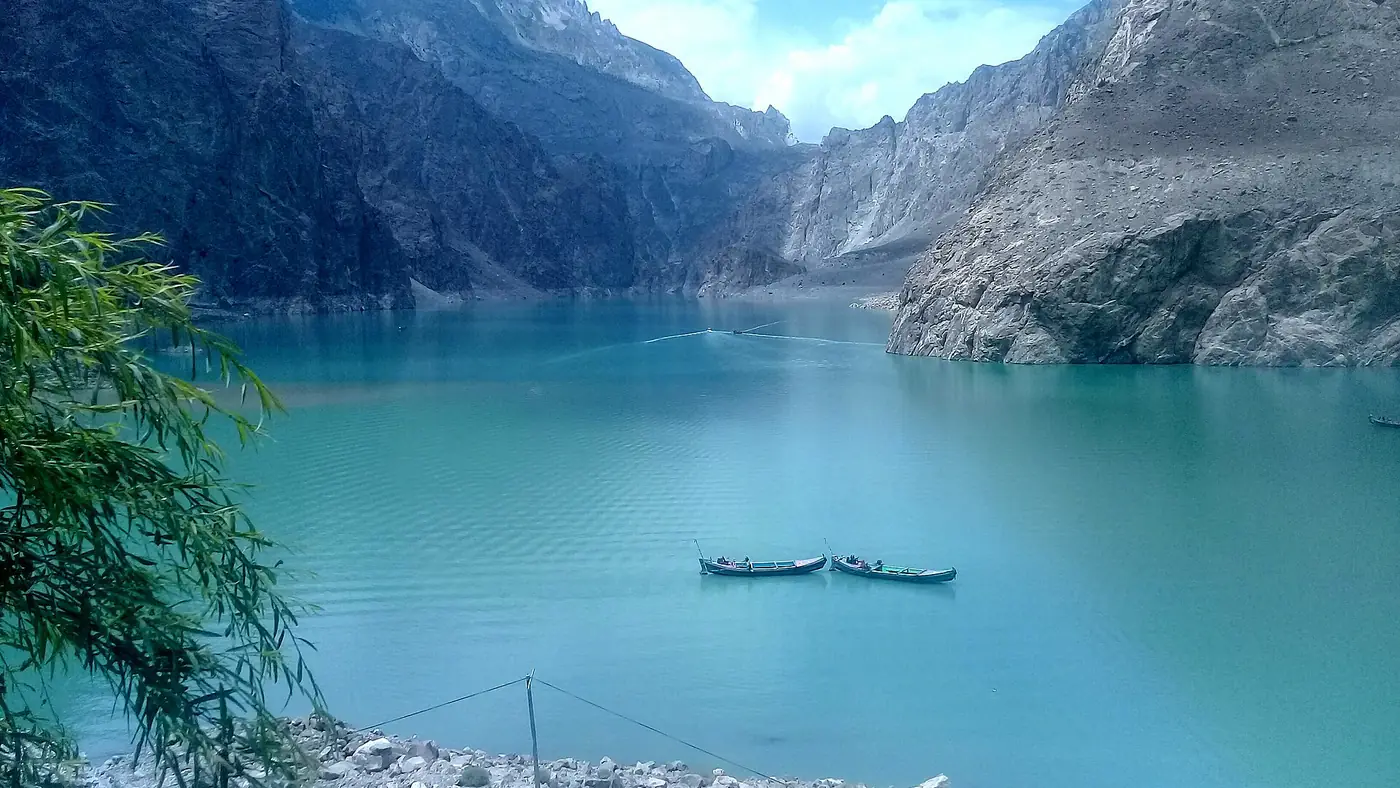
Attabad Lake is the long blue lake on the Karakoram Highway in upper Hunza, about 30 to 40 minutes' drive north of Karimabad. It formed in January 2010, when a landslide blocked the Hunza river, and the highway now runs beside it through a chain of tunnels. You can see it from the road at any time of year; the main landing, with boats, cafés and jet skis, is busiest from late morning to mid-afternoon in summer, so go early or late.
This guide covers how to get there, why the water changes colour through the year, where to see it from, and what else to fit into the same drive. Boat trips, hotels on the shore and the lake in winter each have their own guides, so here they get only a mention.
| At a glance | |
|---|---|
| Location | Gojal, upper Hunza, on the Karakoram Highway |
| From Karimabad | About 30 to 40 minutes by road |
| From Gilgit | About 2.5 to 3.5 hours |
| Formed | 4 January 2010, by the Attabad landslide |
| Size when formed | About 21 km long and over 100 m deep |
| Tunnels | Five, about 7 km in all, opened in 2015 |
| Time needed | One to three hours |
| Best light | Early morning and late afternoon |
Where is Attabad Lake?
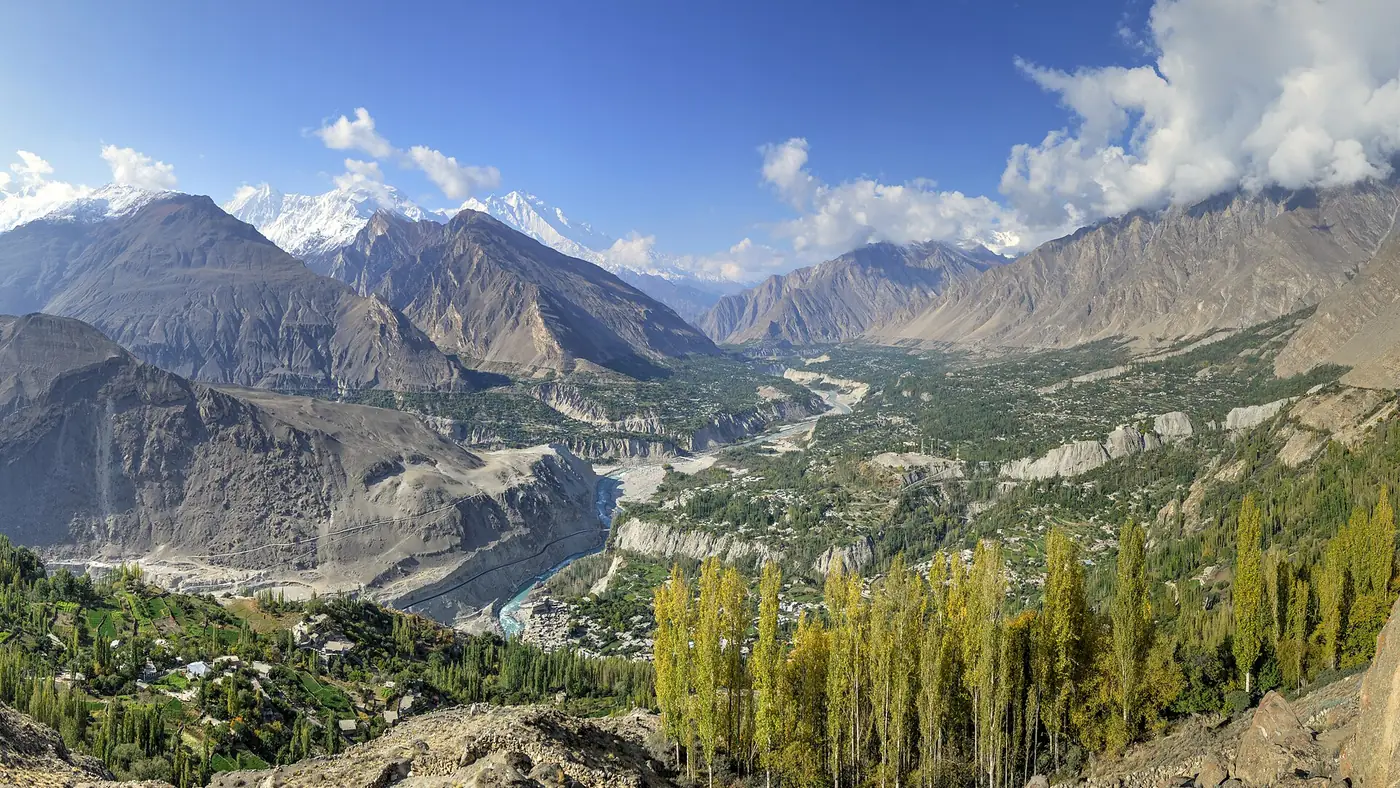
The lake fills the Hunza river valley between the site of Attabad village, just north of central Hunza, and the villages of Shishkat and Gulmit in Gojal. Coming from Karimabad, you drive north down to the Karakoram Highway at Ganish, follow the river upstream, and meet the lake at its southern end, where the road enters the first of the tunnels.
The tunnels, built with Chinese help and opened in September 2015, replaced the stretch of highway that the lake drowned. Between 2010 and 2015 people, goods and even vehicles crossed the lake by boat. The road now runs through the mountainside along the lake, emerging between tunnels to give short views across the water, and crosses the river on a long bridge near Shishkat at the northern end.
How do you get to Attabad Lake?
By car: from Karimabad or Aliabad, drive north on the Karakoram Highway. The road is paved and wide, and the drive takes 30 to 40 minutes. There is parking at the main landing, which fills up on summer afternoons and holiday weekends.
By public transport: shared vans run up and down the highway between Aliabad and the Gojal villages. Ask to be dropped at the lake. In 2026, fares for this kind of short hop have been a few hundred rupees; arrange your return with the driver or flag down a van heading south.
By local car: hotels in Karimabad and Aliabad can arrange a car and driver for the half day. It is usually combined with the Hussaini bridge and Passu.
From Gilgit the drive is two and a half to three and a half hours, depending on stops. If you are coming all the way from Islamabad, our Islamabad to Hunza road guide covers the journey.
How did Attabad Lake form?
On 4 January 2010 a huge landslide came down the mountainside at Attabad village and blocked the Hunza river. Twenty people died, and the river backed up behind the debris for months. By early June 2010 the lake was about 21 km long and over 100 metres deep. It drowned the village of Ayeenabad, much of Shishkat, around 40 per cent of Gulmit and some 19 km of the Karakoram Highway.
For visitors, what matters is that this is a young lake held back by a landslide dam, not a glacial lake that has sat here for centuries. Its level, shoreline and colour all shift from season to season.
What colour is Attabad Lake, and when?
Attabad's blue comes from glacial water and the very fine rock flour it carries, which scatters sunlight. The same streams also bring in coarser silt and mud, and how much of that arrives, more than anything else, decides how the lake looks on the day you visit.
- Spring (March to May): with little meltwater and silt coming in, the water is usually clear and deeply coloured, with snow still on the mountains around it.
- Summer (June to August): the glaciers melt and the side streams run heavy with silt. Brown, muddy patches spread into the lake where they enter, more so after rain, and parts of the lake turn paler. When muddy patches caused a stir in 2025, both a lakeside hotel and a government report put them down to silt-laden streams in the summer months. It is why some July photographs look nothing like the postcards.
- Autumn (September to November): the streams quieten and the lake clears again. With clear autumn air and yellow poplars at Gulmit, many people think this is its best season.
- Winter (December to February): the water is darker and still, and in cold years large parts of the lake freeze. How much freezes varies a lot from year to year; our guide to Hunza in winter covers what to expect.
On any day, the colour is strongest in bright sun and flattens under cloud. Midday gives the most saturated blue; early morning and late afternoon give softer light, calmer water and fewer people.
Is Attabad Lake drying up?
In June 2026 videos of Attabad with wide sandy flats and exposed lakebed spread online under headlines saying the lake was gone. Fact-checks published by Dawn and others found that it has not dried up. The experts they quoted pointed to silt: the streams feeding the lake carry large amounts of it, especially in summer, and it is slowly filling parts of the lake. A 2024 study found the lake's surface area shrank between 2010 and 2020 and has been more stable since. Its level also rises and falls with the inflow and with water leaving through the spillway.
For visitors, the practical point is simple: expect sandbanks and a wider shoreline in places, and don't expect the lake to look exactly like photographs taken a few years ago.
Where are the best viewpoints?
- The main landing at the southern end. This is where the boats, jet skis and cafés are, beside the first tunnel. The view straight up the lake is the classic one. It is busy from late morning in summer.
- The pull-offs between the tunnels. The highway comes out into the open several times between the tunnels. Stop only where there is proper space off the road, and never inside or at the mouth of a tunnel.
- The Shishkat and Gulmit end. At the northern end the Gojal mountains rise straight above the water. It is quieter here, and in autumn the poplars at Gulmit frame the view.
- Hotel terraces. The hotels and cafés on the shore have terraces looking across the water, which is the easiest way to sit with the view for an hour. Our guide to where to stay in Hunza covers the lakeside hotels and whether a night there is worth it.
Things to do at the lake
Most people spend an hour or two at the landing. The options are:
- A boat trip up the lake in a motorboat, the most popular thing to do. Prices vary with the boat and the length of the trip, so agree the price and the duration before you get in, and wear the life jacket you are given.
- Jet skis and speedboats, run by operators at the landing in the warmer months.
- Tea or lunch at one of the cafés or hotel restaurants looking over the water.
- Photography in the first and last hours of daylight, when the landing is quiet.
The water is very cold all year and deep close to the shore. Swimming is not sensible, and children should be kept close at the water's edge.
What else can you see on the same drive?
Attabad is the gateway to Gojal, and it combines easily with the rest of upper Hunza in a half or full day from Karimabad:
- Gulmit, just beyond the northern end, for lunch and a walk through the old village
- The Ghulkin glacier, which comes down almost to the highway just north of Gulmit
- The Hussaini suspension bridge and Borith Lake, a little further north
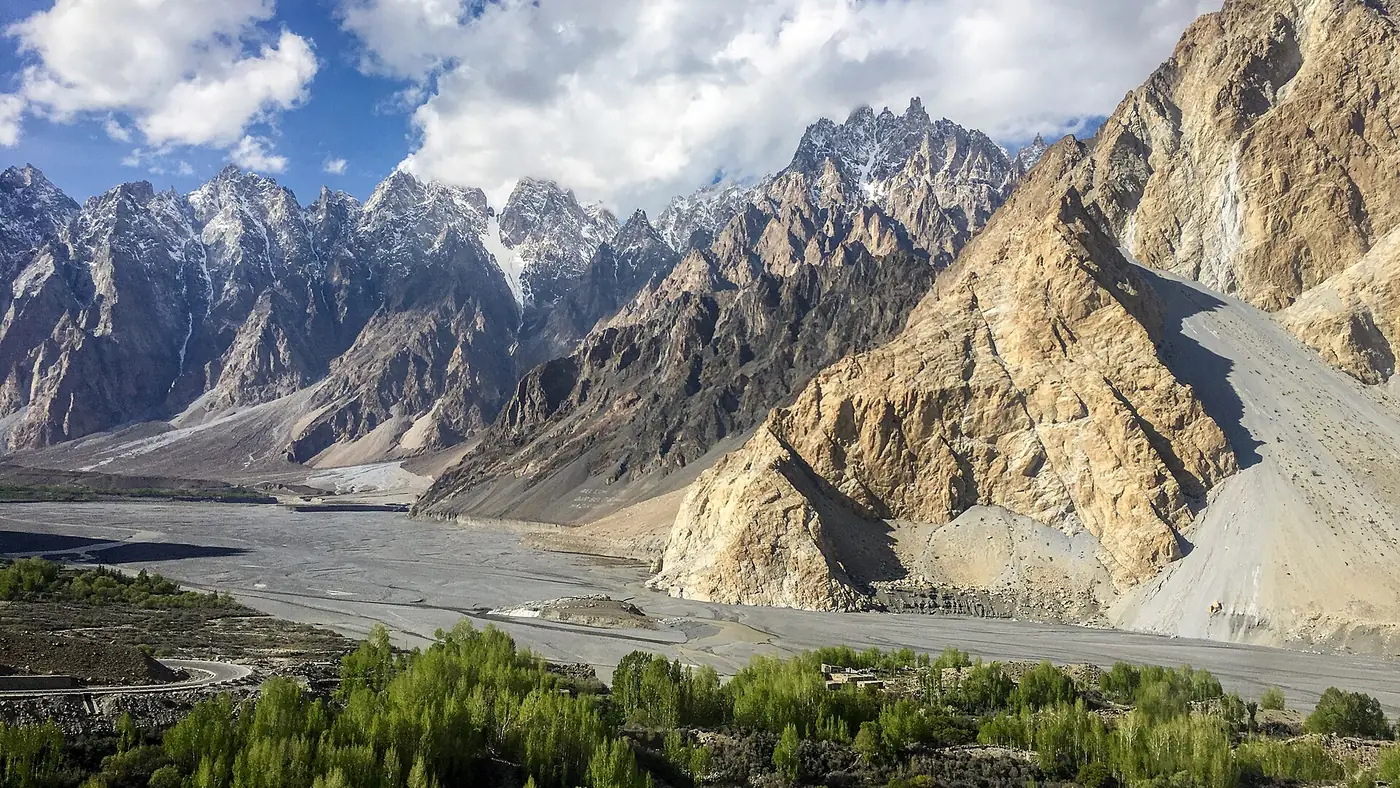
- The Passu Cones and the Passu glacier, about an hour from the lake
- Khunjerab Pass, for a full day that passes the lake on the way up and back
Our list of places to visit in Hunza covers each of these, with the time they need.
Is Attabad Lake worth visiting?
Yes, and it is almost impossible to avoid, because every road trip into Gojal passes it. The question is when to stop.
At midday in July, on a holiday weekend, the landing is crowded, the car park is full and the noise of jet skis carries up the lake. At 8 in the morning or at 5 in the afternoon, on the same day, it is calm and much more beautiful. If you are driving up to Passu or Khunjerab, pass it on the way out and stop on the way back, when the light is lower and the day visitors have thinned.
For a quieter experience, go in spring or autumn, or look at the lake from the northern end near Gulmit rather than the southern landing. Our Gilgit and Hunza page puts the lake in the context of the wider valley, and the Gilgit, Hunza and Khunjerab tour takes a boat out on the lake before going on to Passu.
Frequently asked questions
How far is Attabad Lake from Karimabad?
About 30 to 40 minutes by road, north on the Karakoram Highway. From Gilgit it is two and a half to three and a half hours.
Why is Attabad Lake so blue?
Fine glacial silt suspended in the water scatters sunlight and gives it a blue to turquoise colour. It is usually at its best in spring and autumn; in summer, silt-laden streams leave brown patches in parts of the lake.
When was Attabad Lake formed?
On 4 January 2010, when a landslide at Attabad village blocked the Hunza river. The lake reached about 21 km in length within five months.
Is there an entry fee for Attabad Lake?
There is no fee to see the lake from the highway. At the landing you pay for boats and jet skis, and there may be a small charge for parking or entry; prices vary, so agree them before you start.
Does Attabad Lake freeze in winter?
Large parts of it freeze in cold winters, usually in January. It does not freeze every year, and the ice is not always safe to walk on.
Can you swim in Attabad Lake?
It is not a good idea. The water is very cold all year and deep close to the shore, and there are no lifeguards.