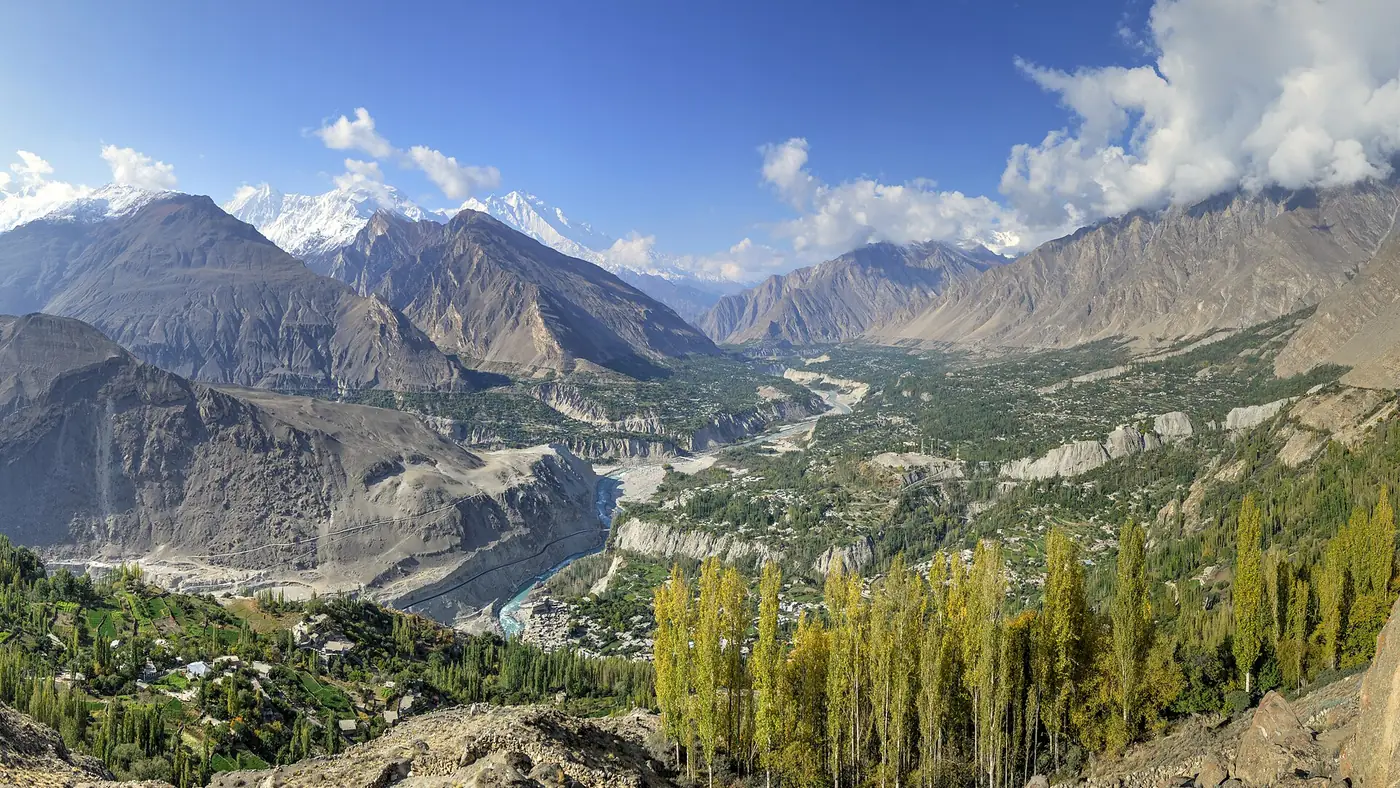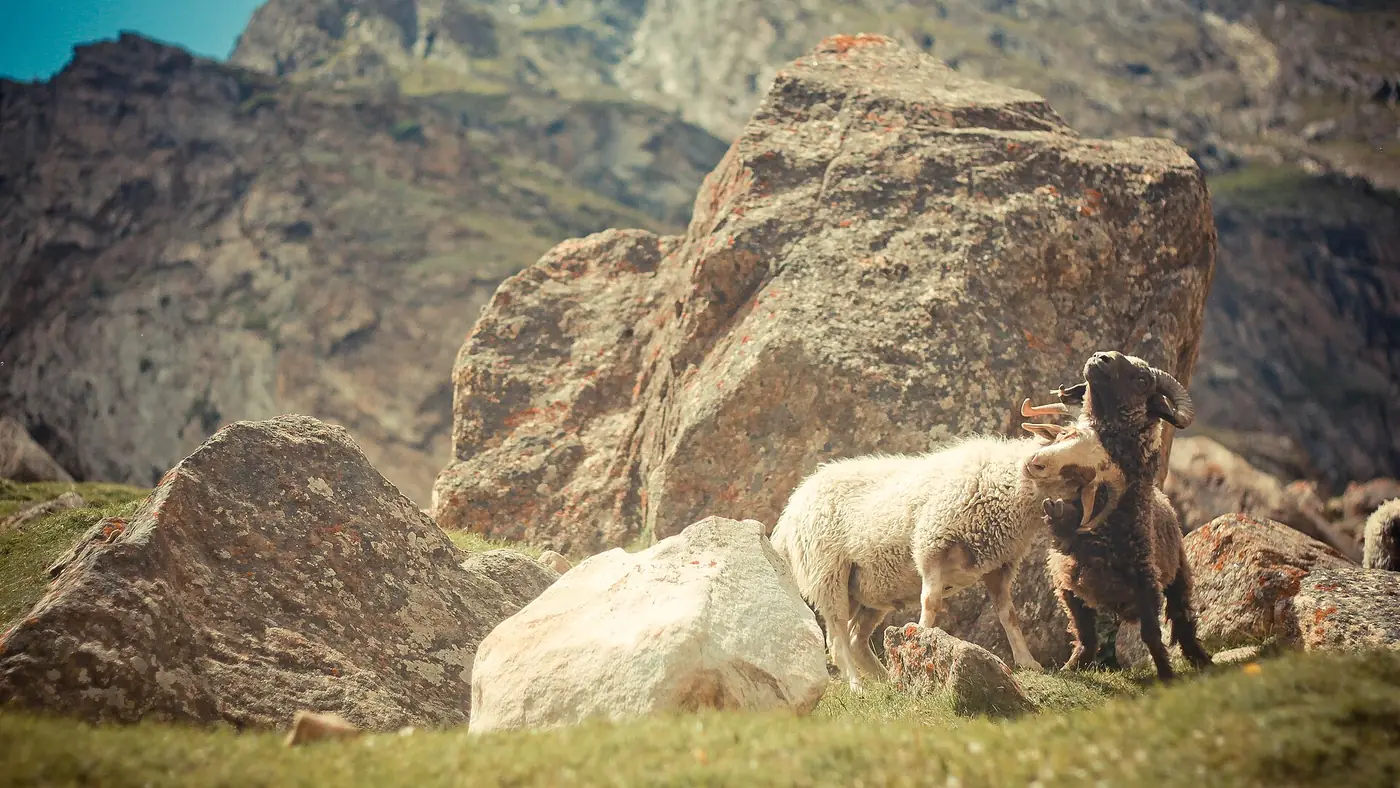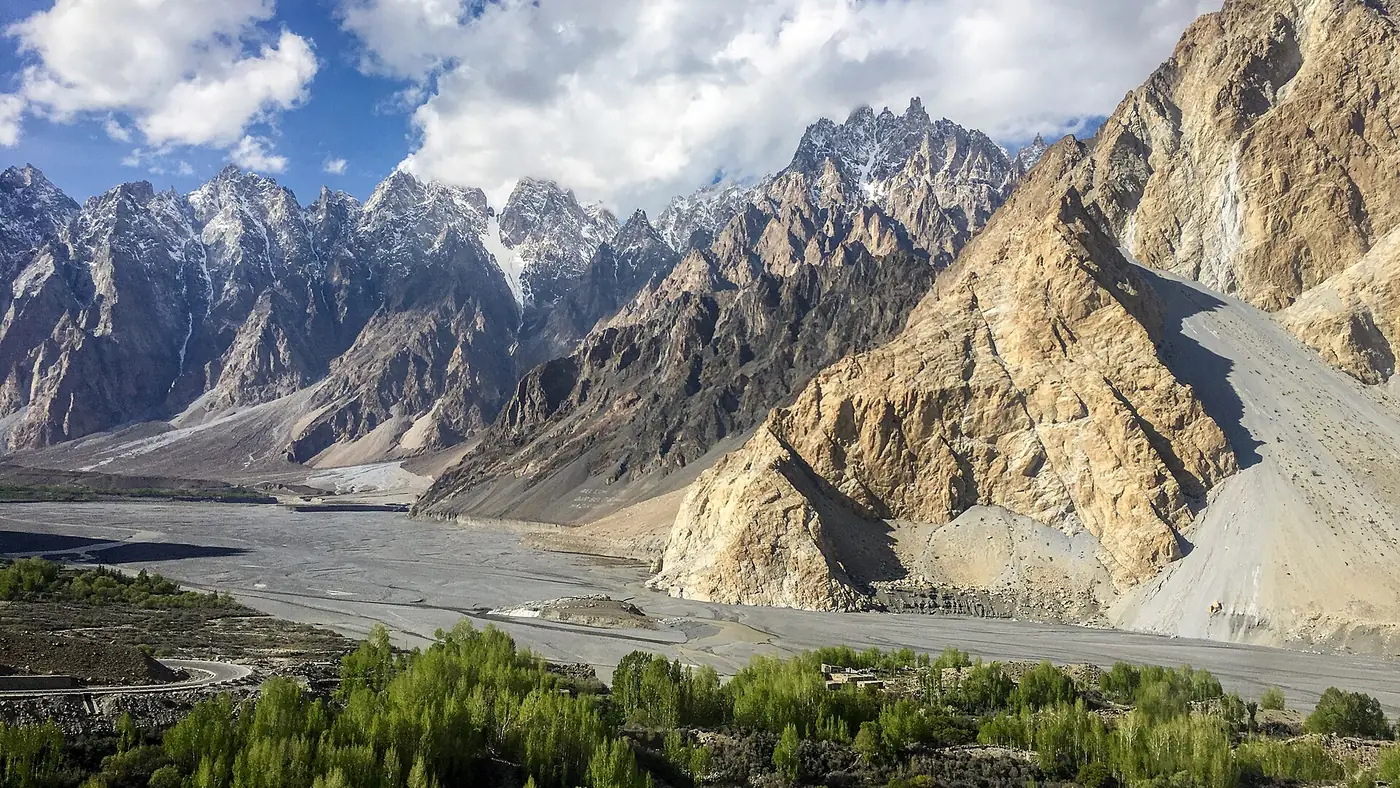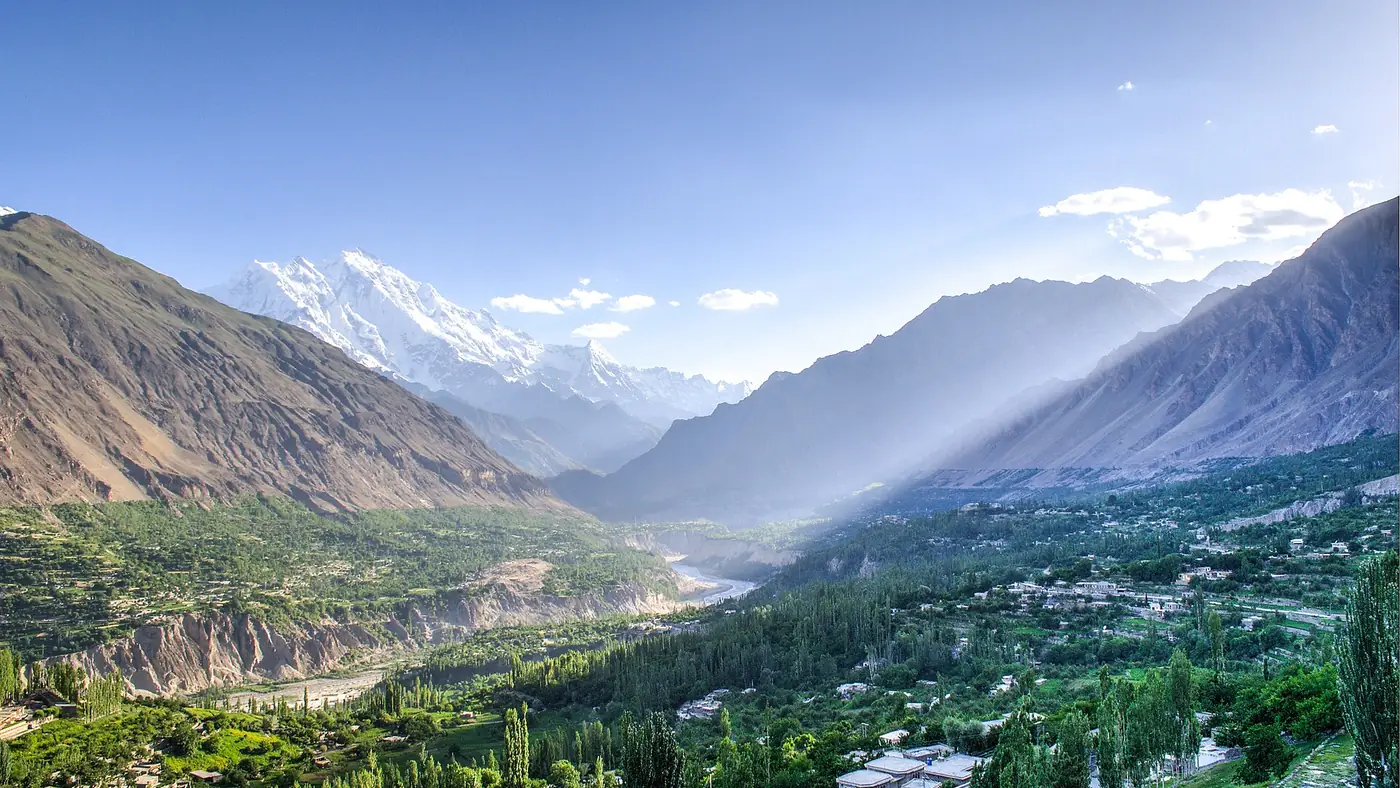
The places to visit in Hunza fall into two groups along the Karakoram Highway. Central Hunza, around Karimabad, has the forts, the old villages and the big views of Rakaposhi and Ultar. Gojal, or upper Hunza, starts at Attabad Lake and runs north through Gulmit, Passu and Sost to the Khunjerab Pass. Most first visits need at least three full days on the ground to see the best of both without rushing.
This guide lists the main sights in each group, how long each one really takes, and how to put them together. The distances are short on paper; the time goes on stopping, walking up to things, and the slow, winding road.
| At a glance | |
|---|---|
| Central Hunza base | Karimabad, about 2,500 m |
| Gojal bases | Gulmit (about 2,465 m) or Passu |
| Karimabad to Attabad Lake | About 30 to 40 minutes |
| Karimabad to Passu | About 1 to 1.5 hours |
| Karimabad to Khunjerab Pass | About 3.5 to 4 hours each way |
| Time needed | 3 full days for the highlights; 5 or more to slow down |
| Best months | April to October; Khunjerab roughly May to November |
How is Hunza laid out?
Hunza is one long valley with the Karakoram Highway running up it. Coming from Gilgit, you reach Aliabad first, the busy market town on the highway, with Karimabad on the slope above it and Altit a few kilometres further along the same hillside. This is central Hunza, where most people speak Burushaski.
Past Ganish the highway continues north to Attabad Lake, goes through the lakeside tunnels, and comes out in Gojal. Here the villages are Wakhi-speaking, the valley is higher and barer, and the settlements are strung out along the road: Shishkat, Gulmit, Ghulkin, Hussaini, Passu, and finally Sost, the last town before the border.
The practical upshot is simple. Karimabad works as a base for central Hunza and for day trips up to Attabad and Passu. For Khunjerab, a night in Gulmit or Passu shortens the drive. If you are still deciding where to base yourself, our guide to where to stay in Hunza compares the areas.
Places to visit in central Hunza
Baltit Fort
The fort above Karimabad was the home of the Mirs of Hunza until 1945. Its oldest parts are thought to date back more than a thousand years, and it was restored by the Aga Khan Trust for Culture and reopened as a museum in 1996. Visits are by guided tour, which takes you through the old rooms and up to the roof, with the whole valley and Rakaposhi laid out below.
Time needed: one to one and a half hours, plus the steep walk up through the bazaar. Go in the morning, when the light is on the valley and the tour groups are smaller.
Altit Fort and old Altit
Altit is older than Baltit, with a tower around 1,100 years old, and it sits on a cliff dropping straight into the Hunza river. Its restoration won a UNESCO Asia-Pacific heritage award in 2011. The fort is small; what makes the visit is the Royal Garden beside it and the lanes of old Altit village below, where people still live in the stone houses.
Time needed: about two hours for the fort, the garden and a slow walk through the village. It is a short drive from Karimabad, or under an hour on foot along the hillside.
Karimabad bazaar and the old town
The main street climbing towards Baltit is where most visitors eat, shop and drink apricot juice. The more interesting part is off it: the narrow lanes of the old settlement, the water channels that feed the terraces, and the views that open up at every corner.
Time needed: an hour or two, best in the late afternoon.
Eagle's Nest, Duikar
Duikar is a village high on the slope above Altit, known for the viewpoint everyone calls Eagle's Nest. From the top you see Rakaposhi, Diran, Ladyfinger and the whole of central Hunza. It is the place for sunrise or sunset, and people drive up for one or the other.
Time needed: one to two hours, including the steep drive up from Karimabad. The road is narrow, so a local jeep or an experienced driver is sensible.
Ganish
Just below Karimabad, beside the highway, Ganish is thought to be the oldest settlement in Hunza. Its old core has carved wooden mosques and stone watchtowers, and the mosques received a UNESCO heritage award in 2002. Most people drive past it; it deserves an hour.
Time needed: about an hour. A local guide makes a big difference here.
Walks above Karimabad
Karimabad is also a base for walking. The Ultar meadows walk climbs behind Baltit Fort towards the Ultar glacier, a steep few hours up and back that most fit people can manage. Shorter walks follow the water channels across the hillside.
Time needed: a half day to a full day for Ultar; an hour or two for the water channels.
Across the river: Nagar
The villages on the other bank of the river are in Nagar district, but they are part of almost every Hunza trip. Hopper Glacier, grey, huge and audible, is a half-day outing from Karimabad by road. The Rakaposhi viewpoint at Ghulmet is on the highway less than an hour before Karimabad as you drive up from Gilgit, so it is usually a stop on the arrival day rather than a separate outing.
Places to visit in Gojal (upper Hunza)
Attabad Lake
The lake formed when a landslide blocked the Hunza river in January 2010. It is now the most visited place in the valley: a long, deep-coloured lake with boats, jet skis and cafés at the main landing, and the highway running beside it through a string of tunnels. Our Attabad Lake guide covers the viewpoints, the colours by season and how to avoid the crowds.
Time needed: one to three hours, depending on whether you go out on the water.
Gulmit
Gulmit was once the summer capital of the Hunza state and is now the main town of Gojal. It is quieter than Karimabad, with an old village, a small cultural museum, and the long staircase path known as Ondra Poygah climbing the hill behind it. The Ghulkin glacier comes down almost to the highway just north of the town.
Time needed: half a day, or a night if you are going on to Khunjerab.
Hussaini bridge and Borith Lake
The Hussaini suspension bridge is the long, gap-planked footbridge over the Hunza river that appears in every Hunza photograph. It is less alarming than it looks, though it does sway, and it is not for anyone nervous of heights over fast water. Borith Lake is a small lake at about 2,600 metres above Hussaini, reached by a short, rough side road.
Time needed: about an hour for the bridge, and another hour or so for Borith Lake.
Passu Cones and Passu Glacier
The serrated ridge above Passu, properly called Tupopdan and about 6,106 metres high, is the most photographed mountain in upper Hunza. The best view is from the highway just south of Passu village. The Passu glacier is close to the road too, and a short walk takes you to a viewpoint over its snout. The Batura glacier, one of the longest outside the polar regions, reaches down towards the highway a little further north.
Time needed: one to two hours for the viewpoints; a full day if you walk to the glaciers.
Sost
Sost is the last town before China: customs and immigration, truck yards, basic hotels, and the last fuel on the road. Few people stay, but everyone going to Khunjerab stops here for fuel and snacks.
Khunjerab Pass
The border with China at 4,693 metres, at the top of the Karakoram Highway, is usually open to visitors from around May into November. It is a full day out from Karimabad, and the altitude is a real consideration for children, older parents and anyone with a heart or lung condition. Our Khunjerab Pass guide covers opening dates, the checkpoint and how the day runs.
Time needed: eight to ten hours from Karimabad, or less from Gulmit or Passu.
Further afield
Two valleys branch off Gojal for travellers with more time.
- Shimshal is reached by a 56 km jeep road from Passu that was only completed in 2003. The village sits at about 3,100 metres and is a base for serious trekking. It needs at least two days.
- Chipursan, in the far north near the Afghan border, is remote, cold and very quiet, with the Baba Ghundi shrine at its head. It was the area worst hit by the January 2026 earthquake, so check conditions locally before planning a visit.
How much time do you need?
The places above add up to more than most trips can hold. A realistic guide:
| Days in Hunza | What fits |
|---|---|
| 2 days | Baltit, Altit, Eagle's Nest; Attabad and Passu on the second day |
| 3 days | The above, plus Khunjerab or a slower day in Gulmit and Hussaini |
| 4 to 5 days | All of the above, plus Hopper, Ganish and a walk to Ultar |
| 6 days or more | Add Shimshal, or simply slow down |
These are days in the valley, not counting the journey from Islamabad, which is two days each way by road. If you are building a route, our five-day Hunza itinerary shows how the drive days fit around the sights.
Which places are worth it, and which can you skip?
If you only have time for a few, choose Baltit or Altit (both if you can), Attabad Lake, and the Passu Cones and Hussaini bridge on the same drive. Those give you the history, the lake and the Gojal landscape in two days.
Khunjerab is worth it for the drive and the sense of reaching the end of the road, but it costs a whole day and asks a lot of anyone who struggles with altitude. For families with small children or older relatives, a slow day in Gulmit and Passu is often the better choice.
Attabad is the place most likely to disappoint if you arrive at midday in July, when the landing is at its busiest. Go early or late. Eagle's Nest, by contrast, rarely disappoints if the sky is clear.
Our Gilgit and Hunza page has an overview of the wider region, and the nine-day Gilgit, Hunza and Khunjerab tour puts almost every place on this list into one route, with nights in Karimabad and Gojal.
Frequently asked questions
What is the most famous place in Hunza?
Attabad Lake and Baltit Fort are the two best-known sights, followed closely by the Passu Cones. Khunjerab Pass is the most famous single destination on the road through Hunza.
How many days are enough for Hunza?
Three full days in the valley covers the main sights, not counting two days of travel each way by road from Islamabad. Five days lets you add Khunjerab, Hopper and a walk without rushing.
What is the difference between central Hunza and Gojal?
Central Hunza is the area around Karimabad, Altit and Aliabad, where Burushaski is spoken. Gojal, or upper Hunza, runs from Attabad Lake to the Chinese border and is Wakhi-speaking, higher and less developed.
Can you see Hunza in one day?
You can see Karimabad, Baltit and Altit in one day, or Attabad and Passu in one day, but not both properly. A single day is better spent choosing one half of the valley.
Is Rakaposhi in Hunza?
Rakaposhi rises from the Nagar side of the river, but it dominates the view from central Hunza. The closest roadside viewpoint is at Ghulmet, on the highway before you reach Karimabad.