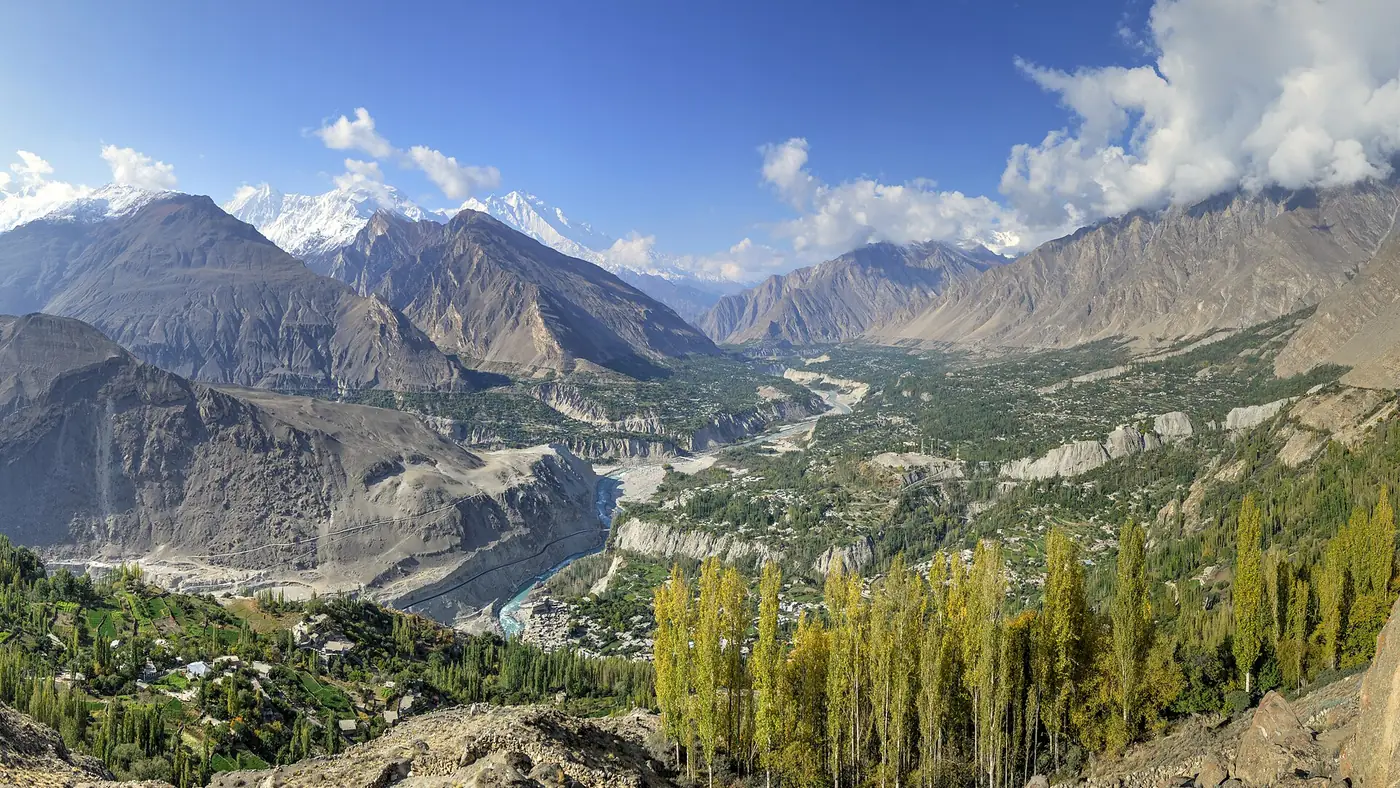
Khunjerab Pass is the Pakistan–China border at 4,693 metres, at the top of the Karakoram Highway in upper Hunza. For visitors it is usually open from around early May into November, whenever snow allows, and June to September is the most reliable window. Most people see it as a day trip from Karimabad, Gulmit or Passu: three and a half to four hours up, an hour at the top, and the same drive back.
It is one of the easiest ways in Pakistan to stand at close to 4,700 metres without walking a step, which is exactly why it catches people out. This guide covers when to go, how the day actually runs, what the checkpoint asks for, and how to come back down feeling fine.
| At a glance | |
|---|---|
| Altitude | 4,693 m at the border |
| Open for visitors | Roughly May to November, weather permitting |
| Most reliable months | June to September |
| From Karimabad | About 3.5 to 4 hours each way |
| From Sost | About 1.5 to 2 hours |
| Documents | CNIC for Pakistanis; passport and visa for foreign nationals |
| Park fee | Paid at the Dih checkpoint, in cash |
When is Khunjerab Pass open?
The road to the top usually opens to visitors in early May, once the snow has been cleared, and stays open into November until winter closes it again. The exact dates move every year with the snow, so treat any date you read online, including this one, as a guide rather than a promise.
You may have seen reports that Khunjerab is now open all year. That announcement, made in December 2024, was about keeping the pass open for trade between Pakistan and China. It does not mean tourists can drive up in January. Between December and April the road beyond Sost is under snow for long stretches, and a winter visit is not something to plan around.
Even inside the season, snow can close the top for a day or two at a time, particularly in May, October and November. If you are planning around Eid or a long weekend, keep one day spare in Hunza so a single closure does not cancel the trip.
The best time to go
June to September is the safe choice. The road is clear, the days are long, and July and August have the lowest chance of a closure. This is also when the Khunjerab National Park is at its greenest, with marmots on every slope beside the road.
May and October are quieter and often beautiful, with snow still on the high ground in May and clear autumn air in October. Both carry a real chance of turning back at the checkpoint, and the top is bitterly cold.
November is a gamble. Some years the road stays open for most of the month; some years it closes early.
If you are also deciding when to visit Hunza as a whole, our guide to the seasons covers blossom, autumn colour and the months the high passes open.
How the day trip works
Almost everyone does Khunjerab as a single day out from central Hunza. There is simple accommodation in Sost, the last town before the border, but staying there saves little time and puts you in a less pleasant place for the night.
A typical day from Karimabad runs like this:
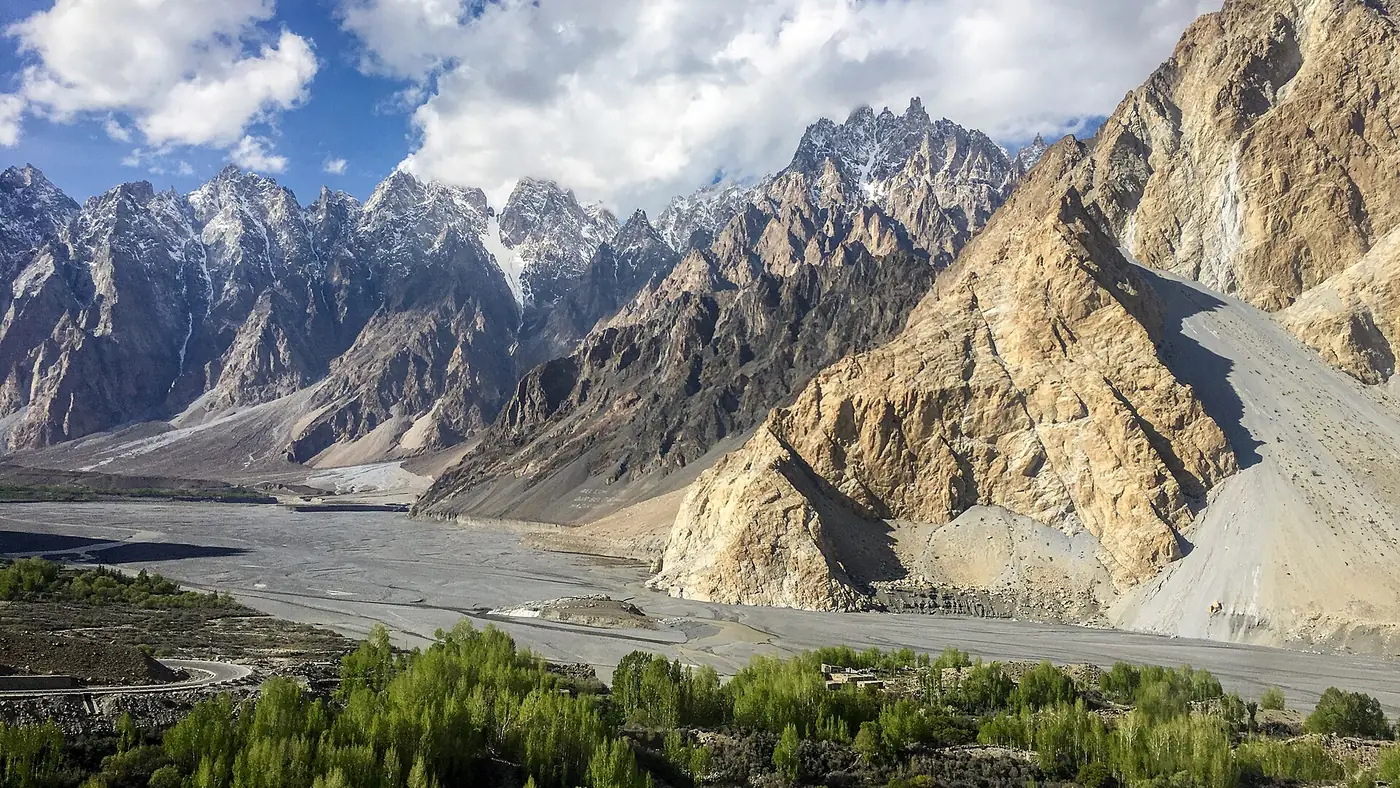
- Leave by 7 or 8 in the morning. The drive north passes Attabad Lake and its tunnels, then Gulmit and Passu. Leave your photo stops for the way back, when the light on the Passu Cones is better anyway.
- Sost, after about two hours. This is the last proper town: fuel, snacks and toilets. Fill the tank here, because there is no fuel station beyond it.
- The Dih checkpoint, about half an hour further on. This is the entrance to Khunjerab National Park. Show your ID, register your vehicle and pay the park entry fee.
- The final climb. The road leaves the valley and climbs in long switchbacks onto open high ground. It is paved and well kept, but drive it slowly.
- At the top, around midday. Give yourself an hour at the border, less if anyone feels unwell.
- Back in Karimabad by late afternoon or early evening, with stops at Passu and Attabad on the way.
Plan on eight to ten hours for the whole day. Starting late is the most common mistake, because it leaves you driving the Attabad stretch in the dark on the way home.
What happens at the border
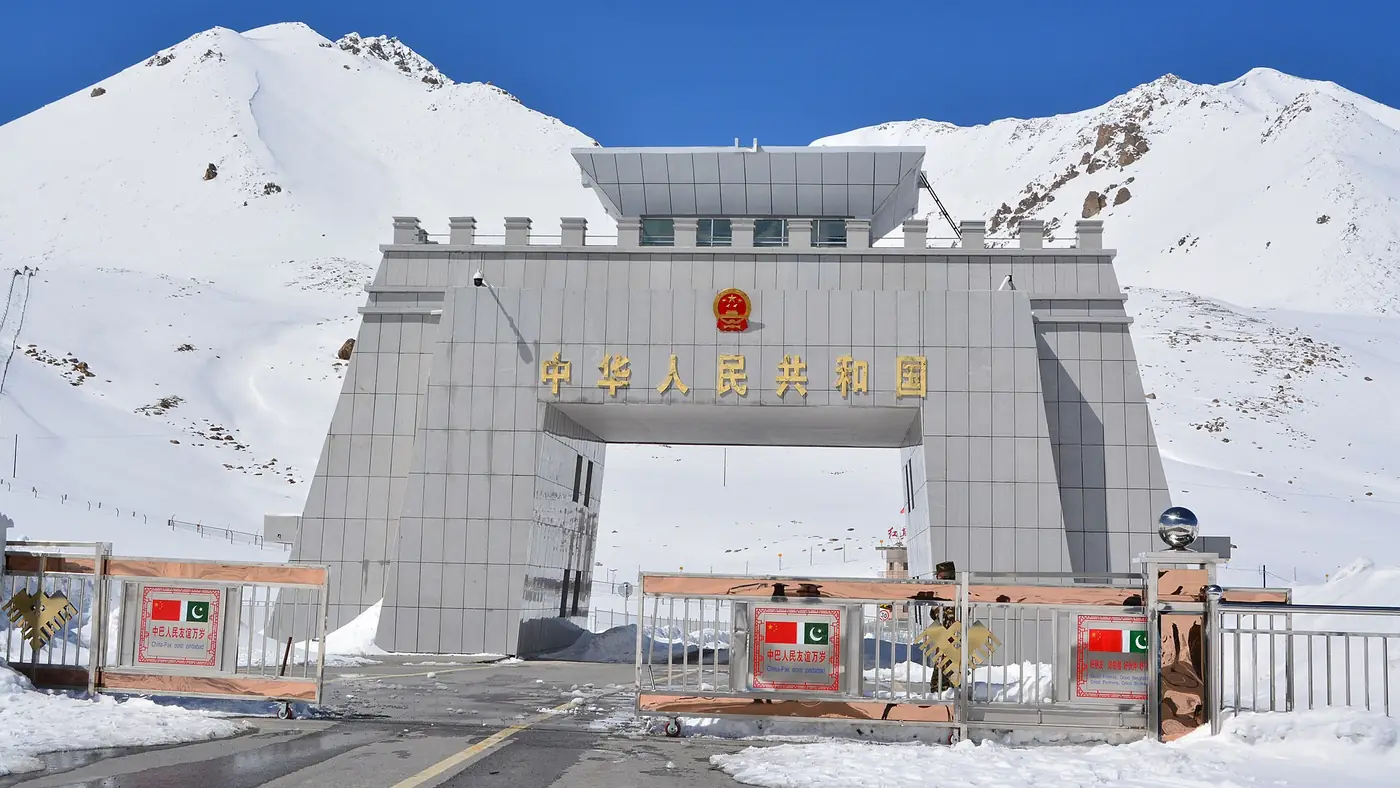
The top of the pass is a wide, wind-scoured saddle with a border gate, the flags of both countries and the famous stone marker. There is not much else: a Pakistani customs and immigration post, and in summer a stall or two selling tea and snacks.
What most visitors do is walk up to the gate, take the photograph with the marker, and watch the trucks come through from China. It is a strange and memorable place, and on a clear day the mountains on both sides go on for ever.
A few things to know:
- You cannot cross into China without a Chinese visa, and a day visitor is not crossing anyway. Stay on the Pakistani side of the gate.
- Follow what the soldiers on duty tell you about where to stand and what not to photograph. They are used to visitors and generally friendly, and a polite question gets a clear answer.
- The wind is the real cold. It can be a pleasant sunny day in Passu and feel close to freezing at the top, even in July.
- Don't count on signal. Expect patchy or no mobile coverage above Dih, and agree a return time with anyone who is not coming up with you.
Altitude: the part people underestimate
Karimabad sits at around 2,500 metres. The border is at 4,693. On the Khunjerab day trip you gain more than 2,000 metres of height in a few hours in a car, with no time to adjust. That is far faster than anyone would climb on foot.
Most healthy adults feel it as breathlessness, a mild headache or a slightly light head, and it passes quickly once you drive back down. What makes the difference is how you spend the hour at the top:
- Move slowly. Walk, don't run, to the gate. Skip the jumping photographs.
- Drink water on the way up and at the top.
- Keep the visit short. An hour is plenty, and if anyone develops a bad headache, nausea, dizziness or confusion, the treatment is to go down straight away.
- Take care with children, older parents and anyone with a heart or lung condition. Ask a doctor before the trip rather than finding out at 4,700 metres. For some families it is better to go as far as Passu and make a different plan.
Our travel guide has more on altitude across the north, including Deosai and the high lakes.
Getting there: your own car, a hired car or a tour
The road from Hunza to the top is paved Karakoram Highway all the way, so a normal car can make it in summer. Drivers from Lahore and Islamabad regularly take their own sedans up. What matters more than the vehicle is the driver's experience on mountain roads, the condition of the brakes, and not being tired from the long drive north the day before.
Options, from most to least independent:
- Your own car. Fine in summer if the car is in good order. Fill up in Sost and keep warm clothes in the car, not packed away in the hotel.
- A car with a local driver from Karimabad or Aliabad. Easy to arrange through hotels, and it means nobody in your group is driving tired on the way back.
- As part of a longer trip. Our Gilgit, Hunza and Khunjerab tour builds the pass into nine days along the Karakoram Highway, with a night in Gulmit or Passu the evening before so the drive up is shorter.
What to carry
Even for a summer day trip, pack as if you were going somewhere much colder than Hunza:
- A warm jacket, a hat and gloves, whatever the month
- Sunglasses and sunscreen, because the sun at altitude burns quickly
- Water and some snacks, especially for children
- Cash for the park fee and for tea at the top
- Your CNIC (for foreign nationals, passport with visa)
- Any regular medication, kept in the car rather than in the boot
The park fee has changed several times in recent years and is different for Pakistani and foreign visitors, so bring more cash than you expect to need and pay whatever is currently posted at Dih.
Khunjerab National Park on the way up
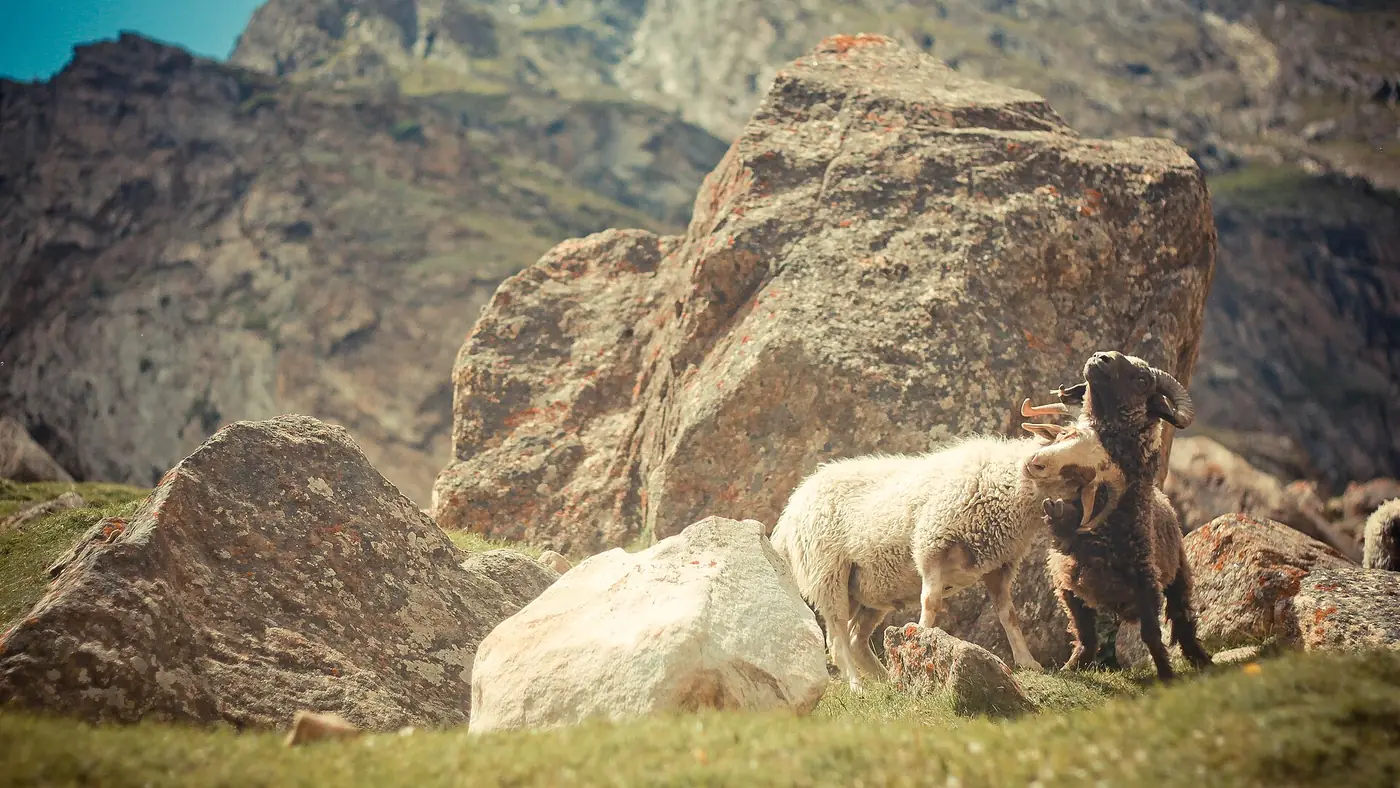
The last stretch of the drive is through Khunjerab National Park. It was set up in 1975 and is one of the largest national parks in Pakistan, created largely to protect the Marco Polo sheep. It is also home to Himalayan ibex, blue sheep and snow leopards.
You are very unlikely to see a snow leopard from the road. You are very likely to see golden marmots standing up beside it, particularly in June and July, and in early morning or late afternoon you have a fair chance of ibex on the slopes above. Keep a distance, don't feed anything, and take your rubbish back down with you.
Is it worth it?
For most people, yes, but for the drive more than for the destination. The top of the pass is a gate, a marker and a cold wind. The road to it runs past Attabad, the Passu Cones and some of the most dramatic valley scenery on the Karakoram Highway, and ends somewhere very few people ever stand.
If your time in Hunza is short, or anyone in the group is likely to struggle with altitude, a day spent at Attabad, Passu and the Hussaini bridge is just as rewarding and a lot less tiring. If you have three or more days in Hunza and everyone is well, go.
Frequently asked questions
Is Khunjerab Pass open right now?
In a normal year the road is open to visitors from about early May into November, and closed by snow from December to April. Closures of a day or two are possible even in season, so check locally in Karimabad or Sost the evening before.
How long does it take to reach Khunjerab Pass from Hunza?
About three and a half to four hours each way from Karimabad, and one and a half to two hours from Sost. Allow eight to ten hours for the full day trip with stops.
Do I need a permit to visit Khunjerab Pass?
Pakistani visitors need only their CNIC, and foreign nationals their passport with a valid Pakistani visa. Everyone pays the national park entry fee at the Dih checkpoint.
Can I cross the border into China at Khunjerab?
Only with a Chinese visa and as a proper border crossing through immigration in Sost. A day visit ends at the gate on the Pakistani side.
Can a normal car go to Khunjerab Pass?
Yes, in summer. The road is paved all the way from Hunza. Make sure the car's brakes and tyres are in good order, and fill up in Sost, the last fuel stop.
Is Khunjerab Pass safe for children and older people?
The road is safe in season; the altitude is the concern. Keep the visit at the top short, watch for headaches or nausea, and ask a doctor first about anyone with a heart or lung condition.