Baltit Fort is the old palace of the Mirs of Hunza, standing on the hill above Karimabad. It is now a museum, visited by guided tour, and it is open every day from about 9 am until late afternoon. Tickets are paid in cash at the gate, and the first tour of the morning is the best time to go. Allow an hour and a half for the walk up, the tour and the view from the roof.
The fort was the seat of Hunza's rulers for centuries, was abandoned in 1945, and was restored in the 1990s. This guide covers its history, what the tour shows you, tickets and timings, and how to fit it into a day in Karimabad.
| At a glance | |
|---|---|
| Where | On the hill above Karimabad, central Hunza |
| Getting there | 10 to 15 minutes' steep walk up from the Karimabad bazaar |
| Age | Oldest parts several centuries old; largely rebuilt in the 16th century |
| Today | Museum run by the Baltit Heritage Trust since the restoration finished in 1996 |
| Visits | Guided tours of about 45 minutes to an hour |
| Opening | Daily, roughly 9 am to 5 pm in summer, shorter hours in winter |
| Tickets | Cash at the gate; roughly PKR 500 to 1,000 for Pakistani adults (2025–26 figures), more for foreign nationals |
| Best time | The first tour of the morning |
What is Baltit Fort?
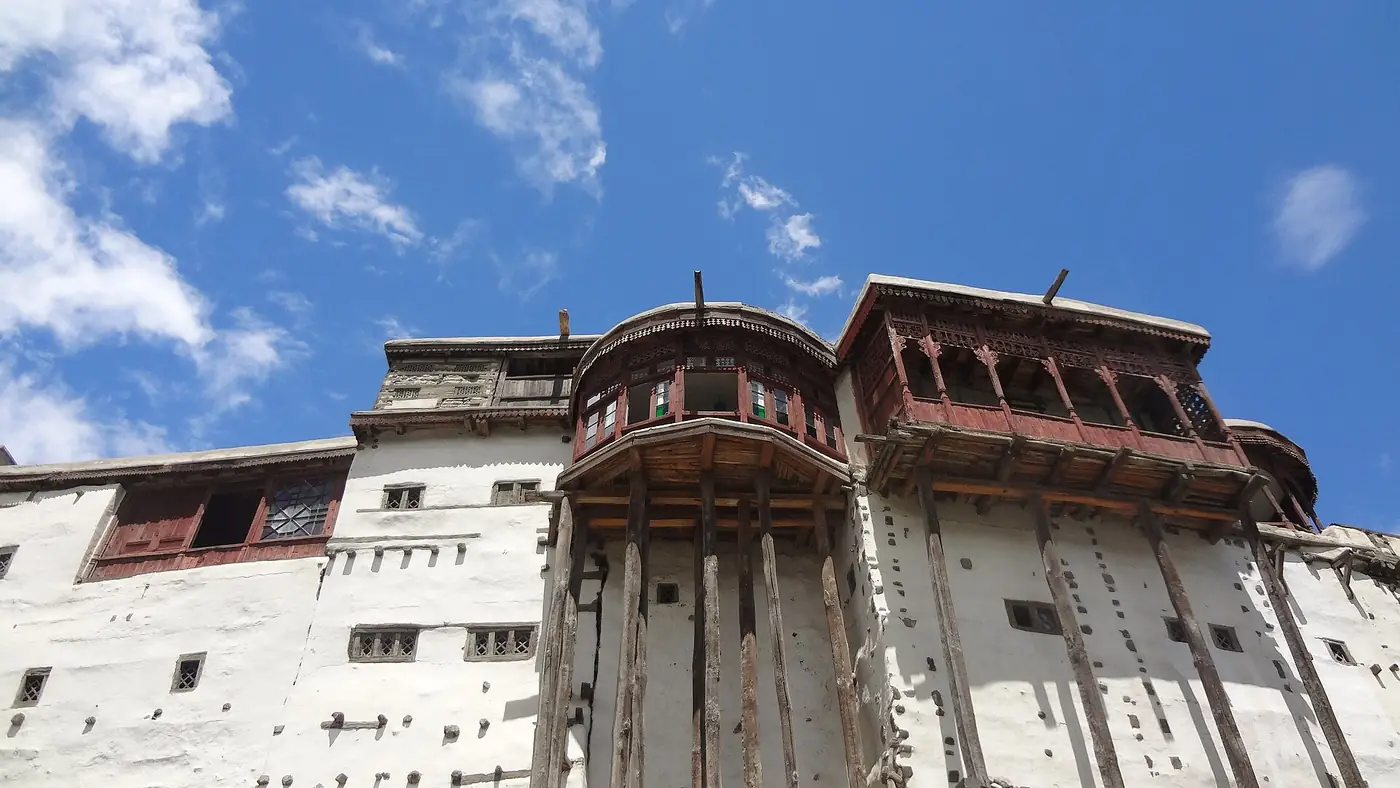
Baltit Fort is a tall, whitewashed stone and timber building at the top of Karimabad, set against the mouth of the Ultar gorge. For centuries it was the home and seat of government of the Mirs, the hereditary rulers of Hunza, and it controlled the valley below it. The town itself was called Baltit until it was renamed Karimabad.
From the outside it is recognisable at once: a pale block of rooms stacked on a rock platform, with wooden balconies and bay windows looking down the valley towards Rakaposhi. Inside it is a warren of low doorways, steep wooden stairs and small rooms around light wells, which is exactly what makes the tour interesting.
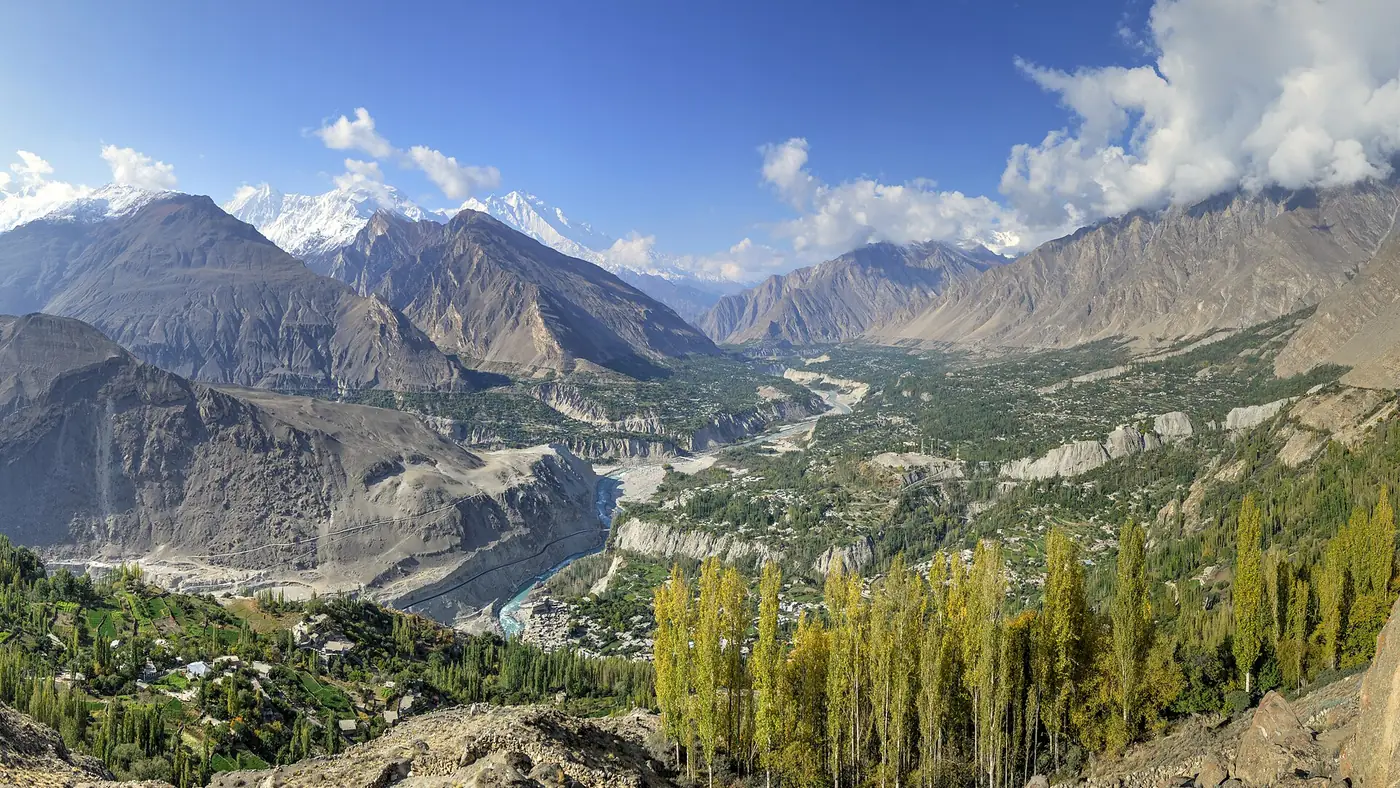
It is one of the best-known buildings in Gilgit-Baltistan, and the view from its roof takes in most of central Hunza. Our Gilgit and Hunza destination page shows how it fits with the other sights in the valley.
A short history of the fort
The fort grew over many centuries rather than being built at one go. Its oldest parts are commonly dated to about 700 years ago, and conservation work in the 1990s suggested that the defensive core, a stone and timber tower, is older still.
The fort took much of its present shape in the 16th century. A ruler of Hunza, Mir Ayasho II, married Shah Khatun, a princess from Skardu, and her father sent Balti craftsmen who rebuilt and extended the fort. That link with Baltistan is why the building shows Tibetan influences in its design and decoration, and it is a reminder of how connected these mountain states were long before there was a road between them.
The Mirs lived here until 1945, when they moved to a new palace lower down the hill. Empty and unmaintained, the old fort decayed badly over the decades that followed.
Its rescue began with a survey supported by the Royal Geographical Society, followed by a full restoration programme backed by the Aga Khan Trust for Culture. The work was completed in 1996, and the fort reopened as a museum run by the Baltit Heritage Trust. Aga Khan-backed conservation has since extended to parts of the old settlements of Karimabad and Altit. Baltit has been on UNESCO's tentative list for World Heritage status since 2004.
The restorers kept the traditional construction: thick stone walls laced with timber, a method long used in these valleys because it copes well with earthquakes. Look for it in the exposed sections of wall as you go round.
How the guided tour works
You can't wander round Baltit Fort on your own. Visitors are taken round in groups by one of the fort's guides, which is how the trust protects the interiors and how the fort earns its upkeep.
A typical tour runs like this:
- The ticket office and courtyard. Groups gather at the entrance and set off every so often through the day. At busy times you may wait a little for the next one.
- The lower rooms. Storerooms and working spaces, with the thick walls and small windows of a building designed to be defended and to survive long winters.
- The main living and reception rooms. This is where the Mir received visitors and held court. Look up at the carved timber and the openings in the roof that let in light and let out smoke.
- Exhibits of household objects, weapons, clothing and old photographs of the Mirs and their court, which give the rooms back some of the life they had.
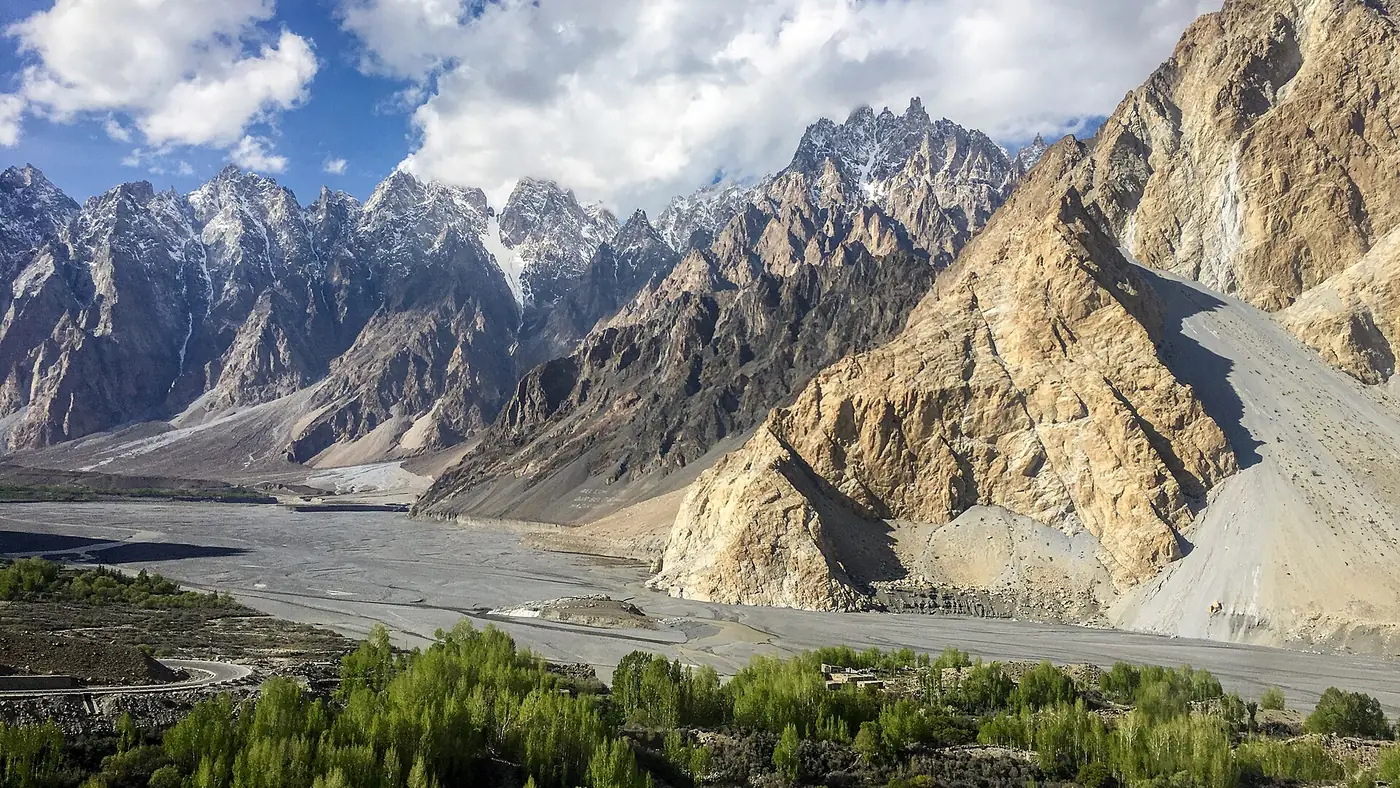
- The roof. The tour ends on the top terraces, and this is the part everyone remembers: Karimabad and Altit below, the Hunza river, and Rakaposhi and the Nagar peaks across the valley.
The tour takes about 45 minutes to an hour. The guides are local and know the building well, and they are used to questions; the history of the Mirs and the stories of the fort make much more sense told in the rooms where they happened.
Your guide will tell you where you can and can't take photographs. The roof is where most people take theirs.
Tickets and opening times
Opening hours. The fort opens every day. In summer tours run from about 9 am to 5 pm; in winter the day starts a little later and finishes earlier, around 4 pm. The last tour leaves before closing time, so don't turn up at five to five.
Tickets. You buy them at the gate, and the price includes your guided tour. Figures quoted for 2025 and 2026 vary between sources, from roughly PKR 500 up to PKR 1,000 for a Pakistani adult, with a higher price for foreign nationals. Prices have gone up several times, so carry more cash than you expect to need and pay what is posted at the ticket office. The money goes towards maintaining the fort.
Most visitors simply turn up and join the next tour.
When is the best time to visit?
Time of day. Go for the first tour, at around 9 am. The lane up is cool, the groups are small, and the morning light is on the valley and the peaks to the south. The busiest time is from late morning to mid-afternoon in summer, when day visitors from the hotels arrive together. Late afternoon is the second-best option, with warmer light on the view from the roof, though you may be on one of the last tours.
Time of year. The fort is open all year, and each season changes what you see from the roof:
- April: blossom across the orchards of Karimabad and Altit. Our Hunza blossom season guide covers the timing.
- June to August: the busiest months, with Eid holidays busiest of all. Go early.
- Late October: the poplars and orchards turn gold, and the air is at its clearest. See our guide to Hunza in autumn.
- Winter: quiet, cold and sometimes snowy. The rooms are unheated, so dress for it.
Getting there and the climb
Baltit Fort is above the main bazaar of Karimabad. From the bazaar, the way up is a steep lane between houses and shops, and it takes 10 to 15 minutes on foot. Take it slowly: Karimabad is at about 2,500 metres, and on your first day you will notice the climb.
The lane is lined with handicraft and gemstone shops, and it is worth saving your browsing for the walk down.
A few practical points:
- Wear shoes with grip. The lane is steep and the stairs inside the fort are narrow and worn.
- Mind your head. Doorways inside are low.
- Think about older family members. The walk up, the steep internal stairs and the altitude together can be hard work for anyone with bad knees or a heart condition. The view from the lane and the bazaar is still very good if the tour is too much.
- Bring a layer. The roof catches the wind, even on a warm day.
Baltit, Altit and the rest of the morning
Altit Fort, a short drive or a long walk down the valley, is older than Baltit and sits on a cliff above the river. Both are visited by guided tour, and many people see both on the same day: Baltit first thing, a walk down through the old lanes of Karimabad, and Altit and its garden before lunch.
If you only have time for one, Baltit is the better museum, with more to see inside and the grander view. Altit is quieter and has the more dramatic setting. Our three-day Hunza itinerary shows how both fit into a single day in Karimabad, and our Gilgit, Hunza and Khunjerab tour builds them into its day in Karimabad.
Is Baltit Fort worth visiting?
Yes, for almost everyone. It is the one place in Hunza that explains the valley's history, the tour is short, and the view from the roof alone justifies the ticket. Couples, families with older children and anyone with an interest in architecture or history will get the most from it.
It suits small children less well. The tour is spoken, the rooms are dark, and the stairs are steep. And if you are short of energy on your first afternoon at altitude, it can wait until the next morning, when you will enjoy it more.
Frequently asked questions
How much is the Baltit Fort ticket?
Figures for 2025 and 2026 range from about PKR 500 to PKR 1,000 for Pakistani adults, with a higher price for foreign nationals. The price includes the guided tour. Pay in cash at the gate, and expect it to change.
What are Baltit Fort's opening hours?
It opens every day, from about 9 am to 5 pm in summer and roughly 9:30 am to 4 pm in winter. Arrive well before closing, because the last tour leaves earlier.
How old is Baltit Fort?
Its oldest parts are several centuries old, commonly put at about 700 years, and it was largely rebuilt in the 16th century by craftsmen from Baltistan. The Mirs of Hunza lived there until 1945.
Can you visit Baltit Fort without a guide?
No. Visits are by guided tour only, and the guide is included in the ticket. Tours take about 45 minutes to an hour.
How do you get to Baltit Fort?
Walk up the steep lane from the Karimabad bazaar, which takes 10 to 15 minutes. Wear shoes with a good grip and go slowly if you have just arrived at altitude.
Is Baltit Fort better than Altit Fort?
Baltit is the better museum and has the wider view; Altit is older, quieter and set more dramatically above the river. If you have a morning in Karimabad, see both.