Lahore to Hunza by road is roughly 950 to 1,000 km and 18 to 22 hours of actual driving. The route is the M-2 motorway to Islamabad, the Hazara Motorway to Thakot, then the Karakoram Highway through Besham, Dasu, Chilas and Gilgit to Karimabad. Almost nobody should try it in one go: plan on two nights on the road, or three with small children.
This guide sets out the route stage by stage, where to break the journey, the summer alternative over the Babusar Pass, and what the trip costs in fuel and tolls at 2026 prices.
| At a glance | |
|---|---|
| Distance | Roughly 950 to 1,000 km to Karimabad |
| Driving time | 18 to 22 hours, not counting long stops |
| Main route | M-2, M-1 to Burhan, Hazara Motorway to Thakot, then the Karakoram Highway (N-35) |
| Summer alternative | Via Naran and the Babusar Pass, open roughly June to October |
| Sensible overnight stops | Mansehra or Besham, then Chilas or Gilgit |
| Tolls for a car (July 2026) | M-2 PKR 1,430; Hazara Motorway PKR 400; PKR 100 per national highway plaza |
| Fuel | About 80 to 100 litres each way in a family car |
The route, stage by stage
- Lahore to the M-1 junction on the M-2. The motorway is 375 km long and usually takes four and a half to five and a half hours from Lahore, depending on where you start and how long you stop. There are service areas every 60 to 80 km. You don't need to go into Islamabad: the M-2 meets the M-1 west of Rawalpindi.
- The M-1 to Burhan, then the Hazara Motorway to Thakot. At the Burhan interchange near Hasan Abdal, turn onto the Hazara Motorway. It runs 180 km past Havelian and Mansehra to Thakot. The Mansehra to Thakot section is narrower, with tunnels and long climbs, but it is still far quicker than the old road.
- Thakot to Chilas on the Karakoram Highway. At Thakot the motorway ends and the KKH begins in earnest, following the Indus through Besham, Dasu and the Kohistan gorges. This is the slowest part of the whole trip: narrow in places, high above the river, prone to slides after rain, and busy with trucks.
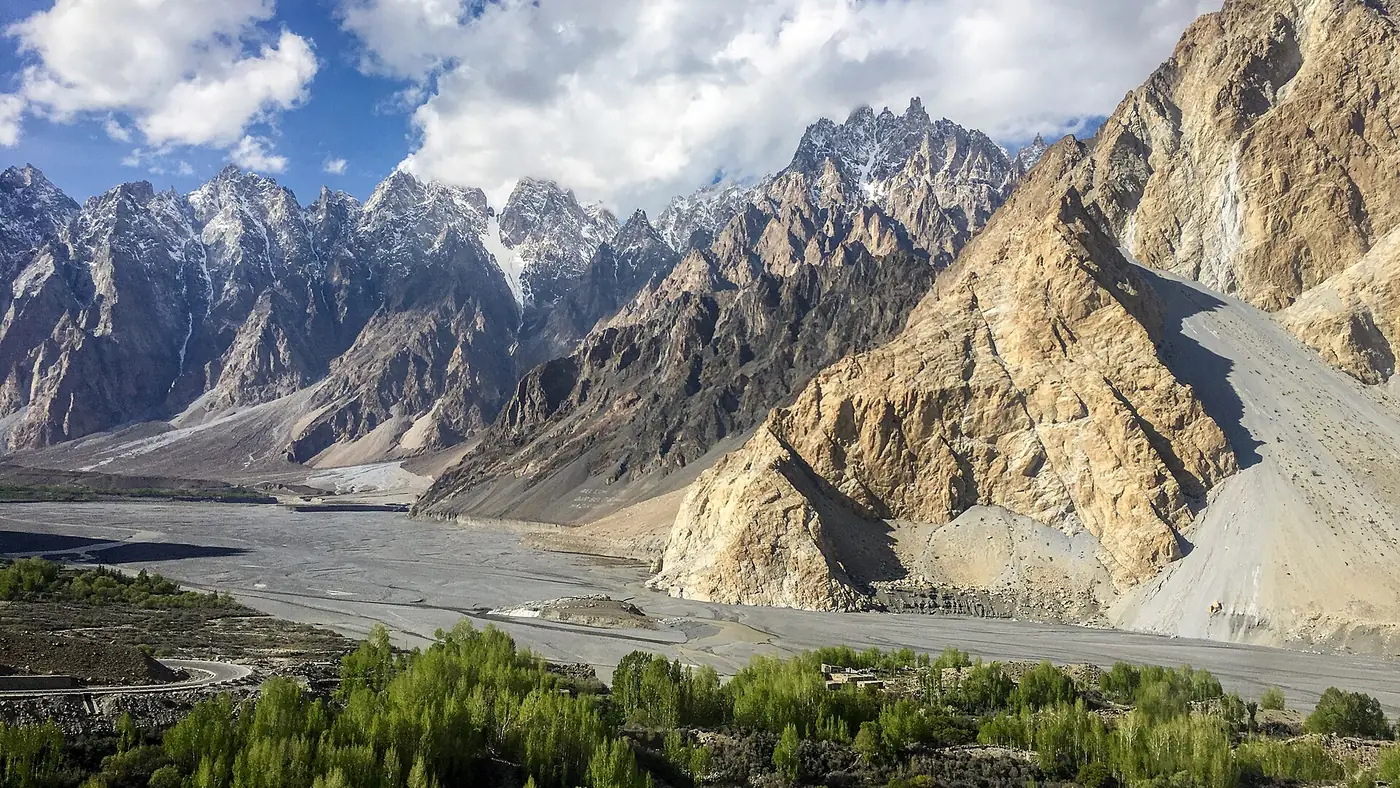
- Chilas to Gilgit. North of Chilas the road surface improves a great deal. The one notorious stretch is the Tatta Pani slide area between Chilas and the Raikot bridge, which blocks several times in a bad season. Beyond Raikot you pass the Jaglot junction, where the road to Skardu turns off, and the valley opens out towards Gilgit.
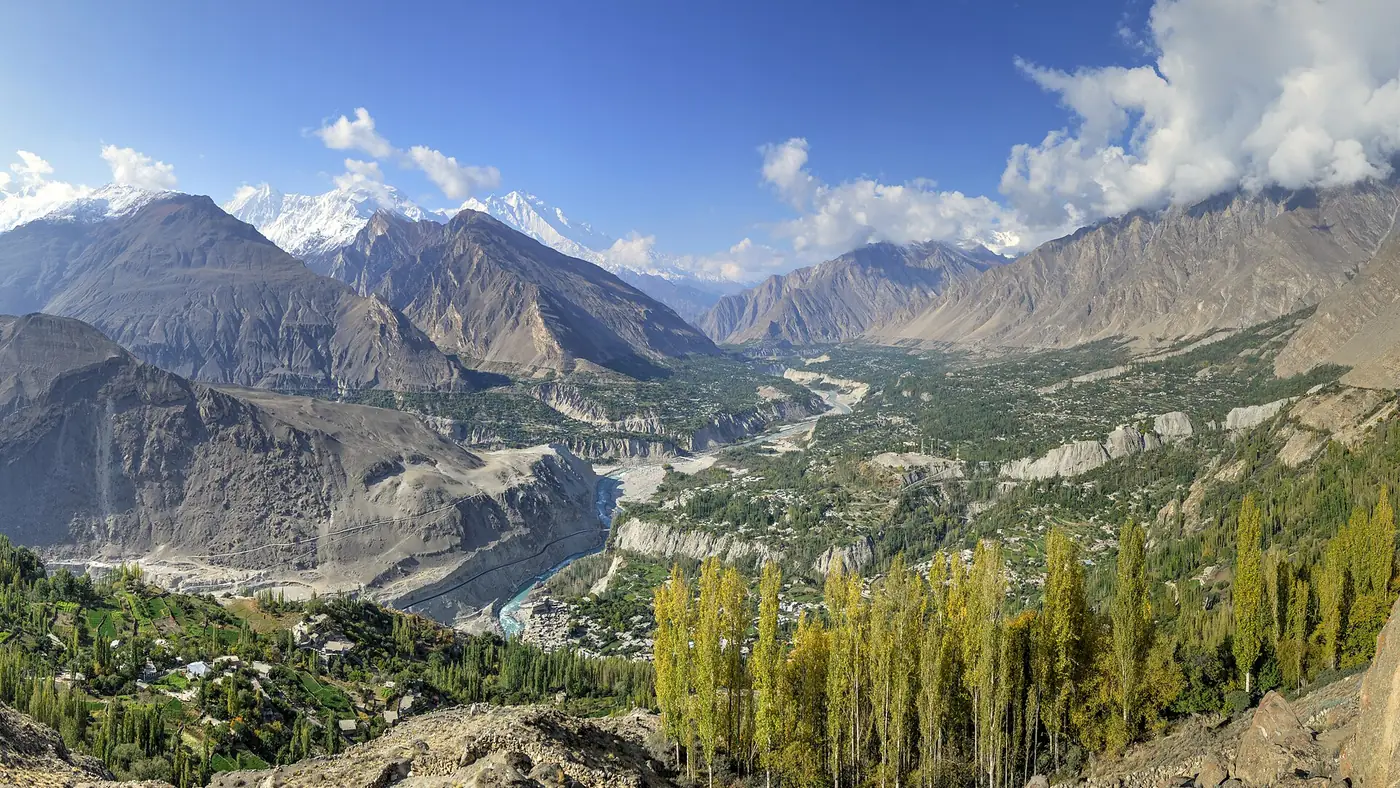
- Gilgit to Karimabad. About 100 km and two to two and a half hours on a good road, with Rakaposhi filling the view at Ghulmet. Try to drive this last stage in daylight, because it is one of the best of the trip.
From the M-1 to Gilgit is typically 12 to 16 hours of driving, most of it on the KKH. Almost all of the uncertainty in the journey sits between Thakot and Gilgit.
Where to stop overnight
Where you break the journey matters more than anything else you decide. The rule we plan around is simple: be through Kohistan in daylight, and don't drive the Indus gorge tired.
Three days: the comfortable plan
- Day 1: Lahore to Mansehra or Abbottabad. Six to seven hours on motorways. A short first day lets you leave after breakfast, deal with the Islamabad-side traffic calmly, and sleep somewhere cool.
- Day 2: Mansehra to Chilas. The long day, through Besham, Dasu and Kohistan. Leave at first light. Chilas has a string of hotels along the highway used to late arrivals.
- Day 3: Chilas to Karimabad, via Gilgit. Five or six hours. Leave early and you arrive in Hunza by early afternoon with time to rest.
This is the plan we suggest for families, older parents and anyone driving the KKH for the first time.
Two days: for experienced drivers
- Day 1: Lahore to Besham. A long day of nine or ten hours, most of it motorway.
- Day 2: Besham to Karimabad. Another long day, often eleven hours or more. It works in summer, when the days are long, if there are two drivers sharing the wheel. In spring and autumn you will struggle to finish in daylight.
Staying in Gilgit on the second night instead of pushing on to Karimabad takes the pressure off, and the last two hours to Hunza become a pleasant morning drive.
One practical point for summer: Chilas and the Indus gorge around it are extremely hot from June to August. Make sure the car's cooling system is in good order, carry plenty of water, and avoid breaking down in the middle of the afternoon.
The summer alternative: Naran and the Babusar Pass
From late spring to autumn there is a second way north. Instead of following the KKH from Thakot, you leave the Hazara Motorway at Mansehra, drive up the Kaghan valley through Balakot and Naran, cross the Babusar Pass at 4,173 metres and descend to rejoin the KKH at Chilas.
It is slightly shorter in distance than the KKH and avoids the whole Besham to Dasu section, and the scenery is better. It also gives you an easy overnight stop in Naran. A common pattern is Lahore to Naran on the first day, then Naran over the pass to Gilgit or Karimabad on the second.
The catches:
- It is seasonal. The road is closed by snow for much of the year. In 2026 it reopened on 25 May after seven months closed, and it usually shuts again once the heavy snow arrives in late autumn.
- The descent to Chilas is long and steep. Brake failures on this side of the pass are a known problem. Use a low gear rather than riding the brakes.
- It floods. In July 2025 the Gilgit-Baltistan government declared an emergency on the Babusar road after flash floods and advised tourists to stay off it. Check conditions the day before.
- Heavy traffic from Naran day-trippers can slow the Kaghan valley badly on weekends and holidays.
If Babusar is open and the weather is settled, it is the more enjoyable route. If it is closed or doubtful, the KKH is the way.
Tolls: what you will pay
These are the rates for a car from July 2026. Tolls rise most years, so treat them as a guide.
- M-2 (Lahore to Islamabad): PKR 1,430, following a 7 percent rise in July 2026.
- M-1 to Burhan: a short stretch, charged by distance.
- Hazara Motorway (Hasan Abdal to Mansehra): PKR 400.
- National highway toll plazas on the way north: PKR 100 each.
Allow roughly PKR 2,500 each way for a car. The motorways run on M-Tag, so get one and keep it topped up before you leave Lahore. The rules for vehicles without a tag have been changing, and a surcharge for untagged cars was proposed in 2026 before a court suspended it. The current rates are published on the National Highway Authority website.
Fuel: how much and where to fill up
A typical family car will use something like 80 to 100 litres to get from Lahore to Karimabad, depending on the engine, the load and how much climbing and idling there is. At the late-September 2026 petrol price of about PKR 390 a litre, that is roughly PKR 31,000 to 39,000 each way. Fuel prices change every two weeks, so redo the sum before you go. Double it for the return, and add a tank for driving around Hunza, Attabad and Khunjerab.
Where to fill:
- Fill up completely at a motorway service area before Mansehra.
- Top up at Mansehra or Besham before the Kohistan stretch.
- Fill again at Chilas and at Gilgit. Stations exist between these towns, but they are fewer, and a closure can leave you waiting for hours with the engine running.
- Carry cash. Beyond the motorway, don't count on card payment.
Never let the tank drop below half on the KKH. A landslide queue is no place to run dry.
Before you set off
A few checks save most of the trouble on this drive:
- Service the car. Brakes, tyres (including the spare), coolant and battery. The Babusar descent and the Kohistan climbs are hard on brakes and engines.
- Check the road the night before and the morning of each day. Slides between Dasu and Chilas can close the KKH for hours or days. Our guide to checking Karakoram Highway road status lists the official sources and the phone numbers to call.
- Check for timed closures near Dasu. Construction around the Dasu dam site has brought scheduled closures: in May 2026 the Upper Kohistan administration announced that the road at Samar Nullah would open only in set windows (8 to 10 am, 3 to 6 pm, and at night). A realigned section of the highway there was due to open in 2026, so find out what applies on your travel date.
- Know the security picture. Several foreign governments advise their citizens against travel on the KKH between Mansehra and Chilas, and foreign nationals may be given a police escort through parts of Kohistan. Pakistani families drive it every day, but check current advice before you go and stay in daylight.
- Download offline maps. Mobile signal is patchy through Kohistan and in the gorge north of Chilas.
- Keep documents to hand: CNIC, driving licence and the car's registration papers. There are police checkposts along the way.
Is driving from Lahore worth it?
It is worth it if you have ten days or more, want your own car in Hunza, and have two people who can share the driving. The road is part of the trip: the Indus gorge, the first sight of Nanga Parbat near Raikot, and Rakaposhi at Ghulmet are things people remember.
It is not worth it for a short trip. Six days in total means four spent in a car, and a tired driver on the way home is a real risk. It also asks a lot of small children, older parents and anyone who gets carsick on mountain roads.
The alternatives:
- Fly and hire a car with a driver. PIA flies to Gilgit from Islamabad, with connections from Lahore, and there are direct flights from Lahore to Skardu. From Gilgit, Karimabad is two to two and a half hours away. Flights to Gilgit are weather-dependent, so keep a spare day. Our guide to flying to Hunza via Gilgit or Skardu compares the options, and our three-day Hunza itinerary is planned around a fly-in arrival.
- Drive to Islamabad and fly from there, which removes the longest stretch but still leaves you at the mercy of the weather.
- Join a trip that starts in Gilgit. Our Gilgit, Hunza and Khunjerab tour covers nine days on the ground with an experienced mountain driver, so nobody in your group spends the holiday behind the wheel.
Frequently asked questions
How many hours is Lahore to Hunza by road?
About 18 to 22 hours of driving, which in practice means two or three days. The motorways to Thakot are quick; the Karakoram Highway north of Thakot is where the time goes.
Which is better, the Babusar route or the KKH via Besham?
Babusar is more scenic and avoids the Kohistan section, but it is open only from about late May or June to autumn and has a long, steep descent. The KKH via Besham is open all year and is the route to use whenever Babusar is closed or the weather is doubtful.
Can a normal car drive from Lahore to Hunza?
Yes. The whole route is paved, and sedans make the trip every summer. Rough patches and slide debris are common in Kohistan, so drive slowly and make sure the brakes and tyres are in good condition.
Can you drive from Lahore to Hunza in one day?
Not safely. Even with two drivers it would mean more than 18 hours at the wheel and driving the Indus gorge in the dark. Break the journey at least once, and ideally twice.
How much are the tolls from Lahore to Hunza?
For a car at July 2026 rates, the M-2 costs PKR 1,430 and the Hazara Motorway PKR 400, plus a short M-1 stretch and PKR 100 at each national highway plaza. Budget about PKR 2,500 each way.
Is it safe to drive from Lahore to Hunza?
Thousands of Pakistani families make the drive every summer. The main risks are landslides, fatigue and driving at night, so travel in daylight, check the road each morning, and read the latest security advice for the Mansehra to Chilas section before you leave.