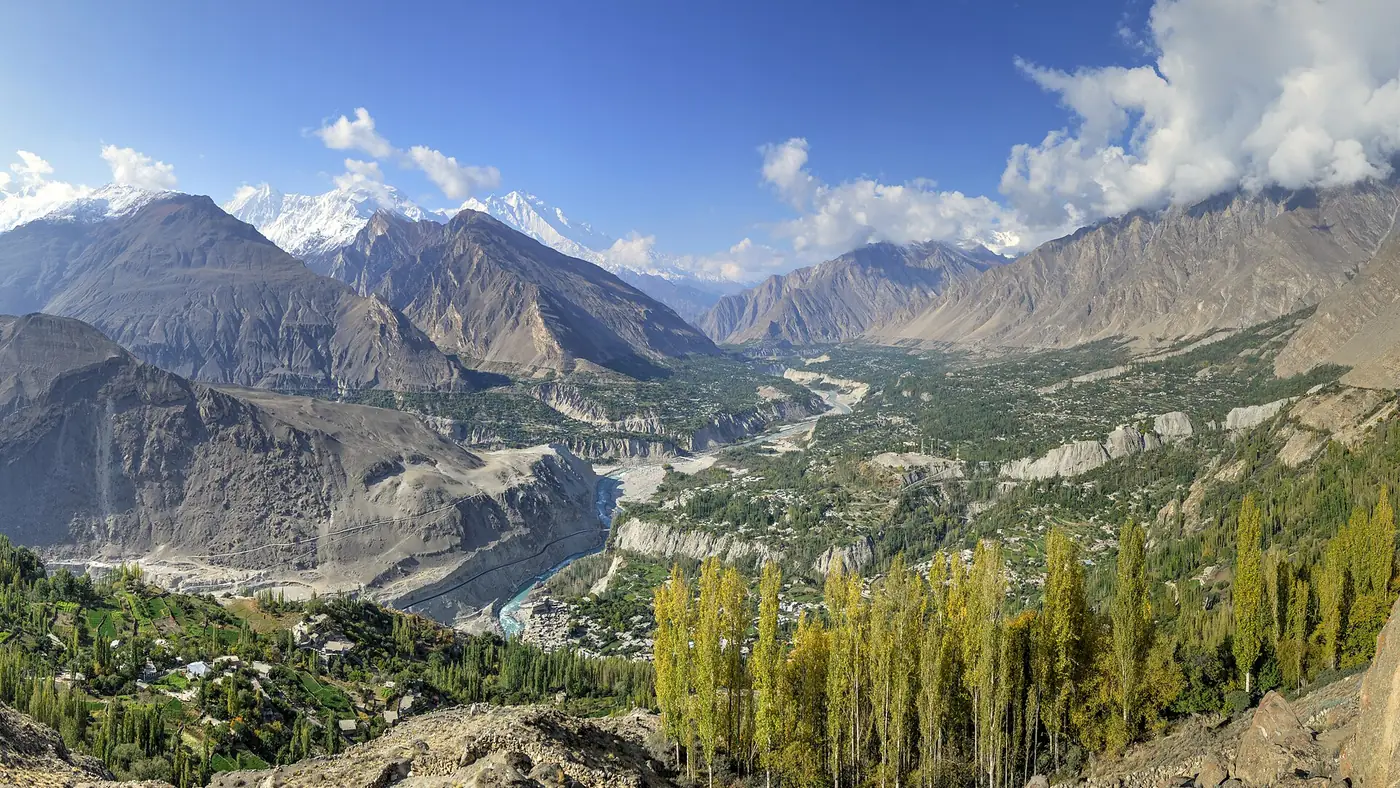
Altit Fort is the oldest fort in Hunza, standing on a cliff roughly 300 metres above the Hunza river, about 3 km along the hillside from Karimabad. Its oldest tower is commonly dated to around 900 to 1,100 years ago. Visits are by guided tour of about 45 minutes, paid in cash at the gate, and the fort is open daily from about 9 am to late afternoon. Allow two hours in all for the fort, the Royal Garden and a walk through the village below it.
This guide covers the fort's history, what the tour shows you, tickets and timings, the garden and its café, and how to see old Altit on foot without treating it as a museum.
| At a glance | |
|---|---|
| Where | Altit village, about 3 km east of Karimabad, central Hunza |
| Setting | On a cliff roughly 300 m above the Hunza river |
| Age | Oldest tower commonly dated to about 900 to 1,100 years ago |
| Restored | By the Aga Khan Trust for Culture; opened to visitors in 2007 |
| Visits | Guided tour only, about 45 minutes, guide included in the ticket |
| Opening | Daily, roughly 9 am to 5 pm; shorter hours in winter |
| Tickets | Cash at the gate; 2025–26 figures vary, see below |
| Time needed | About two hours with the garden and village |
What is Altit Fort?
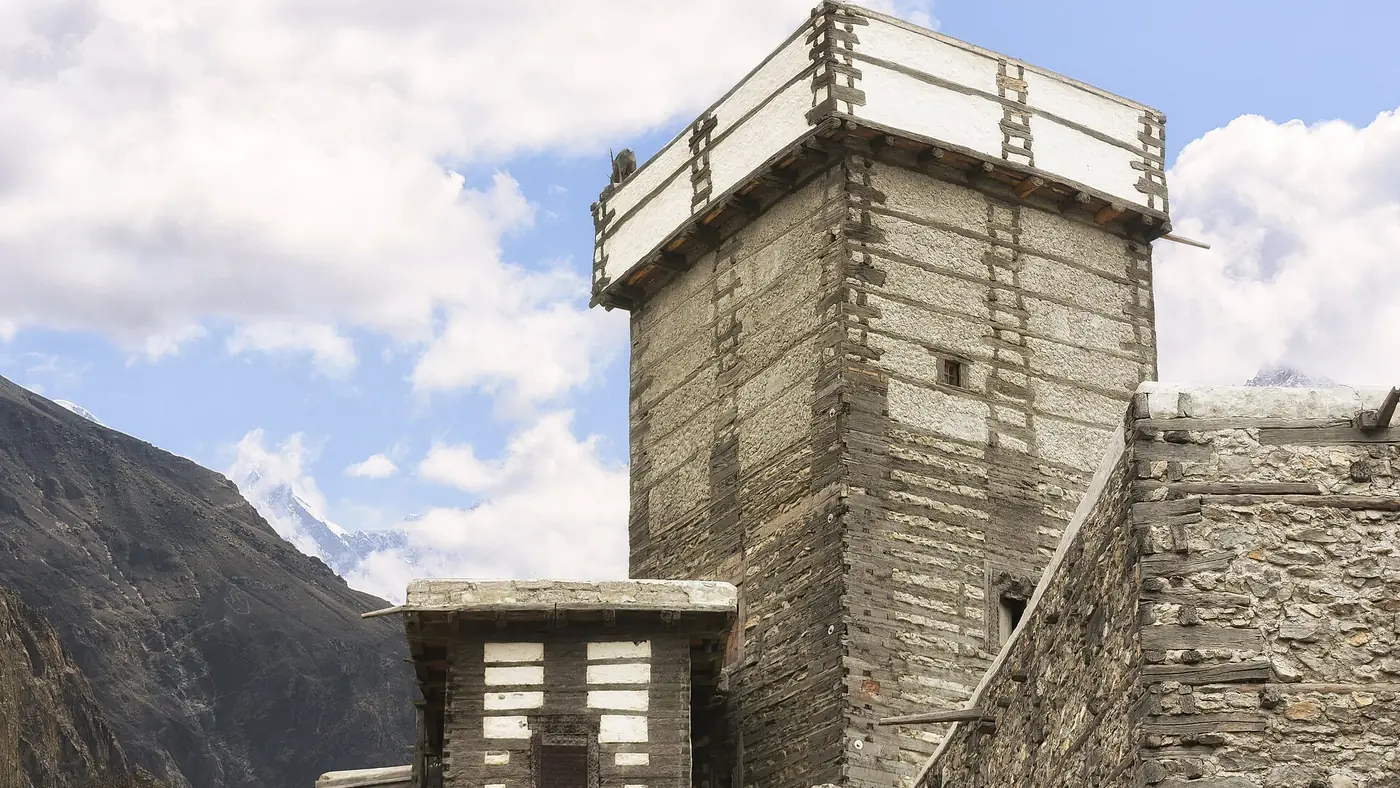
Altit Fort is a cluster of stone and timber buildings on a rock spur at the edge of Altit village, with a watchtower at one corner and a sheer drop to the river on the other side. It was the first seat of the Mirs of Hunza, the valley's hereditary rulers, before they moved up the hill to Baltit. The name is usually explained as Burushaski for "this side down", which fits a village sitting on the lower side of the valley.
It is small next to Baltit, and that is part of its appeal: less a palace than a fortified house, with a tower looking straight down into the gorge. Our Gilgit and Hunza page shows where it sits among the other sights in the valley.
A short history
The oldest part of the fort is the watchtower, known as the Shikari tower. Estimates of its age vary; most sources put it at somewhere between 900 and 1,100 years, which makes it one of the oldest surviving buildings in Gilgit-Baltistan. The rest of the fort grew around it over the following centuries.
When the Mirs moved to Baltit, Altit remained an important settlement but the fort slowly fell into disrepair. The Aga Khan Trust for Culture restored it with support from the Norwegian government, opening it to visitors in 2007 and finishing the work in 2010. In 2011 the restoration received the UNESCO Asia-Pacific Award of Distinction for cultural heritage conservation.
The project did more than repair the building. Women from Altit were trained as carpenters to work on the fort, and that training grew into a women's carpentry enterprise, Ciqam, set up in 2003, which still makes doors, windows and furniture in the valley. The café and much of the work in the garden are also run by women from the village.
How the guided tour works
You can't wander round Altit Fort on your own. Visitors are taken round in small groups by a local guide, and the tour is included in the ticket.
A typical visit runs like this:
- The approach. The last stretch is on foot, through the village lanes and the Royal Garden to the fort gate.
- The lower rooms. Storerooms with thick walls, tiny windows and timber-laced stonework, the traditional way of building in these valleys because it copes with earthquakes.
- The living quarters and the royal kitchen, with its carved woodwork.
- The Shikari tower, the oldest part of the fort.
- The terrace above the cliff. The best moment of the tour: a straight drop to the Hunza river, with Nagar and its peaks across the gorge.
The tour takes about 45 minutes, longer if you ask questions. Your guide will tell you where you can take photographs. The doorways are low and the stairs steep, so wear shoes with grip and mind your head.
Tickets and opening times
Opening hours. The fort opens every day from about 9 am. It usually closes around 5 pm, a little later in summer and earlier in winter. The last tour leaves before closing time.
Tickets. You pay in cash at the gate, and the price includes the guide and entry to the garden. Figures reported for 2025 and 2026 vary widely: from about PKR 500 up to PKR 1,600 for Pakistani visitors from outside Hunza, and roughly PKR 1,500 to 1,650 for foreign nationals, with a much lower rate for residents of Hunza. Prices have changed several times, so carry more cash than you expect and pay what is posted at the gate.
The Royal Garden and Kha Basi café
The garden below the fort is an old apricot orchard, known locally as Kha Basi, with paths, terraces and benches looking across the valley. In April it is white with blossom, and in late October the leaves turn gold and orange. It is the pleasantest place in Altit to sit for half an hour.
Kha Basi Café, in the garden, is run by women from the village and serves Hunza dishes such as chapshuro and diram phitti alongside Pakistani food and tea. It is a good place for lunch after the tour, and quieter than the bazaar in Karimabad.
Also in the garden is the Serena Altit Fort Residence, a small hotel of 16 rooms and huts built during the restoration on the site of the residence of the Mir's son. It is one of the few places to sleep right beside the fort.
Walking through old Altit
The village around the fort is not a museum. People live in its stone houses, and the lanes are their streets. Walk through slowly: narrow paths between houses, covered passages, water channels beside the path, and small orchards dropping towards the river.
- Ask before photographing people, and don't photograph women without permission.
- Keep your voice down; front doors open straight onto the lanes.
- Stay on the paths through fields and orchards.
A slow loop takes 30 minutes to an hour. If you want to understand what you are looking at, ask at the fort whether a guide is free for the village as well.
Getting there from Karimabad
Altit is about 3 km from the Karimabad bazaar along the hillside.
- By car: 10 to 15 minutes. The lanes near the fort are too narrow for cars, and parking is limited on busy afternoons.
- On foot: 35 to 45 minutes from Karimabad, mostly downhill on the way there and uphill on the way back. At 2,500 metres, the return climb is harder than it looks.
- With a driver: hotels in Karimabad can arrange a car, often combined with sunset at Duikar, high above Altit. Our Eagle's Nest guide covers the drive up.
When is the best time to visit?
Time of day. Go first thing, around 9 am, when it is cool and quiet, or in the late afternoon, when the light warms the stone and falls across the Nagar side of the valley. Late morning to mid-afternoon in summer is busiest, when day visitors come down from Karimabad after Baltit.
Time of year. The fort is open all year:
- April: apricot blossom in the Royal Garden and across the village.
- June to August: the busiest months, especially over Eid. Go early.
- Late October: gold leaves in the garden and some of the clearest air of the year. Our guide to Hunza in autumn covers the timing.
- Winter: quiet and cold, and the rooms are unheated.
Is Altit Fort worth visiting?
Yes, for most people. It is the more atmospheric of Hunza's two forts: smaller, older and set more dramatically than Baltit, with a garden and a living village around it. Couples, photographers and anyone curious about how people lived in these valleys will enjoy it most.
It suits some visitors less well. The tour is spoken, the rooms are dark, the terrace above the cliff needs a firm hand on small children, and the stairs are hard on bad knees.
If you only have time for one fort, choose Baltit for the fuller museum and the wider view, Altit for the setting and the village. With a morning in Karimabad you can see both: Baltit at opening time, then Altit and lunch in the garden. Our Baltit Fort guide covers the other half of that morning, and our list of things to do in Karimabad has ideas for the afternoon. Our Gilgit, Hunza and Khunjerab tour builds both forts into its day in Karimabad.
Frequently asked questions
How old is Altit Fort?
Its oldest part, the Shikari tower, is commonly dated to between about 900 and 1,100 years ago. It is older than Baltit Fort and was the first seat of the Mirs of Hunza.
What is the Altit Fort ticket price?
Figures for 2025 and 2026 range from about PKR 500 to PKR 1,600 for Pakistani visitors, with a separate rate for foreign nationals. The guided tour is included. Pay in cash at the gate and expect prices to change.
What are Altit Fort's timings?
It opens daily from about 9 am and usually closes around 5 pm, a little later in summer and earlier in winter. Arrive well before closing, because the last tour leaves earlier.
Can you visit Altit Fort without a guide?
No. Visits are by guided tour only, and the guide is included in your ticket. The tour takes about 45 minutes.
How far is Altit Fort from Karimabad?
About 3 km, which is 10 to 15 minutes by car or 35 to 45 minutes on foot. The walk back to Karimabad is uphill.
Is there somewhere to eat at Altit Fort?
Yes. Kha Basi Café in the Royal Garden, run by women from the village, serves Hunza dishes, Pakistani food and tea, with a view across the valley.