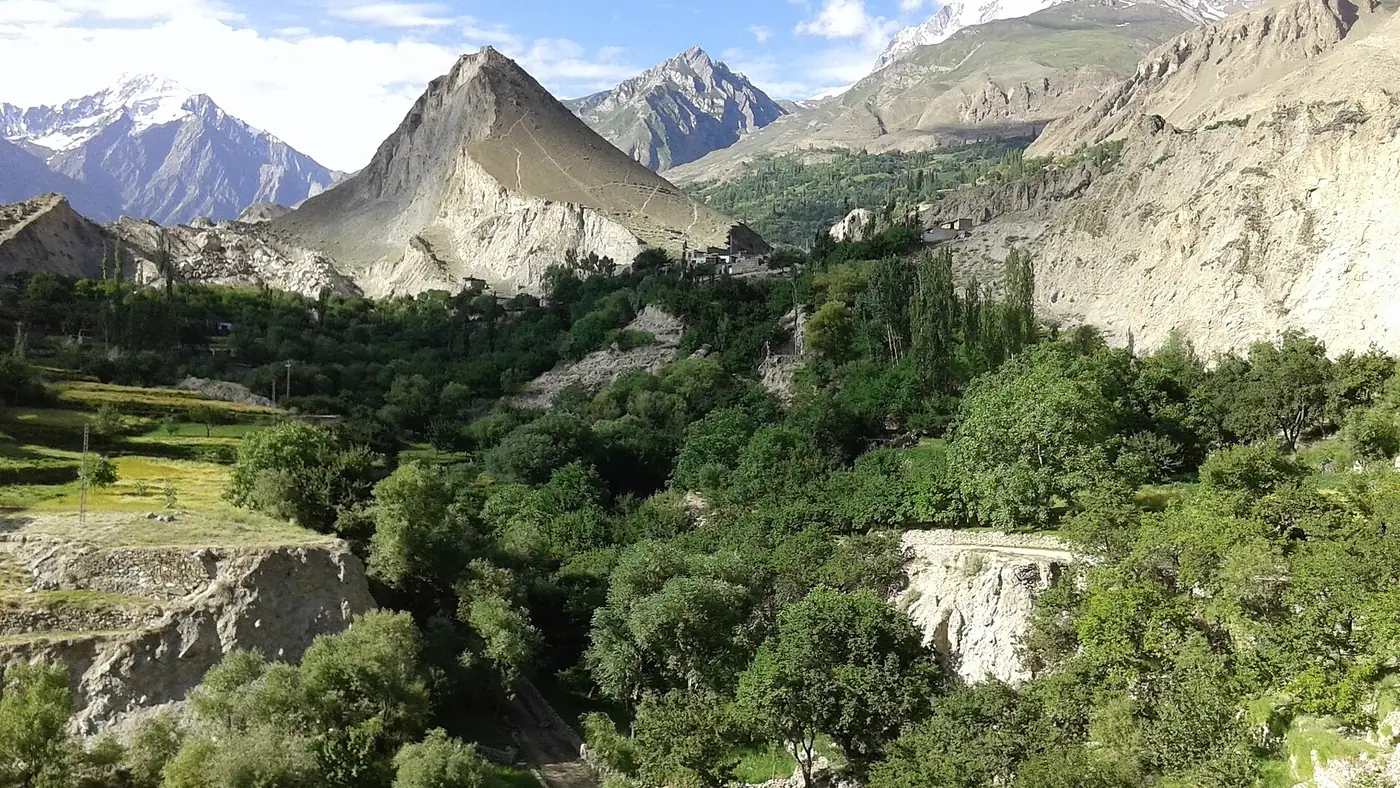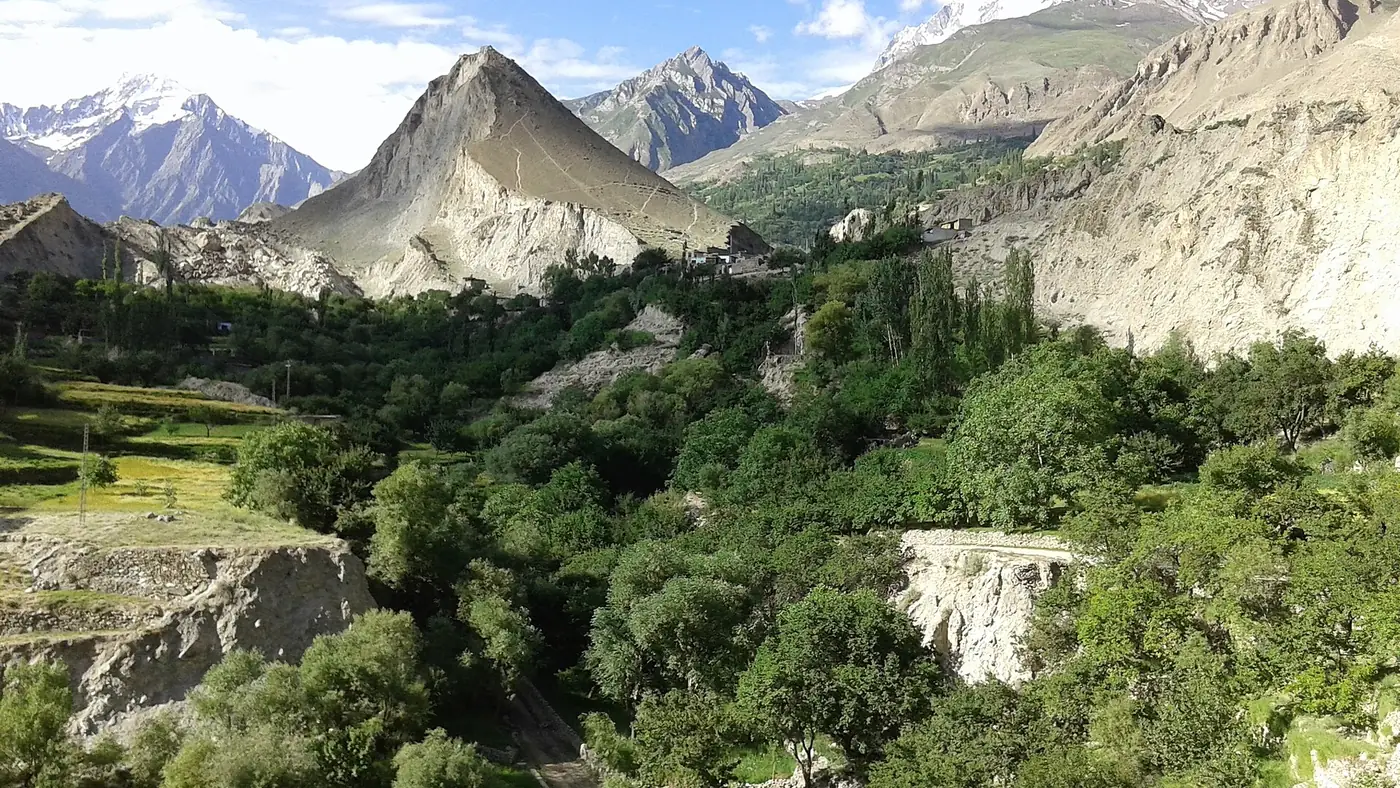
Nagar, across the Hunza river from Karimabad, is the starting point for more high-altitude treks than any other single valley on the Karakoram Highway: Rush Lake, Rakaposhi and Diran base camps, the long Hispar glacier route to Snow Lake, and the shorter Daintar pass. All are reached from villages on or just off the KKH, without the long jeep approach that treks near Skardu need.
This guide sets out what each trek involves so you can match one to the time and fitness you have. For a wider look at what else is in the valley, see our places to visit in Nagar and Hunza versus Nagar guides.
| Trek | Starting village | Typical length | Difficulty |
|---|---|---|---|
| Rakaposhi base camp | Minapin | 2 days | Moderate, no technical skills |
| Diran base camp | Minapin | 2 to 3 days | Moderate to strenuous, glacier crossing |
| Rush Lake | Hopper | 5 to 7 days | Strenuous, glacier travel, high altitude |
| Hispar to Snow Lake | Hispar village | 10 to 13 days | Strenuous, long glacier trek |
| Daintar pass | Upper Naltar, finishing near Chalt | About 5 days | Moderate, one high pass |
Rakaposhi base camp: the easiest introduction
From Minapin, a trail climbs about 1,300 metres in two days to Tagaphari meadow, directly below Rakaposhi's north face, with no technical sections and a well-used path. It is usually the first proper trek anyone in Hunza or Nagar attempts, and a sensible one to build toward the longer routes below. Our Rakaposhi base camp trek guide covers the route stage by stage.
Diran base camp: Rakaposhi's steeper neighbour
Diran base camp shares Minapin as a starting point but branches onto the Minapin glacier itself rather than staying on the valley side, adding a short glacier crossing and generally rougher, more exposed ground. It suits trekkers who have already done Rakaposhi base camp or a similar glacier trek and want more of a challenge in the same two to three days. Our Diran Peak guide covers the mountain's height and the climbing history that gives it its reputation among mountaineers.
Rush Lake: the highest lake, a proper trek
Starting at Hopper, the Rush Lake trek crosses the Bualtar, Barpu and Miar glaciers to reach Rush Lake at 4,694 metres, one of the highest alpine lakes anywhere, usually over five to seven days there and back. It needs no ropes in a normal summer but does need comfort on moving glacier ice, cold-night camping and sustained effort at altitude, which puts it a step above the base camp treks. Our Rush Lake trek guide has the full stage-by-stage route.
Hispar to Snow Lake: Nagar's longest trek
The Hispar glacier runs from Hispar village, Nagar's last settlement, up to the Hispar La at about 5,128 metres, then down the Biafo glacier toward Askole on the Skardu side. Most parties take ten to thirteen days for the full crossing, camping on glacier ice for much of it, past Snow Lake (Lukpe Lawo), a vast glacial basin at around 4,877 metres. This is a serious expedition-length trek, not a weekend option, and needs an experienced guide, full camping support and a wide weather margin.
Daintar pass: a shorter alternative
The Daintar pass trek is a quieter five-day route that starts above Naltar, crosses a high pass around 4,500 metres and drops through side valleys to finish near Chalt, on Nagar's edge along the KKH. It suits trekkers who want a genuine high pass and remote camping without the length of Rush Lake or Hispar, and it works well as a loop combined with a night or two in Naltar.
Which Nagar trek suits you
- First trek, two days to spare: Rakaposhi base camp from Minapin.
- Already comfortable on glacier ice, want more: Diran base camp or Rush Lake, depending on how much time you have.
- A week, fit, want a highlight-reel lake: Rush Lake.
- Two weeks, experienced, want the full Karakoram crossing: Hispar to Snow Lake.
- Something different from the Minapin routes, five days: the Daintar pass.
All of these need a guide, camping gear and, beyond Rakaposhi base camp, porters, none of which is available to hire casually on the trail itself; arrange it in Karimabad, Aliabad or through a licensed operator before you set off. June to September is the working season for all five; May and October are possible only for the lower two-day treks, and even then with real cold at the top.
Frequently asked questions
Which is the easiest trek in Nagar valley?
Rakaposhi base camp from Minapin, a two-day walk with no technical sections and a well-marked trail.
Do I need a guide for Nagar valley treks?
Yes, in practice, for anything beyond Rakaposhi base camp. Glacier crossings on Rush Lake, Diran base camp and the Hispar route change year to year, and route-finding without local knowledge is genuinely risky.
How long is the Rush Lake trek?
Five to seven days from Hopper and back, crossing three glaciers to reach the lake at 4,694 metres.
Can beginners do any Nagar valley trek?
Rakaposhi base camp is manageable for a fit beginner with no prior trekking. The others involve glacier travel, cold camping and sustained altitude, and are better attempted after some trekking experience.
What is the best season for Nagar valley treks?
June to September for the full range of routes. Rakaposhi base camp alone can sometimes be done in May or October in a mild year, but check conditions locally first.
For where these fit into a wider Hunza and Nagar trip, see our travel planning guide and our Gilgit, Hunza and Khunjerab tour.