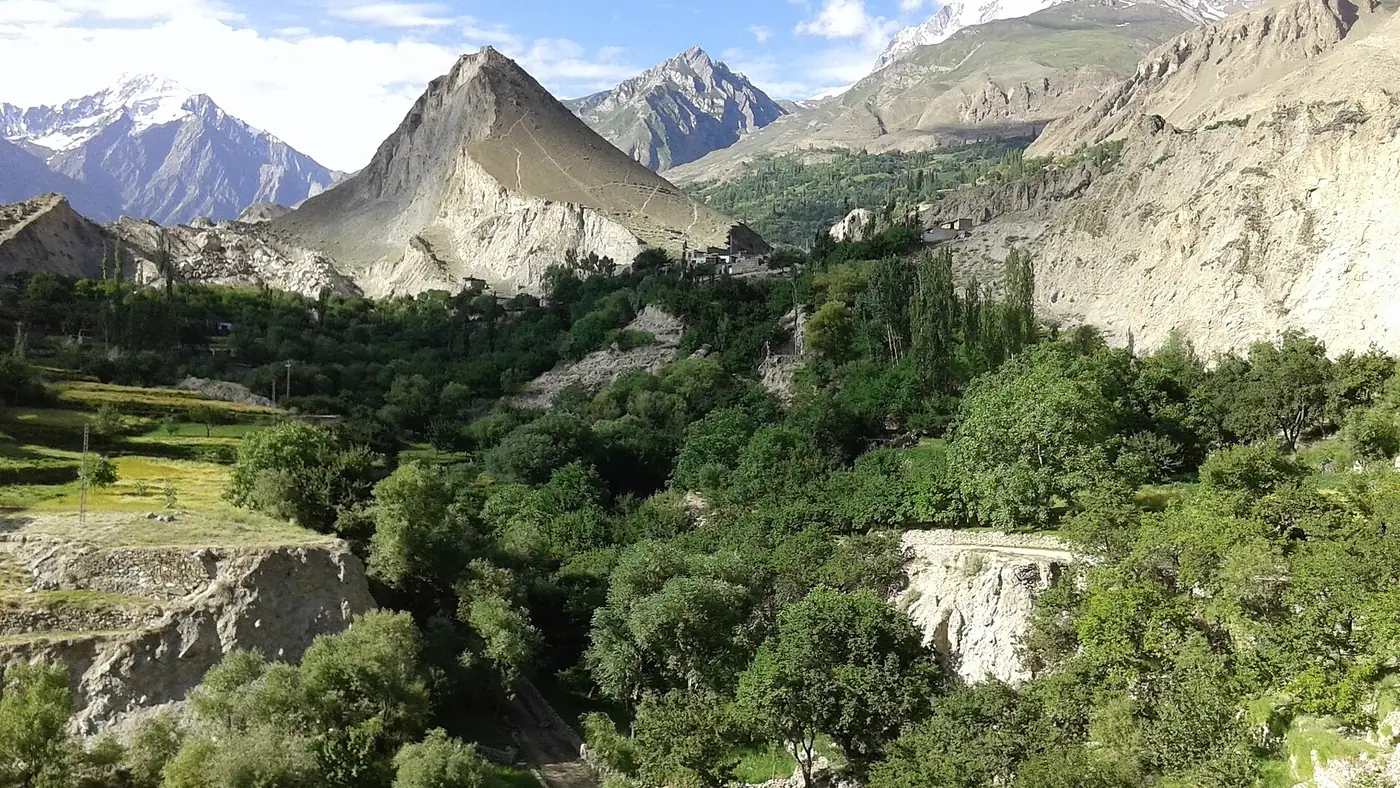
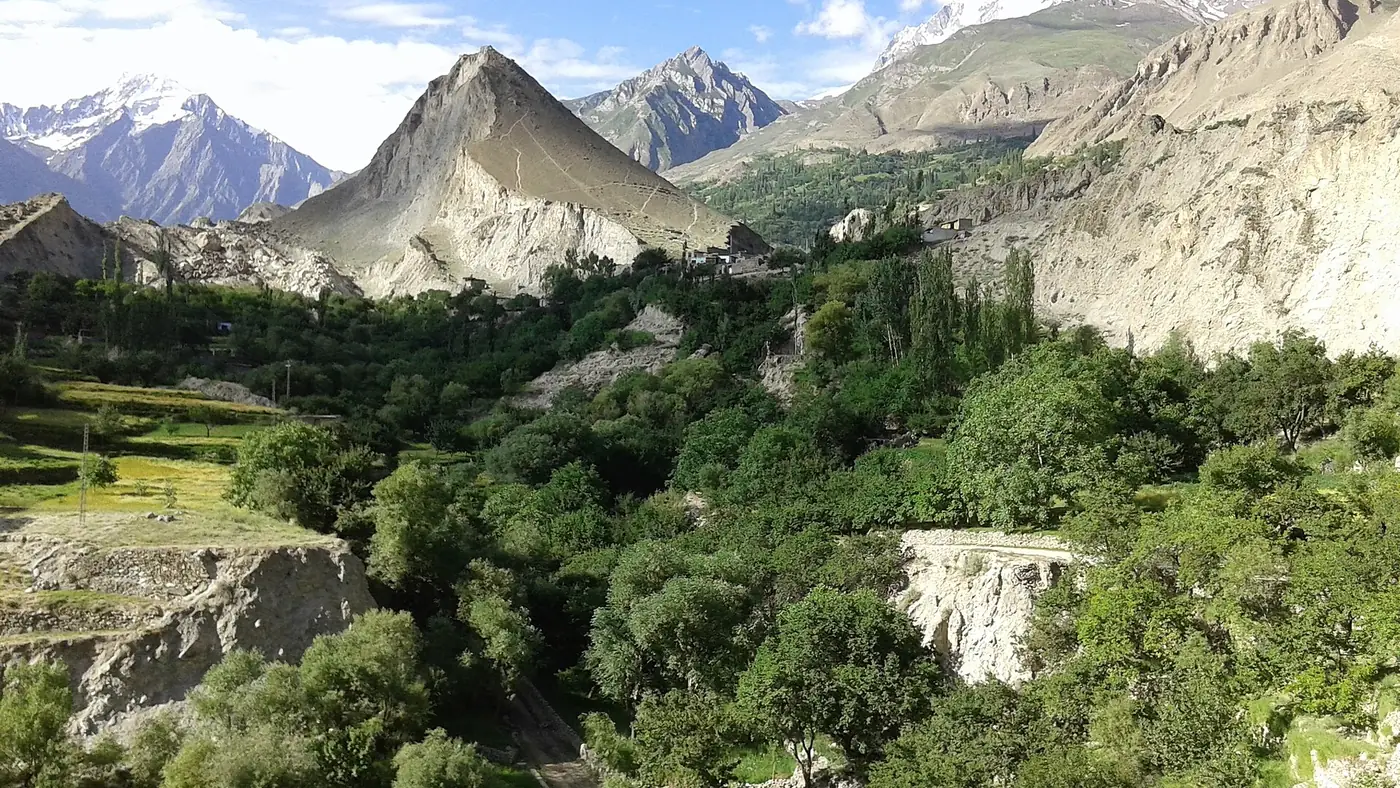
Hunza and Nagar face each other across the Hunza river, but they are two separate districts with different rulers in their history, different faiths, and a very different amount of tourist development today. Hunza, on the north bank, is built around Karimabad and its forts and has most of the region's hotels, restaurants and organised sightseeing. Nagar, on the south bank, is quieter, more agricultural, and visited mostly for its glaciers and mountain views rather than its towns.
This guide sets out the practical differences between the two: geography, faith, history, and what each valley actually offers someone planning a trip.
| Hunza | Nagar | |
|---|---|---|
| Bank of the river | North | South |
| Main town | Karimabad | Nagar Khas |
| Predominant faith | Ismaili | Twelver Shia |
| Known for | Forts, orchards, viewpoints, hotels | Glaciers, gemstone mining, quiet farming villages |
| Tourist infrastructure | Extensive: hotels, restaurants, guides | Limited: a few guesthouses, mostly day trips from Hunza |
| Historic seat | Baltit and Altit forts, both restored | Nagar Khas, no restored fort standing |
Different banks, different feel
Hunza and Nagar sit on opposite sides of the same river gorge, close enough that Rakaposhi, technically a Nagar mountain, fills the view from hotel terraces in Karimabad. But crossing the river changes the character of the place noticeably. Karimabad and the villages around it on the Hunza side are terraced with orchards, lined with guesthouses and cafés, and set up for visitors who want to walk between forts, viewpoints and restaurants without much planning.
Nagar, reached by a road that leaves the Karakoram Highway near Ganish and crosses the river, is more purely agricultural. Its villages, including Nagar Khas and the cluster of settlements at Hopper, are working farming communities with terraced fields and fruit trees, and comparatively few places built specifically for tourists. Most visitors see it as a half-day or day trip from a base in Hunza rather than a place to stay for several nights. Our guide to places to visit in Nagar valley covers what there is to see there.
Faith and culture
The clearest cultural difference between the two valleys is religious. Hunza's population is predominantly Ismaili, a branch of Shia Islam associated with the Aga Khan, while Nagar's population is predominantly Twelver Shia. Both valleys speak Burushaski as a first language, along with some Shina, so the everyday language is largely shared even where religious practice differs.
This difference shows in small, visible ways: the style of mosques and imambargahs along each valley's roads, and the timing of processions and mourning gatherings during Muharram, which are a bigger part of public life in Nagar than in Hunza. Neither valley's religious practice is something a visitor needs to navigate carefully, but it explains why the two places, despite sitting side by side, feel culturally distinct.
A history of rivalry, not partnership
Hunza and Nagar were rival kingdoms for most of their recorded history, ruled by separate lines of Mirs who by local tradition descended from twin brothers given one bank of the river each. That rivalry lasted until December 1891, when a British military campaign brought both states under colonial control within the same few weeks, ending their independence together even though they had spent centuries as opponents rather than allies. Our guide to the history of Nagar covers that campaign and the centuries before it in full.
What followed the campaign also diverged. Hunza's Mirs kept Baltit Fort as a working residence into the twentieth century, and it has since been restored as a museum, along with the older Altit Fort nearby. Nagar's old capital at Nagar Khas has no equivalent building open to visitors; its history survives more in the valley's Shia festivals and its still-strong Burushaski culture than in any preserved royal building.
Economy: tourism versus mining and farming
Hunza's economy today runs substantially on tourism. Karimabad has the region's widest range of hotels and guesthouses, from budget rooms to international-standard properties, and much of the local workforce is connected to hospitality, guiding or selling dried fruit, gemstones and handicrafts to visitors.
Nagar's economy leans more on farming and, in the upper valley, gemstone mining. Villages around Sumayar and elsewhere in Nagar are known for aquamarine, ruby and other stones mined seasonally, mostly from late summer into autumn, and this mining income matters more to many households than tourism does. Hotels in Nagar are limited to a handful of simple places, mainly around Hopper, described in our guide to hotels in Hopper.
Which should you visit?
Not an either-or choice for most people. Almost every visitor to this part of Gilgit-Baltistan bases themselves in Karimabad or Aliabad, in Hunza, because that is where the hotels, restaurants and organised trips are, and sees Nagar as a series of day trips from there: the Rakaposhi View Point on the drive in, an afternoon at Hopper glacier, perhaps a night in Minapin for the walk towards Rakaposhi base camp.
Choosing to stay in Nagar itself suits a smaller group of travellers: walkers heading for Rush Lake or Rakaposhi base camp who want to start close to the trailhead, and anyone who specifically wants a quieter, less commercial base than Karimabad and is prepared for simpler rooms and fewer dining options. For most families and first-time visitors, Hunza as a base and Nagar as a set of day trips remains the easier plan. Our Gilgit and Hunza page covers the wider region both valleys sit within.
Frequently asked questions
Is Nagar part of Hunza?
No. Nagar is a separate district with its own history as an independent kingdom, though the two valleys are often visited together because they sit side by side across the same river.
What is the religious difference between Hunza and Nagar?
Hunza's population is predominantly Ismaili, while Nagar's is predominantly Twelver Shia. Both valleys share Burushaski as a common language despite the difference in faith.
Which is better for tourists, Hunza or Nagar?
Hunza has far more hotels, restaurants and organised sightseeing, and is the practical base for most trips. Nagar is usually visited as a series of day trips from Hunza for its glaciers, mountain views and quieter villages.
Were Hunza and Nagar ever the same kingdom?
By local tradition, yes: one kingdom said to have been split between twin brothers, whose descendants became the separate ruling families of Hunza and Nagar. For most of recorded history they were rival, independent states.
Can you stay overnight in Nagar instead of Hunza?
Yes, though the choice of accommodation is much smaller, mainly a handful of guesthouses around Hopper and Minapin. It suits trekkers and anyone wanting a quieter base more than a first family visit.