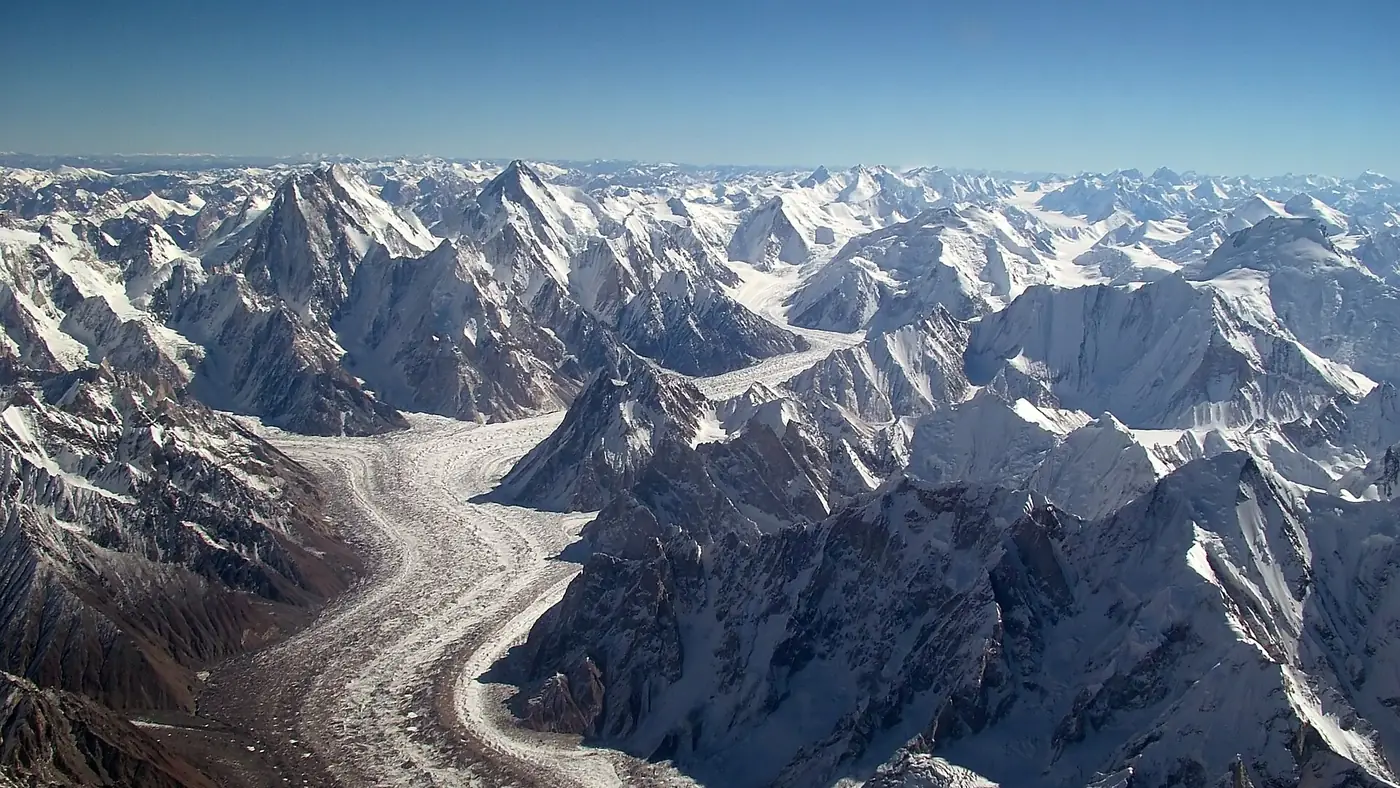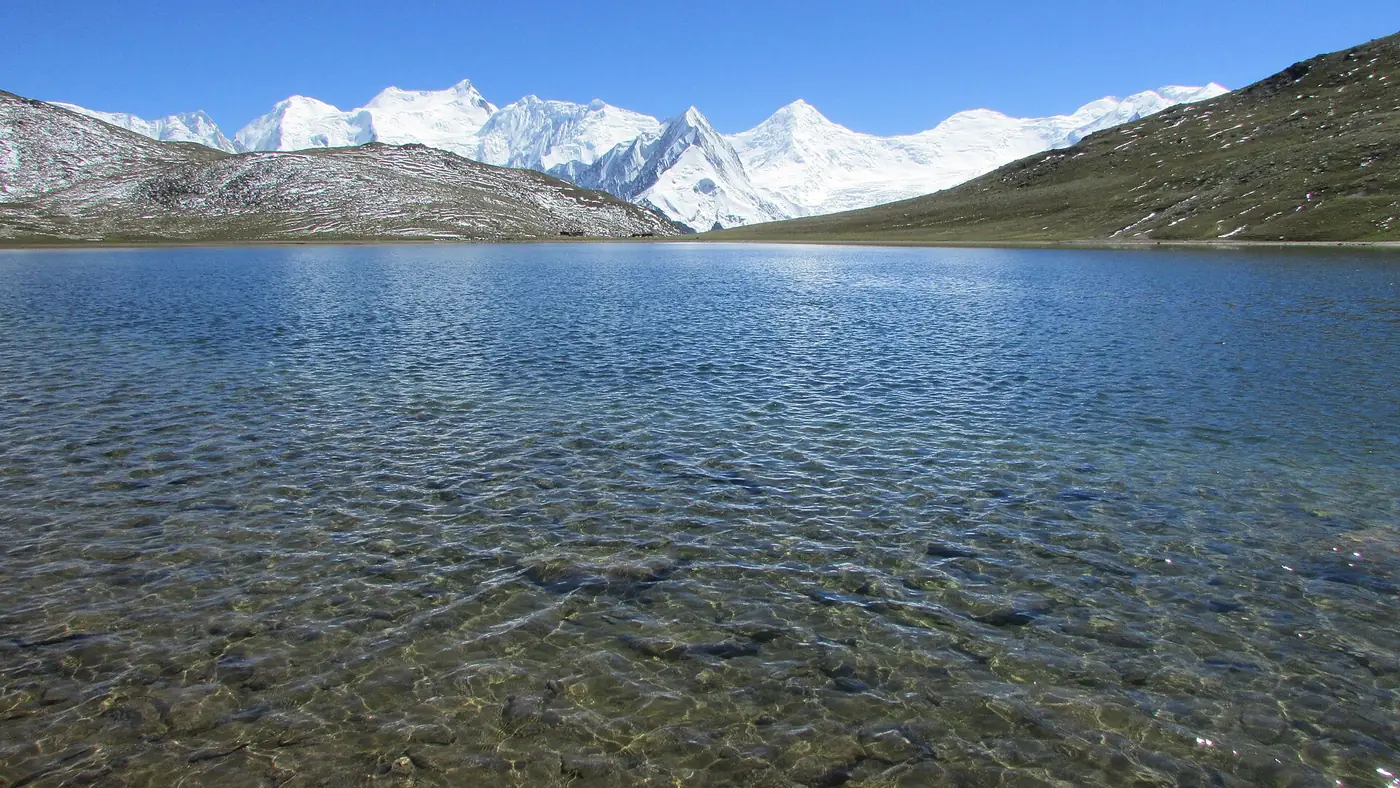
The Rush Lake trek starts at Hopper, above Nagar across the river from Karimabad, crosses the Bualtar glacier and follows the Barpu and Miar glaciers up to Rush Lake at 4,694 metres, one of the highest alpine lakes in the world. Most itineraries take five to seven days from Hopper and back, with three days up. It needs no ropes or climbing gear in a normal summer, but the glacier crossings, the altitude and the cold nights make it a proper trek rather than a first outing. The season runs from about June to September.
This guide covers the route, the glaciers and the camps, how the altitude affects the trek, what you see on the way, and who should and shouldn't go.
| At a glance | |
|---|---|
| Start and finish | Hopper, Nagar, about an hour by road from Karimabad |
| Highest camp | Rush Lake, 4,694 m |
| Optional summit | Rush Peak, 5,098 m |
| Glaciers | Bualtar (Hopper), Barpu and Miar |
| Usual length | 5 to 7 days from Hopper and back |
| Season | June to September; July to September most settled |
| Difficulty | Moderate to strenuous; non-technical, but high |
| Main views | Spantik (Golden Peak), Miar Peak, Malubiting and the Hunza peaks |
Where is Rush Lake?
Rush Lake lies high in the Nagar valley, on a shelf above the Miar glacier, below Rush Peak. The route in begins at Hopper, a cluster of villages about 10 km beyond Nagar Khas, where the grey Bualtar glacier grinds past below the fields. Our guide to glaciers in Gilgit-Baltistan covers the Hopper viewpoint, which most Hunza visitors see as a half-day trip.
From Hopper the trek climbs into high summer pastures beside the ice. The camps on the way are grazing grounds rather than villages, with names like Hamdar, Chidin Harai and Phahi Phari.
The route: Hopper to Rush Lake
Itineraries vary, and many operators go up one side and come back another. A typical plan runs like this:
- Hopper across the Bualtar glacier. The first job is to cross the glacier below the village. It is a jumble of moraine, grey rock and gravel over ice, with small climbs and drops and the odd crack. The path changes from year to year, so this is where a local guide earns his fee on the first morning.
- Up beside the ice to the first camp. Beyond the glacier the path climbs along the side of the valley to a camp such as Bericho Kor or Hamdar.
- Towards Chidin Harai. The second day climbs higher along the Barpu and Miar glaciers, with more moraine and big views of Spantik across the ice. Chidin Harai, the last pasture below the lake, is the usual camp.
- The climb to Rush Lake. The last day is the steepest and the highest, climbing to the lake at 4,694 metres. Start early, so that you arrive with time to rest before the cold of the evening.
- A spare day at the lake. Most itineraries keep a day here, for weather, for acclimatisation, or for Rush Peak.
- Down in two or three days. The return often takes a different line, via Phahi Phari and Hamdar, back across the Bualtar to Hopper.
Ask whoever arranges your trek to explain their exact line and camps. The glaciers move, and so do the paths across them.
The glacier crossings
The glaciers are the heart of this trek and its main hazard. None of the crossings is technical in a normal summer: you walk on moraine, not on bare ice with crampons. But moraine is slow, tiring and easy to twist an ankle on, and it hides ice and cracks beneath the rubble.
Some rules that apply on every crossing:
- Follow your guide's line exactly. The safe way across changes from season to season.
- Cross early in the day. Rockfall from the moraine walls and meltwater streams on the ice both increase as the sun warms things up.
- Keep off the ice cliffs and the edges of meltwater pools.
- Wear boots with ankle support and use trekking poles; trainers are a poor choice here.
After heavy snow or late in a hot summer, conditions on the Miar glacier can change quickly, and a guide may choose a longer line or a different day.
Altitude: the real challenge
Rush Lake is more than 2,000 metres higher than Karimabad, and you reach it in about three days. That is a fast climb, and it is the altitude, more than the distance, that makes this trek hard.
At 4,694 metres, almost everyone feels the thin air: breathlessness on the slightest slope, a headache, poor sleep and loss of appetite are all common at the lake. What matters is the trend. Mild symptoms that settle with rest are normal; a headache that worsens, vomiting, confusion or breathlessness at rest mean the person must go down, even at night.
Ways to make it easier:
- Spend a few days in Hunza first. Karimabad, at around 2,500 metres, is a good place to start adjusting, and a day walk such as Ultar Meadow helps.
- Walk slowly and drink plenty of water.
- Keep the spare day at the lake or lower down rather than squeezing the trek.
Our guide to altitude sickness in Gilgit-Baltistan covers the warning signs and Diamox in more detail.
Camps and nights
Don't count on lodges or huts on this trek. Plan to camp, usually with an operator or local guide who brings tents, a cook, fuel and food, and porters from Hopper or Nagar to carry the loads. Any shepherds' huts at the pastures are private shelters, not guesthouses.
Nights are cold. At the lower camps expect a chilly night even in July; at the lake the temperature usually drops below freezing, and snow can fall in any month. Bring a sleeping bag rated well below zero, a down jacket, a warm hat and gloves.
Water comes from streams and the lake. Treat or boil all of it.
The views: Spantik and the Nagar peaks
The Rush Lake trek is famous for what you see on the way. Spantik, 7,027 metres, often called Golden Peak for the colour of its rock in evening light, dominates the upper valley. Around it rise Malubiting, Miar Peak and Phuparash, and looking back the peaks of Hunza, including Ultar Sar, line the horizon.
Snow can still lie around the lake early in the season. The biggest panorama of all is from the peak above it.
Rush Peak
Rush Peak, 5,098 metres, rises behind the lake. In summer it is a steep, non-technical climb for fit trekkers with a guide, usually made early on the rest day. On clear days the summit looks east across the Karakoram, and K2 and Broad Peak can be seen on the far horizon. Go only in settled weather, and turn back if anyone is struggling with the altitude.
When to go
July to September is the most reliable window. The snow has cleared from the upper path, the pastures are occupied, and the weather is at its most settled, although storms still come through.
June is possible, but expect snow on the upper sections and around the lake, and colder nights. Late September brings clear air and sharp views but increasingly cold nights, and from October the route is out of season.
As on every glacier trek, the middle of a hot summer brings more meltwater and more rockfall.
Who is the Rush Lake trek for?
It suits fit walkers who have done at least one multi-day trek, ideally at altitude, and who are happy camping in the cold. If you enjoyed the climb to Rakaposhi base camp and felt fine at 3,300 metres, Rush Lake is a natural next step; our Rakaposhi base camp trek guide covers that easier trek.
It doesn't suit first-time trekkers, young children, or anyone with a heart or lung condition or a history of altitude sickness. Nor does it suit a tight schedule: without the spare day it becomes a race against the altitude.
If you want Nagar without the trek, the Hopper glacier viewpoint gives you the ice and the valley in an afternoon. Our nine-day Gilgit, Hunza and Khunjerab tour includes a day in Hopper and Nagar. To build Rush Lake into a longer Hunza trip, with time to acclimatise first, send us your dates through our planning page.
Frequently asked questions
How long is the Rush Lake trek?
Most itineraries take five to seven days from Hopper and back: about three days up to the lake, a spare day there, and two or three days down.
How high is Rush Lake?
Rush Lake is at 4,694 metres, one of the highest alpine lakes in the world. Rush Peak, above it, is 5,098 metres.
Is the Rush Lake trek difficult?
It is moderate to strenuous. There are no technical sections in a normal summer, but it crosses several glaciers on rough moraine and sleeps at 4,694 metres, so fitness and acclimatisation matter.
Where does the Rush Lake trek start?
At Hopper in the Nagar valley, about an hour by road from Karimabad across the Hunza river.
Can you see K2 from Rush Lake?
Not from the lake itself. From the top of Rush Peak, above the lake, K2 and Broad Peak can be seen far to the east on a clear day.
Do I need a guide for the Rush Lake trek?
Yes, in practice. The glacier crossings change every year, and a local guide from Hopper or Nagar knows the current line, the camps and the weather.