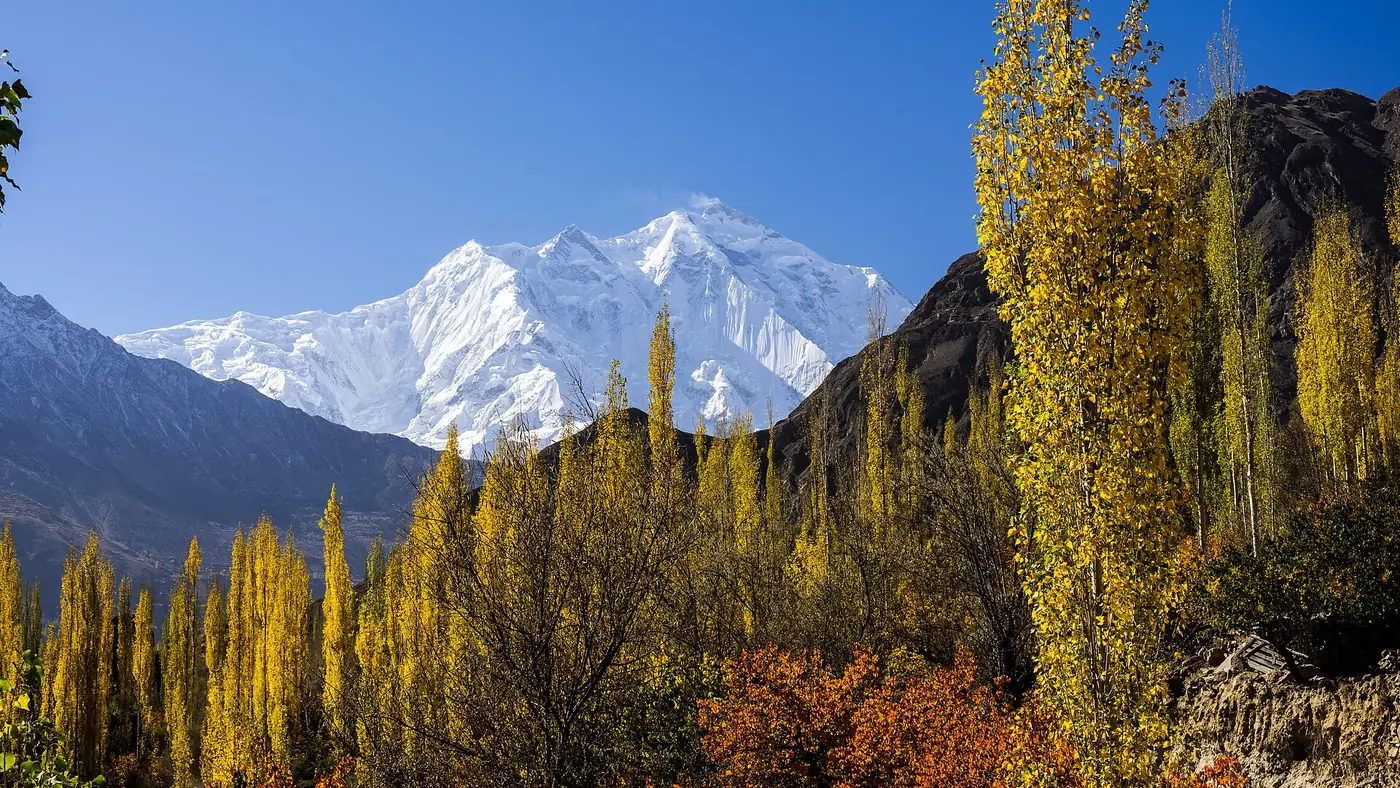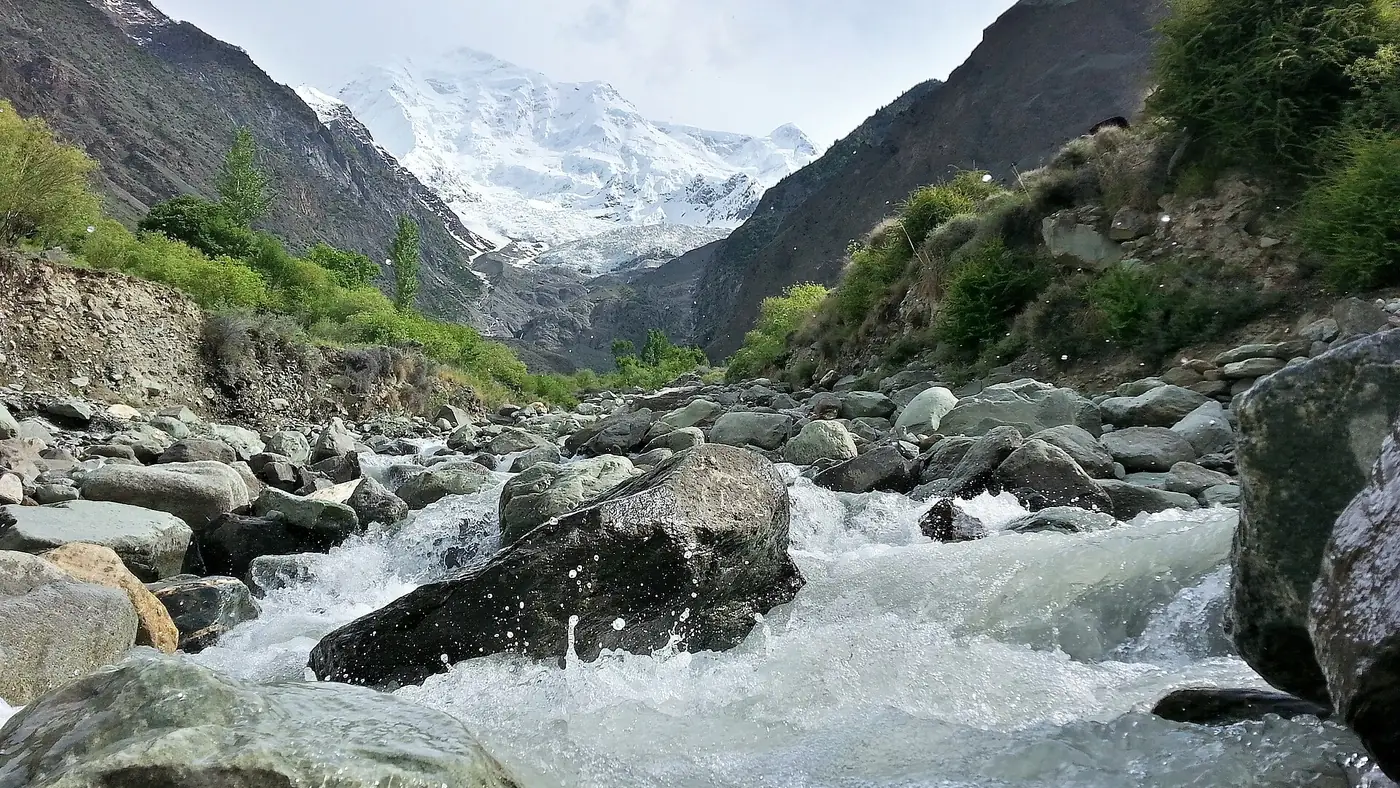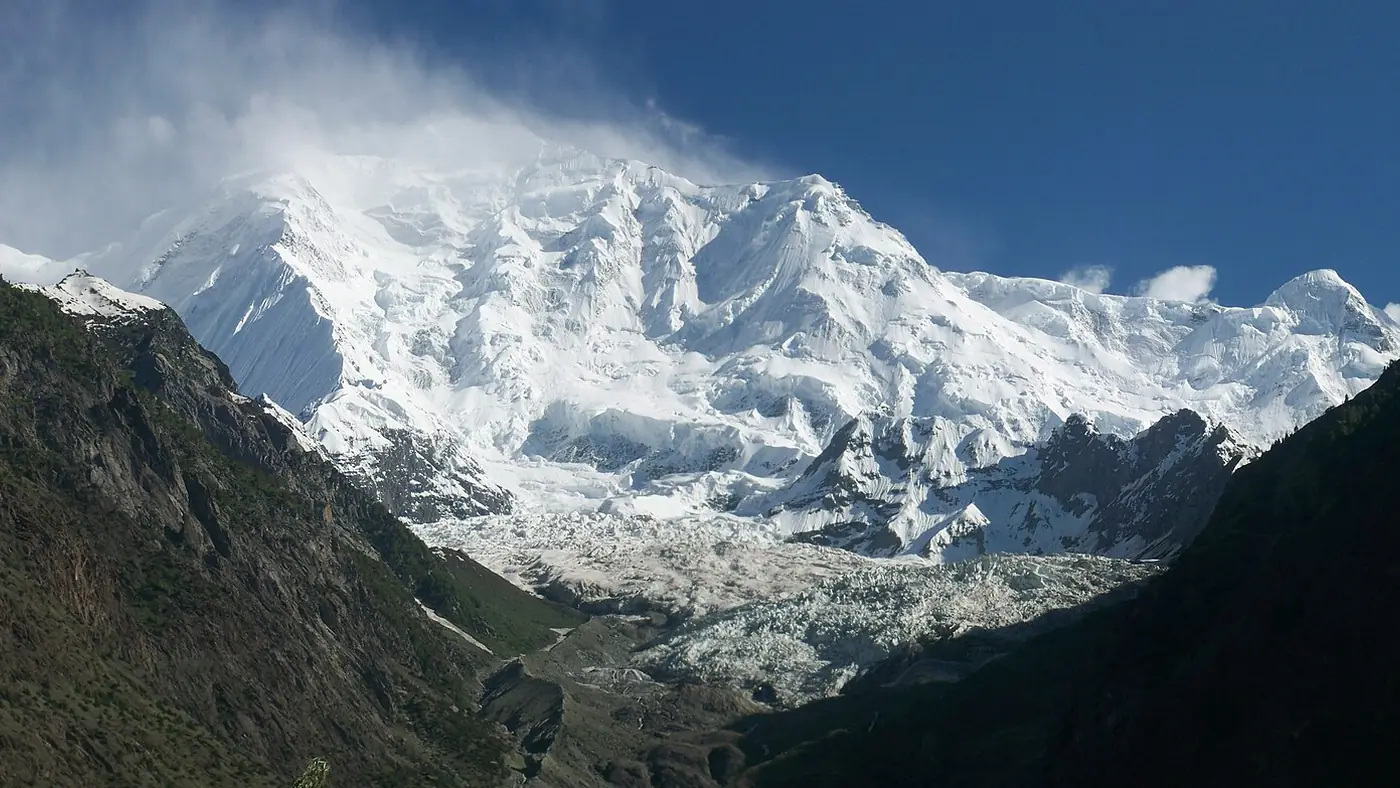
The glaciers in Gilgit-Baltistan you can visit without trekking are mostly in Hunza and Nagar: the Passu glacier, a short walk from the Karakoram Highway; the Batura and Ghulkin glaciers, which come down close to the road near Passu and Gulmit; and the Hopper glacier in Nagar, an hour or so by road from Karimabad. The famous giants, the Baltoro under K2, the Biafo and the Hispar, are a different undertaking: a week or two on foot with porters and a guide.
The Karakoram is the most heavily glaciated range on earth outside the polar regions. This guide sorts its glaciers by effort, then covers how to be near the ice without getting hurt.
| Glacier | Where | How you reach it |
|---|---|---|
| Passu | Passu, upper Hunza | 20 to 45 minutes' walk from the KKH |
| Batura | Just north of Passu | Snout near the KKH; a full-day walk for the big view |
| Ghulkin | Between Gulmit and Passu | Crossed on the 2 to 3 hour walk to Borith Lake |
| Hopper | Nagar, across the river from Karimabad | An hour or so by road, then a steep path down |
| Raikot | Fairy Meadows | Beside the path from the meadow to Beyal |
| Minapin | Nagar, below Rakaposhi | Overnight trek from Minapin village |
| Chogo Lungma | Arandu, upper Shigar | About 4 hours by jeep from Skardu, then a walk |
| Baltoro, Biafo, Hispar | Central Karakoram | Treks of one to two weeks or more |
Glaciers you can reach from the road
Passu glacier
The easiest glacier in Gilgit-Baltistan to see up close. It comes down from Passu Peak just south of Passu village, and two paths lead to it: a lower one from the village along a dirt track, and an upper one from a small tea shop on the KKH near the Borith Lake turning. Either reaches a viewpoint over the ice in 20 to 45 minutes.
Stay on the viewpoint path. The front of the glacier is broken, steep and loose, and walkers who know it agree: go onto the ice only with a local guide.
Batura glacier
At 57 km, the Batura is one of the longest glaciers outside the polar regions, and its snout ends close to the highway just north of Passu. From the road it looks like a vast grey rubble field, because most of its lower section is covered in rock; the ice is underneath.
The best view needs a walk. The Yunz valley path climbs from Passu between the Passu and Batura glaciers and looks up both. The loop is steep and exposed in places, with some route-finding, so it is a long day for fit walkers, and a guide is worth having.
Ghulkin glacier and Borith Lake
The Ghulkin glacier comes down almost to the highway just north of Gulmit. The classic walk crosses its lower end to Borith Lake, two to three hours on foot over moraine and dirty ice. The path shifts from year to year, so take a local guide from Gulmit or Ghulkin. If you only want the lake, a road leads to it from Hussaini.
Hopper glacier, Nagar
Across the river from Karimabad, a narrow road climbs through Nagar to the village of Hopper, an hour to an hour and a half's drive, rough in places. From the viewpoint you look down on a huge, dark glacier where the Bualtar and Barpu glaciers meet, cracking audibly on a warm day.
A path drops to the edge of the ice. The climb back is steep, and older parents and small children are better off staying at the top.
Glaciers at the end of a walk
- Ultar glacier, Karimabad. A steep walk of a few hours behind Baltit Fort leads to the Ultar meadow below the glacier. It is the glacier walk you can start from your hotel door in Karimabad; our list of places to visit in Hunza covers it alongside the forts.
- Raikot glacier, Fairy Meadows. The path from the meadow to Beyal camp follows the edge of the Raikot glacier for 1.5 to 2.5 hours, and the viewpoint beyond looks across it to Nanga Parbat. See our guide to things to do at Fairy Meadows.
- Minapin glacier, Nagar. The trek to Rakaposhi base camp climbs beside it from Minapin village, usually with a night at Hapakun and another at Tagaphari, the base camp meadow at about 3,300 metres.
- Chogo Lungma glacier, Arandu. Arandu, the last village in upper Shigar, sits at the glacier's snout, about four hours by jeep from Skardu. The ice caves at its foot have become a winter outing, visited with local guides from December to February when the meltwater stops. Never enter them in the melt season, when they can collapse without warning.
The trek-only giants
The glaciers that make the Karakoram famous cannot be seen from any road.
- Baltoro. More than 60 km long. Its snout is two days' walk above Askole, and at Concordia it meets the Godwin-Austen glacier below K2. Our K2 base camp trek guide goes through the two-week route stage by stage.
- Biafo and Hispar. The Biafo, also over 60 km, meets the 49 km Hispar at the Hispar La, a pass of 5,128 metres. Together they make a glacier route of about 100 km from Askole to Hispar village in Nagar, across the ice basin called Snow Lake. It involves roped glacier travel and is for experienced parties only.
These treks are organised through licensed operators with porters, a cook and a guide who knows the glacier. Permit rules and park fees differ for Pakistani and foreign trekkers and change often, so confirm them before you commit.
How to stay safe on and near the ice
From the edge, a glacier looks solid and slow, and that is what catches day visitors out.
- Don't walk onto a glacier without a local guide. Rock-covered ice hides hollows and crevasses you can't see, and higher up, snow hides them completely.
- Keep away from the snout and any ice cliff. Ice and boulders fall from the front, most often in the afternoon heat. Don't stand beneath it for a photograph.
- Cross meltwater streams in the morning. They rise through the day, and a stream you stepped across at ten can knock you over at four.
- Wear boots with grip and carry a warm layer. The air over the ice is cold even in July.
- Protect your eyes and skin. Glare off ice burns quickly; sunglasses and sunscreen matter.
- Tell someone where you are going. Signal is patchy away from the villages.
Our travel guide covers altitude, cold and the other practical risks of the north.
Glacier floods: why the alerts matter
Glacial lake outburst floods, or GLOFs, happen when meltwater dammed by ice or moraine breaks out suddenly, sending mud and boulders down side streams, sometimes onto the Karakoram Highway. Heatwaves make them more likely.
The Shishper glacier above Hassanabad in central Hunza is the example everyone in the valley knows. Its lake burst twice in 2019, and in May 2022 the flood swept away the Hassanabad bridge on the KKH, cutting Hunza off from Gilgit until a temporary crossing was built. It is a glacier to look at from a distance, not to explore.
In July 2026 the National Disaster Management Authority issued a GLOF alert for the Hoper and Hisper valleys in Nagar during a heatwave, and Rescue 1122 told residents and visitors to keep away from rivers, streams and glacier areas. When an alert is out, skip the glacier walk, don't camp in stream beds, and follow local advice. Current alerts are posted by the National Disaster Management Authority.
When to go, and which glacier suits you
June to September is the season for glacier walks: the paths are clear of snow and the days are long. It is also the season of heatwaves and floods, so check for alerts. April, May and October suit the roadside viewpoints at Passu and Hopper, though snow may block higher paths. From November to March most glaciers are under snow, and the Arandu ice caves are the one glacier outing that belongs to winter.
- Short Hunza trip, with family: the Passu and Hopper viewpoints. Both fit into a normal day and neither needs you on the ice.
- Fit walkers with a spare day: the Yunz valley loop at Passu or the Ghulkin crossing, with a local guide.
- Already going to Fairy Meadows: the walk to Beyal is your glacier day.
- Based in Skardu: there is no easy roadside glacier near town, and Arandu is a long jeep day.
- You want the Baltoro or Snow Lake: plan a trek of two weeks or more with a licensed operator, not an add-on to a holiday.
Our nine-day Gilgit, Hunza and Khunjerab tour includes a day at Hopper and a stop at Passu, and the Gilgit and Hunza page shows what else lies along the way.
Frequently asked questions
Which glacier is easiest to visit in Gilgit-Baltistan?
The Passu glacier in upper Hunza, where a path from the Karakoram Highway reaches a viewpoint in 20 to 45 minutes. The Hopper viewpoint in Nagar is almost as easy once you have driven up.
Can you walk on the glaciers in Hunza?
Only with a local guide who knows that glacier. Many lower glaciers are covered in rock that hides ice, hollows and crevasses, and the fronts shed ice and stones.
How far is Hopper glacier from Karimabad?
About an hour to an hour and a half by road, across the river into Nagar. A steep path drops from the viewpoint to the ice.
Is it safe to visit glaciers in summer?
Yes, if you keep to viewpoints and marked paths, stay away from snouts and ice caves, and check for flood alerts. During a heatwave or a GLOF warning, skip the glacier walk.
Do I need a permit to visit glaciers in Gilgit-Baltistan?
Not for the roadside glaciers in Hunza and Nagar. The long treks in the Central Karakoram National Park carry park fees, and the rules for foreign trekkers are stricter, so check before you plan one.