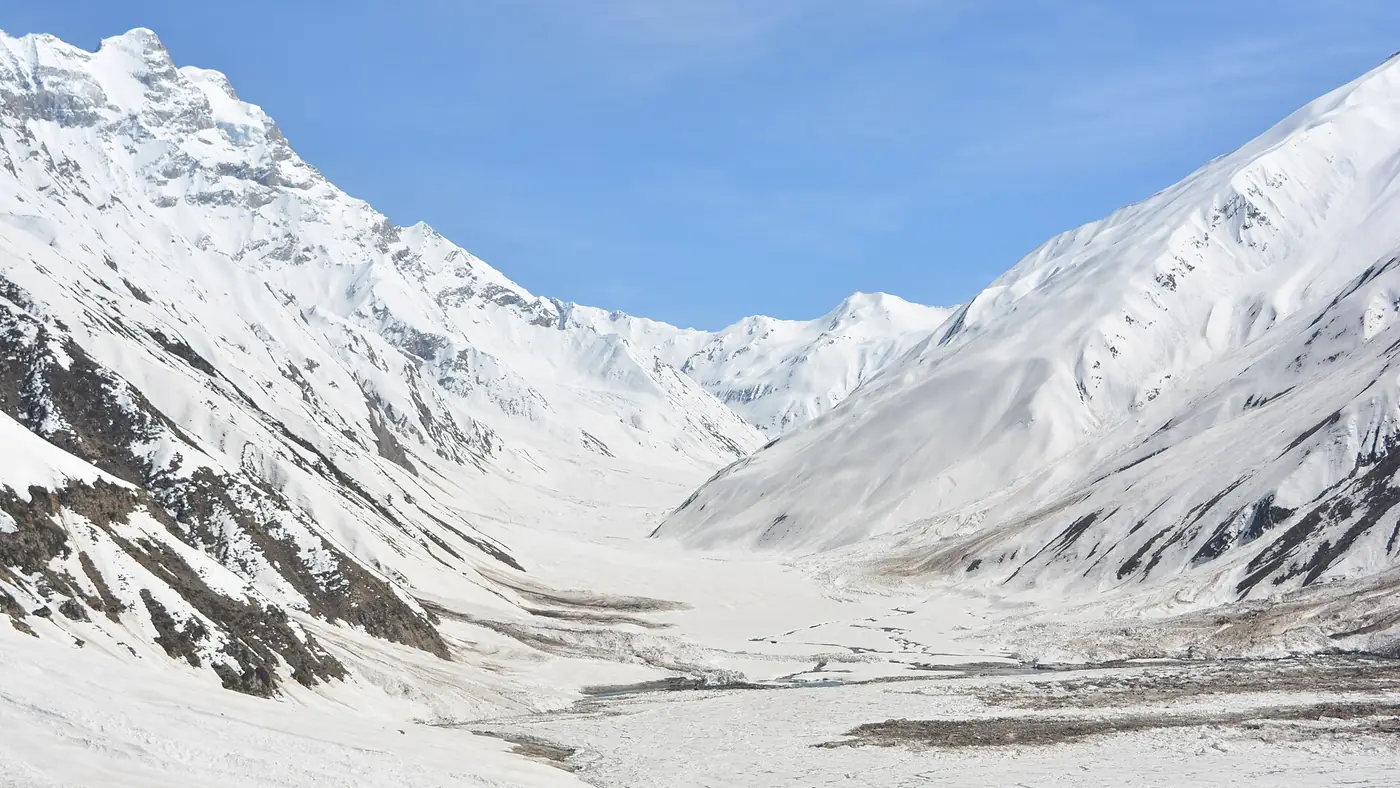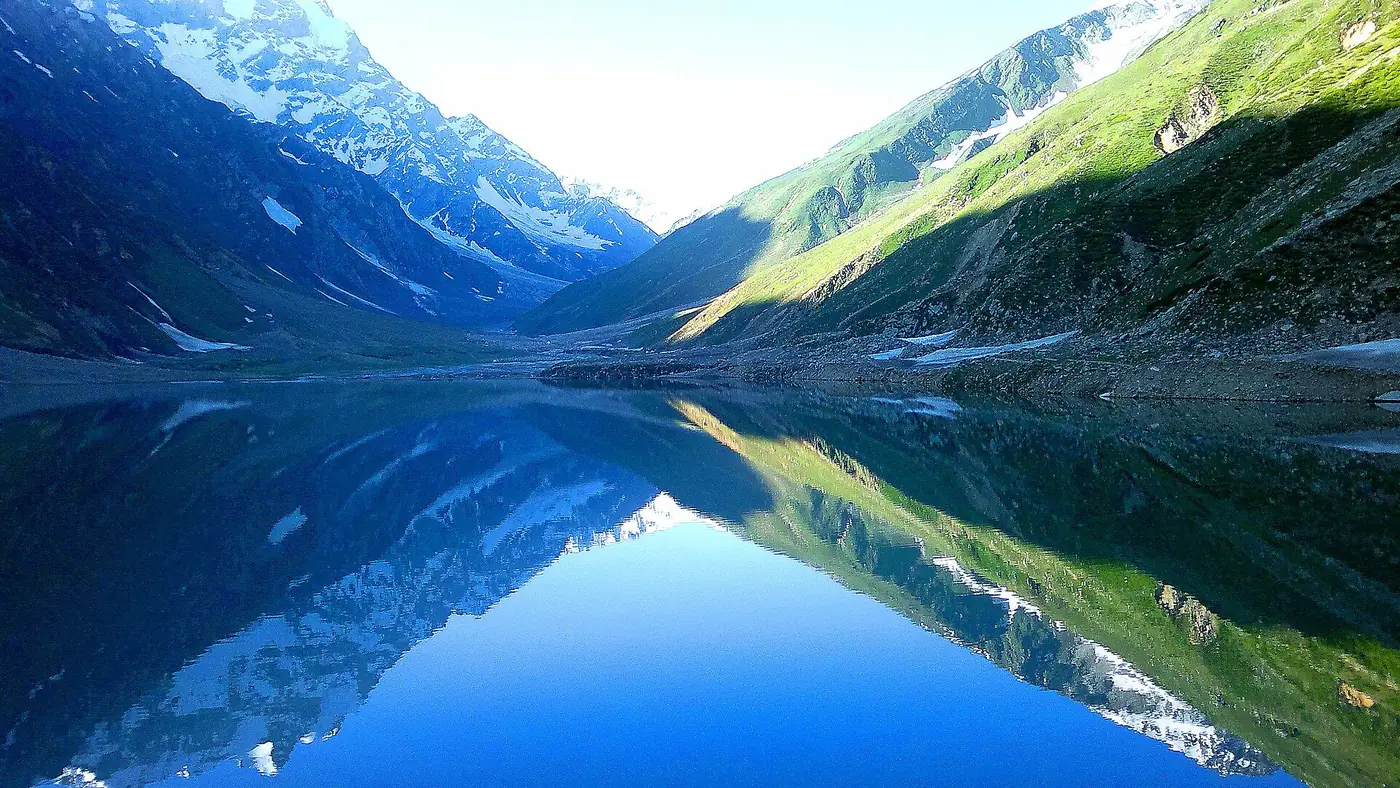
The best photography spots in Naran and Kaghan are Saif-ul-Malook at sunrise, Lulusar Lake in the still light of early morning, and the open panoramas at Babusar Top and the Gittidas meadows on the way up to it. What they share is timing: still water and clear light both belong to the first hour or two after sunrise, before the wind picks up and the crowds arrive.
This guide covers where to go, what time of day works, and how to get the shot without losing the whole morning.
| At a glance | |
|---|---|
| Best overall light | Early morning, before wind and crowds build |
| Best for reflections | Saif-ul-Malook and Lulusar Lake |
| Best for wide panoramas | Babusar Top and the Gittidas meadows |
| Best months | June and September for clear skies |
| Gear worth carrying | A polarising filter and a tripod for the lakes |
| Main hazard | Never shoot from beneath glacier ice or snow overhangs |
Saif-ul-Malook: sunrise and the shore
Saif-ul-Malook, at 3,224 metres below Malika Parbat, is the valley's best-known photograph and still worth chasing despite the crowds, because almost everyone arrives after mid-morning. Get to the lake with the first jeeps and you have the shore largely to yourself, with a good chance of a still surface holding the reflection of the peak.
By late morning wind usually ripples the water and the crowds fill the area near the jeep stand, so the shot changes completely. Walk a few minutes along the shore, away from the stalls, for a cleaner frame with fewer people in it. Our Saif-ul-Malook visitor guide covers the jeep fare, the walk and the best time of day in more detail.
Lulusar Lake: the quiet reflection
Lulusar, at 3,410 metres on the paved road towards Babusar, is the easier of the two lakes to photograph well, because you drive straight to the shore rather than queuing for a jeep. On a calm morning it holds a clean reflection of the slopes and snow above it, and because far fewer people stop here than at Saif-ul-Malook, you can set up a tripod without being in anyone's way.
As at the other lake, mornings are the time to go. By afternoon, wind typically comes up the valley and cloud often builds over the peaks in summer. Our Lulusar Lake guide has the drive time from Naran and more on when the light works best.
Babusar Top and Gittidas: wide views
The drive from Naran to Babusar Top passes through some of the widest, most open country in the valley, and it rewards a different kind of photograph: high meadows, distant ridgelines and, on a clear day, Nanga Parbat on the horizon from near the top. The Gittidas meadows, just below the final climb, are a good stop if the summit itself is crowded or in cloud, with grazing herds and open grass making a very different scene from the lake shots.
Morning again gives the best chance of clear air; cloud tends to build over the high peaks as the day warms. At over 4,000 metres near the top, altitude affects concentration and balance more than people expect, so move carefully around any edge or slope while composing a shot. Our Babusar Pass guide covers the full drive and what the top is like.
Naran bazaar and the Kunhar river
Not every good photograph in the valley needs a jeep or a long drive. The Kunhar river running through Naran, especially in the soft light of early morning or early evening, and the everyday life of the bazaar, are worth a slow walk with a camera on the day you arrive, when you are still adjusting to the altitude and not yet ready for a full day out.
A note on safety around snow and glaciers
Some of the most tempting photographs in the valley, standing beneath a snow tunnel or an ice overhang beside the road in May and June, have killed visitors in past seasons when the snow collapsed without warning. Photograph these features from the road rather than climbing onto or under them, however solid they look, and keep children well away from snow cones and overhangs altogether.
When to go for photography
June and September give the most reliably clear skies, with June adding more snow on the high ground and September adding calmer, more settled air and the first hint of autumn colour towards the end of the month. May offers dramatic snow scenes around the lake and the road but with a real chance of low cloud and a shorter list of open sights. July and August bring green meadows but also cloud and rain that can close in without much warning; our guide to Naran in July covers what the monsoon does to a trip. Our best time to visit Naran guide compares the months for the trip as a whole, not just the photography.
Is a photography-focused trip worth planning around?
Yes, if you can control your own schedule. The difference between an ordinary snapshot and a genuinely good photograph at Saif-ul-Malook or Lulusar is almost entirely about being there in the first hour of daylight, which means staying overnight in Naran or Batakundi rather than arriving mid-morning as a day visitor.
It is a harder trip to plan around a large group or young children, since an early start and patient waiting for the right light don't always suit either. If photography is the priority, keep the group small, base yourself in Naran for at least two nights, and build the schedule around sunrise rather than around meals. For help planning the stops and the timing, send us your plans.
Frequently asked questions
What is the best time of day to photograph Saif-ul-Malook?
Early morning, ideally with the first jeeps up from Naran. The water is calmer, the light is softer, and the crowds have not yet arrived.
Is Lulusar Lake good for photography?
Yes, and it is easier than Saif-ul-Malook because you can drive right to the shore. Early morning gives the best chance of a still, reflective surface.
Can you photograph Nanga Parbat from Babusar Top?
On a clear day, yes, to the east from near the top. Cloud often builds through the day, so an early start gives the best chance of a clear view.
What is the best month for photography in Naran and Kaghan?
June and September, for the clearest skies. May offers dramatic snow but less certainty, and July and August bring cloud and monsoon rain.
Is it safe to photograph the glaciers beside the road?
Photograph them from the road only. Snow and ice overhangs beside the road have collapsed without warning in past seasons, with fatal results, so never climb onto or under them for a photograph.