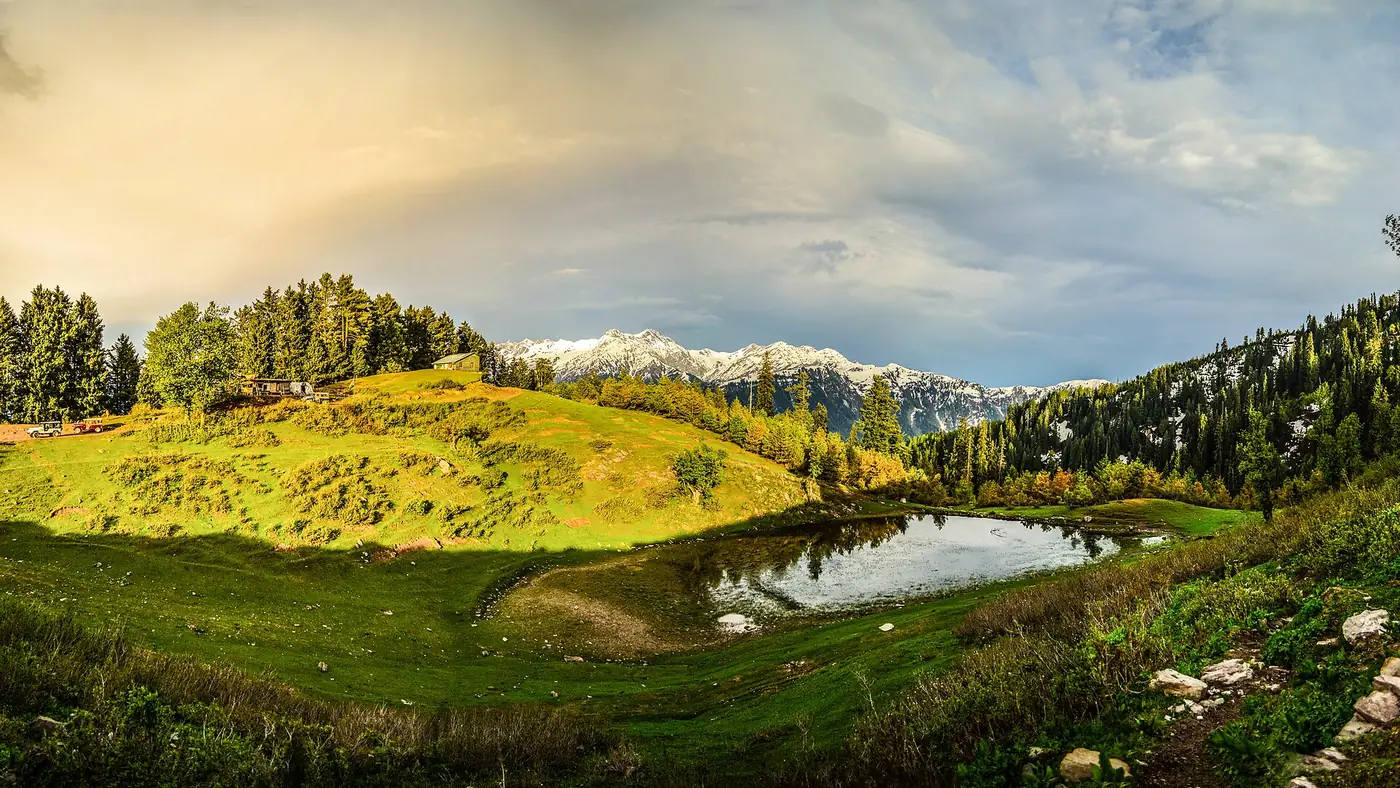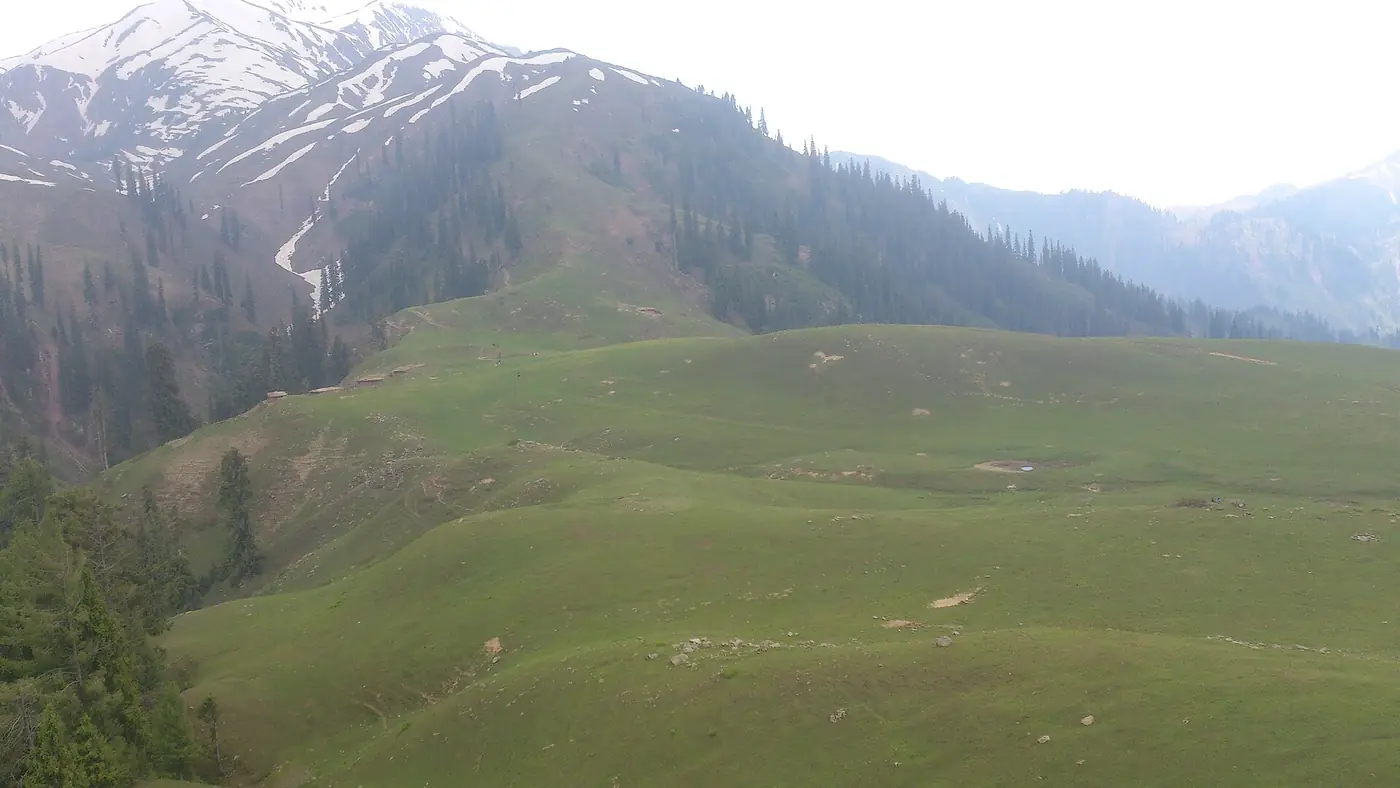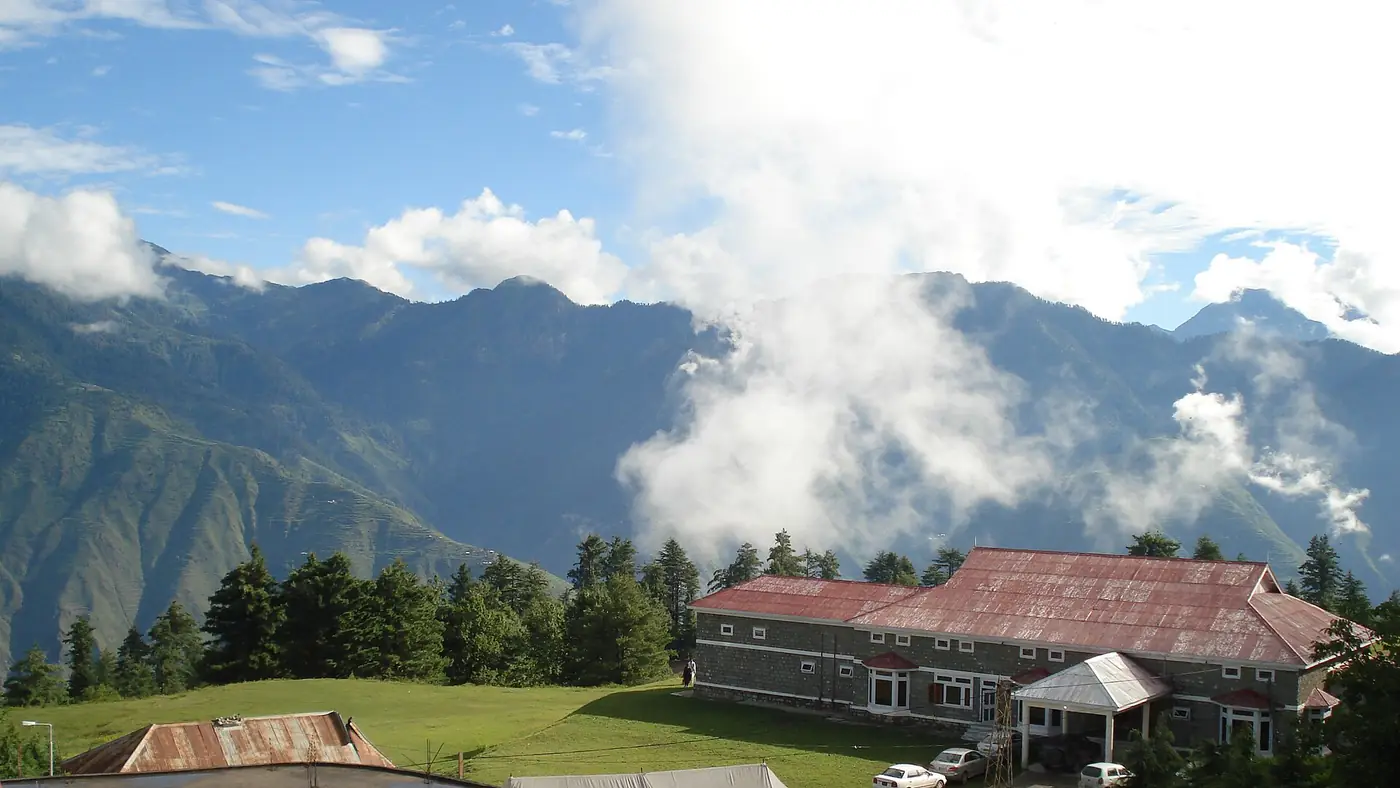
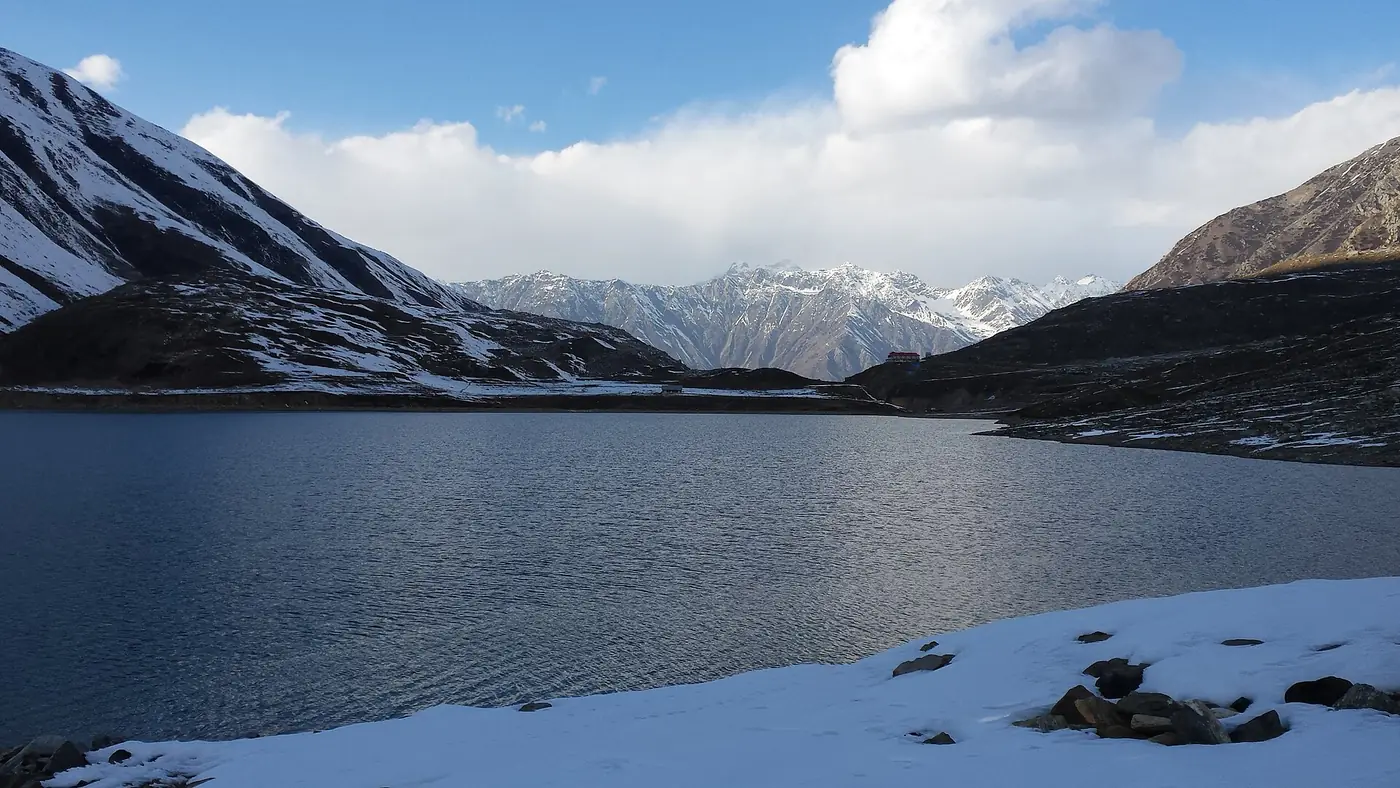
Naran's weather by month runs from freezing winters, when the town is snowbound and closed, to mild summers with days of roughly 17 to 22°C in June, July and August. Even then the nights drop to around 8 to 14°C, and in May, September and October they get close to freezing. Babusar Top, about 1,750 metres higher, is roughly 10 degrees colder than Naran in every month, and snow can fall there in late May and June.
The figures below are long-term averages from two climate datasets for Naran's altitude of 2,409 metres. They differ by a few degrees, so we give the range between them rather than a single number. Treat them as a guide to packing, not a forecast.
| At a glance | |
|---|---|
| Altitude | 2,409 m (Babusar Top 4,173 m) |
| Warmest month | July: days about 18 to 22°C, nights 10 to 14°C |
| Coldest month | January: below freezing day and night |
| Wettest times | March and April, then the monsoon in July and August |
| Driest time | October to December |
| Snow in Naran | Mainly December to March; possible from October to May |
| Open to visitors | About late April to November |
Naran temperatures month by month
| Month | Day | Night | What it is like |
|---|---|---|---|
| January | About −3 to −1°C | About −11 to −7°C | Deep snow; road closed beyond Kaghan town |
| February | About 1 to 3°C | About −8 to −5°C | Heavy snow; closed |
| March | About 6 to 9°C | About −4 to −2°C | Snow and rain; closed |
| April | About 10 to 11°C | About −1 to 2°C | Snowmelt; road reopens late in the month |
| May | About 15 to 16°C | About 4 to 7°C | Fresh days, cold nights, snow all around |
| June | About 17 to 20°C | About 8 to 11°C | Mild and mostly dry |
| July | About 18 to 22°C | About 10 to 14°C | Warmest month; monsoon showers |
| August | About 17 to 22°C | About 7 to 13°C | Monsoon continues |
| September | About 15 to 20°C | About 3 to 10°C | Clear, settled, cooling nights |
| October | About 11 to 14°C | About −1 to 4°C | Crisp days, frosty nights |
| November | About 5 to 7°C | About −4 to −1°C | Freezing nights; first heavy snow |
| December | About 1 to 2°C | About −7 to −5°C | Snowbound; closed |
Two things these averages hide. The sun at this altitude is strong, so a 16°C afternoon in May feels warm in the open and cold the moment a cloud comes over. And the temperature falls quickly once the sun drops behind the mountains, which in a deep valley like this happens well before sunset.
How much colder is it at Saif-ul-Malook and Babusar?
Air cools by roughly six to seven degrees for every 1,000 metres you climb, and the places people visit from Naran are all higher than the town.
- Saif-ul-Malook, at 3,224 metres, is about 5 degrees colder than Naran, with wind off the water on top.
- Lulusar Lake, at 3,410 metres, is colder again.
- Babusar Top, at 4,173 metres, is roughly 10 degrees colder than Naran.
Approximate averages for Babusar Top in the months the pass is open:
| Month | Day | Night |
|---|---|---|
| Late May | Around 2°C | Well below freezing |
| June | Around 8°C | Just below freezing |
| July | Around 12°C | Around 2 to 3°C |
| August | Around 12°C | Around 2°C |
| September | Around 8°C | Just below freezing |
| October | Around freezing | Far below freezing |
The wind is what people notice. A still, sunny 12°C at the top feels pleasant; the same temperature in a steady wind feels close to freezing. Snow is possible at the top in any month the pass is open. On 30 and 31 May 2026, only days after Babusar reopened, continuous snowfall made the road slippery, parts of it were reduced to one-way traffic, and the administration told tourists to avoid non-essential travel and warned that the road was at its most dangerous after 6 pm. Our Babusar Pass guide covers the drive and the stop at the top.
Spring: April and May
In both 2025 and 2026 the road to Naran reopened in the second half of April. At that point nights are around freezing, and snow lies deep beside the road above the town.
May is fresh and bright, with pleasant days and nights that still need a proper jacket. March and April are among the wettest months of the year, and snow showers are possible into May. Rain in town can mean snow at the lake and on the pass.
What to pack: a warm jacket, a fleece or sweater, a hat and gloves, waterproof shoes with a good grip for snow and slush at the lake, and sunglasses for the glare off the snow.
Summer: June, July and August
June is usually the most comfortable month in Naran. The days are warm enough for short sleeves in the sun, it is drier than the months either side, and the nights are cool rather than cold.
July and August are slightly warmer but wetter, because the monsoon reaches the valley. Rain often comes as heavy showers, and cloudbursts cause the flash floods and landslides that close the road and the jeep tracks for hours or days. On 21 July 2026 heavy rain closed the roads to Jalkhad and the lake, stranded visitors were moved to Naran, and the district administration advised against travel north for three to four days. On 30 July flash floods washed out part of the Saif-ul-Malook track, and from 1 August the lake was closed to visitors for a week.
What to pack: light layers for the day, a warm fleece or jacket for the evening and for the lake, a waterproof jacket in July and August, and sunscreen. Pack warm clothes even in July. People coming from 40°C in Lahore or Karachi are regularly caught out by evenings in Naran that feel cold.
Autumn: September, October and November
September has the most settled weather of the season. The monsoon has passed, the air is clear, the days are still warm, and the nights cool steadily through the month.
October is crisp: sunny days and nights that fall to around freezing, with frost on the grass in the morning. The first snow on the high ground usually comes this month, and snow can fall at Babusar.
November is cold. Days are in single figures and nights below freezing. Heavy snow closes Babusar first, then the valley above Naran. In late November 2025, visitors could go to Batakundi and Saif-ul-Malook only between 11 am and 3 pm, with chains on their tyres, and on 10 December travel to Naran and beyond was banned until summer.
What to pack: a proper winter jacket from October, thermal layers for the nights, a hat and gloves, and chains in the car if you are going in November.
Winter: December to March
From December until the road reopens in spring, Naran is under snow and closed to visitors, with no hotels or restaurants open. January is the coldest month, with daytime temperatures around freezing and nights well below it. In January 2025, snow in and around Naran was reported at up to three feet deep.
If you want winter snow in the Kaghan valley, you can go only as far as Kaghan town and Shogran. Pack as you would for any snow trip: waterproof boots, thermals, a heavy jacket, and chains for the car.
How to check the weather before you go
Averages tell you what to pack; the forecast decides how a particular day goes.
- The Pakistan Meteorological Department issues heavy-rain, snow and flood warnings. A warning for the Hazara division is the early sign that roads or jeep tracks may close.
- Your hotel in Naran can tell you what the weather is doing at the lake and on Babusar that morning.
- District administration notices from Mansehra, carried by the main newspapers, announce closures and timing rules.
Our guide to whether the Naran road is open or closed explains where to check before you set off.
Which weather suits your trip?
- Warmest and easiest, for families with small children or older parents: late June or the first half of September. You get mild days without the monsoon's rain.
- Snow on the ground and at the lake, for those who don't mind cold nights: May, knowing some places may not yet be open.
- Clear skies and autumn light: late September and October, with warm clothes for the evenings.
- Most rain and the highest chance of a closure: July and August. Keep a spare day.
Weather is only one part of choosing dates; crowds, Eid and the opening of each road matter just as much. Our guide to the best time to visit Naran weighs them together, and our month-by-month guide to the north compares Naran with the other valleys.
Frequently asked questions
What is the temperature in Naran in summer?
In June, July and August, days are usually around 17 to 22°C and nights around 8 to 14°C. It feels warmer in the sun and much colder at the lake and on Babusar.
Does it snow in Naran?
Yes, heavily, mainly from December to March, when the town is closed to visitors. Snow can also fall in October, November, April and May, and at Babusar Top even in June.
How cold is Naran at night?
Cool in summer, at around 8 to 14°C, and close to or below freezing in April, May, October and November. Pack a warm layer for every evening, whatever the month.
When does it rain most in Naran?
In the monsoon months of July and August, when cloudbursts can bring flash floods and landslides. March and April are also wet, often as snow higher up. October to December is the driest time.
How cold is Babusar Top in July?
Roughly 12°C by day and just above freezing at night, and the wind makes it feel colder. Take a warm jacket, a hat and gloves even in midsummer.
What should I wear in Naran in June?
Light layers for the day, a warm fleece or jacket for the evenings, and something warmer again for the lake and Babusar. Nights are around 8 to 11°C in town and near freezing on the pass.