Hopper valley is a group of five villages in Nagar, at the end of a road that climbs about 22 km from Karimabad, on the other side of the Hunza river. The road stops at a viewpoint above the Hopper glacier, a wide river of ice so covered in rock that it looks almost black. The drive takes 45 minutes to an hour each way, so it makes an easy half-day trip from Hunza, best between May and October.
You will also see the name spelt Hopar or Hoper; all three mean the same place. This guide covers the drive, what to do at the viewpoint, where to stay if you want a night there, and the trek to Rush Lake that starts from the village.
| At a glance | |
|---|---|
| Where | Upper Nagar, across the river from Karimabad |
| Altitude | About 2,800 m at the viewpoint |
| From Karimabad | About 22 km, 45 minutes to an hour |
| From Gilgit | About 120 km, roughly three hours |
| Time needed | Half a day from Karimabad |
| Best months | May to October |
| Glaciers | Bualtar (the Hopper glacier) and Barpu |
| Mobile signal | SCOM is the most reliable network in Nagar |
| Trek from here | Rush Lake, 4,694 m, several days |
Where is Hopper valley?
Nagar and Hunza face each other across the Hunza river. Karimabad and its forts sit on the northern slope; Nagar Khas and the Hopper villages lie on the southern side, higher up and further back towards the glaciers. The road has to drop to the river, cross it and climb again.
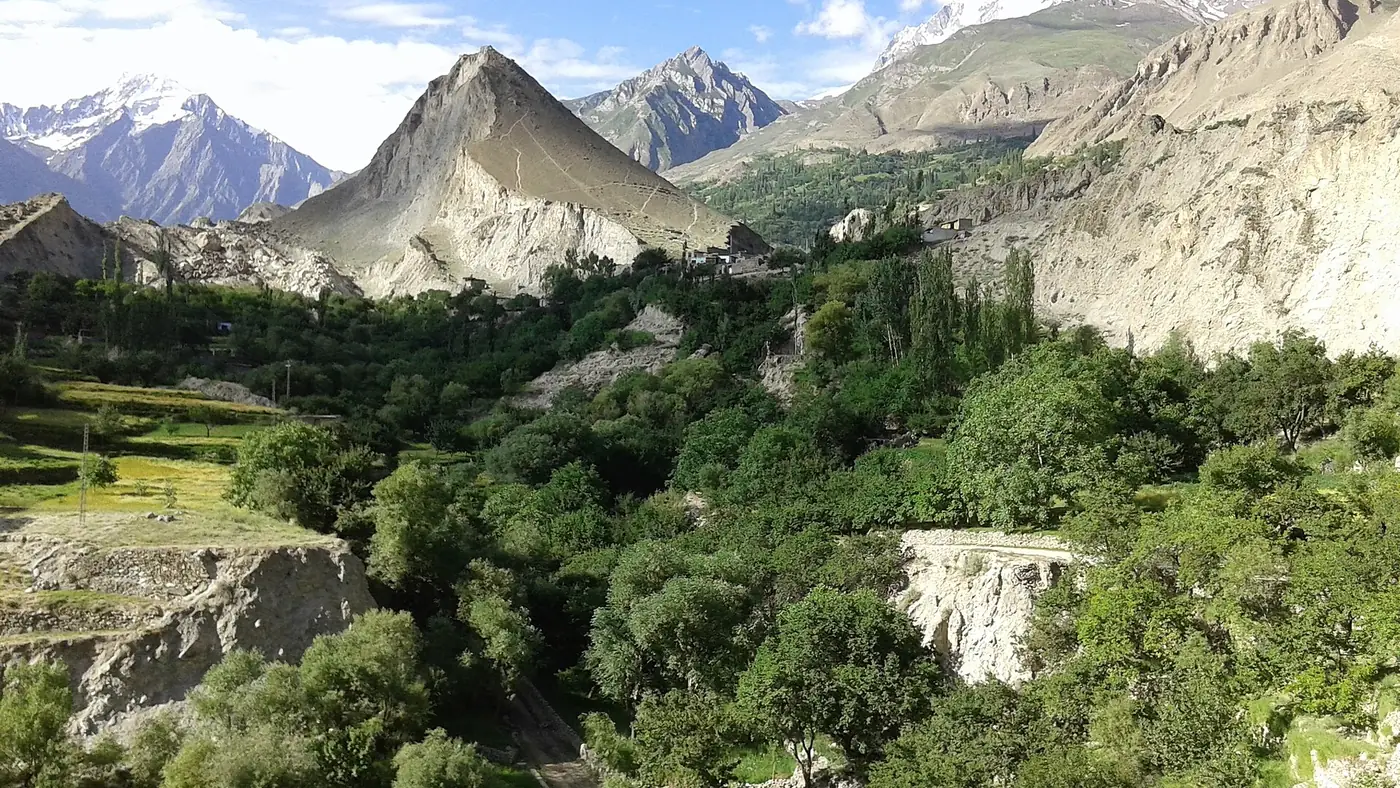
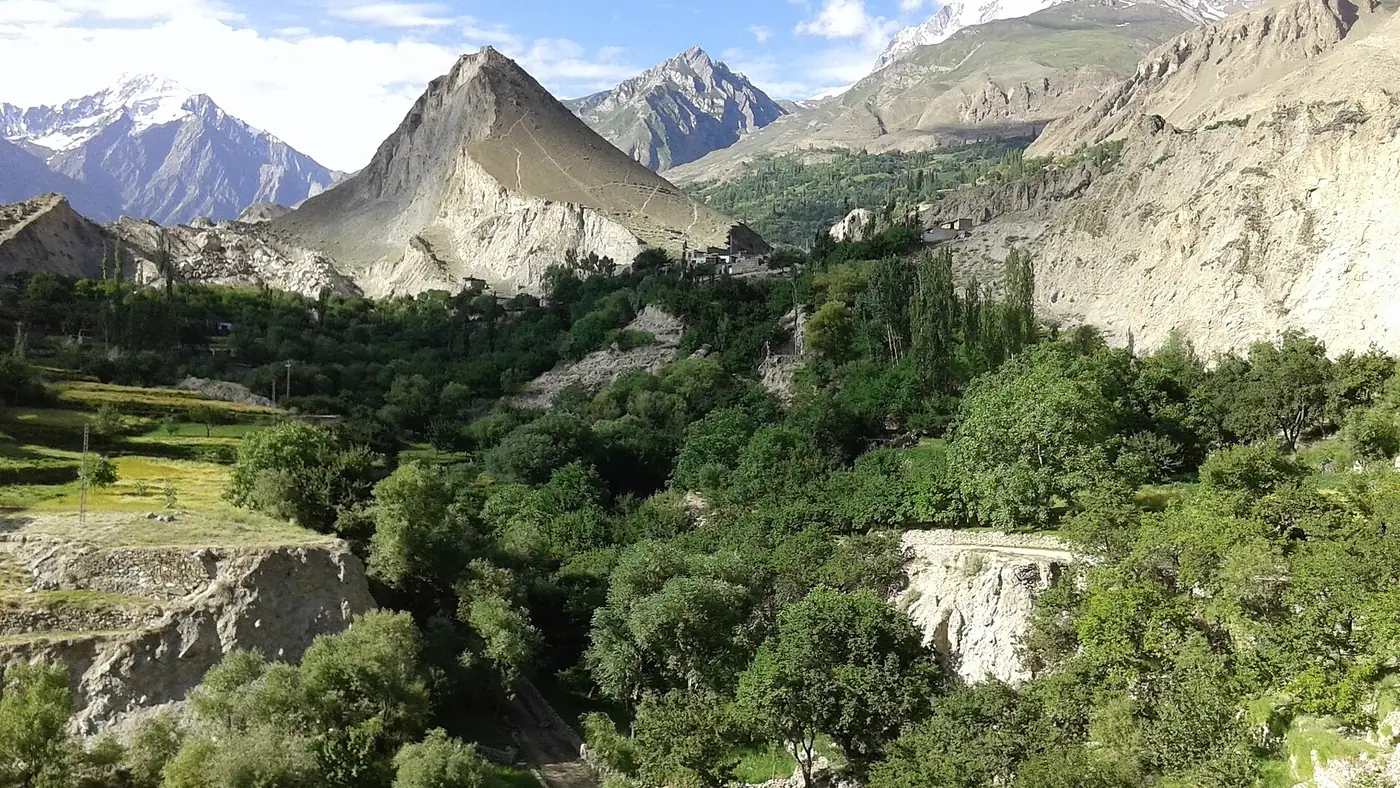
Hopper itself is not one village but five small ones, Holshal, Brushal, Ratal, Ghoshoshal and Hakalshal, spread over green terraces and fields at around 2,800 metres. People here speak Burushaski, as in central Hunza. The Nagar villages are conservative, so dress modestly and ask before photographing anyone, especially women.
What brings visitors is the ice. The villages sit on the edge of the Bualtar glacier, usually called the Hopper glacier, and the Barpu glacier lies just beyond it, leading towards Rush Lake. Our round-up of places to visit in Nagar valley shows how Hopper fits with the rest of the district.
How do you get to Hopper from Karimabad?
There is only one road, and it is the same whether you drive yourself or hire a car with a driver:
- Down to Ganish. Leave Karimabad for the Karakoram Highway at Ganish, below the town.
- Across the Hunza river. Just past Ganish the Nagar road leaves the highway and crosses the river.
- Up to Nagar Khas. The road climbs for about 7 km to Nagar Khas, the old capital of Nagar and now the district headquarters.
- On to Hopper. From Nagar Khas it is roughly another 10 km, climbing steadily, to the end of the road at the viewpoint.
The road is narrow and single-lane in places, and stretches of it have been under reconstruction for several years, so expect some rough, dusty sections and slow passing. Ordinary cars make the trip in dry weather; after heavy rain, or if you are not used to mountain roads, a car and driver from Karimabad is the easier choice. Most hotels in Karimabad and Aliabad can arrange one.
Coming straight from Gilgit, Hopper is about 120 km and roughly three hours by road. It is better done fresh from a night in Hunza than tacked onto an arrival day.
At the viewpoint: what to see and the walk down
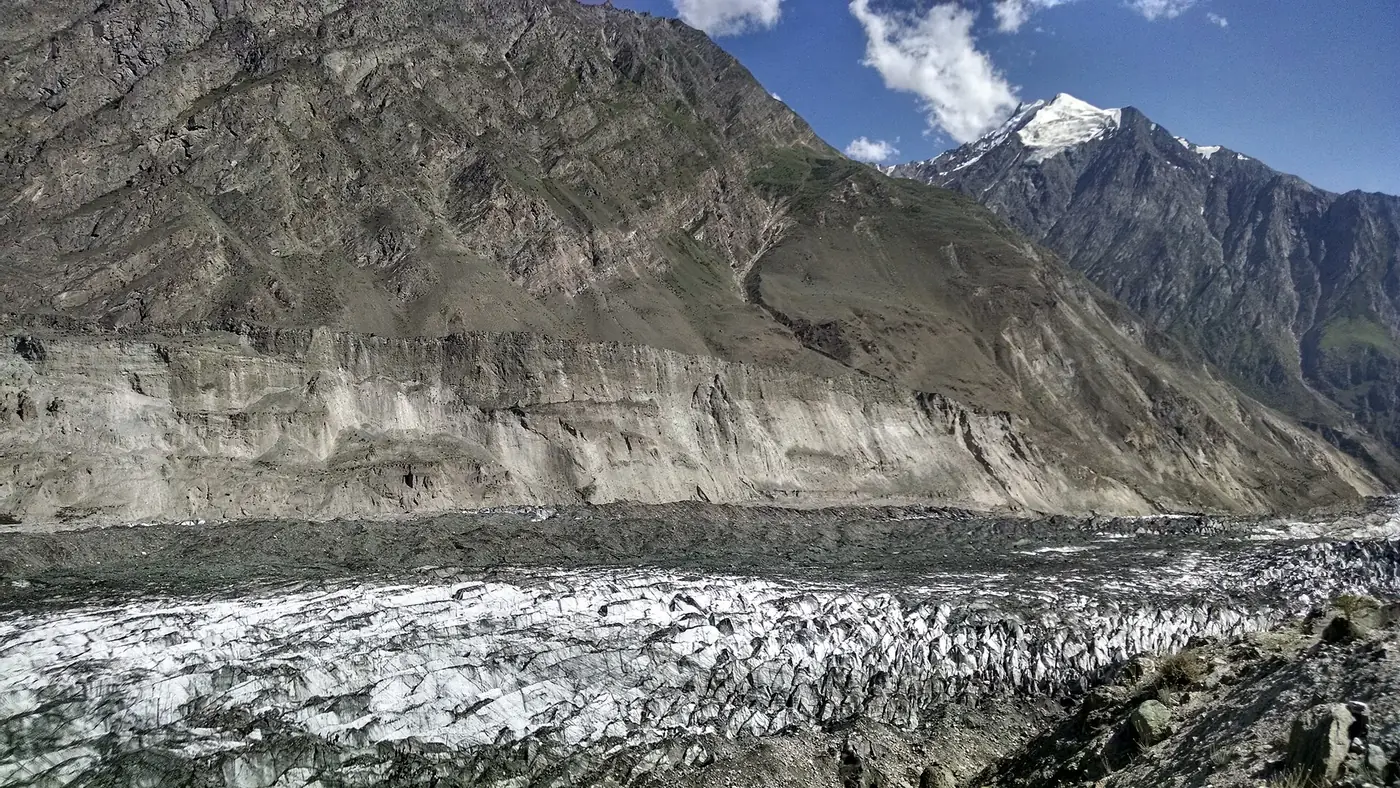
The road ends beside a few hotels and a small viewpoint on the lip of the glacier's side moraine. Below you, the Bualtar glacier fills the valley: grey and black with rock, broken into ridges and hollows, with patches of white ice showing where the surface has split. On a warm afternoon you can hear it, a crack or a rumble as ice shifts and stones slide off.
Most visitors are content with this view, a cup of tea and half an hour of looking. If you want to get closer:
- A steep path drops down the moraine to the edge of the ice. Going down is quick; the climb back up, at 2,800 metres on loose ground, is the hard part. Allow at least an hour there and back, and leave older parents and small children at the top.
- Don't walk out onto the glacier without a local guide. The rock on top hides holes and crevasses, and the surface changes every year.
- Keep away from the foot of the moraine walls. Stones come off them through the day, more often in the afternoon heat.
- Wear shoes with grip and carry a warm layer; the air over the ice is cool even in July.
In hot spells, the risk from glacial lake outburst floods rises across Gilgit-Baltistan. In late June 2026, during a heatwave, the National Disaster Management Authority issued a GLOF alert for Gilgit-Baltistan and Khyber Pakhtunkhwa that told tourists to avoid trekking in glacier areas and to stay away from glacier sites. If an alert like that is in force, enjoy Hopper from the viewpoint and follow local advice. Our guide to glaciers in Gilgit-Baltistan has more on staying safe near the ice.
Where to stay in Hopper
Most people see Hopper on a day trip and sleep in Karimabad. Staying in the valley makes sense if you want a quiet evening, an early morning at the glacier, or a head start on the Rush Lake trek.
The choice is small and simple. A handful of hotels and guesthouses stand near the viewpoint at the end of the road; the best known is the Hopar Hilton Inn, which, despite the name, is a simple hotel and restaurant that has hosted trekkers for years. Expect basic rooms and cold evenings even in summer, and confirm your booking and meals before you go.
If you would rather base yourself in Hunza and visit Hopper for the day, our guide to where to stay in Hunza compares Karimabad, Aliabad and the other bases.
Rush Lake: the trek that starts in Hopper
Hopper is the trailhead for Rush Lake, which at 4,694 metres is one of the highest lakes in the country. The route crosses the Bualtar glacier from the village and follows the Barpu and Miar glaciers up through summer pastures to the lake, which lies below Rush Peak, 5,098 metres. On a clear day the view from the peak reaches as far as K2 and Broad Peak.
This is a real trek, not an extension of a day trip:
- Time: most parties plan five to seven days there and back from Hopper, including a rest day to acclimatise.
- Season: July to September. The lake is frozen for much of the year.
- Support: go with a local guide and porters from Hopper who know the glacier crossings, which change from year to year.
- Altitude: the climb from 2,800 to nearly 4,700 metres needs to be taken slowly. Anyone who develops a bad headache, vomiting or confusion should go down.
For how Rush Lake compares with the other high lakes of the north, see our guide to lakes in Gilgit-Baltistan.
When to visit Hopper
May to October is the comfortable season. The fields are green from late spring, the road is at its most reliable in summer, and September and October add clear skies and autumn colour on the terraces, with far fewer visitors.
July and August are the busiest months and the warmest, which is also when the glacier is at its most active and flood alerts are most likely. Go in the morning, when streams are lower and the light on the ice is softer.
The villages are lived in all year, but from November to March it is cold at 2,800 metres and the road can be icy. Go with a local driver, and check that anywhere you plan to eat or stay is open.
Is Hopper worth the trip?
For most people staying in Karimabad, yes. It is the easiest place in Hunza and Nagar to stand above a big Karakoram glacier without walking, and the drive through Nagar shows you a side of the valley that visitors who stay on the highway never see. It fits comfortably into a morning or an afternoon.
It suits families, couples and anyone who wants a glacier without a hike, as long as the group is fine with a narrow mountain road. It is less rewarding if you have already walked to the Passu glacier and have only a day or two in Hunza; in that case Attabad, Passu and the forts may be the better use of time.
We build a day at Hopper and Nagar into our nine-day Gilgit, Hunza and Khunjerab tour, after the Khunjerab day, when everyone is well settled into the altitude.
Frequently asked questions
How far is Hopper from Karimabad?
About 22 km by road, crossing the Hunza river below Karimabad and climbing through Nagar Khas. The drive takes 45 minutes to an hour each way.
Can a normal car go to Hopper glacier?
Yes, in dry weather, though the road is narrow and rough in places where it is being rebuilt. If you are nervous on mountain roads, hire a car and driver in Karimabad.
Can you walk on the Hopper glacier?
Only with a local guide. A steep path leads down to the edge of the ice, but the rock-covered surface hides crevasses and changes every year.
Is there anywhere to stay in Hopper?
Yes, a few simple hotels and guesthouses near the viewpoint, including the long-running Hopar Hilton Inn. Most visitors stay in Karimabad and come for the day.
How long is the trek from Hopper to Rush Lake?
Most parties plan five to seven days there and back, crossing the Bualtar, Barpu and Miar glaciers to the lake at 4,694 metres. The season is July to September, with a guide and porters.
What is the best time to visit Hopper valley?
May to October, with September and October the clearest and quietest. In July and August go early in the day, and check for flood alerts before walking near the ice.