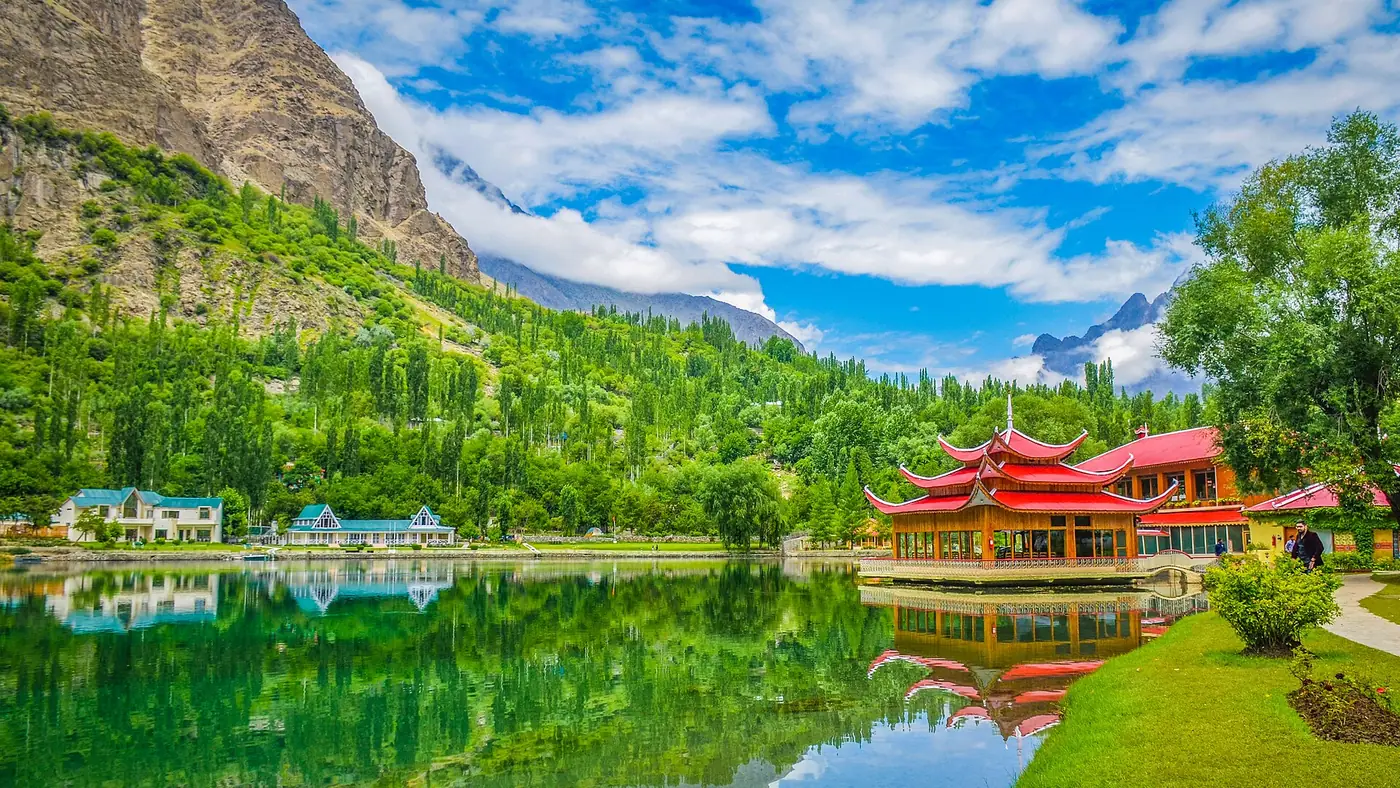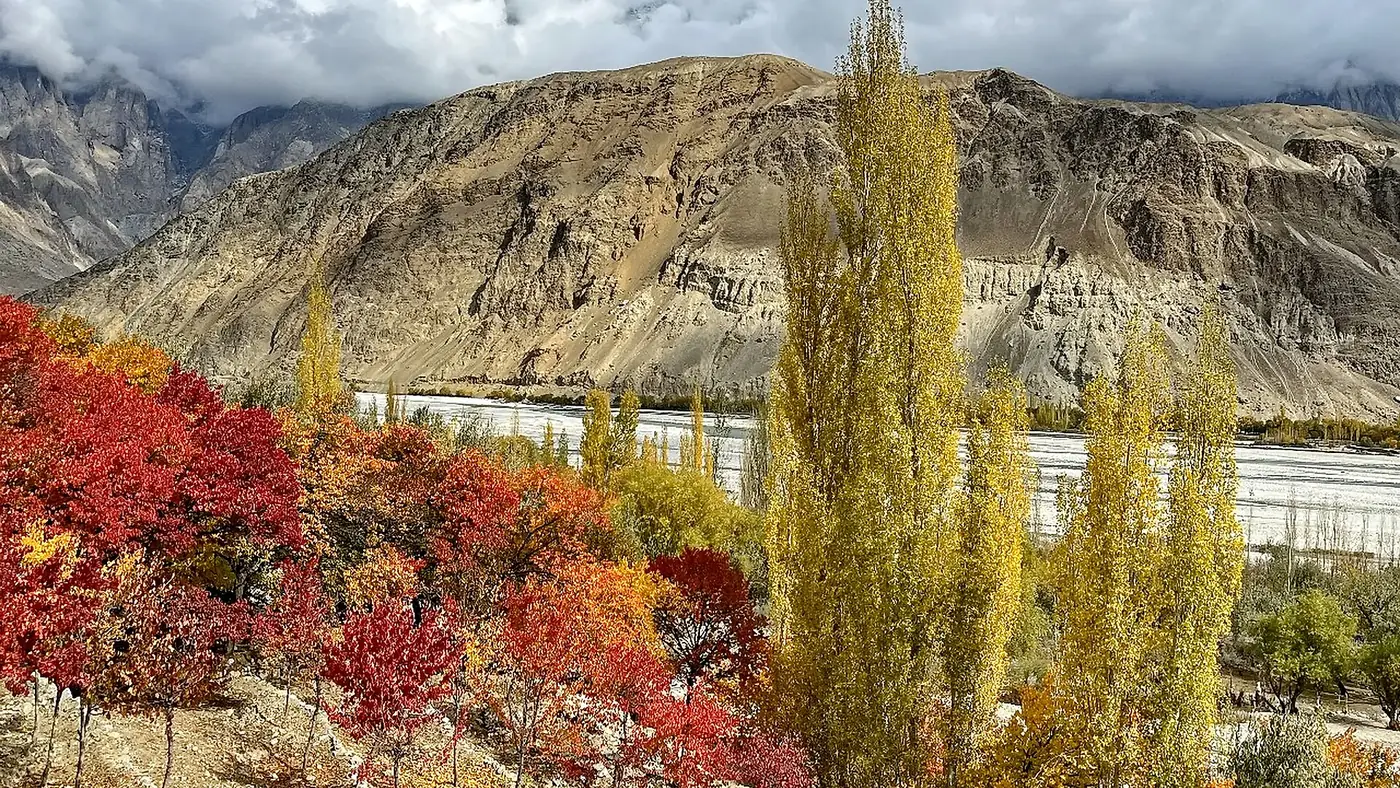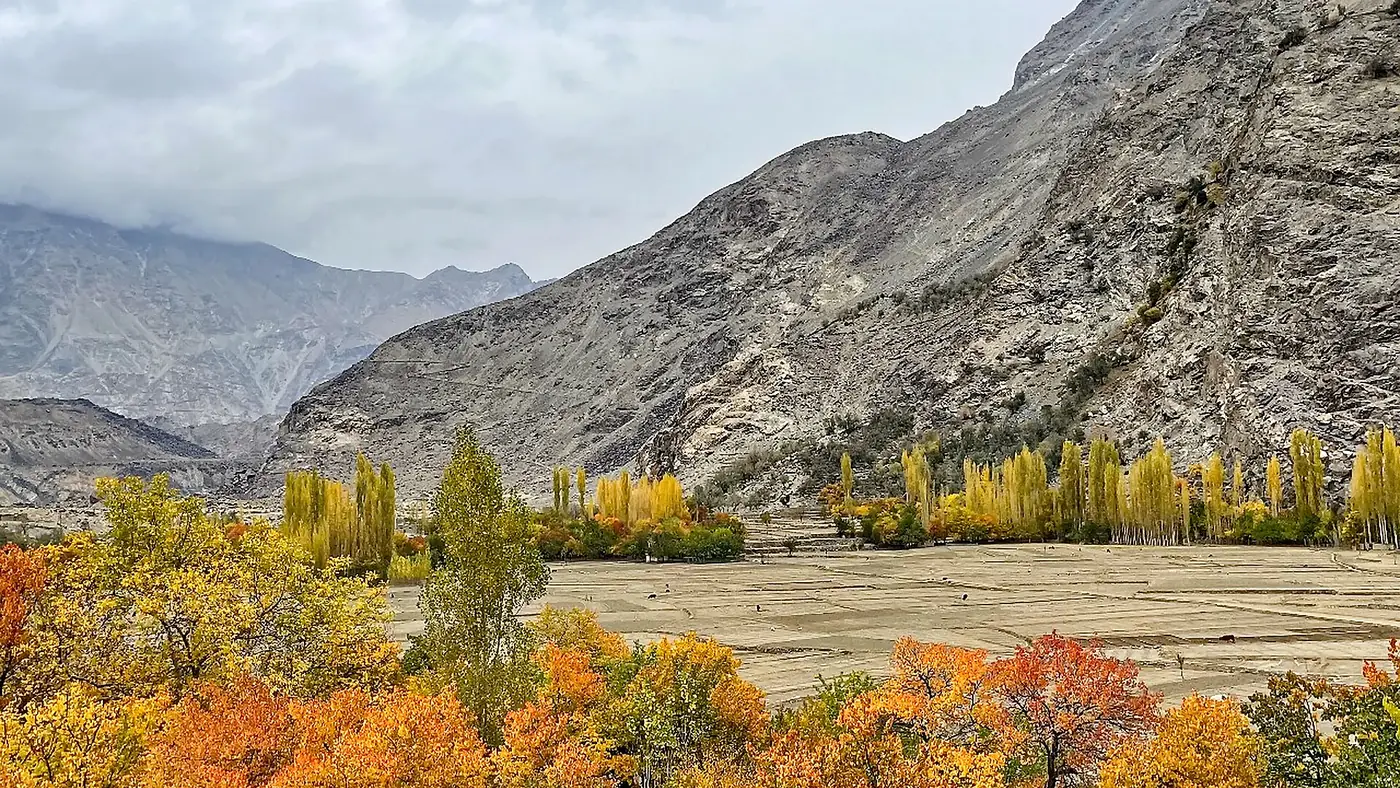
The best Skardu photography spots come from its contrasts: sand dunes against snow peaks, still lake water against sharp ridgelines, and some of the clearest night skies in Pakistan. The places that matter most for a camera are Katpana, the Kachura lakes and Satpara Lake, and each rewards a different time of day.
This guide covers when to be at each one, what to look for, and the basics of shooting the night sky at altitude.
| At a glance | |
|---|---|
| Best sunset | Katpana desert, last hour before sunset |
| Best sunrise | Upper Kachura Lake or Satpara Lake, first light |
| Best night sky | Katpana desert, away from town lights |
| Best reflections | Lower Kachura Lake, calm morning water |
| From Skardu | Katpana 15-20 min, Kachura about 30 min, Satpara 20-30 min |
| Gear worth bringing | A tripod, spare batteries (cold drains them fast), a wide lens |
Katpana desert: sunset and the night sky
Katpana, the cold desert beside Skardu airport, is the single best spot for both ends of the day. In the last hour before sunset the dunes turn gold against the snow peaks behind town, and it's close enough that you can shoot it and still be back in Skardu for dinner. Our Katpana desert guide has the seasonal sunset times.
After dark, Katpana is also one of the best places near any Pakistani city for night-sky photography. The desert sits at over 2,200 metres, away from most of Skardu's lights, and on a clear, moonless night the Milky Way is visible without much effort. A tripod, a wide-angle lens and a few seconds' exposure is enough to get a usable shot; cold nights drain batteries fast, so carry a spare.
Kachura: reflections and layered mountains
The Kachura lakes, about 30 minutes from Skardu, are the place for water shots. Lower Kachura, inside the Shangrila Resort, has calm, sheltered water that reflects the surrounding hills well in the still air of early morning, before any wind picks up. Upper Kachura, a short distance further on, is quieter and less developed, with a more open view up the valley. Our guide comparing Upper and Lower Kachura covers the differences if you're deciding which to prioritise.
Satpara Lake: the classic Skardu view
Satpara, on the road up towards Deosai, gives a wider, more open composition: a long lake backed by bare mountains, with boats on the water in season. Morning light is generally calmer here too, before the afternoon wind on the water breaks up reflections. It's an easy add-on if you're heading up towards Deosai or just want a change of scene from the lakes closer to town.
Skardu town and the fort
For a different kind of shot, Kharpocho Fort above the old town gives a high viewpoint over Skardu and the Indus valley, particularly good in the late afternoon when the light rakes across the valley floor. It's a short, steep climb rather than a drive, so allow extra time and carry water.
Tips for shooting at altitude
- Cold kills batteries faster than you'd expect. Keep spares in an inside pocket, not your camera bag, especially for early starts or night shoots.
- The light changes quickly. Sunrise and sunset are both short at this altitude and latitude; be in position with time to spare rather than arriving as the light is already going.
- Check the forecast, not just the season. Even in summer, cloud can roll in and block a clear night; ask locally about conditions before planning a dedicated night shoot.
- A tripod matters more here than almost anywhere else in the north. Night shots and low-light interiors both need one.
- Respect people and property. Ask before photographing individuals up close, and treat farmland and grazing areas around the villages as private, not backdrop.
Frequently asked questions
What is the best time of day for photos in Skardu?
The last hour before sunset and the first hour after sunrise, when the light is low and the colours on the dunes and mountains are strongest.
Where can I photograph the night sky near Skardu?
The Katpana cold desert, 15 to 20 minutes from town, is the most accessible spot with genuinely dark, clear skies away from most city light.
Is a tripod necessary for photography in Skardu?
Not essential for daytime shots, but close to it for night-sky and low-light photography, and useful for any long-exposure water shot at the lakes.
Which lake is more photogenic, Upper or Lower Kachura?
Lower Kachura has calmer, more sheltered water for reflections; Upper Kachura is quieter and gives a more open valley view. Many photographers cover both in one visit.
Do I need a permit to photograph in Skardu?
No permit is needed for ordinary tourist photography at these spots. Drones are a separate matter with their own rules, so check current regulations before flying one.