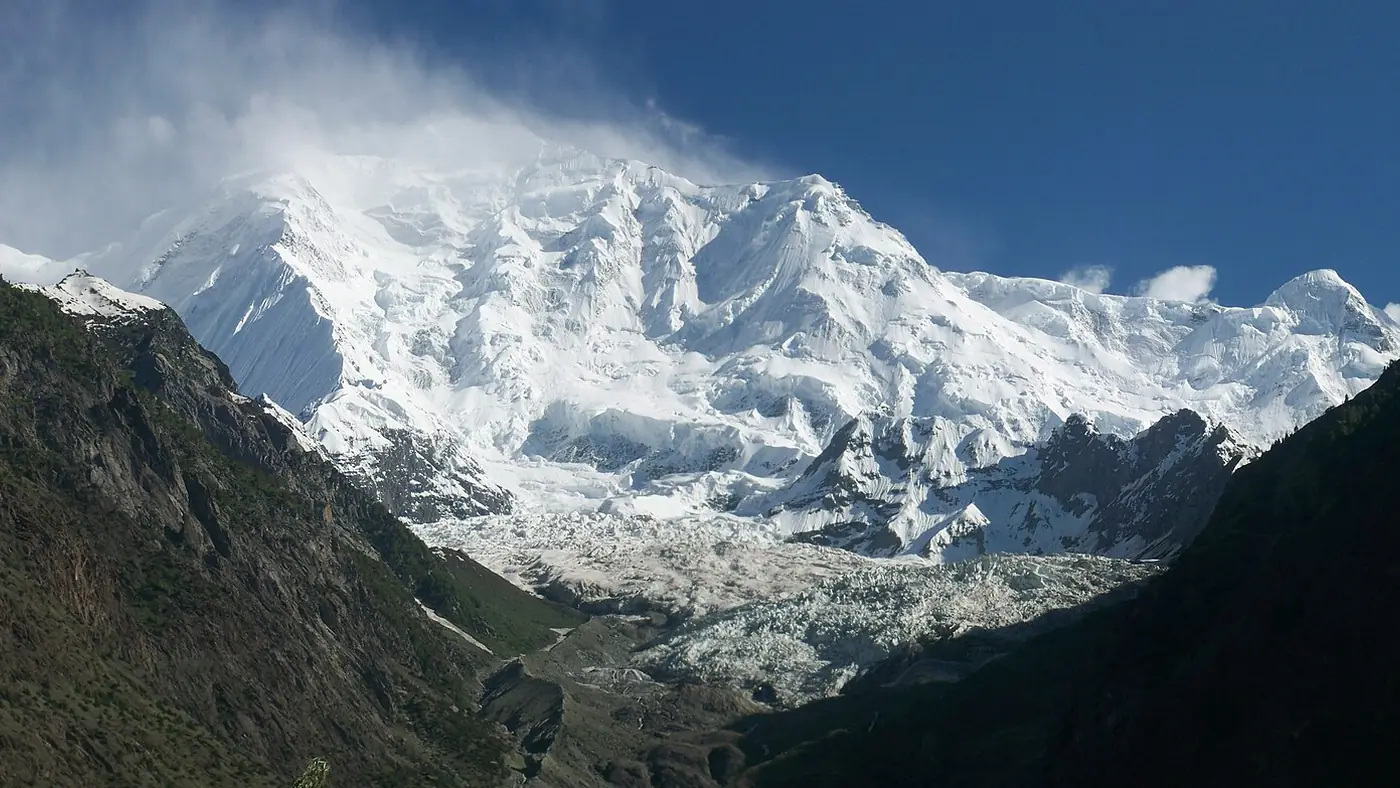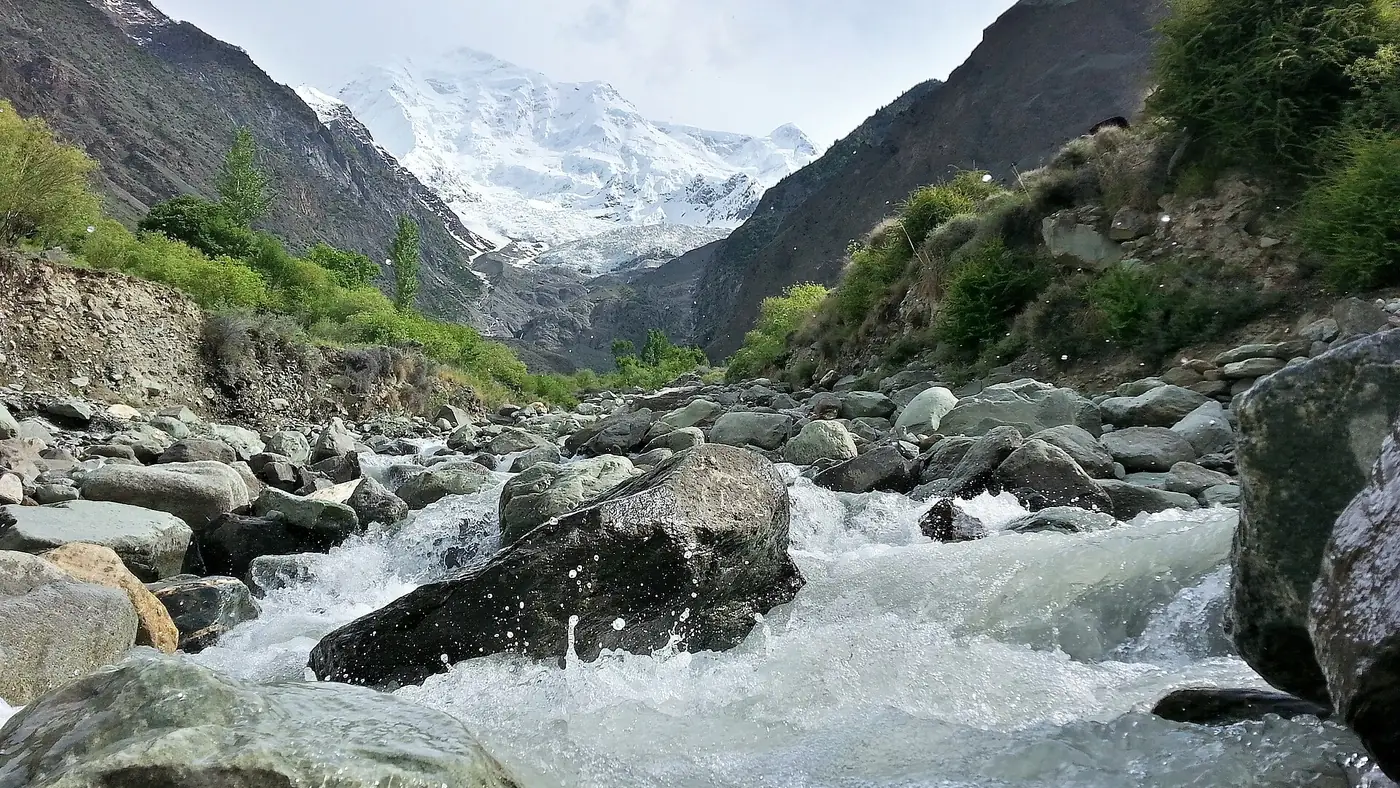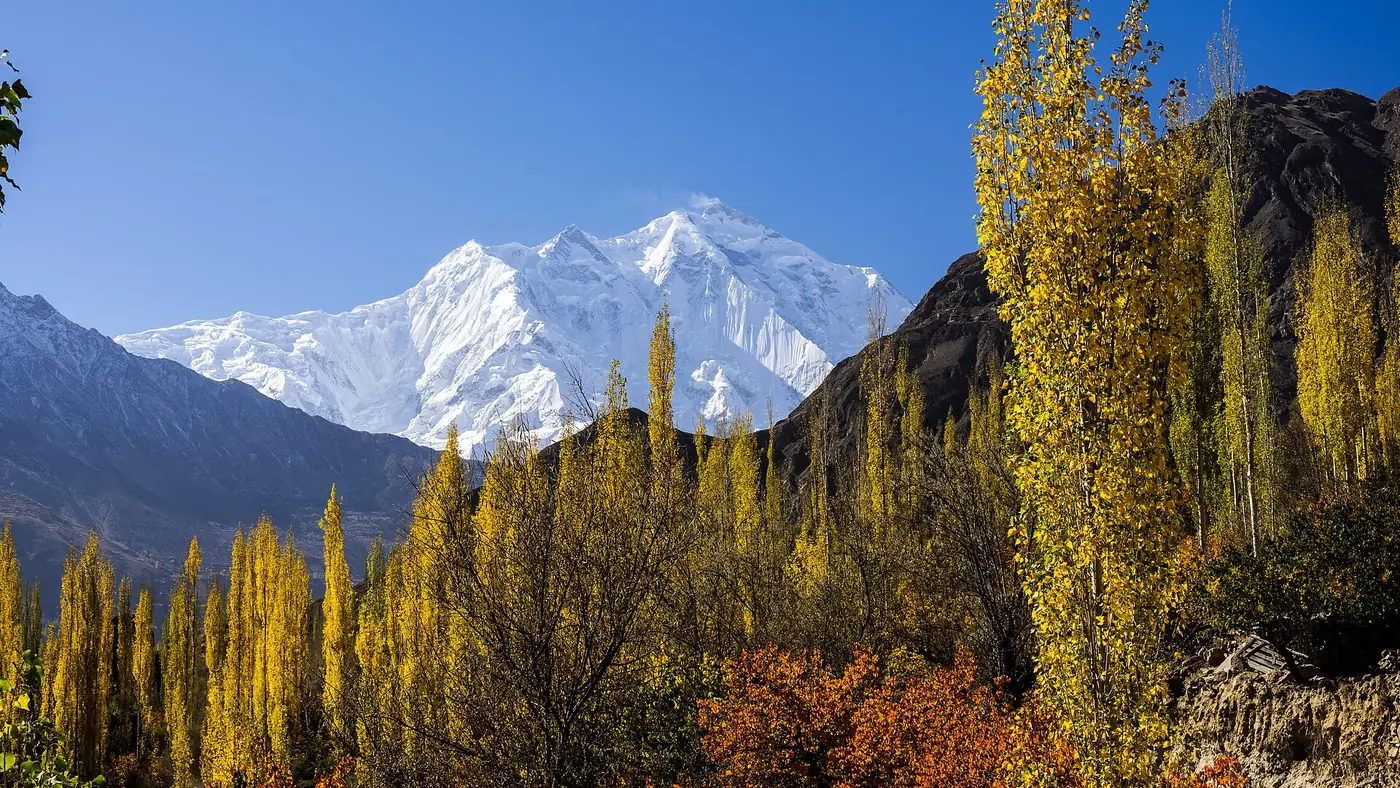
The best photography spots in Gilgit-Baltistan are Duiker above Karimabad for sunrise over the Hunza valley, Attabad Lake and the Passu Cones for the turquoise water and jagged peaks together, and the Deosai plateau and Shangrila lakes around Skardu for wide open space and reflections. Most of these are roadside or a short walk, so a normal camera bag and an early start matter more than specialist gear.
This guide runs through where to go, what time of day works, and how the seasons change what you get.
Hunza: Duiker, Eagle's Nest and Rakaposhi
Duiker, sometimes signed as Eagle's Nest, sits on the hillside above Karimabad and is the single most photographed viewpoint in the valley. From there Baltit Fort, the terraced fields and the whole sweep of the Hunza valley sit below Rakaposhi and Ultar Sar. Go for sunrise: the light comes low across the peaks before it reaches the valley floor, and the road up is quiet at that hour. Sunset works too, but haze often builds through the afternoon in summer.
Further down the Karakoram Highway, the stretch around Ghulmet and Maiun gives the closest roadside view of Rakaposhi, which rises more than seven thousand metres almost straight out of the valley. A short stop with a telephoto lens is worth more here than trying to fit the whole mountain into a wide shot.
Attabad Lake and the Passu Cones
Attabad Lake formed after the 2010 landslide and its colour, ranging from turquoise to deep blue depending on sediment and light, photographs best in the middle of the day when the sun is overhead, which is the opposite of most spots on this list. Boats and the lakeside road give several vantage points; the far end near Gulmit is quieter than the jetty area.
The Passu Cones, the jagged rock spires above Passu village, are best around sunset, when the last light picks out the ridgelines against the sky. The Hussaini suspension bridge nearby is a strong foreground for the cones behind it, though the bridge itself sways and is not the place to change lenses.
Khunjerab and the high passes
The road up to Khunjerab Pass climbs through Khunjerab National Park, where golden marmots sit up beside the road in early morning and late afternoon and the high ground opens out into wide, treeless country. Midday light is flat at this altitude; if you can time the drive for early morning, the low sun on the surrounding ridgelines is worth it. Our Gilgit, Hunza and Khunjerab tour covers this route along with Attabad, Passu and the Hunza forts.
Skardu, Shangrila and the Katpana desert
Around Skardu, Upper and Lower Kachura lakes (the Shangrila lakes) are calmest and clearest early in the morning, before wind picks up on the water and boat traffic starts. The Katpana cold desert nearby is at its best in the last hour of light, when low sun rakes across the dunes and throws long shadows, with the Karakoram peaks behind.
Shigar Fort and Khaplu Palace, both restored heritage buildings, give strong architectural subjects: carved wooden balconies, courtyards and, at Khaplu, the fort framed by orchards below.
Deosai: sky and open ground
The Deosai plateau, open only from around June to September, is less about a single viewpoint and more about space: rolling grassland, Sheosar Lake, and a horizon with almost nothing on it. It sits above 4,000 metres and has very little light pollution, which makes it one of the more accessible places in the north for night photography, if the weather is clear and you are prepared for a cold night at altitude. Our Skardu and Deosai tour includes a night on the plateau.
When to go
- March to April: apricot and cherry blossom through Hunza, particularly around Karimabad and lower Hunza. A short window and it moves fast, so build in a couple of spare days if this is the goal.
- June to August: the clearest, most reliable weather, Deosai open, and the greenest landscapes, but also the most crowded viewpoints and the haziest afternoons.
- October: clear air, autumn colour in the orchards, and far fewer people at Duiker and Attabad, though the high passes and Deosai are closing for the year.
- Winter (December to February): snow on Rakaposhi and the valley floor, and very few other photographers, but roads and some hotels close, and cold drains batteries fast.
Our travel guide has more on planning around road and weather conditions for each season.
What to carry
- A wide lens for landscapes and a mid telephoto for peaks and wildlife such as marmots and ibex
- A polarising filter, useful for cutting glare off Attabad Lake and the Shangrila lakes
- Spare batteries kept warm in an inner pocket, since cold at altitude drains them quickly
- A lightweight tripod for sunrise and night shots
- A cloth or blower for dust, especially on jeep tracks and at Deosai
Frequently asked questions
What is the single best photography spot in Gilgit-Baltistan?
Duiker above Karimabad, for the combination of Baltit Fort, the Hunza valley and Rakaposhi in one sunrise view, reached by a short drive with no trekking required.
Do I need a drone permit in Gilgit-Baltistan?
Rules on drones in Pakistan change and are enforced differently by area, so check the current position with the Gilgit-Baltistan tourism authorities before you travel rather than assuming a drone flown elsewhere is fine here.
Is Attabad Lake or Deosai better for photography?
They suit different light and different trips. Attabad rewards a midday visit for its colour and fits into a Hunza day trip; Deosai is a wide-open landscape best seen with a night on the plateau, and is only accessible in summer.
When is the blossom season in Hunza for photography?
Late March into April, starting in lower Hunza and moving up the valley over a couple of weeks. Dates shift with the winter, so check nearer the time if this is the main reason for the trip.