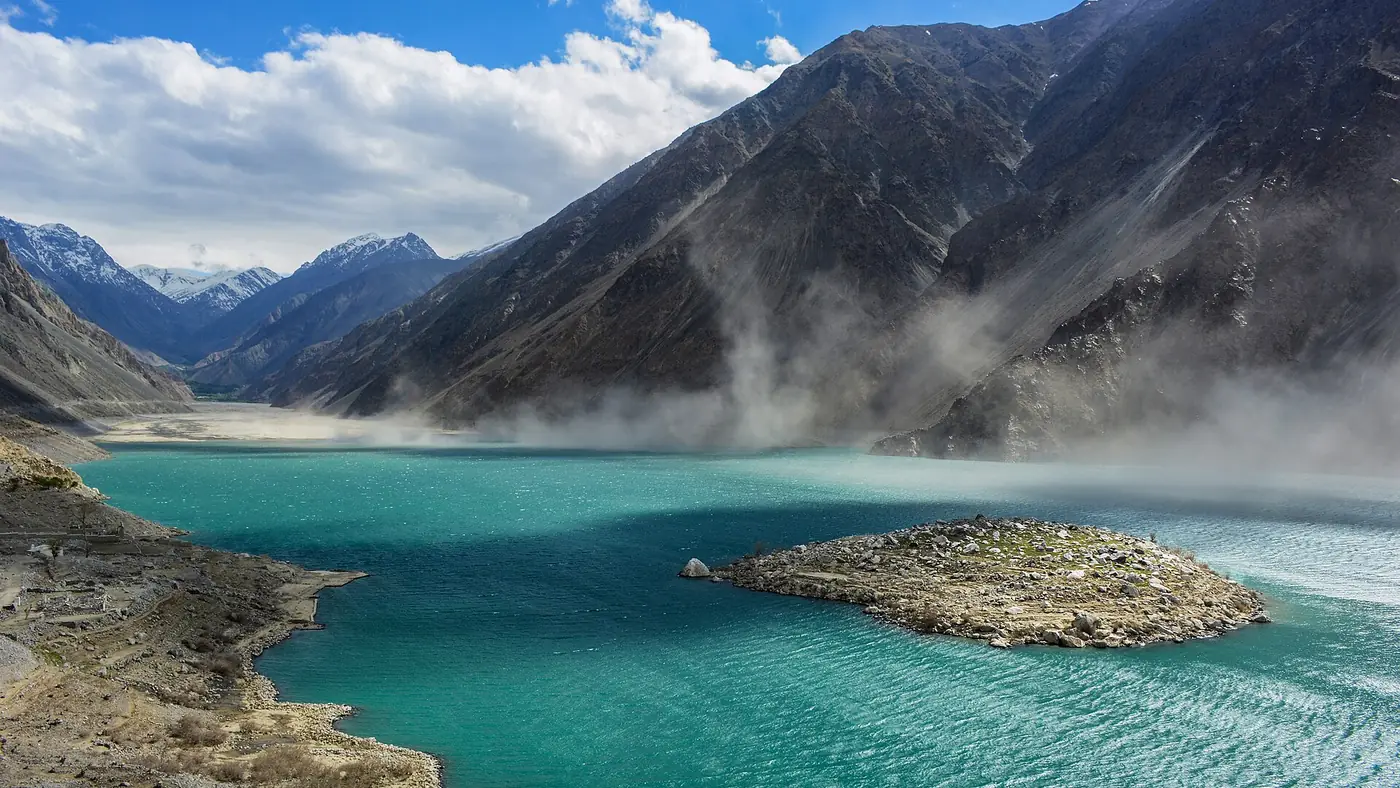
Satpara Lake is a long reservoir lake about 8 to 10 km south of Skardu, at around 2,600 metres, on the road that climbs to the Deosai plateau. It is fed by snowmelt from Deosai and held back by the Satpara Dam, which supplies Skardu with its drinking water and power. The road is paved as far as the lake, so it is 20 to 30 minutes from town in an ordinary car, and in season you can take a boat out on the water.
It is the easiest lake to reach from Skardu, and most people give it an afternoon or a stop on the way back from Deosai. This guide covers getting there, boating, the viewpoints, the history of the dam, and the Manthal Buddha Rock just below it.
| At a glance | |
|---|---|
| Where | South of Skardu, on the road to Deosai |
| Distance | About 8 to 10 km from the bazaar |
| Drive | 20 to 30 minutes; paved road, any car |
| Altitude | About 2,600 m |
| Water | Snowmelt from Deosai; the lake supplies Skardu's water |
| Things to do | Boating in season, trout fishing, viewpoints |
| Nearby | Manthal Buddha Rock, below the dam |
| Time needed | One to two hours |
Where is Satpara Lake, and how do you get there?
The lake sits in the valley directly south of Skardu town. The Satpara road leaves town and climbs steadily past Manthal village and the dam to the lake. The Gilgit-Baltistan tourism department's distance chart puts Satpara at 8 km from Skardu; depending on where your hotel is, expect 8 to 10 km.
The road is paved as far as the lake, so there is no need for a jeep. A car with driver or a taxi from town is the usual way; agree whether the driver will wait while you take a boat out. If you are hiring for several days, our guide to renting a car in Skardu covers rates.
You will see the name spelled two ways, Satpara and Sadpara, on signs, maps and in hotel names. They are the same place.
Boating on Satpara Lake
The tourism department lists boating and trout fishing as the lake's main activities, and in the season there are boats for hire near the road. Expect a mix of rowing boats and small motor boats; a short circuit of the nearer water is the usual trip.
A few things to know before you get in:
- Agree the price first, for the whole boat and for how long. Rates change from season to season.
- Ask for life jackets and wear them. The lake is deep, and at 2,600 metres the water is very cold even in August. Put children in theirs before they step into the boat.
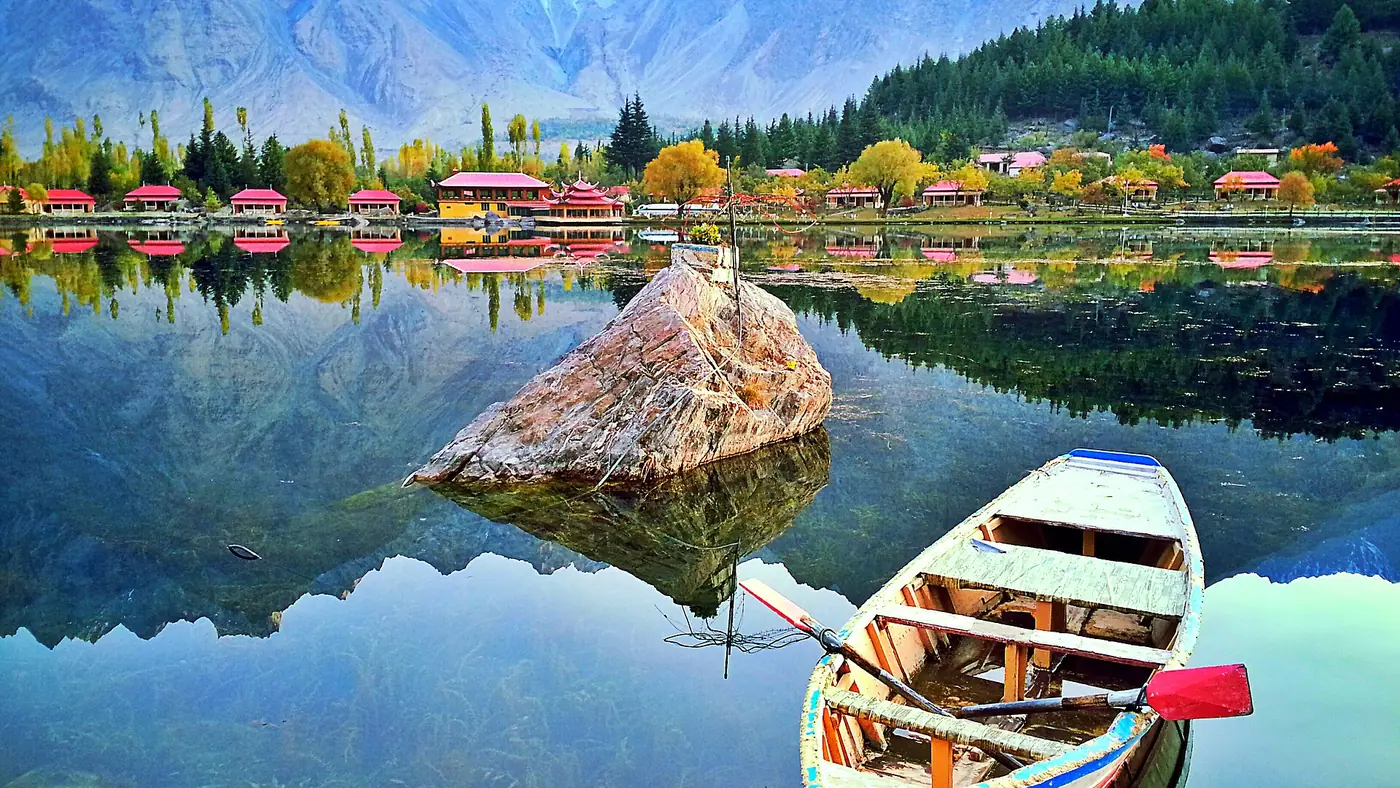
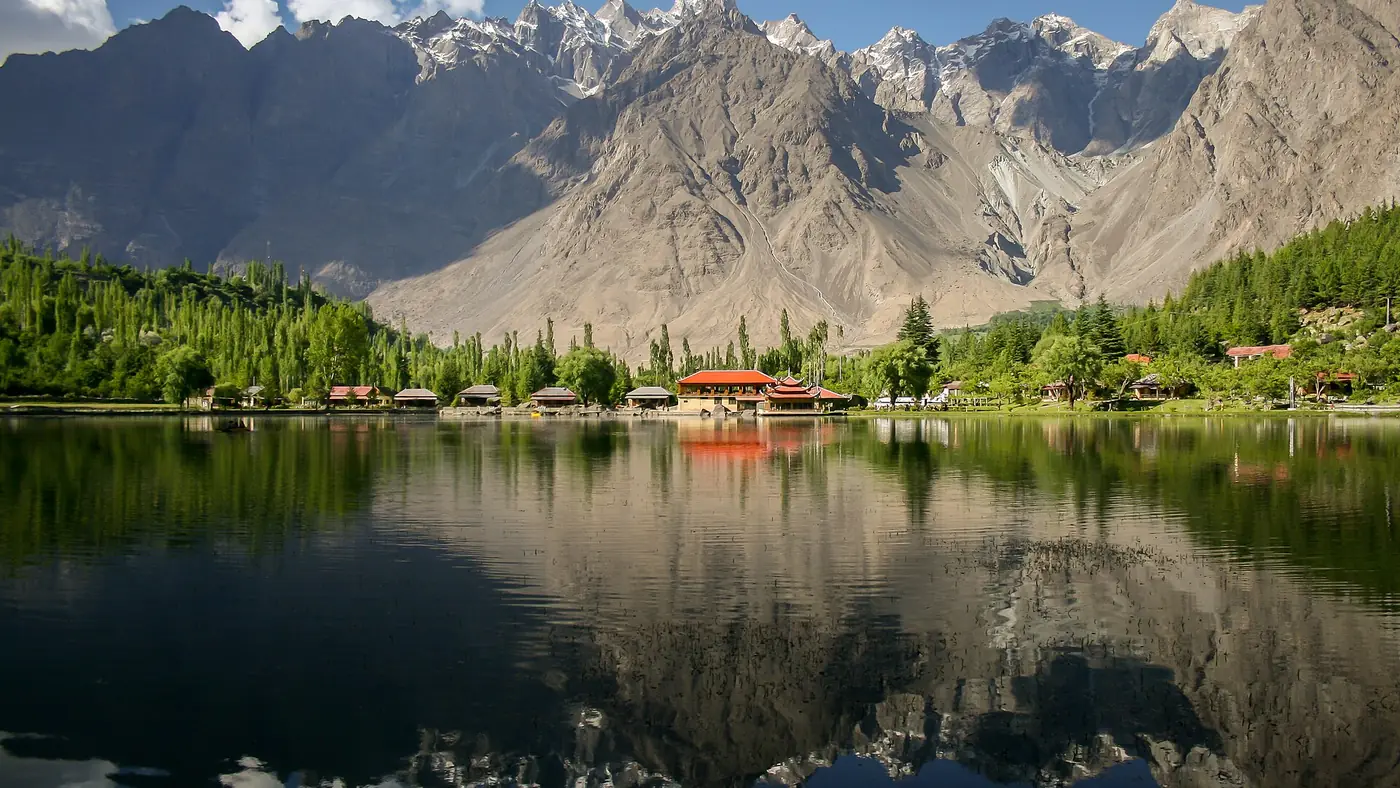
- Go in the morning if you can. The water is usually at its calmest early, before the wind picks up in the afternoon, and that is also when the reflections are best.
- Don't swim. Cold water at this altitude can overwhelm a strong swimmer quickly, and the lake is the town's water supply.
- Don't expect boats in winter. Plan boating for the warmer months.
The best viewpoints
Satpara is a lake you see best from above, and the road gives you most of the views.
- As the road tops the dam. The first view is the widest, looking up the length of the lake towards the mountains that wall in the Deosai side. Pull over only where there is room, well clear of the traffic.
- Along the shore road. The road follows the lake towards Sadpara village, with the small island in the lake coming into view. Stop wherever it is safe; the light on the water changes with every bend.
- Above Sadpara village, on the Deosai road. If you are going up to the plateau, the bends above the village look back over the lake towards the Skardu valley. This is the view most people remember from a Deosai day.
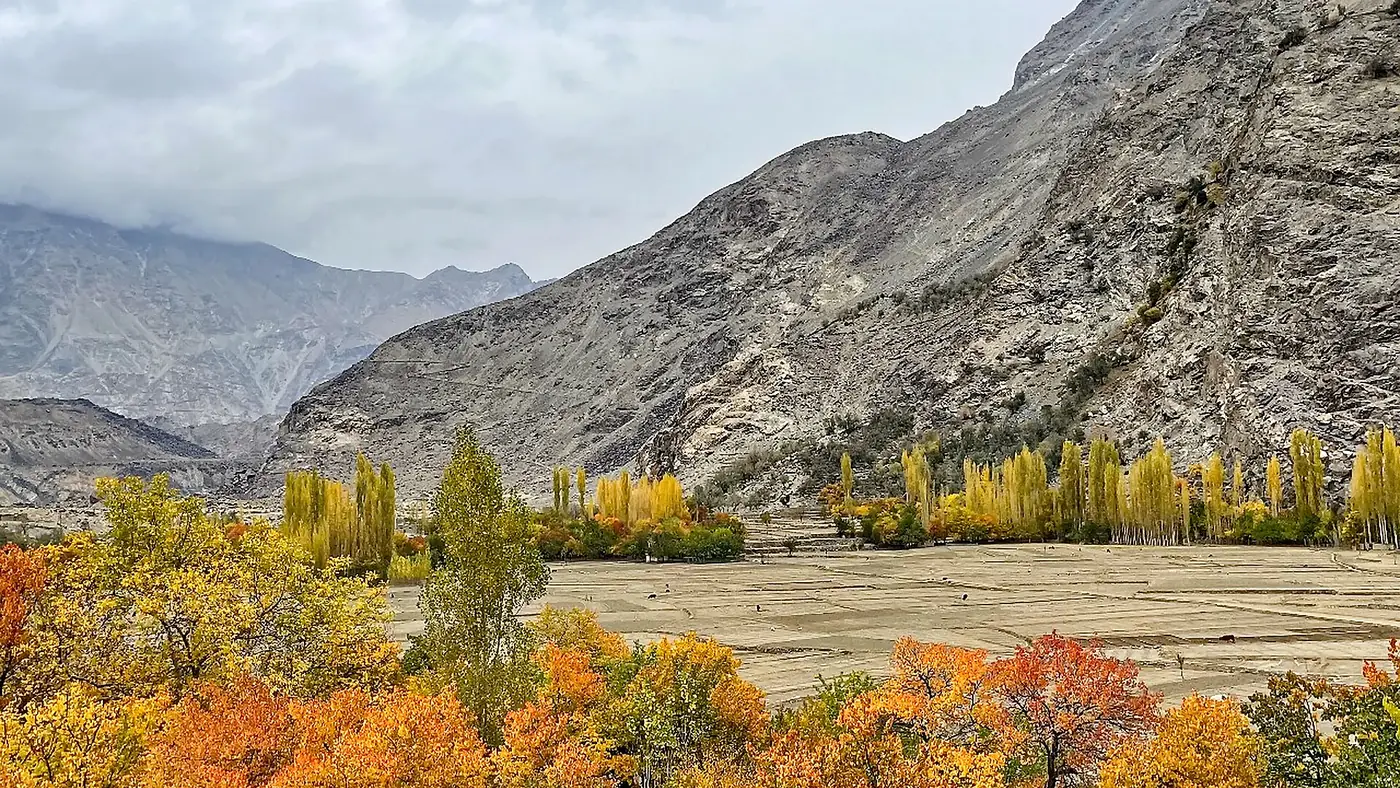
For photographs, calm mornings give the reflections, and the hour before sunset lights the mountains on the far shore. In the second half of October the poplars in the villages around the lake turn gold; our guide to Skardu in autumn covers the colour season.
The dam and the lake's history
There has been a lake here for a long time. Local tradition credits a Balti ruler of the late 16th and early 17th century with building the first dam across the valley, and the name Sadpara is often explained as "seven gates" in Balti.
Today's lake is larger. The Satpara Dam, built by WAPDA and completed in the early 2010s, is a concrete-faced earth-fill dam about 39 metres high. It generates around 17 MW of electricity for the Skardu valley, irrigates farmland below it and supplies drinking water to the town. The lake is roughly three and a half kilometres long, fed by snowmelt coming off the Deosai plateau, and it drains through the Satpara stream into the Indus.
That makes it a working reservoir as well as a sight. Keep the shore clean, take every wrapper and bottle back with you, and don't wash anything in the water.
Manthal Buddha Rock, on the way up
Just below the dam, in Manthal village, a large boulder carries one of the best-known carvings in Baltistan. The tourism department describes a large Buddha carved on the rock with a standing figure on either side, surrounded by 21 smaller figures, and dates it probably to the 8th century, from the centuries when Buddhism was the faith of the region. There are inscriptions at the foot of the rock.
It takes 15 to 30 minutes and sits naturally on the drive to the lake: see it on the way up, while the light is on the rock, and the lake afterwards. Our guide to places to visit in Skardu puts it alongside the town's other short sights.
Trout, Sadpara village and the road beyond
Brown and rainbow trout were introduced to the lakes of the region, and Satpara is one of the places anglers fish for them. If you want to fish, ask in Skardu about the current fishing permit before you go, rather than at the lake.
Sadpara village, at the far end of the lake, is the home village of Muhammad Ali Sadpara, the mountaineer who died on K2 in the winter of 2021. It is also the last village on the Skardu side of Deosai. Beyond it the tarmac gives way to a rough jeep track that climbs to the rim of the plateau. If you are carrying on, our guide to the drive from Skardu to Deosai covers the route and why you need a jeep.
When to visit Satpara Lake
- April and May: the valley greens up and the village orchards blossom; the high ground around the lake still carries snow.
- June to September: the main season for boating, and the time you pass the lake on the way to Deosai.
- October: clear air, calm water and gold trees in the villages; cold in the shade.
- Winter: cold and bleak, and the lake can ice over in the coldest weeks. It is a short look rather than an outing.
Is Satpara Lake worth visiting?
Yes, if you treat it as what it is: a short, easy trip from town rather than the highlight of a Skardu holiday. It is a good first afternoon after a morning flight, when you want something gentle at low effort, and a natural stop on the way back from Deosai when the light is softer.
If you have only two or three days, the Kachura lakes and Shigar come first; Satpara is the one to drop. Families with small children or older parents will find it one of the easiest outings in the valley, with the car parked close to the water. For the wider picture, see our Skardu destination page, and our seven-day Skardu and Deosai trip passes the lake on the way over to the plateau.
Frequently asked questions
How far is Satpara Lake from Skardu?
About 8 to 10 km south of the town, a drive of 20 to 30 minutes. The road is paved all the way, so any car can make it.
Can you go boating on Satpara Lake?
Yes, in season. Rowing and small motor boats are available near the road; agree the price before you set off and wear a life jacket.
What is the altitude of Satpara Lake?
About 2,600 metres, a few hundred metres higher than Skardu town. Most people barely notice the difference.
Is Satpara Lake the same as Sadpara Lake?
Yes. Both spellings are used for the lake, the dam and the village at its far end.
Is Satpara Lake on the way to Deosai?
Yes. The road to the Deosai plateau passes the dam and runs along the lake to Sadpara village, after which it becomes a jeep track.
Does Satpara Lake freeze in winter?
It can ice over in the coldest weeks, and it is a cold, quiet place from December to February. Visit between April and October for boating.