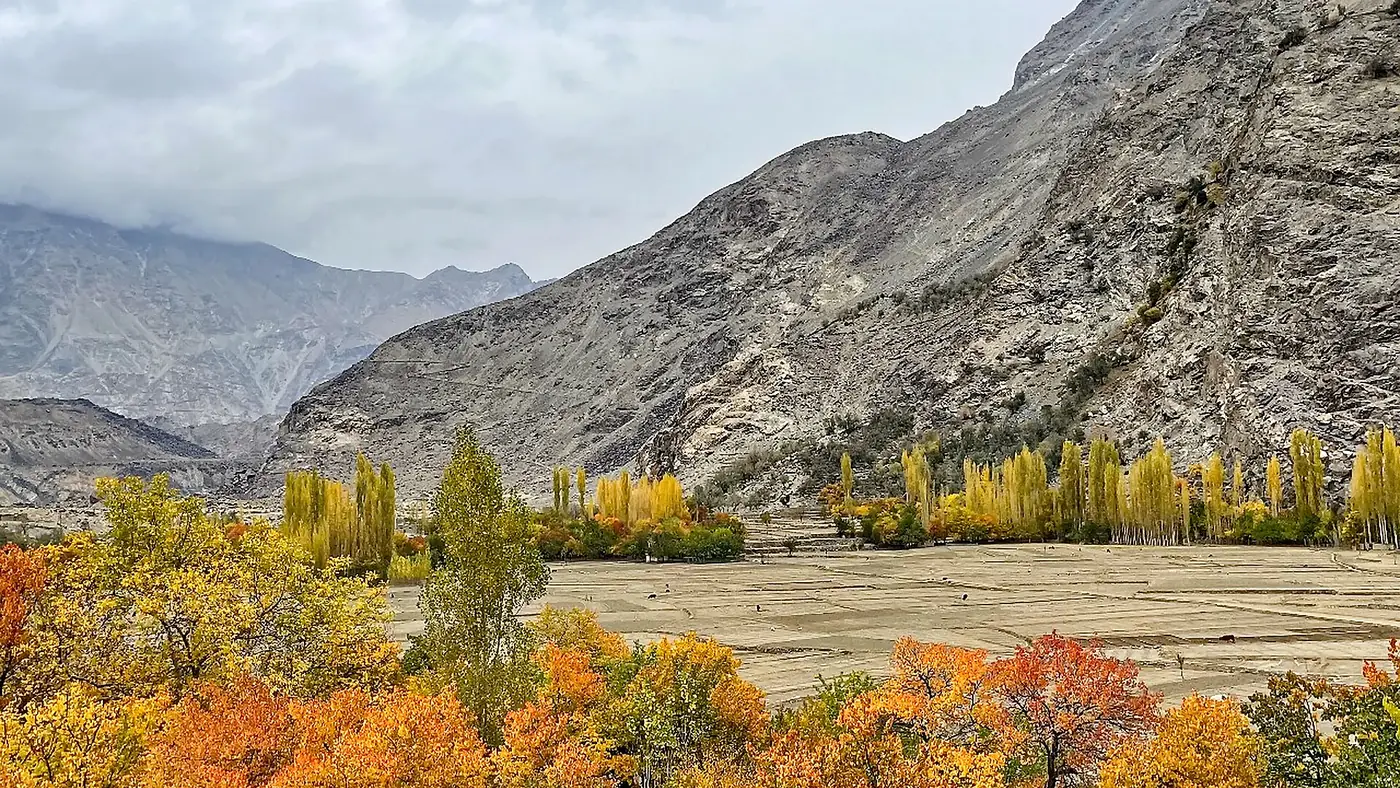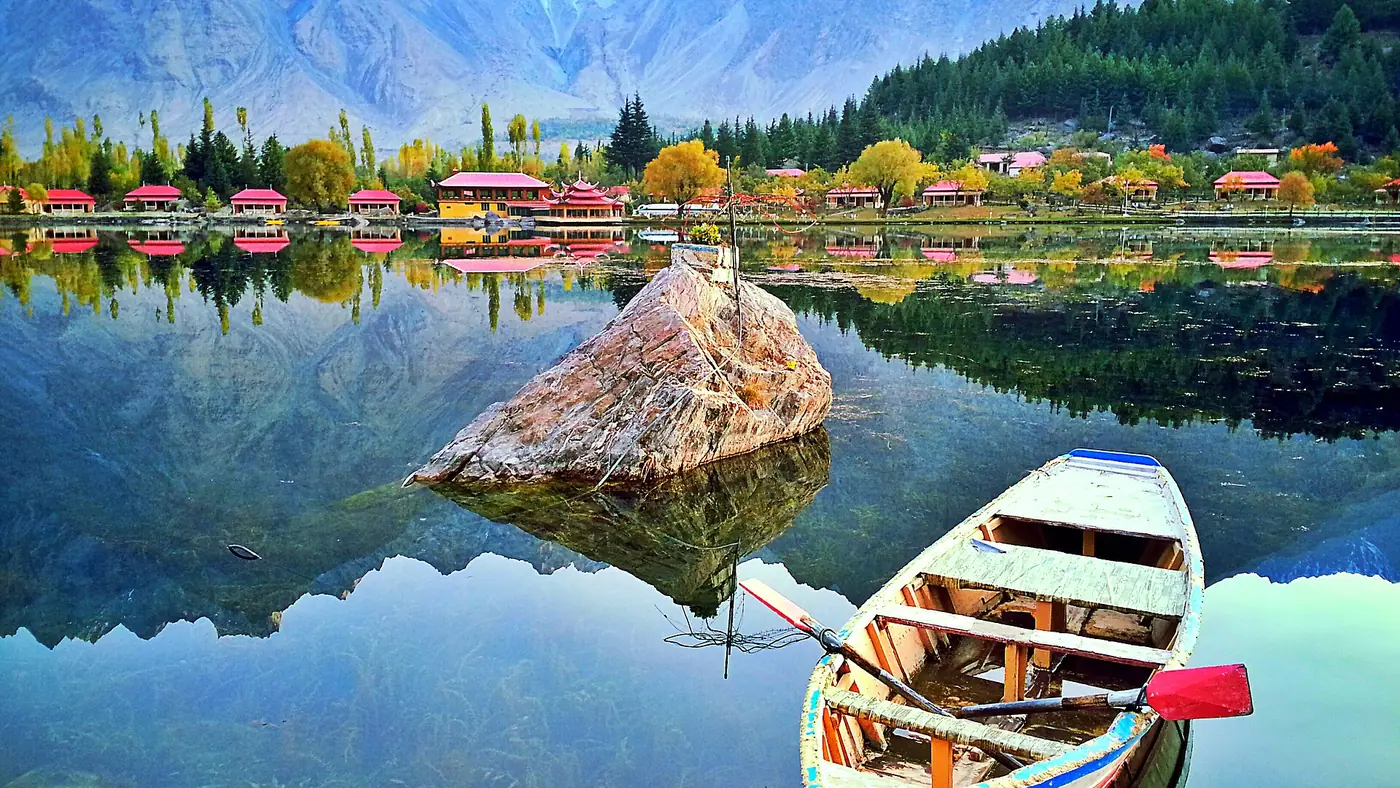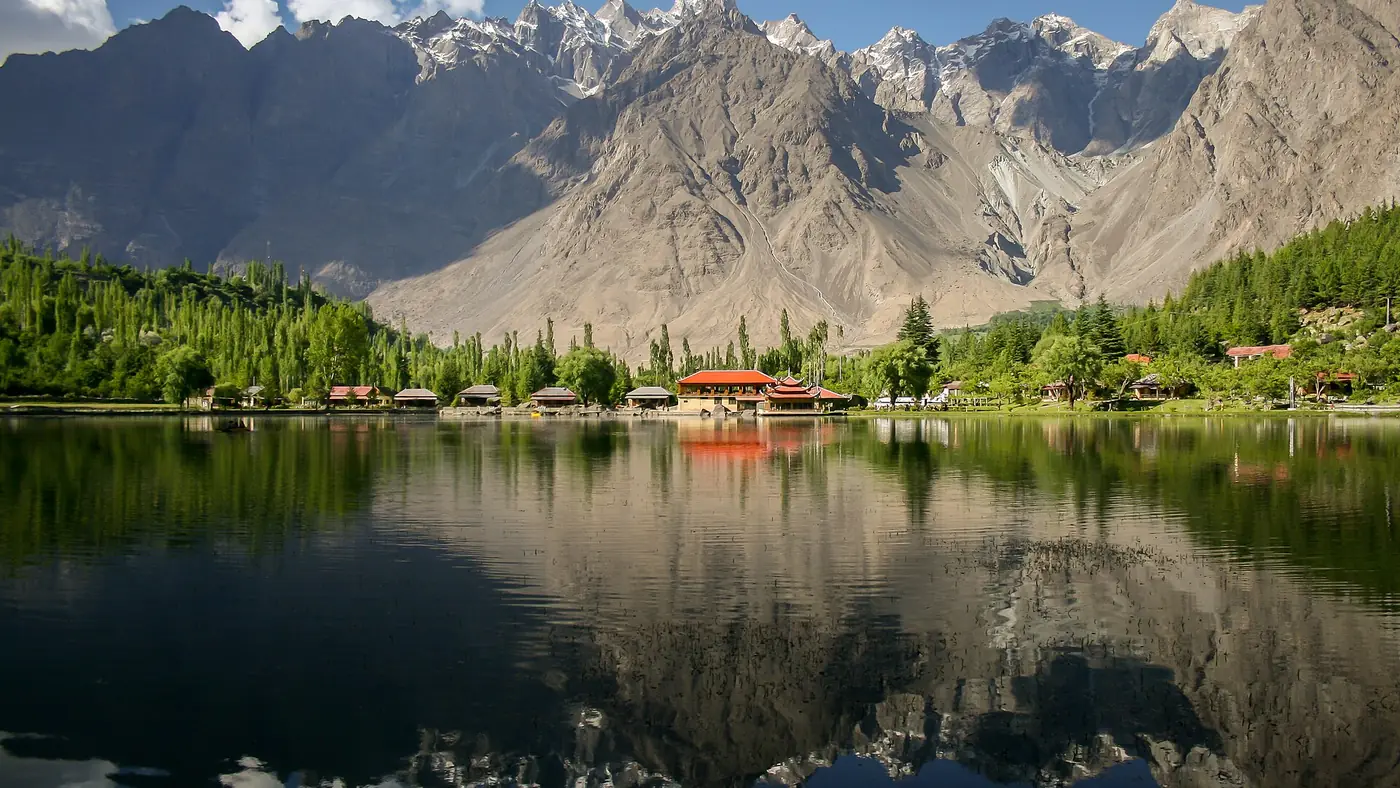
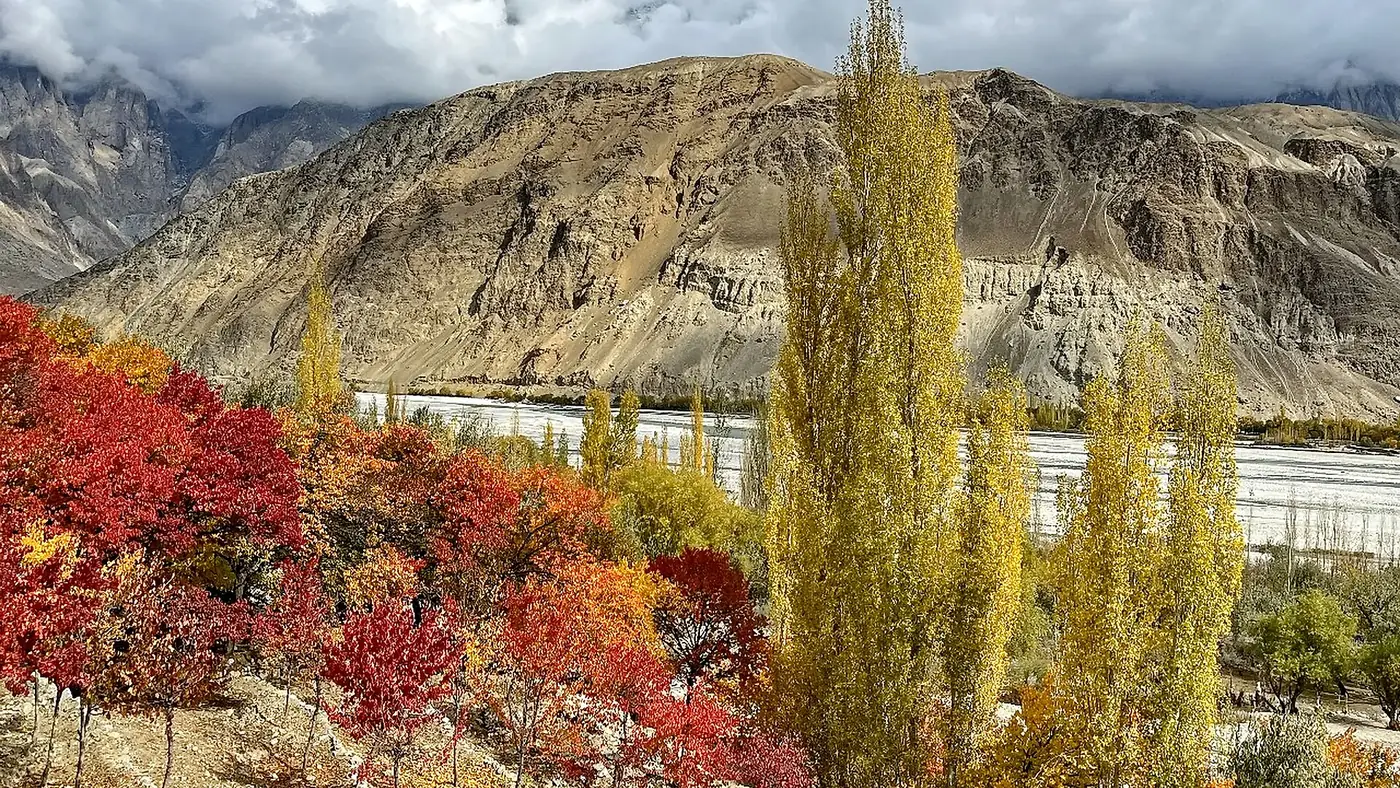
The places to visit in Skardu fall into a few easy groups: the Kachura lakes to the west, the Katpana and Sarfaranga cold deserts on the valley floor, Satpara Lake and the Manthal Buddha Rock just south of town, Shigar Fort to the north, and the Deosai plateau above it all. Most of them need half a day or less. Khaplu and Deosai each want a full day, Shigar can easily fill one, and Deosai is only open in summer.
With four clear days in Skardu you can see the core of it without rushing. This guide goes through each place in turn, with how far it is from town, how long to allow and when to go, so you can build your own plan.
| Place | From Skardu town | Time to allow |
|---|---|---|
| Kharpocho Fort and Nangsoq | In town | 2 to 3 hours |
| Manthal Buddha Rock | About 4 km | Under an hour |
| Satpara Lake | About 10 km | 1 to 2 hours |
| Katpana cold desert | About 7 km | 2 hours, late afternoon |
| Shangrila and Upper Kachura | About 26 to 30 km | Half a day |
| Sarfaranga cold desert | About 15 km | An hour, on the way to Shigar |
| Shigar Fort and village | About 30 km | Half a day to a full day |
| Deosai National Park | About 50 km to Bara Pani | A full day, summer only |
| Khaplu | About 103 km | A full day, or a night |
In and around the town
Kharpocho Fort
Kharpocho, "the king of forts", sits on the rocky hill that rises straight out of Skardu above the Indus. It was built by the Maqpon rulers of Baltistan, traditionally credited to Ali Sher Khan Anchan, and was their seat until a Dogra army took and wrecked it in 1840. What stands today is partly ruined, but the reason to climb is the view: the whole valley, with the Indus braiding across the sand below.
The walk up is short but steep. Go in the morning or late afternoon rather than the midday heat of summer, and wear proper shoes.
Nangsoq village
Behind Kharpocho lies Nangsoq, developed as Pakistan's first organic village. It is a quiet walk among fields and orchards, and a good place to try Balti food. Pair it with the fort for an easy first afternoon.
Manthal Buddha Rock
A few kilometres south of the bazaar, in Manthal village off the Satpara road, a large granite boulder carries a carved relief of the Buddha surrounded by smaller figures. It probably dates from the eighth century, from Baltistan's Buddhist period. It takes half an hour at most, and fits naturally on the way to Satpara Lake.
Satpara Lake
Satpara Lake is about 10 km south of town, at around 2,600 metres, held back by the Satpara Dam and fed by snowmelt from Deosai. It supplies Skardu with water. It is a quick trip on its own, and it is also on the road to Deosai, so many people see it on the way up to the plateau. Early morning, before the wind picks up, is when the water is calmest.
The Kachura lakes
The two Kachura lakes lie off the Jaglot road west of the airport, at about 2,500 metres, and are the image most people have of Skardu.
- Shangrila, or Lower Kachura. The lake sits inside the Shangrila Resort, Skardu's first resort hotel, opened in 1983. Its best-known feature is a restaurant built into the fuselage of an aircraft. It is landscaped and busy, especially on summer afternoons.
- Upper Kachura. A short drive further on and a walk down from the road, the upper lake is deeper (around 70 metres), clearer and less built up, with trout in the water and boats for hire in summer. It freezes solid in winter.
Go early. In the first hours after sunrise the water is still and the day boats have not yet gone out. A morning here plus Katpana in the evening makes an easy day. If you are choosing somewhere to sleep, our guide to where to stay in Skardu compares Kachura with staying in town.
The cold deserts: Katpana and Sarfaranga
Skardu's valley floor holds two stretches of sand dunes, one on each side of the Indus.
Katpana, at about 2,226 metres, is the one most visitors see. It lies next to the airport, a few kilometres from town, and in winter the dunes are covered with snow, something you will not see in many places. Come for the last hour before sunset, when the sand turns gold and the peaks behind catch the light. Midday in summer is hot and flat.
Sarfaranga lies across the river where the Shigar valley opens into the Skardu basin, on the road to Shigar. It is less visited than Katpana, and since 2017 it has hosted an annual jeep rally. Stop for half an hour on the way to or from Shigar.
Shigar valley
Shigar is about 30 km north of Skardu, an hour's drive at most, and it feels a world away from the bustle of the bazaar: orchards, stone walls and a slow pace.
- Shigar Fort (Fong Khar). A seventeenth-century palace on a rock above the village, restored by the Aga Khan Cultural Service between 1999 and 2004 and awarded a UNESCO Asia-Pacific heritage award in 2006. It is now run by Serena as a heritage hotel and museum. If you are not staying, the museum is the part to see; check the current timings and ticket price locally.
- Amburiq Mosque. A small wooden mosque from the fourteenth century, said to be the first in the valley. Its restoration won a UNESCO heritage award in 2005.
- The village and orchards. Walk the lanes behind the fort, and in season look for apricots, grapes and walnuts.
Half a day covers the fort and mosque. Make it a full day if you want lunch in the valley and time to walk, or stay a night.
Deosai National Park
Deosai is the high plateau above Skardu, averaging about 4,114 metres, and for many people the main reason to come. It is open only in summer: the track usually opens some time in June and closes with the first heavy snow, most often in October, and July to mid-September is the reliable window. It is a sea of grass and, in July, of wildflowers. Marmots are everywhere and there is a real chance of the Himalayan brown bear: the park's population has recovered from 19 animals in 1993 to 78 in 2022.
From Skardu the road climbs past Satpara Lake and over the Ali Malik Mar pass onto the plateau. Bara Pani, in the middle of the park, is about 50 km away, two to three hours by jeep, and Sheosar Lake, at the western edge, three to four hours. Allow a full day. Most visitors hire a local jeep with a driver who knows the plateau; the track is rough in places and a low car will struggle. It is also a big jump in altitude, so plan it after a night or two in Skardu, not on arrival day.
Plan Deosai as a day trip. Rules on staying overnight were tightened after a bear attacked a camper near Bara Pani in September 2025, and our Deosai National Park guide covers the current rules, the wildlife and the ways in.
Our Skardu and Deosai trip gives the plateau two days, with the crossing towards Sheosar in the best light, which is the best way to see it if you have the time.
Khaplu and further afield
Khaplu is 103 km east of Skardu along the Shyok river, about three hours each way. Khaplu Palace, built in 1840 and restored by the Aga Khan Trust for Culture, is now a Serena heritage hotel with a museum, and the Chaqchan Mosque in the town dates back to 1370. It is a long day trip; a night in Khaplu is better.
With more time, the valleys around Skardu reward a day each:
- Manthokha waterfall, in Kharmang, about 60 km from Skardu towards the southeast.
- Basho valley, about 45 km from Skardu at around 3,600 metres, forested and green, reached by jeep.
- Chunda valley, about an hour's drive and 500 metres above Skardu, with a view over the whole town, and at its best in blossom season.
How to see it all, and what to skip
With four days on the ground and Deosai open, a good split is:
- Manthal and Satpara on the afternoon you arrive, and Kharpocho if you have the energy.
- The Kachura lakes in the morning, Katpana at sunset.
- Deosai for the whole day.
- Shigar, with Sarfaranga on the way back.
Our 5-day Skardu itinerary sets this out in detail, with a spare day for weather.
If you are short of time, skip Satpara and Manthal before you skip Kachura or Shigar. If Deosai is closed, which it will be outside summer, use that day for Khaplu instead. Families with young children or older parents will find everything except Deosai easy; the plateau is worth it, but take the altitude seriously and keep the day unhurried.
Not every place suits every season. Kachura and Shigar are at their best in blossom time and autumn, Katpana is most striking under winter snow, and Deosai is summer only. Our guide to the best time to visit Skardu goes through the months, and the Skardu destination page gives the overview.
Frequently asked questions
What is the most famous place in Skardu?
Shangrila (Lower Kachura Lake) is the most photographed, and Deosai National Park is the one most people remember. Shigar Fort and the Katpana cold desert are close behind.
How many days are enough for Skardu?
Four full days cover Kachura, Katpana, Shigar and Deosai at a comfortable pace. Add a spare day for the flight, and a sixth if you want Khaplu.
Is Deosai part of Skardu?
Deosai National Park lies between Skardu and Astore, with most of it on the Skardu side. From Skardu it is two to three hours by jeep to Bara Pani in the middle of the park.
Which lake is best in Skardu?
Upper Kachura is the quieter and clearer of the Kachura lakes, Shangrila is the easiest to visit, and Satpara is the closest to town. Sheosar, on Deosai, is the highest and the most remote.
Can you visit Skardu's attractions without a jeep?
Yes, for most of them. Kachura, Katpana, Satpara, Shigar and Khaplu can all be reached in a normal car. For Deosai and side valleys such as Basho, hire a local jeep.