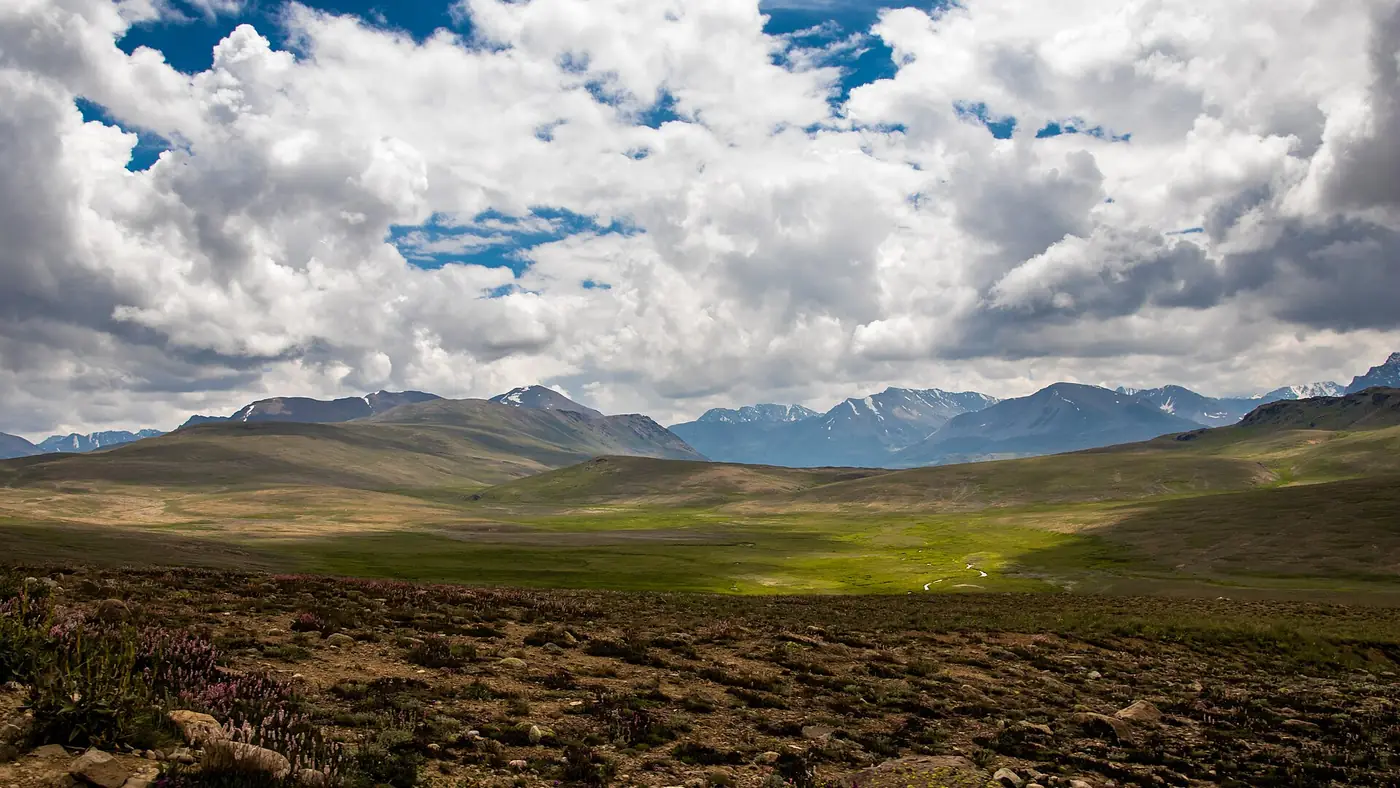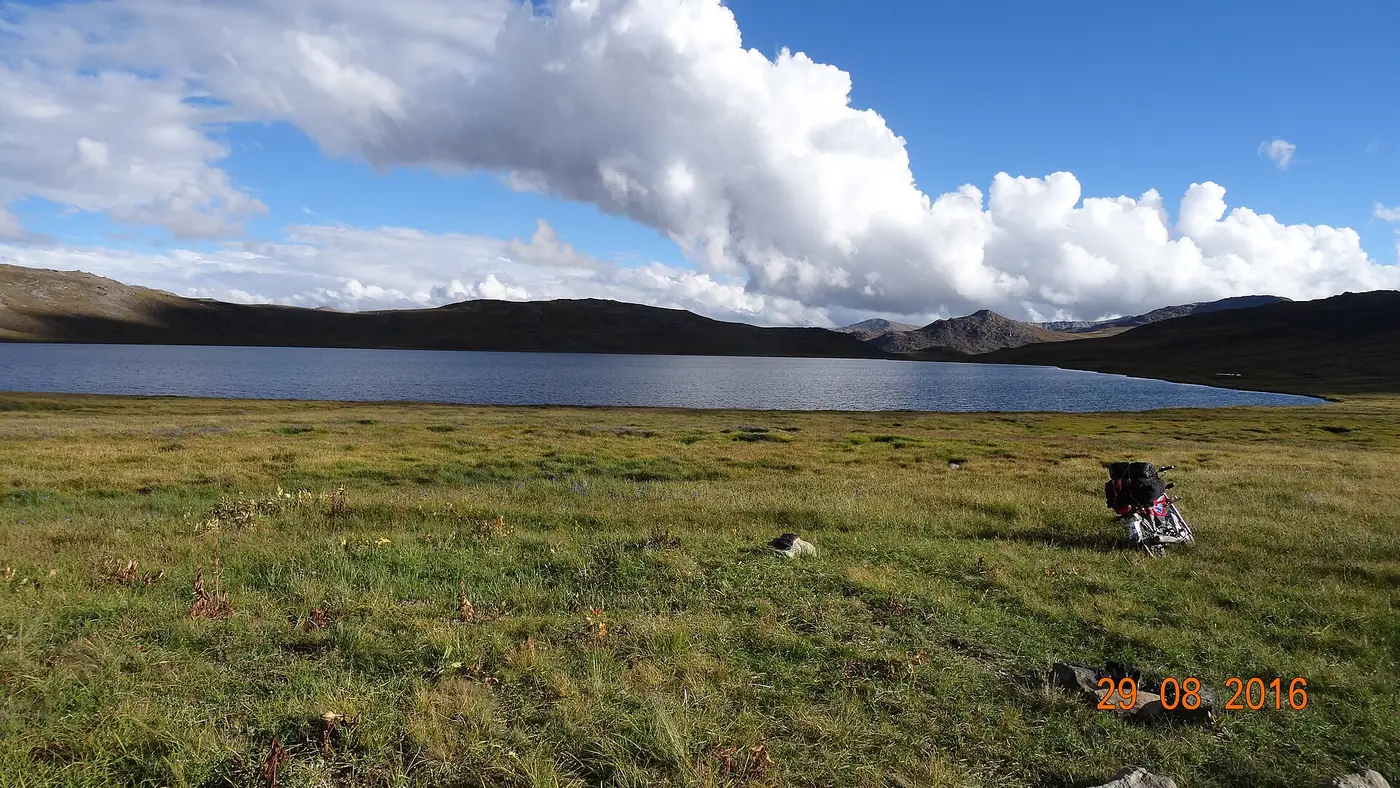
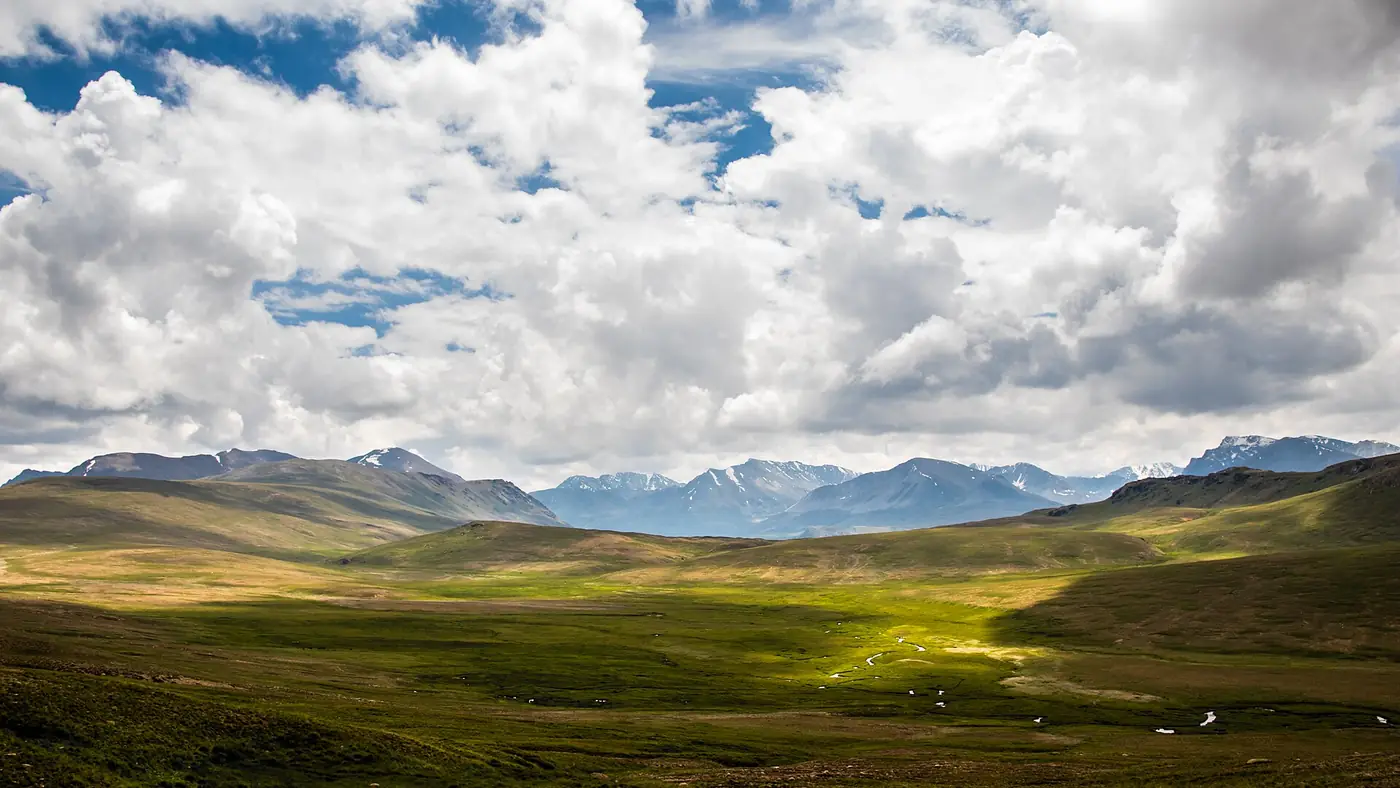
Deosai National Park is a high, treeless plateau between Skardu and Astore in Gilgit-Baltistan, at an average altitude of 4,114 metres. It is open to visitors only in summer, roughly June to October, and is reached by jeep track: about two hours from Skardu over the Ali Malik Mar pass, or from the Astore side through the village of Chilim. People come for the sheer space, the July wildflowers, Sheosar Lake and a fair chance of seeing a Himalayan brown bear.
This guide is the overview: what the plateau is, the ways in, the wildlife and lakes, the seasons, and what the rules now say about staying overnight, which changed after a bear attack in 2025.
| At a glance | |
|---|---|
| Altitude | 4,114 m on average |
| Size | More than 3,000 sq km |
| Open for visitors | Roughly June to October, depending on snow |
| From Skardu | About 30 km to the rim of the plateau, 1.5 to 2 hours by jeep |
| Skardu to Astore across it | About 152 km, a full day |
| Vehicle | Jeep or other high-clearance 4x4 |
| Overnight stays | Restricted since 2025; check before planning a night |
| Mobile signal | Expect none on the plateau |
What is Deosai?
Deosai is one of the highest plateaus in the world, a rolling upland of grass, streams and low hills with mountains around its edges and not a single tree. There are no villages on it. For more than half the year it lies under deep snow, and in summer it turns green and then, for a few weeks, almost solid with flowers.
The name is usually translated from Shina as "land of giants". In Balti the plateau is called Ghbiarsa, "the summer place", which describes the only time anyone can use it.
It was declared a national park in 1993, mainly to protect the Himalayan brown bear, and covers more than 3,000 square kilometres. The park is run by the Gilgit-Baltistan Forest, Wildlife and Environment Department, which has a short official page on Deosai.
How do you get to Deosai?
There are two main ways onto the plateau, and both are jeep tracks for most of their length.
From Skardu
This is how most visitors arrive. The road leaves Skardu, which sits at about 2,200 metres, and climbs past Sadpara Lake and Sadpara village before zigzagging up to Ali Malik Mar, the pass on the northern rim of the plateau. It is paved as far as Sadpara Lake and rough after that.
The rim is about 30 km from Skardu, which takes an hour and a half to two hours by jeep. Bara Pani, in the middle of the plateau, is two to three hours from town, and Sheosar Lake on the far side three to four. Our Skardu to Deosai route guide covers the drive stage by stage.
From Astore
From the Astore valley a road climbs to Chilim, the last settlement, and then onto the plateau at its western end near Sheosar Lake. This side is closer to the Karakoram Highway and to Nanga Parbat country.
Crossing from one side to the other
Skardu to Astore across Deosai is about 152 km, and with stops it takes the whole day. Crossing is a useful way to link Skardu with Astore and the Karakoram Highway without doubling back along the Skardu road, as long as the weather holds and the track is open end to end.
There are also walking routes onto the plateau, such as the trek over the Burji La from the Skardu side. These are proper high-altitude treks that need a guide, not afternoon walks.
A jeep or another high-clearance 4x4, with a driver who knows the track, is the standard advice. The surface is rutted and stony, and after rain it turns to mud in places. Everyone pays the national park entry fee at the checkpoint. It is different for Gilgit-Baltistan residents, other Pakistanis and foreign visitors, and it has changed several times, so carry cash and pay what is posted.
When is Deosai open?
Snow closes the plateau from some time in October or November until the following June. In a typical year the track opens to visitors some time in June, once the snow has melted and been cleared, and stays open until the first heavy snowfall, most often in October. The exact dates move every year.
Summer does not guarantee an open road either. In late July 2025 heavy rain brought down landslides on the road between Sadpara and Deosai, and hundreds of tourists were stranded overnight until the army cleared it. In late July 2026 a section of the road was washed away when the Sadpara stream overflowed, and the route via Deosai was closed.
For how to check the road before you set out, see whether Deosai is open or closed. For choosing a month, see the best time to visit Deosai: July for flowers, later summer for quieter days. Our seasonal guide to the north puts Deosai alongside the rest of Gilgit-Baltistan.
Wildlife: bears, marmots and birds of prey
The Himalayan brown bear is the reason the park exists. When it was created in 1993 there were only 19 bears on the plateau. Protection has worked: recent counts put the population at several dozen, and Deosai is now one of the most important strongholds of this bear anywhere.
Bears hibernate from around October and come out in April and May, so they are active through the whole visitor season. They feed mostly early in the morning and again later in the afternoon, which is when you have the best chance of seeing one, usually at a distance across the grass. There is no guarantee, and plenty of visitors cross the plateau without seeing one.
What you are almost sure to see in summer are golden marmots, standing up beside their burrows all along the track. Other animals of the park include:
- Himalayan ibex on the slopes around the edges
- Tibetan wolf and red fox
- Snow leopard, present but very rarely seen
- Golden eagle, lammergeier and Himalayan griffon vulture overhead, among well over a hundred bird species recorded
Sheosar Lake and the rivers
Sheosar Lake is at the western end of the plateau, near the Chilim side. It is a little over 2 km long and almost as wide, and on a clear day you can see Nanga Parbat from its shore. From Skardu it is the far end of the day, three to four hours away, so it is worth deciding in the morning whether you are going that far.
Bara Pani is the largest of the rivers crossing the plateau, and the bridge over it is the natural stopping point in the middle of the plateau on the drive from Skardu. Kala Pani and the Shatung are the other main streams, running clear and very cold through the summer.
Below the plateau on the Skardu side, Sadpara Lake, at about 2,600 metres, is fed by snowmelt from Deosai. You pass it on the way up, and it is worth a stop on the way back when the light is lower.
Can you camp or stay overnight in Deosai?
For years many visitors spent a night on the plateau, in their own tents or in seasonal tented camps near Bara Pani, Kala Pani and Sheosar. That has changed.
In September 2025 the singer Quratulain Balouch was attacked and injured by a brown bear while camping near Bara Pani. The Gilgit-Baltistan government then banned camping on the plateau at night. In December 2025 the Forest, Parks and Wildlife Department went further and notified a ban on seasonal hotels, accommodation and all commercial activity inside the park from the 2026 season, and reports at the time said the night-camping ban remained in force.
What that means for planning:
- Treat Deosai as a day on the plateau, either as a return trip from Skardu or as a one-day crossing between Skardu and Astore.
- Sleep in Skardu or on the Astore side. There is simple accommodation around Chilim and more further down the Astore valley.
- Don't count on buying food or tea on the plateau. With commercial activity banned inside the park, carry everything you need for the day.
- If you want a night on the plateau, ask first. Check with the forest and wildlife department's office in Skardu or the staff at the checkpoint what is permitted this season. Rules like these can be relaxed or tightened from one year to the next, and pitching a tent on your own is not the way to find out.
Altitude, weather and what to carry
The drive from Skardu gains around 2,000 metres in two hours. A dull headache or shortness of breath when you first walk about is normal at this height. Move slowly, drink water, and if someone feels steadily worse rather than better, drive down. Our travel guide has more on altitude across the north.
The weather on the plateau is colder and much windier than in Skardu, even on a July afternoon. Rain and hail can blow in quickly, nights drop close to freezing even in summer, and the sun at this height burns quickly. Carry:
- A warm jacket, hat and gloves, and a waterproof layer
- Sunglasses and sunscreen
- Water, lunch and snacks for everyone, for the whole day
- Cash for the park fee
- Your CNIC (for foreign nationals, passport with visa)
- Any regular medication, kept in the vehicle rather than in the hotel
- A full tank of fuel, since there is none on the plateau
There is no mobile signal on most of the plateau. Tell someone in Skardu or Astore when you expect to be back.
Who Deosai suits, and who it doesn't
Deosai is at its best for people who enjoy open space for its own sake: walking out along a stream, watching marmots, waiting to see if the dot on the far slope is a bear. There is no single sight at the end of the drive. The plateau itself is the point, and it rewards a slow day.
It suits families with older children who travel well, photographers, and anyone who liked the Khunjerab drive and wants something wilder. It is harder going for young babies, for anyone who struggles on long bumpy drives, and for people with heart or lung conditions, who should talk to a doctor first about the altitude. With the current rules it is also no longer a camping trip for most people, which will disappoint anyone who came for a night under the stars.
If you have only two or three days in Skardu, Deosai takes a full one. Shangrila, Upper Kachura, the Katpana cold desert and Shigar are all easier. If you have longer, go. Our seven-day Skardu and Deosai trip builds the plateau into a week in Baltistan, with a spare day for weather.
Frequently asked questions
Where is Deosai National Park?
It is in Gilgit-Baltistan, on a high plateau between Skardu and the Astore valley. The Skardu side is the usual way in, about 30 km south of the town.
How high is Deosai?
The plateau averages 4,114 metres, roughly 2,000 metres above Skardu, and Sheosar Lake sits a little higher than that average.
When is Deosai open for tourists?
Roughly June to October. It opens once the snow has cleared and closes with the first heavy snowfall, and the dates change every year, so check locally before setting out.
Can you see bears in Deosai?
Sometimes. Himalayan brown bears are active throughout the summer season, and early morning and late afternoon give the best chance, usually at a distance, but many visitors see none.
Is camping allowed in Deosai?
Night camping was banned after a bear attack in September 2025, and seasonal hotels and commercial activity inside the park were banned from the 2026 season. Ask the forest and wildlife department in Skardu or the checkpoint staff what is currently permitted before planning a night on the plateau.
Can a car go to Deosai?
A jeep or high-clearance 4x4 is the standard advice. The track beyond Sadpara Lake is unpaved, stony and muddy after rain, and there is no help on the plateau if a car gets stuck.