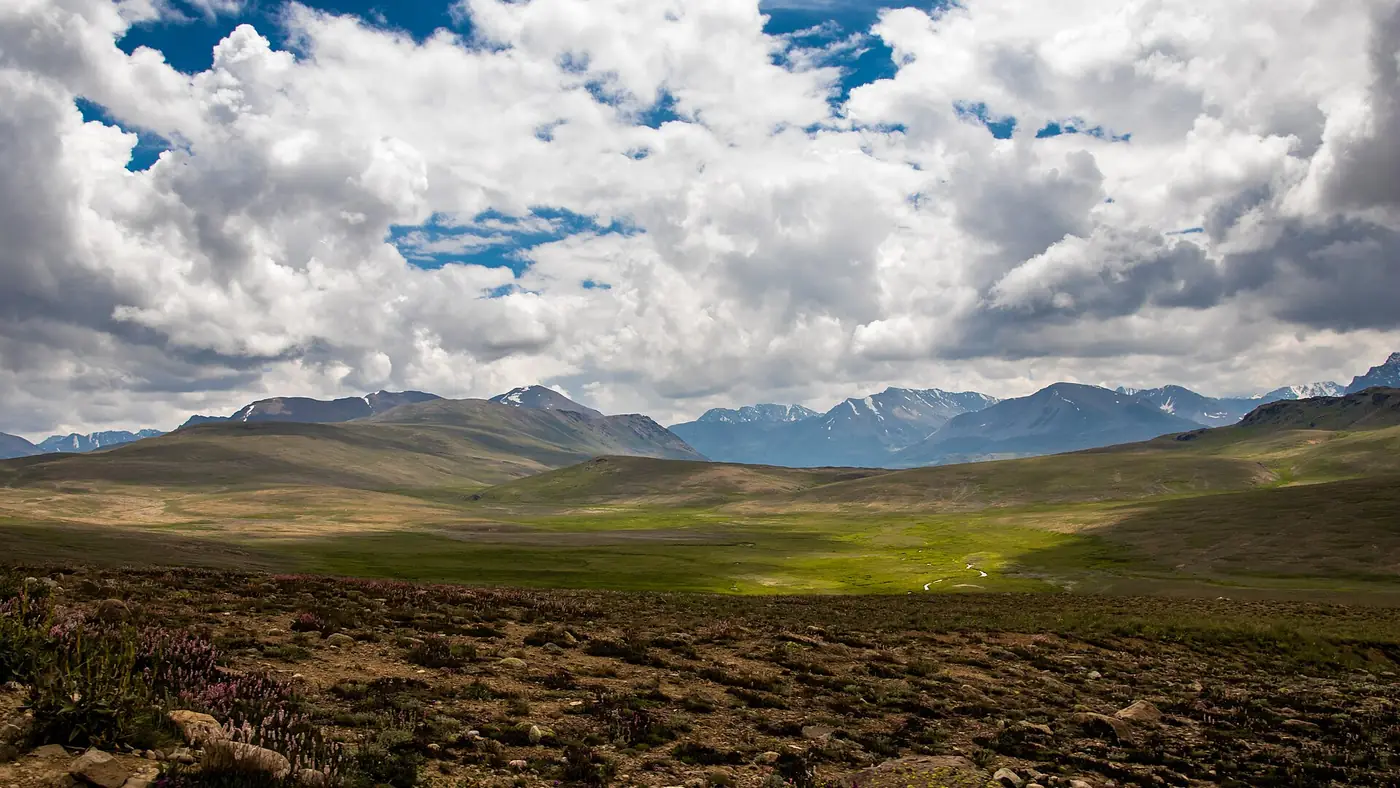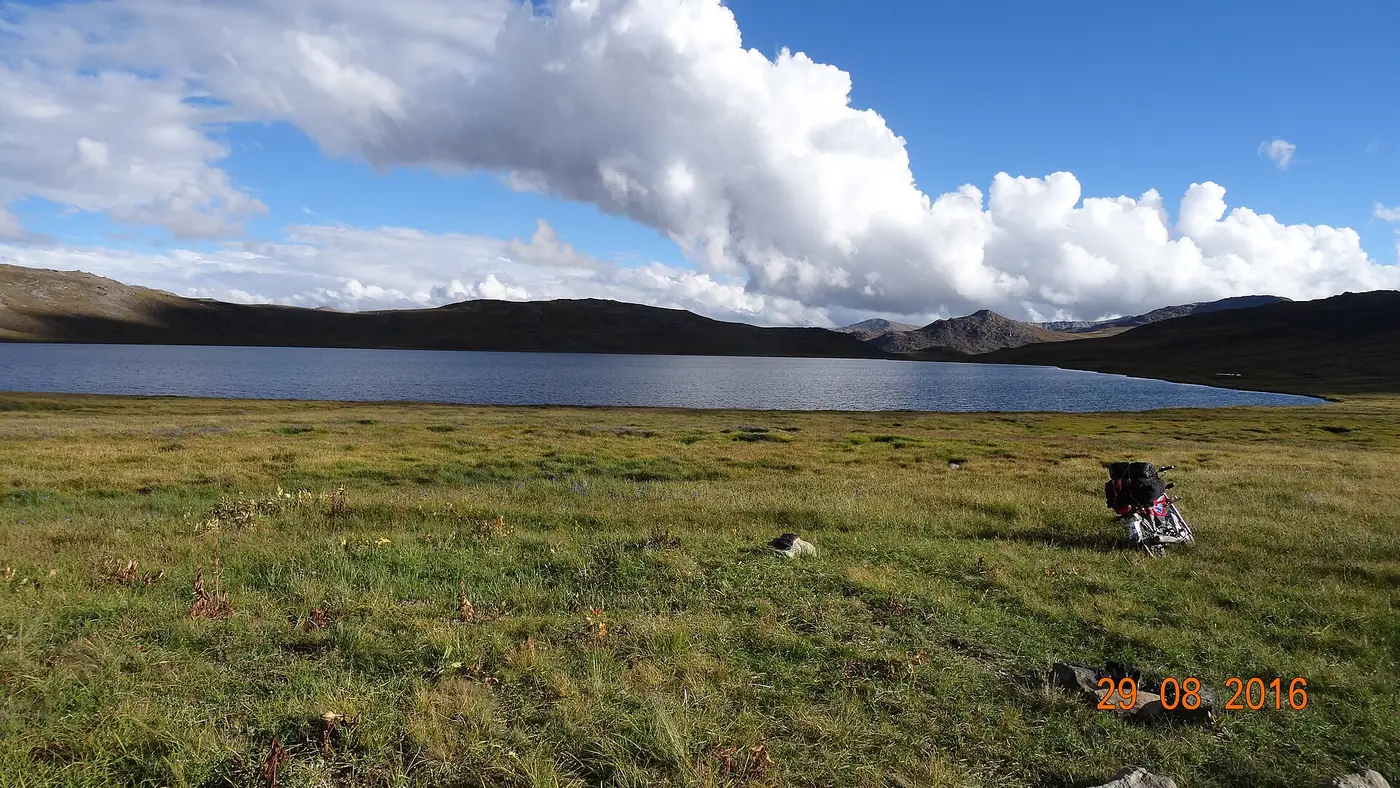
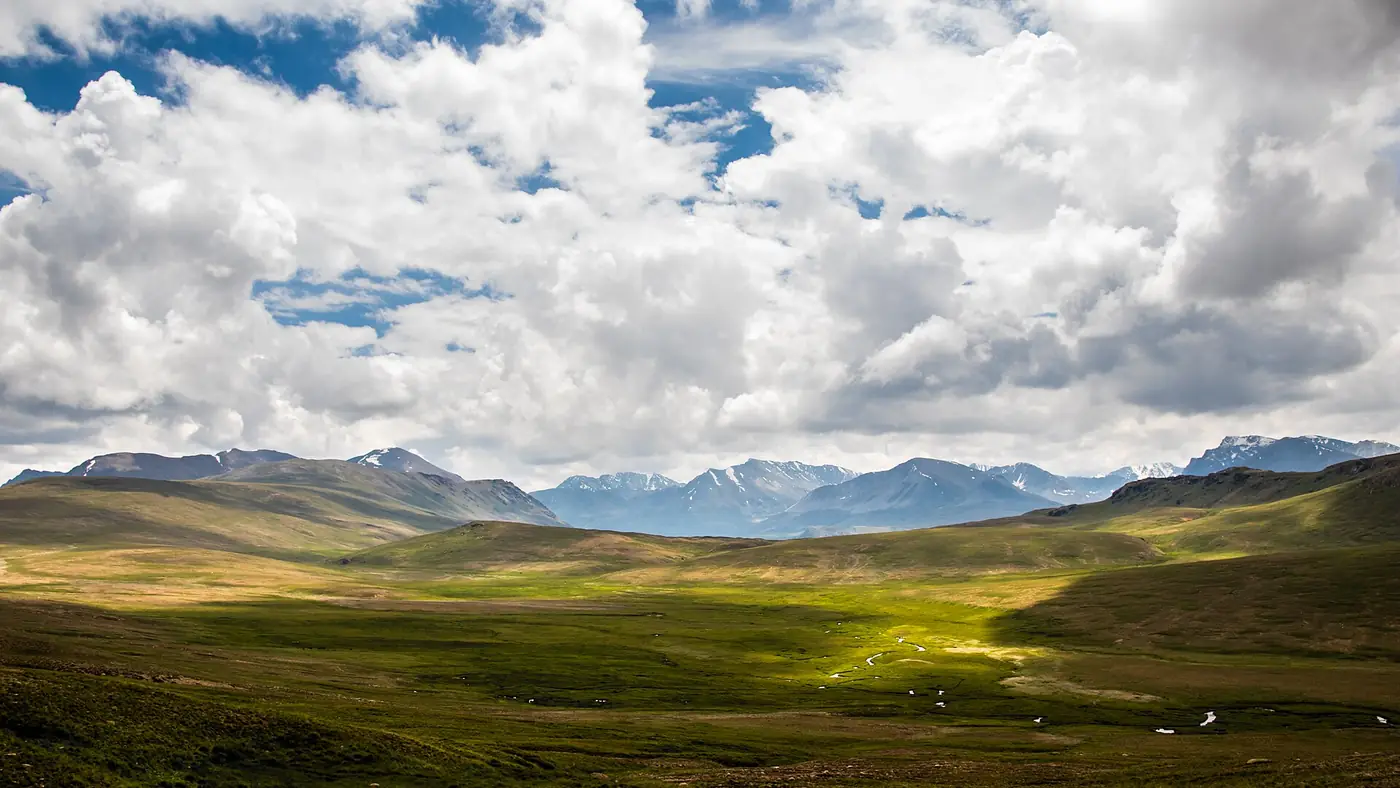
Deosai weather is cold for a summer trip. The plateau averages 4,114 metres, nearly 2,000 metres above Skardu, so on the same day it is typically around 12 °C colder: summer afternoons are usually somewhere in the teens, nights fall to around freezing or below even in July, and the wind makes it feel colder still. Cloud, rain, hail and even snow can build within an hour, and from about November to June the plateau lies under deep snow.
This guide explains why Deosai is so much colder than the valley, how its storms behave, what each month of the season is like, and what to wear so a sunny morning in Skardu doesn't leave you shivering at Bara Pani.
| At a glance | |
|---|---|
| Altitude | 4,114 m on average |
| Compared with Skardu | Roughly 12 °C colder on the same day |
| Summer afternoons | Usually in the teens °C in sun; much colder in wind or cloud |
| Summer nights | Around freezing, sometimes below |
| Snow | Possible in any month; closes the plateau from about November to June |
| Rain and snow | About 350 to 550 mm a year, mostly winter snow |
| Main summer risk | Afternoon storms in July and August, and heavy rain on the road up |
| Sun | Much stronger UV than in the plains; burns fast |
How cold is Deosai compared with Skardu?
The simplest way to think about Deosai is as Skardu, only much higher. Air cools as you climb, on average by about 6 to 7 °C for every 1,000 metres. Skardu sits at about 2,200 metres and the plateau at a little over 4,100, so as a rough rule the plateau is about 12 °C colder than the town at the same moment.
That turns Skardu's summer into something much closer to early spring. Skardu's long-term averages, recorded by the Pakistan Meteorological Department, run to highs of about 32 °C and lows of about 16 °C in July, and highs of about 27 °C and lows of about 11 °C in September. Take roughly 12 degrees off and you have a fair idea of a plateau afternoon: up to about 20 °C on a still, sunny day in July, more often in the teens. Our Skardu weather guide has the full monthly table.
Two things make it colder than that arithmetic suggests:
- Wind. The plateau is open grassland with no trees and nothing to break the wind. A steady breeze at 12 °C feels far colder than still air.
- Clear nights. Once the sun goes down, the open plateau loses heat quickly, so nights end up colder than the simple rule predicts, around freezing or below. Waking to frost, or even a dusting of snow, is not unusual, even in high summer.
Long-term averages for the plateau itself are hard to find, so treat any exact figure you read online, including ours, as a guide. What is certain is that you should dress for a cold day, whatever Skardu feels like.
Why storms build so fast on the plateau
Deosai gets more rain and snow than the dry valleys of Baltistan around it. According to the government's submission to UNESCO, that is because the plateau faces the outer Himalaya, which catches the monsoon, and most of its 350 to 550 mm a year falls as winter snow.
In summer, the pattern that matters to a day visitor is the afternoon build-up. Mornings are often clear. As the ground warms, cloud builds over the surrounding peaks, and by early afternoon a shower, a hailstorm or a thunderstorm can sweep across the plateau. In July and August, the monsoon months, this happens more often, and heavy rain can also bring landslides on the roads below. In July 2025 and again in July 2026, floods closed the road between Sadpara and Deosai.
What to do about it:
- Start early. The best weather of the day is usually the morning.
- Watch the sky over the peaks and start back if dark cloud is building fast.
- Get into the vehicle in a thunderstorm. On open ground you are the tallest thing for kilometres. Stay off high ground and away from the edges of lakes and streams.
- Don't drive the descent to Sadpara in heavy rain. Wait it out on the plateau or turn back early.
Our guide to whether Deosai is open or closed explains how to check the road after bad weather.
Deosai weather month by month, and what to wear
| Month | What the weather is like | What to wear |
|---|---|---|
| June | Opening month; cold, wet ground, snow patches, frosty nights | Warm jacket, waterproof, hat, gloves, waterproof shoes |
| July | The mildest month, but showers and hail in the afternoon are common | Warm layers and a waterproof shell, even on a hot day in Skardu |
| August | Similar to July; monsoon storms still likely early in the month | As July; a spare dry layer in the vehicle |
| September | Settled and clear more often; sharp, cold mornings | A proper warm jacket, hat and gloves |
| October | Cold; the first heavy snow usually closes the plateau | Full winter clothing, if the road is still open |
| November to May | Closed by snow | Not open to visitors |
June is when the snow melts and the plateau opens, some time in the month. The ground is waterlogged, drifts can still lie beside the track, and early mornings are frosty. Waterproof shoes matter more than in any other month.
July and August are the warmest months on the plateau and the ones most visitors see. A sunny midday can feel almost warm out of the wind. The same afternoon can bring a hailstorm, and in some years snow has fallen on the plateau in July. Treat a sunny forecast as a bonus, not a promise.
September is often the most settled month, with clearer skies after the monsoon. Mornings are sharp and cold, and the wind has an edge from mid-afternoon. By late in the month you need winter layers.
October is a month of first snows. The plateau stays open until a heavy fall closes it, most often around the middle of the month. In November 2024, 14 travellers were stranded on the Deosai road for more than 29 hours in heavy snow. Late in the season, a fine morning in Skardu tells you very little about the plateau.
Which month suits your trip for flowers, wildlife and crowds is covered in our guide to the best time to visit Deosai.
Wind, sun and the "warm in Skardu" trap
The most common mistake is dressing for Skardu. You leave town in a T-shirt at 7 in the morning, and two hours later you are standing in a cold wind at over 4,000 metres with your jacket back at the hotel. Put the warm clothes in the vehicle the night before.
The sun is the other trap. At this height ultraviolet light is much stronger than in the plains, and cold wind hides how quickly you are burning. Sunglasses, sunscreen and a hat with a brim are as important as the jacket, especially for children. Lips crack fast in the dry air, so bring lip balm.
A clothing checklist for any Deosai day
- A base layer and a fleece or warm jumper
- A windproof, waterproof jacket
- A warm hat and gloves, in every month
- Long trousers, not shorts
- Closed shoes with a good grip; waterproof in June and after rain
- Spare socks
- Sunglasses, sunscreen, a sun hat and lip balm
- A blanket or extra layer for children and older passengers, who feel the cold first on a long jeep day
Checking the forecast before you go
The Pakistan Meteorological Department publishes forecasts and heavy-rain warnings for Gilgit-Baltistan at weather.gov.pk. Its forecasts are for towns such as Skardu and Astore rather than for the plateau itself, so read them as a warning of what is coming rather than a plateau forecast.
The best local forecast is often your jeep driver. Drivers go up most days in the season and can tell you what the plateau was like that afternoon. If rain is forecast, go as early as you can and plan to be off the plateau by early afternoon. If heavy rain or snow is forecast, move Deosai to another day.
For how the plateau's short season fits the rest of Gilgit-Baltistan, see our guide to when to go. Our seven-day Skardu and Deosai trip runs in the summer window and keeps a spare day for weather.
Frequently asked questions
How cold is Deosai in summer?
Summer afternoons are usually in the teens Celsius, roughly 12 degrees colder than Skardu, and nights fall to around freezing or below. Wind makes it feel much colder.
Does it snow in Deosai in summer?
It can. Snow is possible in any month at this altitude, and in some years it has fallen on the plateau in July. Heavy snow usually returns in October.
Is Deosai colder than Skardu?
Yes, by roughly 12 °C on the same day, because the plateau is nearly 2,000 metres higher. A hot day in Skardu can be cold and windy on Deosai.
What should I wear to Deosai in July?
Layers: a warm top, a windproof and waterproof jacket, a hat and gloves, long trousers and closed shoes, plus sunglasses and sunscreen for the strong sun.
Does it rain in Deosai?
Yes. Afternoon showers, hail and thunderstorms are common in July and August, and heavy monsoon rain can close the road up from Skardu.
When does Deosai get snow?
Heavy snow usually arrives in October and covers the plateau until about June. The first heavy fall closes the track to visitors, most often around mid-October.