Skardu weather by month swings from an average high of about 32 °C in July to an average low of about −8 °C in January. Summers in the valley are hot, dry and very sunny, with cool nights; winters are properly freezing, with snow most likely from December to February. It is a dry place all year, with only about 170 mm of rain and snow in an average year, most of it between December and May.
Below are the monthly averages, what each season actually feels like on the ground, how much colder Deosai is than the town, and what to pack. The figures are long-term averages recorded by the Pakistan Meteorological Department at Skardu, which sits at about 2,200 metres.
Skardu temperatures and rainfall by month
| Month | Average high | Average low | Precipitation |
|---|---|---|---|
| January | 3 °C | −8 °C | 28 mm |
| February | 6 °C | −4 °C | 26 mm |
| March | 12 °C | 2 °C | 37 mm |
| April | 19 °C | 7 °C | 31 mm |
| May | 23 °C | 10 °C | 25 mm |
| June | 29 °C | 13 °C | 9 mm |
| July | 32 °C | 16 °C | 10 mm |
| August | 31 °C | 16 °C | 12 mm |
| September | 27 °C | 11 °C | 9 mm |
| October | 20 °C | 4 °C | 7 mm |
| November | 13 °C | −2 °C | 6 mm |
| December | 7 °C | −6 °C | 16 mm |
These are averages over several decades, from 1961 to 2009. Any given week can be several degrees warmer or colder, so treat the table as a guide to what to pack, not a forecast.
Two things in it matter most. First, the gap between day and night is large, 14 to 16 degrees from May to November, so a warm afternoon is followed by a cold evening. Second, the driest months are June to November, which is why summer and autumn are the easiest seasons for travel.
How hot does Skardu get in summer?
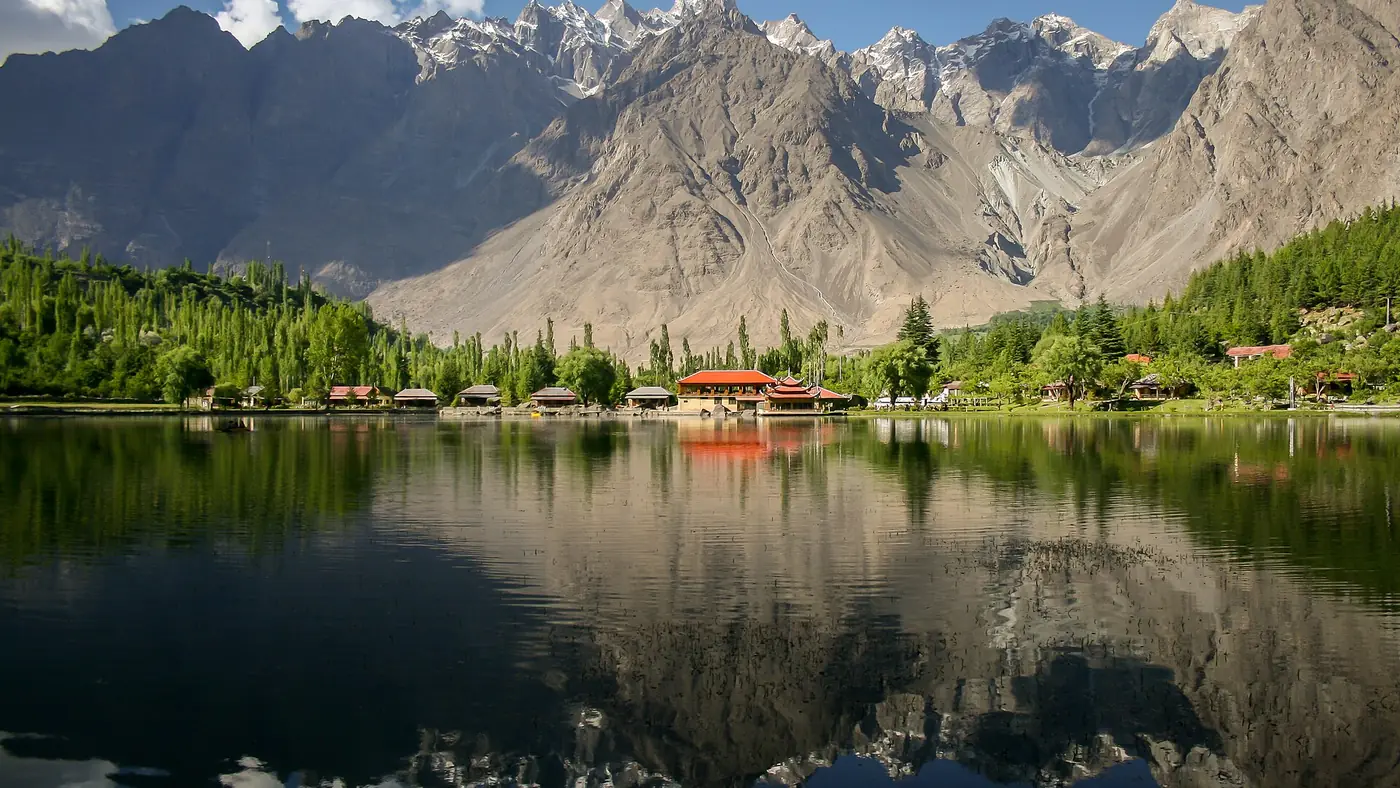
From June to August, days in town average 29 to 32 °C and some go much higher: the highest temperature on record at Skardu is 41 °C, reached in both July and August. Nights are cooler, averaging 13 to 16 °C, which makes sleeping comfortable.
The heat feels different from Lahore or Karachi. The air is very dry, with average humidity in June of little more than 20 per cent, and at 2,200 metres the sun is fierce. You burn quickly and dehydrate without noticing. On the valley floor, and especially on the Katpana and Sarfaranga dunes, the middle of the day is hot and glaring.
Plan around it:
- Do the lakes and the walking in the early morning, and the deserts in the last hour before sunset.
- Rest indoors from about noon to four.
- Drink more water than you think you need, and carry it in the car.
- Remember that Deosai, the same day, can be close to freezing in the wind.
If you are driving up, the overnight stop is hotter still: Chilas, at about 1,265 metres, averages around 35 °C on July afternoons.
How cold is Skardu in winter?
Winter is long and serious. From December to February, daytime highs average 3 to 7 °C and nights fall well below freezing: January averages −8 °C at night, and the lowest temperature on record at Skardu is −24.1 °C, in January 1995. Nights below −15 °C are possible in December and January.
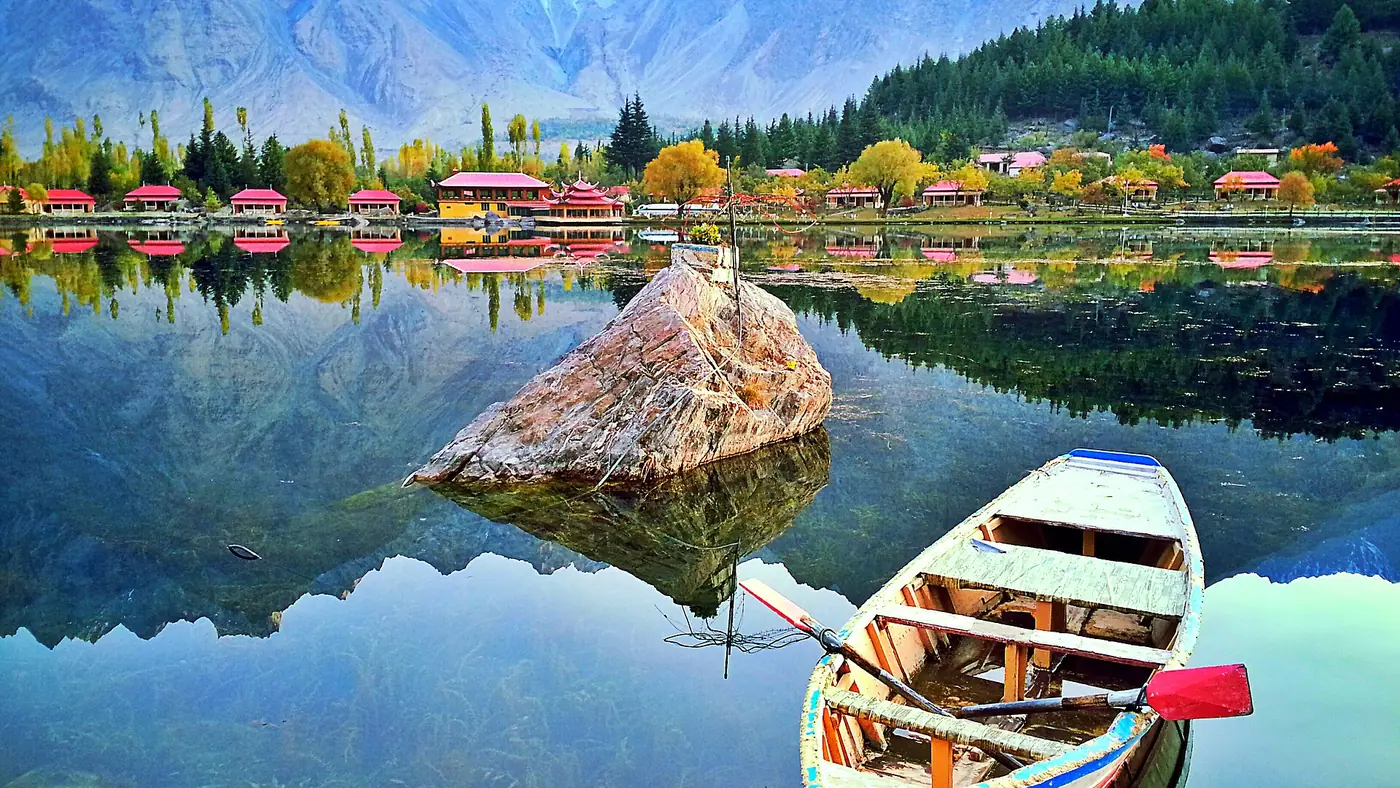
Upper Kachura freezes solid, and any wind makes it feel colder still. The cold is easier to bear in the sun and much harder after dark. Indoors, comfort depends entirely on your hotel's heating and power backup, so check both before you book.
When does it snow in Skardu?
In the town itself, snow is most likely from December to February, with occasional falls in late November and March. Because Skardu is so dry, snowfalls in the valley are usually modest; the monthly averages show only 16 to 28 mm of precipitation in the winter months, much of it falling as snow. Snowfall varies a lot from one winter to the next.
Higher up, the picture changes:
- The mountains around the valley hold snow from autumn to late spring, and the highest peaks keep it all year.
- Deosai is snowbound from roughly November to June and cannot be visited until the track clears, usually some time in June.
- The Katpana dunes are often dusted or covered with snow in mid-winter, one of Skardu's most unusual sights.
If snow is the reason for your trip, go in January, and keep spare days: winter weather also cancels flights. Our guide to Skardu in winter covers heating, roads and what is open.
Spring and autumn: the in-between months
Spring and autumn are when the averages hide the most. In both seasons, days are pleasant and nights are cold.
March to May. March is still cold, with nights around freezing, and it is Skardu's wettest month, with unsettled spells of cloud, rain and late snow. April warms up quickly, with highs near 19 °C and nights around 7 °C, just as the orchards come into blossom. May is mild and green, with days in the low 20s. Spring weather changes fast, and a sunny morning can turn to cloud and wind by afternoon.
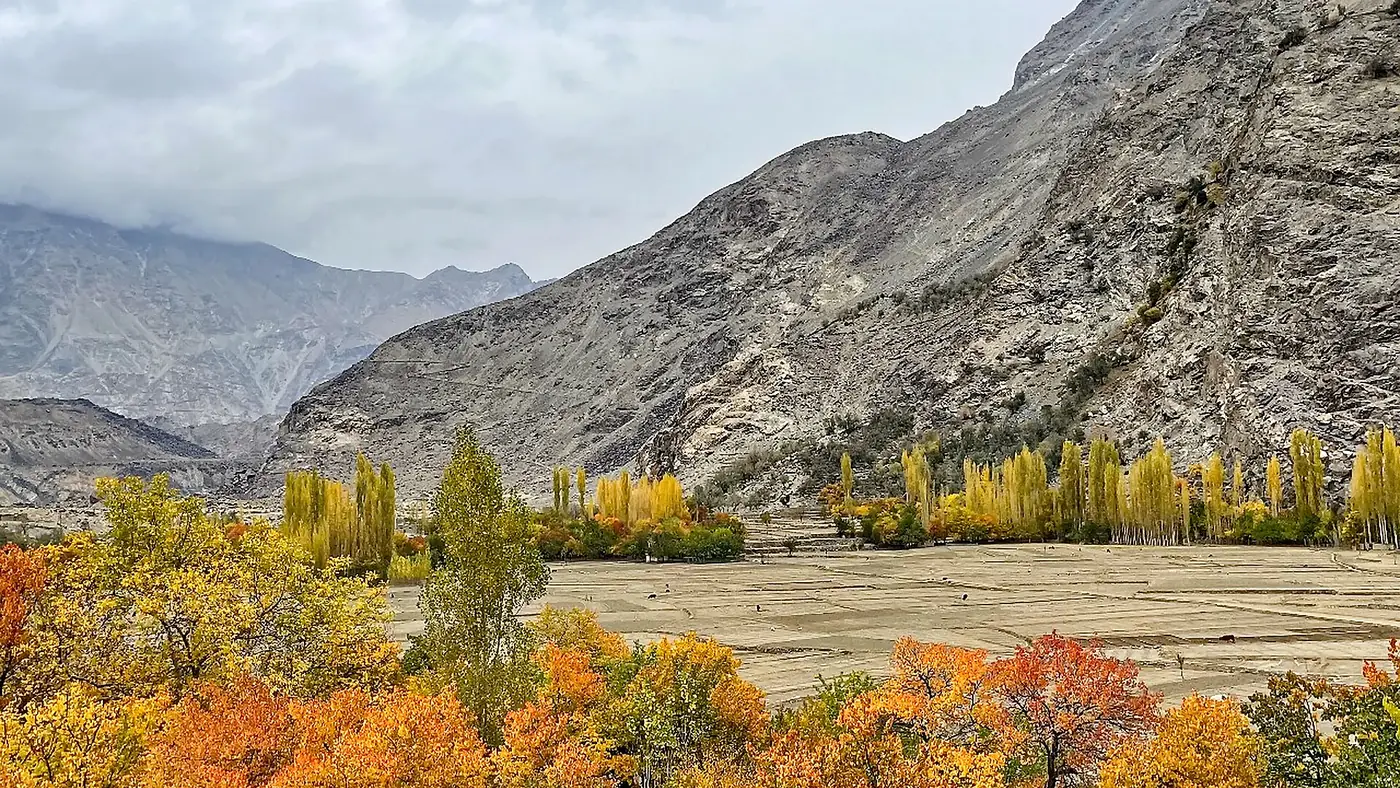
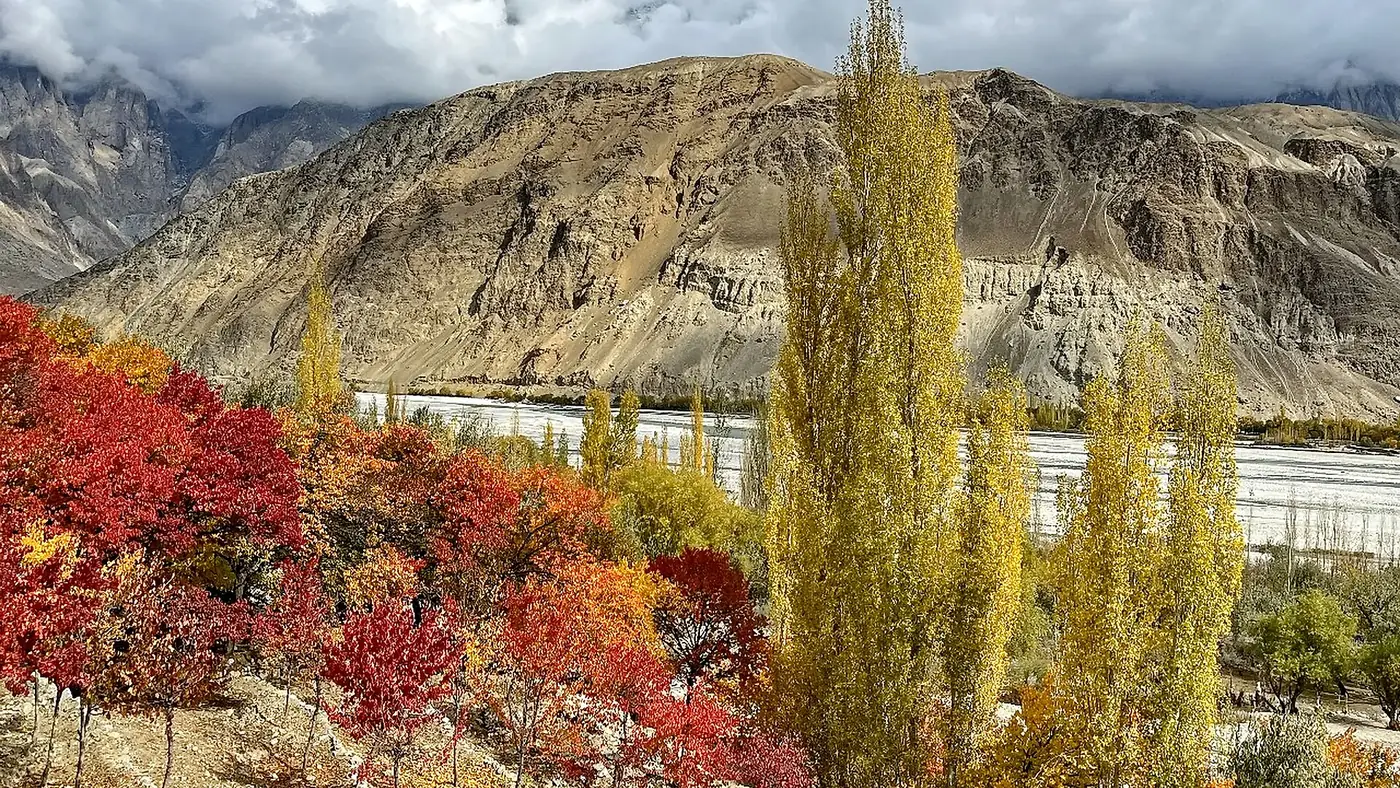
September to November. September is warm and settled, with highs of about 27 °C and cool nights. October is dry and usually clear, with days around 20 °C and nights near 4 °C. By November, days are around 13 °C and nights drop below freezing.
For which of these months suits which kind of trip, see our guide to the best time to visit Skardu.
Altitude: why Deosai and the side valleys feel different
The figures above are for Skardu town. Go higher and it gets colder, roughly six to seven degrees for every thousand metres you climb.
- Deosai averages over 4,000 metres, nearly 2,000 metres above the town. Even on a July day that is hot in Skardu, the plateau is cool, windy and exposed, and early mornings can be close to freezing. Weather there also changes quickly, so dress for cold whatever the town feels like.
- Kachura and Khaplu, at around 2,500 to 2,600 metres, are a little cooler than the town, which is noticeable on summer evenings.
The sun gets stronger as you climb, even when the air is cold. Sunburn at 4,000 metres happens fast.
What to pack for Skardu weather
June to August
- Light, loose clothes that cover your arms and legs from the sun
- A sun hat, sunglasses and high-factor sunscreen
- A fleece or light jacket for evenings
- A proper warm jacket, hat and gloves for Deosai
- Lip balm and moisturiser for the dry air
- A reusable water bottle
March to May and September to November
- Layers: T-shirts, a warm mid-layer and a windproof jacket
- A warm jacket for mornings and evenings, which are cold even when days are warm
- Comfortable walking shoes with some grip
- Sunglasses and sunscreen, which you will still need
- A light waterproof in spring
December to February
- A heavy down or insulated jacket
- Thermal base layers, a warm hat, gloves and a scarf
- Warm, waterproof boots with good grip for ice
- Warm clothes to sleep in, in case the heating is weak
- A power bank, for power cuts
Our travel guide has more on packing and altitude across the north.
How the weather affects your plans
Weather shapes a Skardu trip in three ways. Flights need clear conditions and are most often cancelled in winter and spring, so every plan needs a spare day. The Karakoram Highway is most exposed to landslides and flash floods during the July and August monsoon, even though Skardu itself stays dry. And Deosai is only open for a few months each summer.
Averages tell you what to pack; the forecast tells you what to do tomorrow. The Pakistan Meteorological Department publishes daily and three-day forecasts and weather alerts at weather.gov.pk, including heavy-rain warnings for Gilgit-Baltistan. Check it before you set off up the KKH or commit to a Deosai day, and again the evening before a flight. Conditions can differ a lot from one valley to the next, so treat what your hotel and drivers tell you as part of the forecast too.
Our 5-day Skardu itinerary builds in room for bad weather, and our guide to the seasons across the north shows what is open in each season, in Skardu and beyond.
Frequently asked questions
What is the weather like in Skardu in July?
Hot and dry by day, with average highs around 32 °C and strong sun, and cool nights around 16 °C. Deosai, at over 4,000 metres, is much colder and windier on the same day.
How cold is Skardu in December and January?
Very cold. Average night-time lows are −6 °C in December and −8 °C in January, and the record low is −24.1 °C. Days average 3 to 7 °C.
Which month does it snow in Skardu?
Snow in the town is most likely from December to February, with occasional falls in November and March. The surrounding mountains hold snow from autumn to late spring.
Does it rain a lot in Skardu?
No. Skardu gets only about 170 mm of rain and snow a year, most of it between December and May. June to November is very dry.
What should I wear in Skardu in October?
Layers. Days are around 20 °C and pleasant in the sun, but nights fall to around 4 °C, so bring a warm jacket, a hat and gloves for mornings and evenings.
Does Deosai get cold in summer?
Yes. At over 4,000 metres it is far colder than Skardu, windy and exposed, and early mornings can be near freezing even in July. Take a warm jacket, hat and gloves whatever the weather in town.