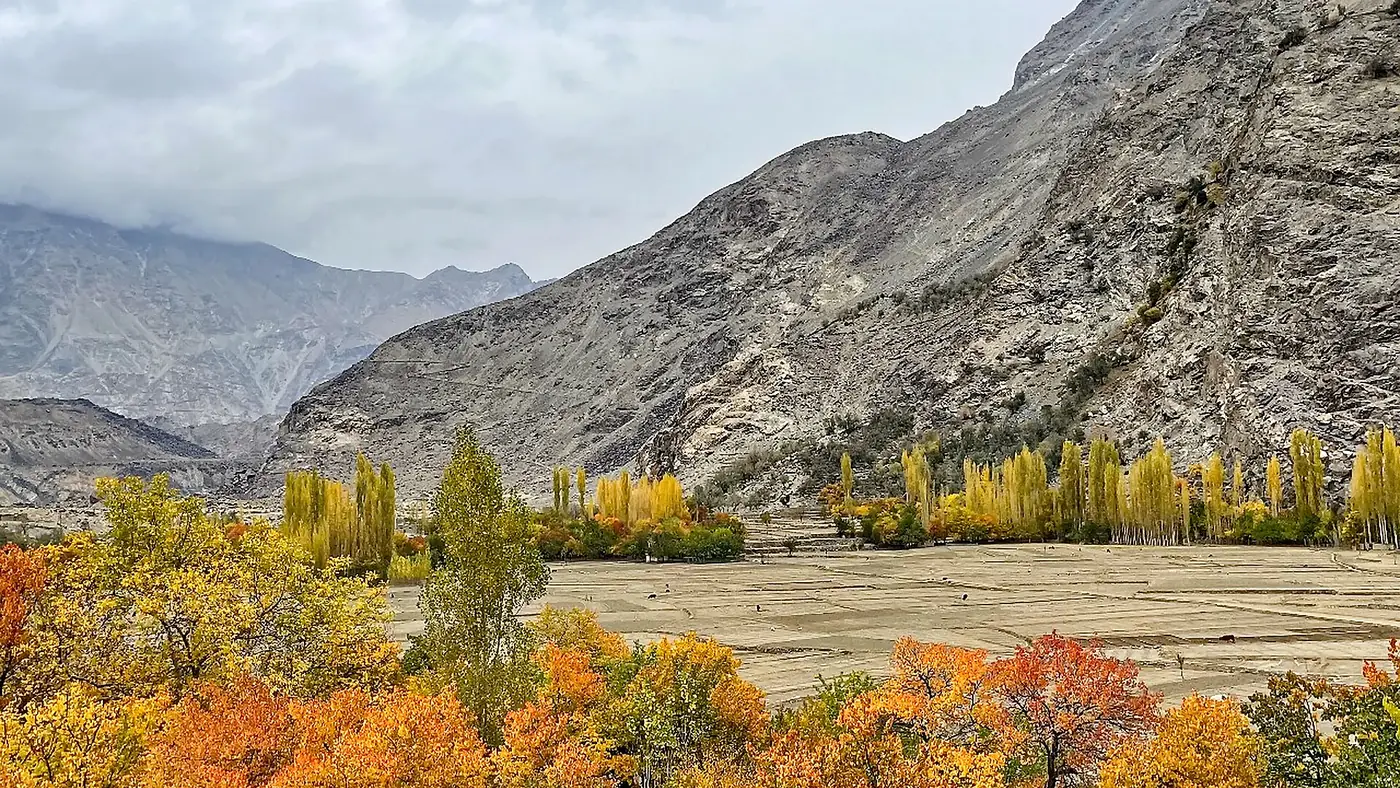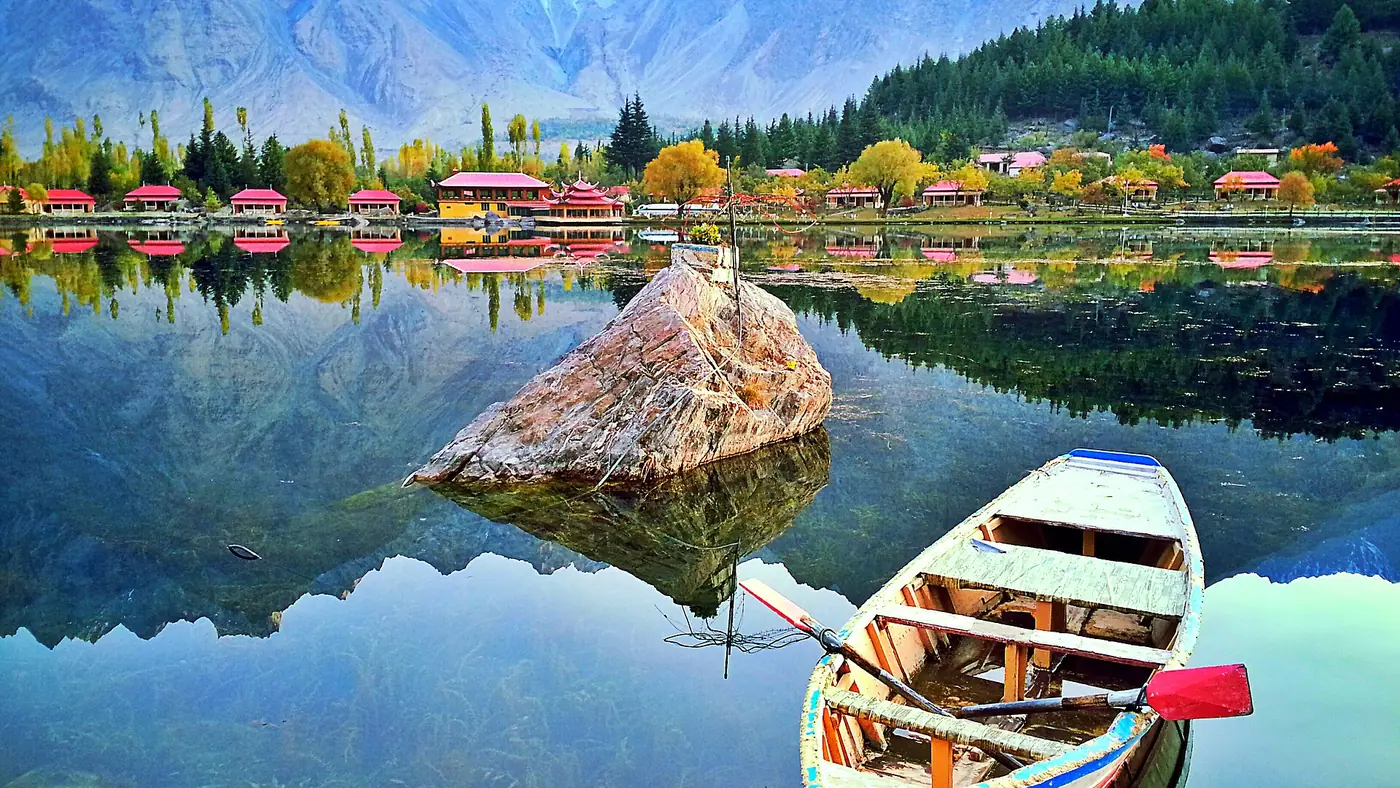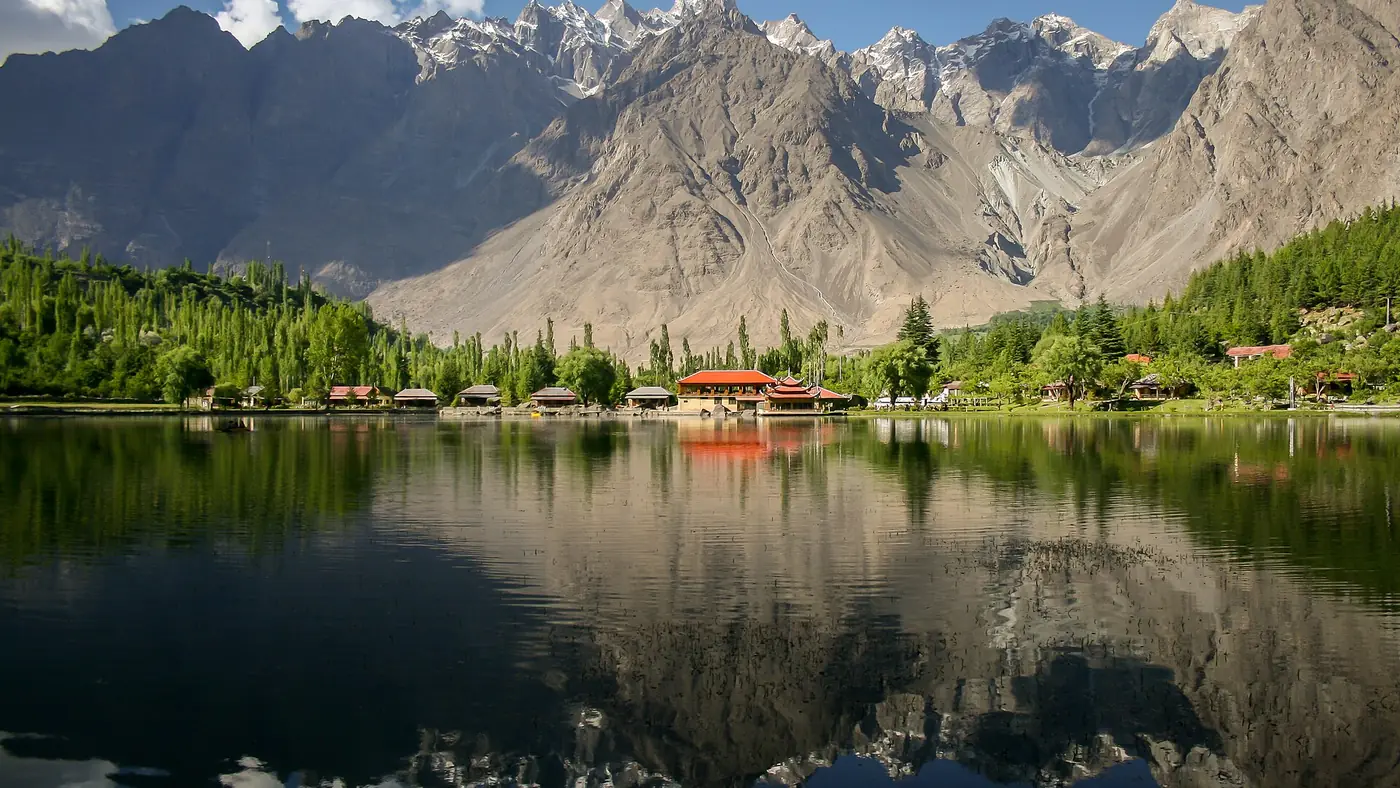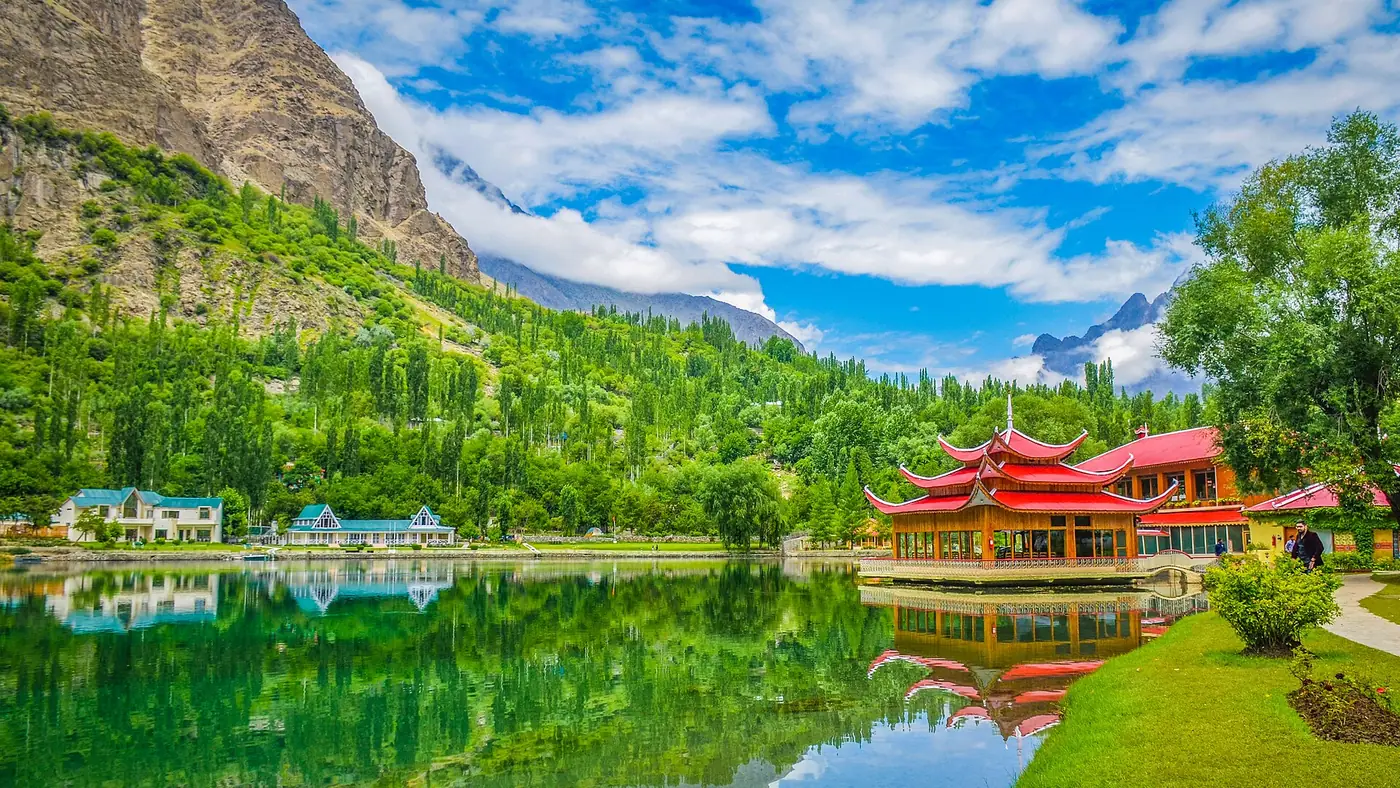
Skardu in winter, from December to February, is cold, dry and very quiet. Days are a few degrees above freezing, nights fall to around −5 to −8 °C on average and much lower in a cold spell, the lakes freeze, and after a snowfall the Katpana dunes lie white under the mountains. You can still reach it: flights from Islamabad keep running when the weather allows, and the Karakoram Highway and the Skardu road stay open, but the Babusar Pass and Deosai are closed until early summer.
A winter trip is rewarding for the right people and hard work for everyone else. This guide covers the weather, getting there, the real problem of heating and power, what the frozen lakes and the snowy desert are like, and who should go.
| At a glance | |
|---|---|
| Average daytime high | About 3 °C in January, 6 to 7 °C in December and February |
| Average night-time low | About −8 °C in January, −4 to −6 °C either side |
| Record low | −24.1 °C (1995) |
| Daylight | Roughly 7 am to 5 pm |
| Flights | Islamabad–Skardu continues, subject to weather |
| Roads | KKH and Skardu road open; Babusar Pass closed |
| Closed for the season | Deosai plateau |
| Biggest practical issue | Heating and long power cuts |
What is Skardu like in winter?
Skardu sits at about 2,200 metres in a wide, dry valley. In January the average daytime high is only about 3 °C and the average night-time low about −8 °C; December and February are a little milder. The coldest nights of a hard winter go well below that, and the lowest temperature recorded in Skardu is −24.1 °C.
What surprises people is how dry it is. Skardu gets less than 200 mm of rain and snow in a whole year, and the wettest months are March and April, not midwinter. So snow in town comes in a handful of falls rather than a deep, lasting blanket. The mountains all around stay white, but the valley floor can be bare and brown for weeks between falls.
On a clear, windless day the sun is strong and the valley is beautiful. The cold arrives the moment the sun drops behind the ridges, which in December and January is well before 5 pm.
Getting to Skardu in winter
Flying
Flights from Islamabad to Skardu run through the winter, but fewer of them, and the direct services from Karachi are thinner outside the main season. Every Skardu flight depends on clear weather along the route past Nanga Parbat, and winter has more days when it isn't clear. Delays and cancellations are more frequent than in summer.
Build in two spare days, not one. A cancellation in January may mean the next flight also doesn't operate, and a winter trip with no slack is a trip you may spend in Islamabad.
By road
The Babusar Pass is closed from about November until late May, so the only road is the Karakoram Highway from Thakot through Besham and Chilas, then the Jaglot–Skardu road. Both stay open in winter apart from closures after snow, ice or landslides.
Winter driving is slower. Shaded sections of the gorges hold ice all day, slides take longer to clear, and daylight is short, so every leg has to be planned to finish before dark. Allow three days from Lahore rather than two. Our Lahore to Skardu road guide covers the KKH route and where to stop.
Heating, power and hotels
This is the part that decides whether a winter trip is comfortable.
Skardu relies heavily on local hydropower, including the plant at Satpara Dam. When the streams feeding it freeze, output falls, and long power cuts through the day and night are a normal part of Skardu winters. Electric heaters and electric blankets are only as good as the supply.
Before you book a room, ask the hotel:
- How is the room heated? Gas heaters running on cylinders, wood or coal stoves, or electric heating. Ask which one, and whether it runs through the night.
- Is there a generator, and for how many hours a day does it run?
- Is there hot water in the morning, and from what?
- Is the hotel actually open? A number of hotels close for the winter or run with a skeleton staff. Confirm by phone shortly before you travel, not just on a booking site.
Gas heaters need ventilation. Never sleep with an unflued gas heater running in a closed room. If the room has one, turn it off before you sleep and use more blankets instead.
Frozen lakes: Satpara and Kachura
The lakes are the reason many people come in winter. Upper Kachura, at about 2,500 metres, freezes solid on the surface in winter, and Satpara, a little higher, usually freezes over in the coldest weeks. With snow on the slopes above, they look nothing like their summer selves.
Look, photograph, but don't walk out on the ice. Upper Kachura is up to 70 metres deep, and there is no way to tell from the shore how thick the ice is or where the inflows keep it thin. Nobody patrols these lakes in winter, and a fall through the ice at −5 °C is not something anyone can help you with quickly.
A few practical points:
- Upper Kachura's path from the parking area down to the shore is steep, and in winter it is often icy. Wear boots with a real grip, and skip it if anyone in the group is unsteady.
- Boats don't run once the lakes freeze, and the lakeside places that serve food in summer are mostly shut.
- Satpara is the easiest frozen lake to see, about 20 minutes from town on the road towards Deosai. The road beyond it, up to the plateau, is closed by snow.
- Shangrila, or Lower Kachura, is inside the resort. Check before you go whether the resort is open to day visitors during your dates.
Snow on the sand: Katpana in winter
Katpana is one of the highest deserts in the world, at 2,226 metres beside Skardu airport. In winter, after a snowfall, the dunes are covered white, and the sight of sand ridges under snow with the mountains behind them is what most winter visitors come to photograph.
Because Skardu is dry, you need a snowfall to see it. The snow on the sand lasts a few days in the shade and melts faster on the sunny faces, so if it snows while you are in Skardu, go the next morning. January usually gives the best chance, but no month guarantees it.
Go in the middle of the day, when it is warmest, or in the last light before sunset, which in December and January is around 4:45 to 5 pm. The jeep and bike rides that run on the dunes in summer are much less reliable in winter. Our Katpana desert guide covers the desert across the whole year.
What else is open, and what isn't
Open, and good in winter:
- Shigar, an hour north. The villages and the valley are quiet, and the fort is at its most atmospheric in the snow. Check in advance whether the fort museum is open on your dates.
- Manthal Buddha rock and the walk up towards Kharpocho Fort, if the path above the town is not icy.
- The bazaar, which keeps going through the winter, with dried apricots and nuts from the valley's orchards.
- Khaplu, about three hours up the Shyok valley, if the road is clear. Go only in settled weather and aim to be back before dark.
Closed:
- Deosai. The plateau is under deep snow from around October or November until June. Our Deosai National Park guide covers the summer season.
- The high treks, including the K2 base camp route.
- Babusar, as above.
With short days and cold afternoons, plan one outing a day and be back in town by 4 pm.
What to pack for Skardu in winter
Pack for temperatures well below freezing indoors as well as out:
- Thermal underwear, top and bottom, and a spare set
- A proper down or synthetic insulated jacket, not just a fleece
- A warm hat, gloves and thick socks, and warm slippers for the hotel
- Boots with a good grip for icy paths
- Sunglasses and sunscreen; the winter sun on snow is strong
- A power bank or two, since charging depends on the power supply
- A hot-water bottle, which helps a lot when the heating goes off at night
- Lip balm and moisturiser, because the air is very dry
Who is a winter trip to Skardu for?
It suits photographers, couples and small groups of friends who want the valley to themselves, who like the cold, and who can cope with power cuts and a flight that may not go on the day. The light is clean, the crowds are gone, and seeing the frozen lakes and snow on the desert is something most summer visitors never do.
It is harder for families with babies and small children, older parents, and anyone with a heart or lung condition. The cold, the unreliable heating and the flight uncertainty add up. It is also the wrong season if Deosai, the high lakes by boat, or the treks are what you have in mind.
If winter is not a firm choice, late March and April give you snow on the peaks, blossom in the orchards and far warmer nights, and October gives clear autumn light before the cold sets in. Our guide to the best time to visit Skardu goes through the year month by month, and our seasonal guide compares the months across the north.
Frequently asked questions
How cold is Skardu in winter?
In January, the coldest month, the average daytime high is about 3 °C and the average low about −8 °C. Cold spells go much lower, and the record is −24.1 °C.
Does it snow in Skardu?
Yes, but not heavily or often in the town itself, because Skardu is very dry. The surrounding mountains stay white all winter, and the valley floor gets a few falls each season.
Are flights to Skardu operating in winter?
Yes, Islamabad to Skardu flights continue through winter when the weather allows. Cancellations are more common than in summer, so keep two spare days.
Is the road to Skardu open in winter?
The Karakoram Highway and the Jaglot–Skardu road stay open, apart from short closures after snow or landslides. The Babusar Pass is closed from about November to late May.
Is Deosai open in winter?
No. Deosai is under snow from about October or November until June, and the road onto the plateau is closed.
Does Katpana desert get snow?
Yes. After a snowfall the dunes are covered white, usually for a few days. Because Skardu gets little snow, it is never guaranteed during a particular trip.