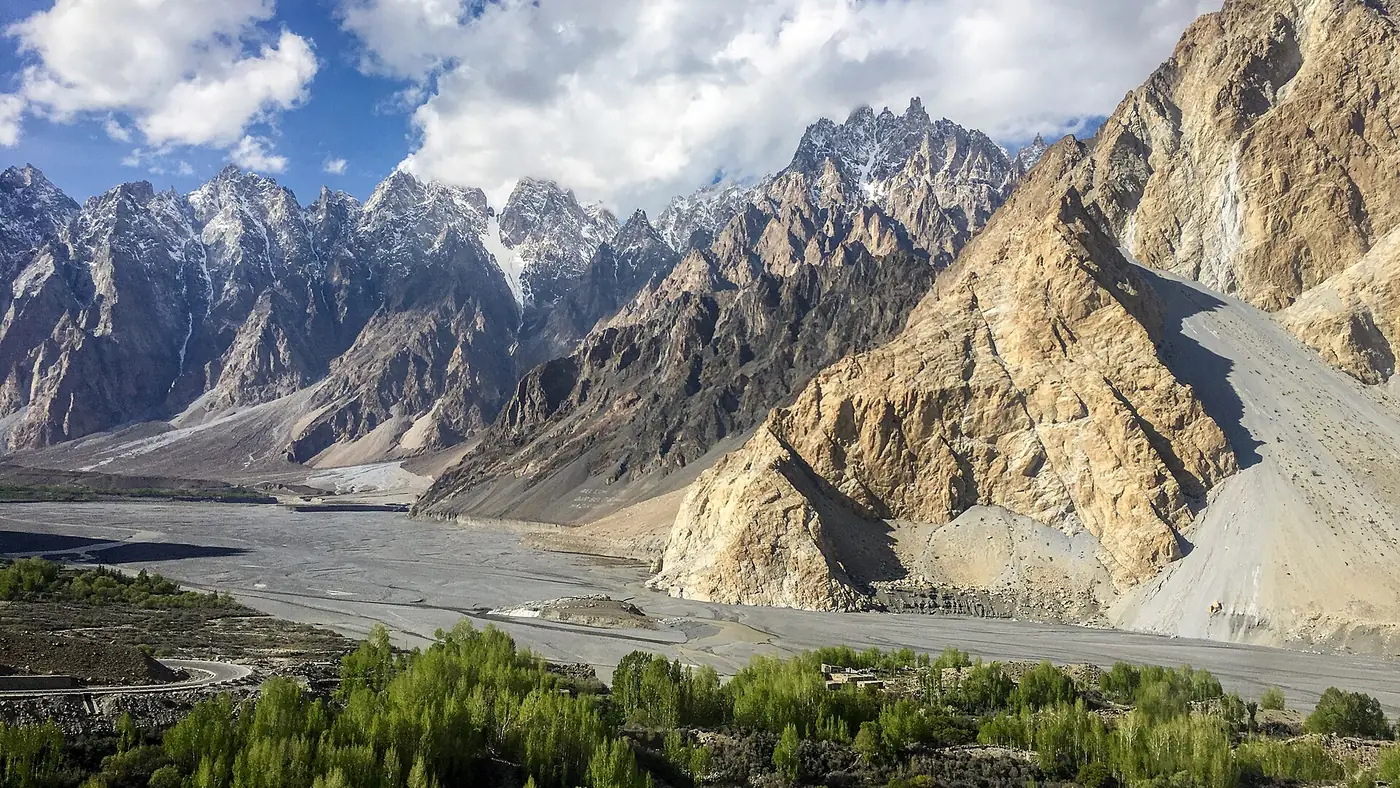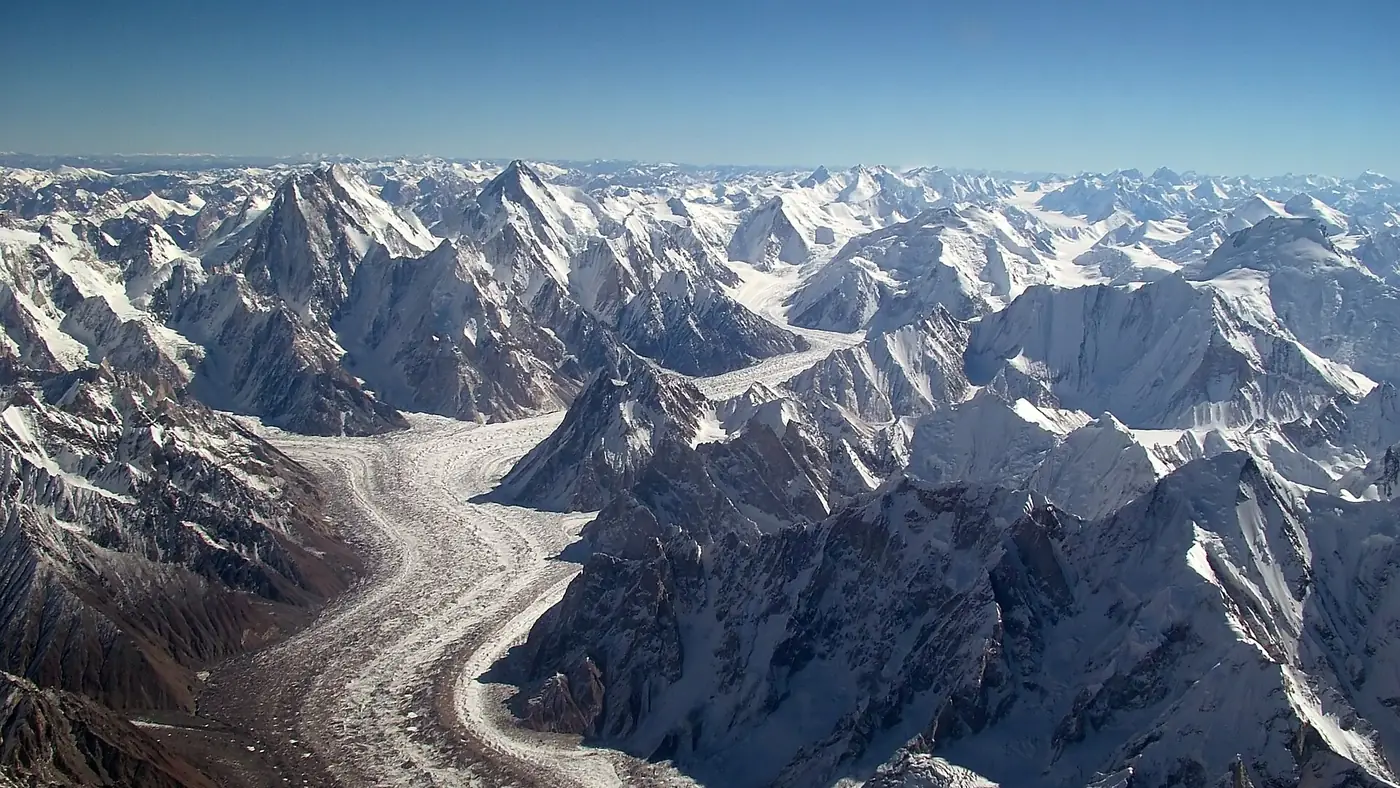
The Laila Peak base camp trek runs from Hushe village up the Gondogoro valley to a camp at around 4,590 to 4,600 metres, facing the needle-like summit of Laila Peak across the Gondogoro glacier. It is one of the shorter Hushe valley base camp treks by walking days, but the final approach crosses glacier ground, so it asks more of trekkers than a simple valley walk.
This guide covers the route, the days it takes, and what makes Laila Peak's base camp different from its Hushe valley neighbours.
| At a glance | |
|---|---|
| Start | Hushe village, about 3,050 m |
| Base camp altitude | About 4,590 to 4,600 m (Khuispang) |
| Walking days | About 6 to 9, round trip, with rest days |
| Best months | June to September |
| Difficulty | Moderate to challenging; a glacier traverse on the final approach |
| Peak | Laila Peak, about 6,090 to 6,096 m |
Where the trek goes
Laila Peak base camp shares its trailhead with the Masherbrum base camp trek and the K6 and K7 base camp trek: all three start at Hushe, the last village on the road up its valley east of Khaplu. Our guide to the Hushe valley covers getting there and where to stay before setting off.
From Hushe the route turns towards the Gondogoro valley, the same approach used for the longer Gondogoro La trek between the Baltoro and Hushe, before branching off before the pass to Khuispang, the meadow and camp used as Laila Peak's base. Laila Peak itself, a sharp granite and ice tower rising to around 6,090 to 6,096 metres, stands almost directly across the glacier from camp, which is what draws photographers to this trek in particular.
The route, stage by stage
- Hushe to Saicho. A short, easy first day, used for settling into the trek and beginning to acclimatise.
- Saicho to Dalsampa. A longer day skirting the edge of the Gondogoro glacier, gaining height steadily through the valley.
- Dalsampa to Khuispang, around 4,590 to 4,600 metres. The final approach crosses a stretch of the glacier itself, which needs care and is best done with a guide who knows the current crossing. This is base camp, and most itineraries build in several days here for acclimatisation and for the view.
- Return to Hushe. Usually over two days, faster than the walk in.
Full itineraries, including the days at base camp, commonly run to around nine days from Hushe and back, though the core trekking days are closer to six.
Difficulty and who it suits
This trek sits between Masherbrum, the gentlest of the three Hushe valley base camp walks, and the technical Gondogoro La crossing. The walk to Dalsampa is straightforward valley trekking, but the final stage onto the glacier at Khuispang means real glacier travel, even though it is not as sustained or as high as the Gondogoro La itself.
It suits keen trekkers and photographers with previous multi-day hiking experience, comfortable with a short stretch of glacier walking under guidance. It is not the trek for a first camping trip, and anyone uneasy on ice and moraine should choose Masherbrum instead.
Season and permits
June to September is the trekking season, when the glacier crossing to Khuispang is at its most predictable and the high camp is clear of fresh snow. The Central Karakoram National Park trekking permit and park fee apply here as on the other Hushe valley treks, usually arranged through your operator or guide; confirm the current requirement rather than relying on an old figure, since the rules have changed in recent years.
Is it worth it?
Yes, for trekkers who want one of the most striking single-mountain views in the Karakoram without committing to the full Gondogoro La crossing. Few peaks in the region have as distinctive a shape as Laila Peak, and Khuispang puts you almost level with it across the ice.
It asks more than Masherbrum but less than the full Gondogoro La route, which makes it a reasonable middle option if you are weighing up the Hushe valley's treks against each other. If glacier travel is not something your group wants, Masherbrum is the better fit from the same trailhead.
Frequently asked questions
How long is the Laila Peak base camp trek?
About six trekking days each way to Khuispang and back, inside a fuller itinerary of around nine days from Hushe that includes rest days at base camp.
How high is Laila Peak base camp?
Khuispang, the camp used for Laila Peak, sits at around 4,590 to 4,600 metres.
Is the Laila Peak base camp trek technical?
The approach to Dalsampa is straightforward walking, but the final stage to Khuispang crosses glacier ground, so it is more demanding than a simple valley trek and best done with a guide.
How does Laila Peak base camp compare to Masherbrum base camp?
Laila Peak involves a short glacier crossing near the end and slightly higher camps, so it is a step up in difficulty from the more straightforward Masherbrum route, though both start at Hushe.
When is the best time for the Laila Peak base camp trek?
June to September, when the glacier section is most stable and the trail is clear of fresh snow.