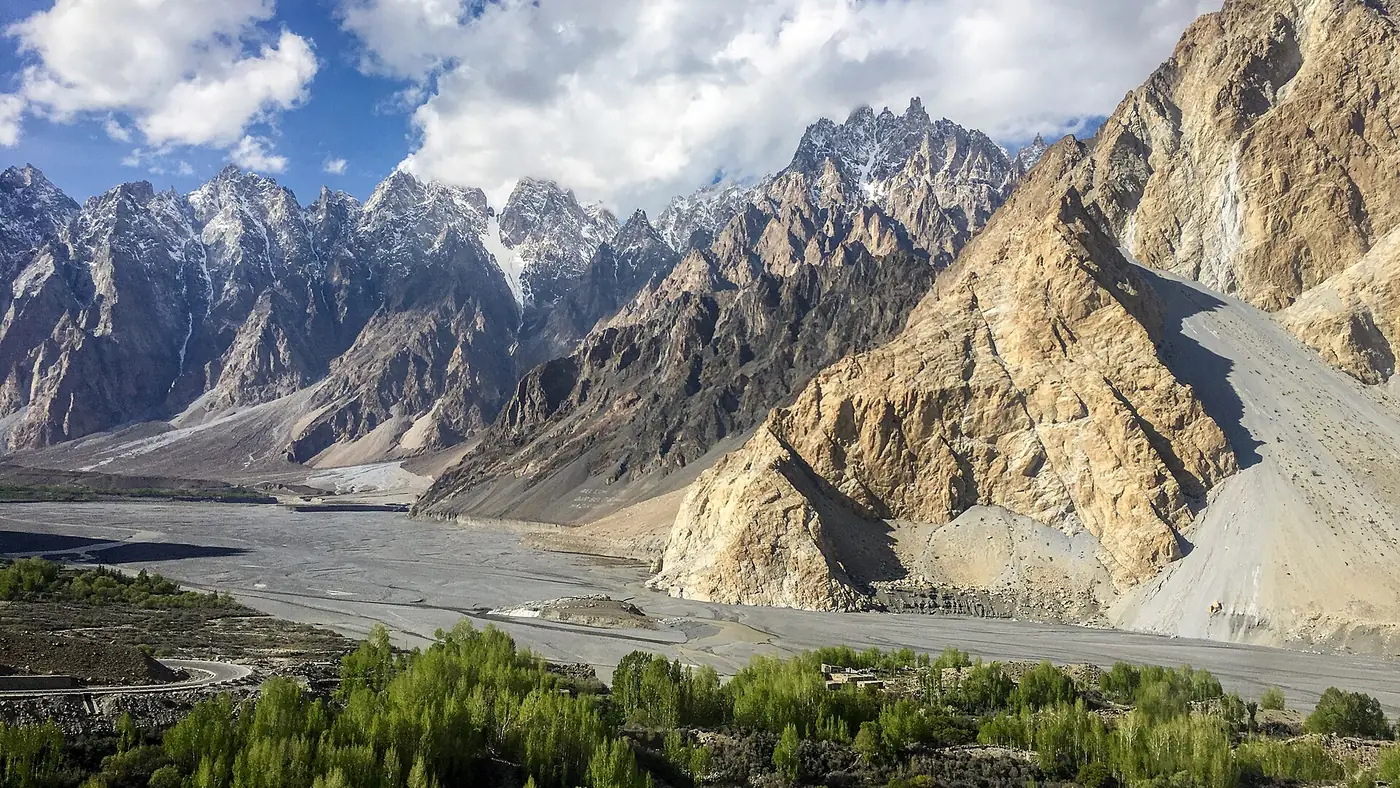
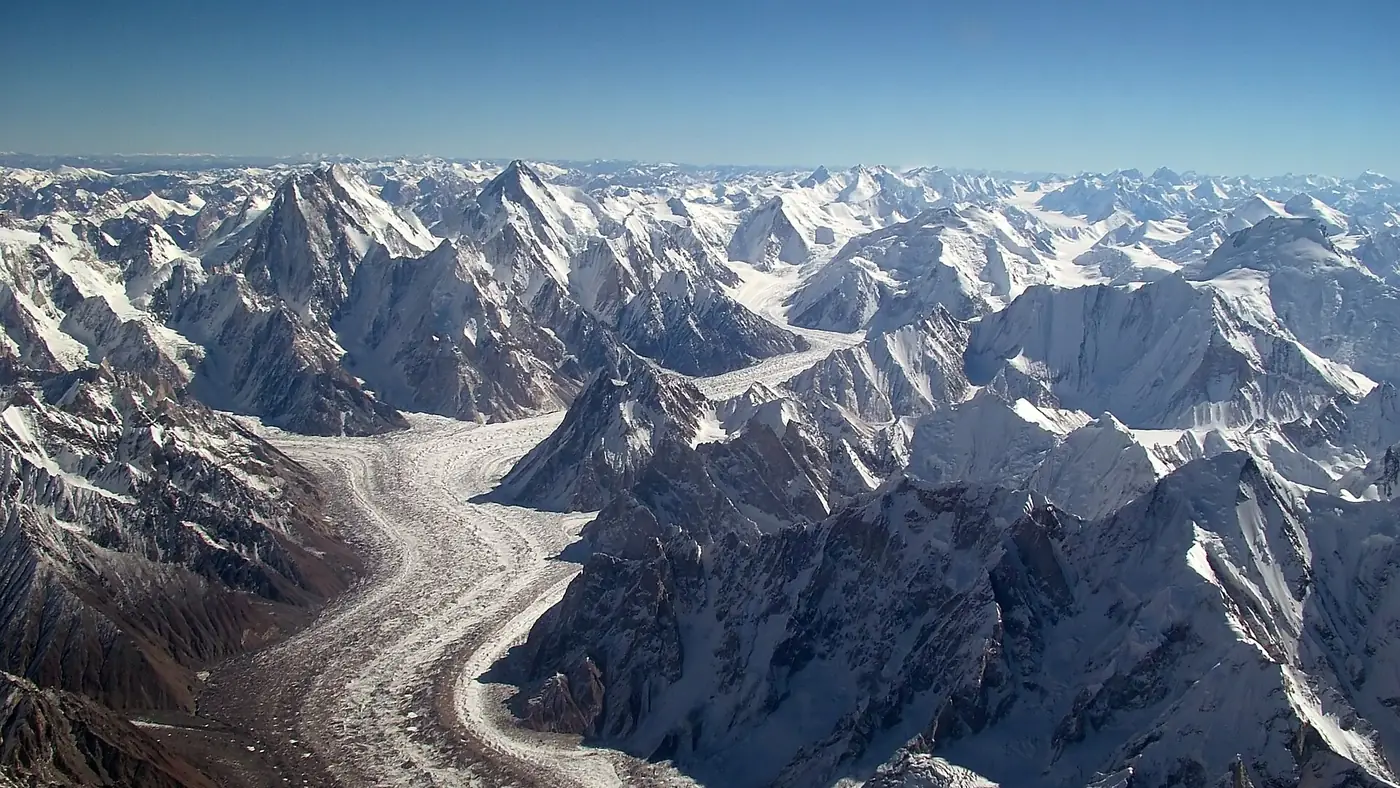
The K6 and K7 base camp trek follows the Charakusa valley from Hushe village to a camp at around 4,600 metres, below two of the Karakoram's sharpest granite peaks, K6 (7,281 m) and K7 (6,934 m). Allow about six or seven walking days round trip, through pasture, an ablation valley beside the Charakusa glacier, and moraine to the camp itself.
This guide covers the route, the days it takes, and who the trek suits.
| At a glance | |
|---|---|
| Start | Hushe village, about 3,050 m |
| Base camp altitude | About 4,600 m |
| Walking days | About 6 to 7, round trip |
| Best months | June to September |
| Difficulty | Moderate; long days on moraine and an ablation valley |
| Peaks | K6, 7,281 m; K7, 6,934 m; Link Sar, 7,041 m, also visible |
Where the trek goes
Like the Masherbrum base camp trek and the Laila Peak base camp trek, this route starts at Hushe, the trailhead village at the head of its valley east of Khaplu. Our guide to the Hushe valley covers reaching the village and staying there before you set off.
From Hushe the trek turns into the Charakusa valley, a side valley known for the concentration of sharp granite towers around its glacier, popular with climbers as well as trekkers. The walk follows the glacier's ablation valley, the rough, debris-covered ground beside the ice rather than on it, before reaching moraine close to the mountains.
The route, stage by stage
- Hushe to Saicho. A short, easy first day, mostly used to settle into the trek and begin acclimatising.
- Saicho onward through the ablation valley. A longer day on uneven, rocky ground beside the Charakusa glacier, more tiring than the distance suggests because of the terrain underfoot.
- To base camp, around 4,600 metres. The approach climbs onto moraine directly below K6 and K7, with Link Sar also visible from camp. Most itineraries build in one or two rest days here.
- Return to Hushe. Retracing the route, usually faster than the walk in, over one or two days.
Operators typically allow six or seven days of trekking in total, inside a longer itinerary from Islamabad that includes travel to and from Skardu.
Difficulty and who it suits
This is a longer and slightly more demanding trek than Masherbrum, mainly because of the ablation valley, whose loose, uneven rock and occasional glacier-melt streams make for slower, more tiring walking than a normal trail. There is no roped glacier travel or technical climbing on the standard route to base camp, but altitude, several consecutive long days, and the rough ground call for solid fitness and prior multi-day trekking experience.
It suits keen trekkers and photographers who want to be among some of the most striking rock architecture in the Karakoram, and climbers using the trek as an approach to the peaks themselves. It is not a trek for beginners or for anyone short on time, given the days it takes just to reach Hushe from Islamabad.
Season and permits
June to September is the season, when the ablation valley and moraine are at their most stable and the high camps are clear of fresh snow. Streams that cross the path swell with glacier melt on warm afternoons, so an early start each day makes for easier, drier crossings.
The route lies within Central Karakoram National Park, so a trekking permit and park fee apply, normally arranged by your operator or guide. Rules have changed in recent years, so confirm the current requirement before booking rather than assuming an old figure still holds.
Is it worth it?
Yes, for trekkers who want close views of some of the most photogenic granite peaks in Pakistan, in a valley with far fewer visitors than the Baltoro or Fairy Meadows. K6, K7 and Link Sar rising directly above a high camp is one of the more dramatic settings in the Hushe valley's trekking options.
It asks more of you than Masherbrum, mainly in terrain rather than altitude, so it is not the right first trek for someone new to multi-day walking. If you want something similar with a shorter approach, the Masherbrum base camp trek is the gentler option from the same trailhead, and our guide to the best treks in Gilgit-Baltistan sets it against the region's other classic routes.
Frequently asked questions
How long is the K6/K7 base camp trek?
About six to seven walking days round trip from Hushe, including one or two rest days at base camp.
How high is K6/K7 base camp?
Around 4,600 metres, in the Charakusa valley below K6 (7,281 m) and K7 (6,934 m).
Is the K6/K7 base camp trek technical?
No technical climbing or roped glacier travel is needed on the standard route, but the ablation valley's rough, uneven ground makes it more tiring than the distance suggests.
What makes the Charakusa valley different from other Hushe valley treks?
It is known for its concentration of sharp granite spires and towers, which draw rock climbers as well as trekkers, alongside the Karakoram's usual ice and snow peaks.
When is the best time for the K6/K7 base camp trek?
June to September, when the trail and high camps are clear of snow. Start each day's walking early, since glacier-melt streams rise through the afternoon.