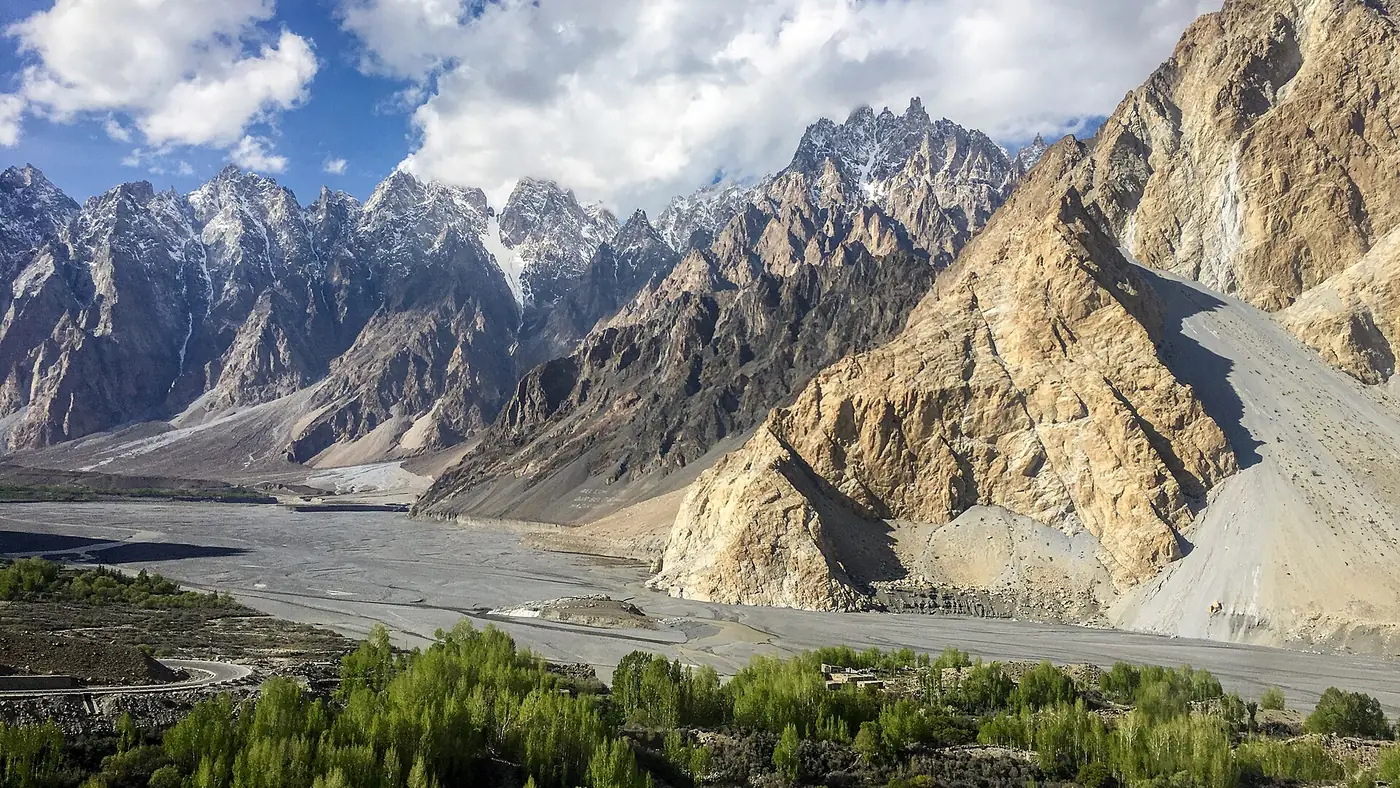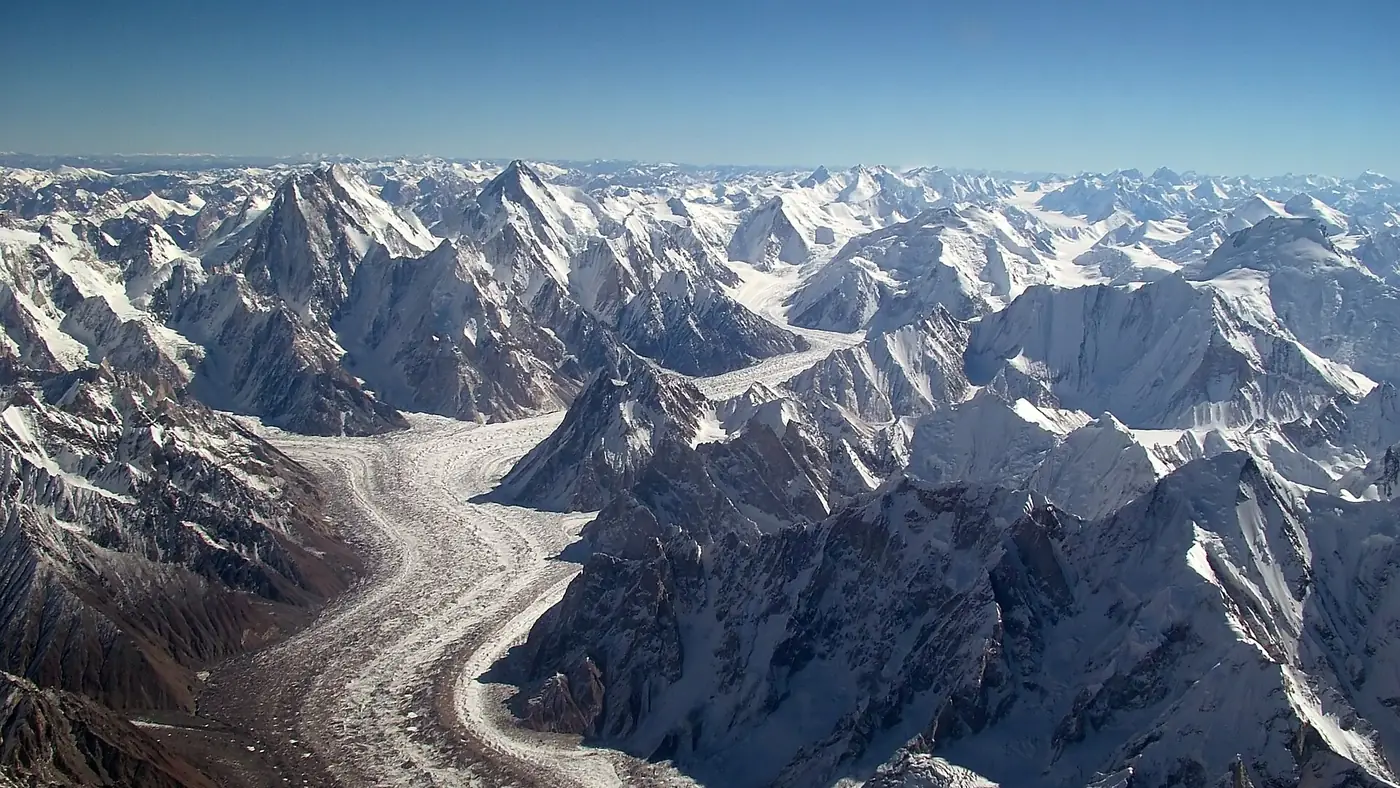
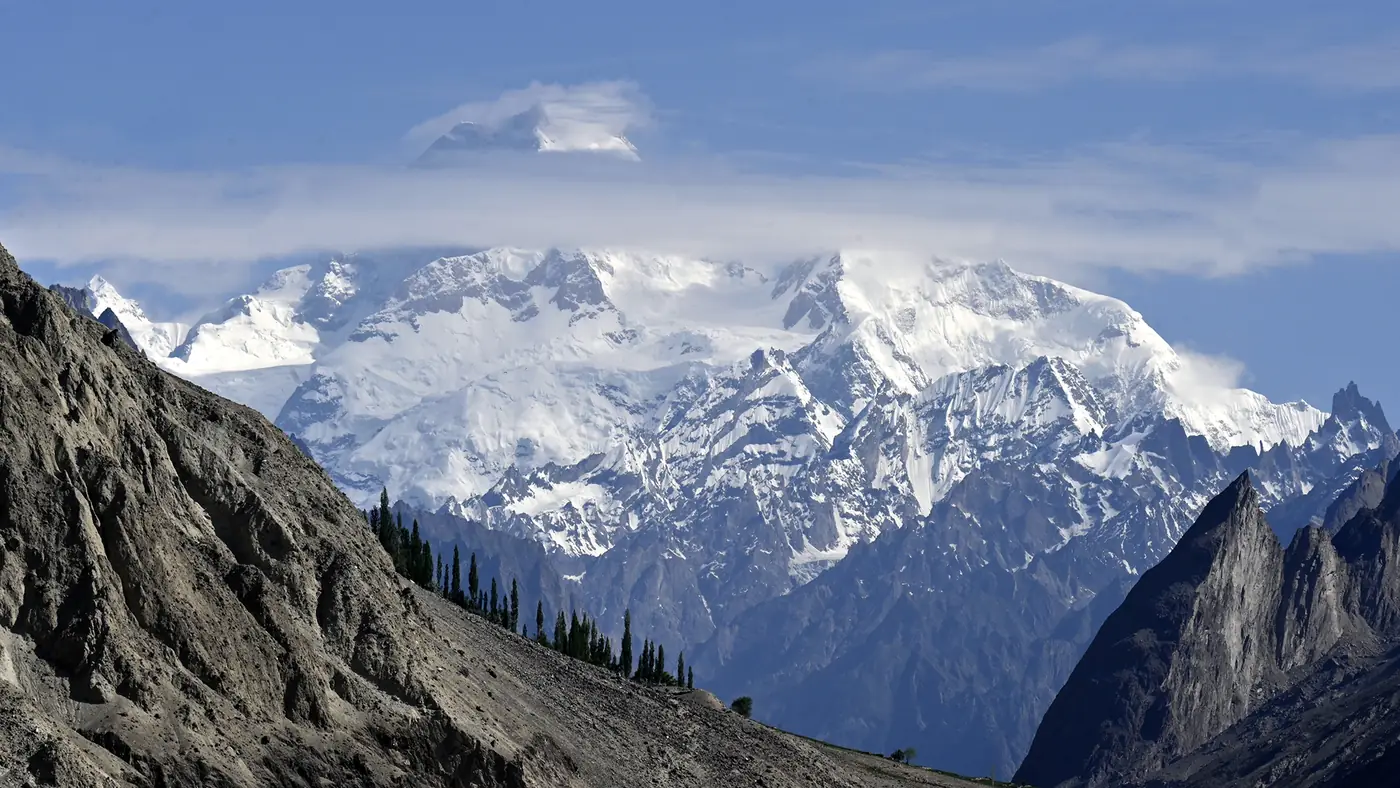
The Masherbrum base camp trek climbs from Hushe village, in the valley east of Khaplu, to a base camp at around 4,200 to 4,300 metres below Masherbrum, the 7,821-metre peak also known as K1. Walking days run to about five or six, through pasture and moraine rather than technical ground, which makes it one of the more approachable base camp treks in the Hushe valley.
This guide covers the route stage by stage, how long to allow, and how it compares to the other treks that share the same starting point.
| At a glance | |
|---|---|
| Start | Hushe village, about 3,050 m |
| Base camp altitude | About 4,200 to 4,300 m |
| Walking days | About 5 to 6, round trip |
| Best months | June to September |
| Difficulty | Moderate; non-technical walking on moraine and alpine ground |
| Peak | Masherbrum (K1), 7,821 m |
Where the trek goes
Hushe is the last village on the road up its valley from Khaplu, and it is the trailhead for several of Baltistan's base camp treks, Masherbrum among them. Our guide to the Hushe valley covers getting there and staying in the village before you start.
From Hushe the path climbs through narrow side valleys and across glacial streams, gaining height steadily rather than in one hard push, before reaching moraine and alpine ground close to the mountain. Masherbrum itself, one of the most striking peaks in the Karakoram and the first 7,000-metre summit climbed by an American expedition, dominates the approach for the final stretch.
The route, stage by stage
- Hushe to the first camp. A shorter first day out of the village, following the valley through pasture and past summer settlements, used partly for acclimatisation.
- Onward through the ablation valley. The path climbs beside the glacier's edge rather than on the ice itself for most of the way, through increasingly bare, high ground.
- To base camp, around 4,200 to 4,300 metres. The final approach crosses moraine directly below the peak. Most groups build in a rest day here before turning back, both to acclimatise and to make the most of the setting.
- Return to Hushe. Most operators retrace the route over one or two days, faster than the walk in since the height loss makes for easier going.
Total walking time is usually five to six days, with the exact split depending on pace and how much time you spend at base camp.
Difficulty and who it suits
This is a moderate trek rather than a technical one. There is no roped glacier travel or climbing, and the terrain is walking on moraine, pasture and rough ground rather than ice. The challenge is altitude and the number of consecutive days at height, both of which call for reasonable fitness and, ideally, some previous experience of multi-day trekking or camping.
It suits walkers who want the scale and remoteness of a Karakoram base camp trek without the length or glacier travel of the K2 or Gondogoro La routes. It is not the trek for a first-ever camping trip or for anyone who has not walked several consecutive days before.
How it compares to the other Hushe valley treks
Hushe is also the start of the K6 and K7 base camp trek into the Charakusa valley and the Laila Peak base camp trek towards the Gondogoro glacier. All three share the first day or two out of the village before splitting towards different valleys, and all sit in the same season and difficulty range. Masherbrum's route is generally considered the gentlest of the three, with less glacier walking than Laila Peak base camp and a shorter approach than K6/K7.
If you are choosing between them, Masherbrum suits a group wanting the most straightforward walk to a genuine 7,000-metre base camp; the other two reward more trekking experience with closer views of technical rock and ice terrain.
Season and permits
June to September is the trekking season, when the route is clear of fresh snow and the weather is most settled. Outside these months the high ground is cold and unpredictable, and few operators run the trek.
The trek lies within Central Karakoram National Park, so a trekking permit and park fee apply, normally arranged through the operator or guide you book with. Rules and fees have changed in recent years, so confirm the current requirement rather than relying on an old figure.
Is it worth it?
Yes, for a group that wants a proper Karakoram base camp experience without the two weeks needed for K2 or the technical crossing of the Gondogoro La. Standing below Masherbrum's face, one of the more dramatic mountains in Baltistan and far less visited than K2, is a serious reward for five or six days on foot.
It is not worth attempting without previous multi-day trekking experience, and it is not a trek to do without a local guide, since the route beyond the first day is remote with no facilities. If a shorter, more accessible trek is what you want, our guide to the easiest treks in Gilgit-Baltistan covers routes that need far less commitment.
Frequently asked questions
How long is the Masherbrum base camp trek?
About five to six walking days round trip from Hushe village, including a rest day at base camp.
How high is Masherbrum base camp?
Around 4,200 to 4,300 metres, at the foot of Masherbrum, also known as K1, which rises to 7,821 metres.
Is the Masherbrum base camp trek technical?
No. It is a non-technical walk on pasture and moraine, though it does need good fitness for several consecutive days at altitude.
Do I need a guide for the Masherbrum base camp trek?
Yes. The route beyond Hushe is remote with no facilities, and a local guide handles navigation, camp logistics and porters.
When is the best time for the Masherbrum base camp trek?
June to September, when the trail is clear of snow and the weather is most stable. Outside this window the trek is not recommended.