
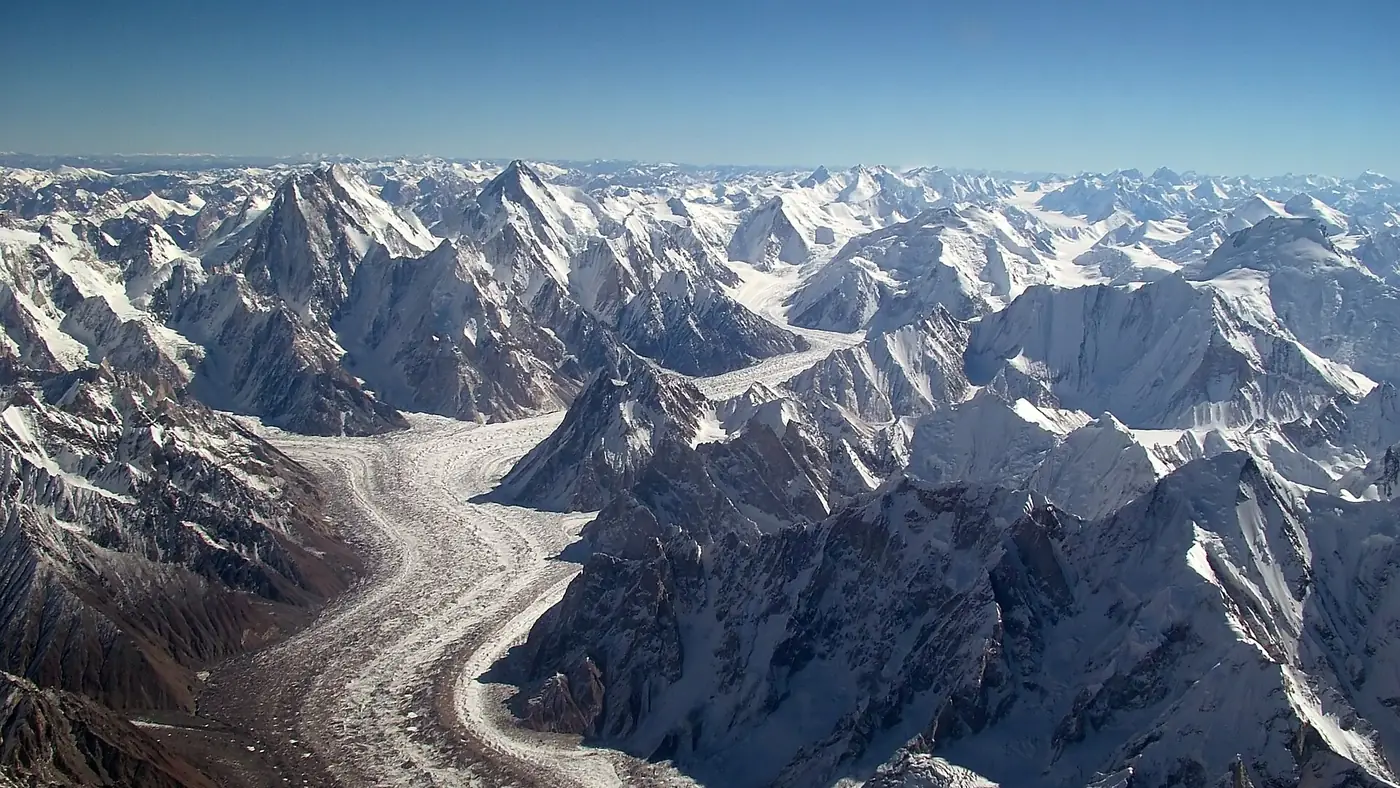

The best treks in Gilgit-Baltistan, in our ranking, are the K2 base camp trek to Concordia, the Gondogoro La loop, Nanga Parbat base camp from Fairy Meadows, Rush Lake in Nagar and Rakaposhi base camp. The first two are two-week glacier journeys for July and August; the others take two to seven days and suit a much wider range of walkers between June and September. Snow Lake, the Shimshal Pass, the Rupal valley, the Thalle La and Patundas round out the top ten.
We have ranked them on four things: the mountains you see, how hard they are, how many days they need, and how reliable the season is. A huge view in three days ranks above a similar view in ten.
| Rank | Trek | Days on foot | Highest point | Difficulty | Season |
|---|---|---|---|---|---|
| 1 | K2 base camp and Concordia | 12 to 14 | About 5,000 m | Strenuous, non-technical | July and August |
| 2 | Gondogoro La | 11 to 12 | About 5,585 m | Semi-technical | Mid-July to mid-August |
| 3 | Nanga Parbat base camp, Fairy Meadows | 2 to 3 | Close to 4,000 m | Moderate | Late June to September |
| 4 | Rush Lake | 5 to 7 | 4,694 m | Moderate to strenuous | July to September |
| 5 | Rakaposhi base camp | 2 to 3 | About 3,300 m | Moderate, steep | June to September |
| 6 | Snow Lake and Hispar La | About 16 | About 5,150 m | Roped glacier travel | July and August |
| 7 | Shimshal Pass and the Pamir | A week or more | 4,735 m | Strenuous, remote | June to September |
| 8 | Rupal valley, Herrligkoffer base camp | 1 to 2 | About 3,550 m | Moderate | June to September |
| 9 | Thalle La | About 3 | About 4,600 to 4,800 m | Moderate | June to September |
| 10 | Patundas | 2 to 3 | A little over 4,000 m | Moderate, glacier crossing | June to September |
The great glacier treks: two weeks or more
1. K2 base camp and Concordia
Nothing else in Pakistan compares. From Askole, a day's jeep ride from Skardu, the route follows the Braldu river and then climbs the Baltoro glacier for days, past the Trango Towers and Masherbrum, to Concordia, where K2, Broad Peak and the Gasherbrums stand around you. Base camp is at about 5,000 metres.
It is long, cold and rough rather than technical: two weeks of walking, much of it on glacier moraine, and a week of nights above 4,000 metres. Allow 15 to 17 days from Skardu. Our K2 base camp trek guide goes through the route stage by stage.
2. The Gondogoro La
The same walk in to Concordia, but out over a pass of about 5,585 metres to the Hushe valley instead of back down the Baltoro. The crossing starts around midnight and uses fixed ropes on steep snow, so it needs crampons, a harness and a guide who has done it. It ranks second only because its window is so narrow, roughly mid-July to mid-August.
6. Snow Lake and the Hispar La
The hardest trek on this list. From Askole it climbs the Biafo glacier to Snow Lake, a basin of ice more than 16 km wide, crosses the Hispar La at about 5,150 metres and descends the Hispar glacier into Nagar. That is around 16 days on foot, with roped travel across crevassed ice. It is for experienced parties with glacier skills only, which is why it ranks lower.
Nanga Parbat: three sides, three ways in
3. Nanga Parbat base camp from Fairy Meadows
The best short trek in the country for the size of mountain it shows you. From the lodges at Fairy Meadows, about 3,300 metres, a path follows the Raikot glacier past Beyal camp and a viewpoint to the base camp below the Rakhiot face, close to 4,000 metres. Fit walkers do it in a long day from the meadow; others sleep at Beyal. With the walk up from Tato, it makes a two to three day trip, and weaker walkers can stop at Beyal or the viewpoint and still see the face.
8. The Rupal valley and Herrligkoffer base camp
On the Astore side, the Rupal face of Nanga Parbat rises about 4,600 metres from its base, often called the highest mountain face in the world. From Tarishing, the last village, the Herrligkoffer base camp meadow at about 3,550 metres is about five hours' walk. Fit walkers do it as a long day there and back, or camp for a night. It is quieter than Fairy Meadows.
The Nanga Parbat circuit
For experienced trekkers, a circuit of well over two weeks links the Rupal and Diamir sides over the Mazeno La, at about 5,400 metres. It is rarely done and too specialised for our top ten.
A week in the high pastures
4. Rush Lake
The best trek of about a week. From Hopper in Nagar, across the river from Karimabad, the route crosses the Bualtar glacier and follows the Barpu and Miar glaciers up to a lake at 4,694 metres, one of the highest alpine lakes in the world. Spantik, Malubiting and Miar Peak fill the view, and from Rush Peak above the lake, at 5,098 metres, K2 is visible far to the east on a clear day. It is non-technical, but the altitude is serious.
7. The Shimshal Pass and the Pamir
From Shimshal village, at the end of a 56 km jeep road from near Passu, a week or more on foot follows the summer migration of the village's yaks and flocks to the Shimshal Pass, at 4,735 metres, and the high Pamir pastures around it. It ranks for remoteness and Wakhi herding life rather than big peaks. Foreign trekkers need a permit arranged in advance.
The Hushe valley: Nangma and Masherbrum
From the Hushe valley near Khaplu, the Nangma valley leads to a ring of granite towers and Masherbrum base camp to the foot of a 7,821-metre peak, each in about a week from Skardu. They are the best choice for trekkers who want wild Karakoram scenery without the Baltoro's length.
Our guides to trekking in Hunza and treks near Skardu compare the routes in each region in more detail.
Short treks: two to four days
5. Rakaposhi base camp
The best first trek in Gilgit-Baltistan. From Minapin, just off the Karakoram Highway in Nagar, a steep but well-used path climbs about 1,300 metres to Tagaphari, a meadow at about 3,300 metres beside the Minapin glacier, directly below Rakaposhi and Diran. Most people take two days, with a night at base camp. Seasonal camps offer tents and meals in summer.
9. The Thalle La
A gentle pass between the Thalle valley near Khaplu and Shigar, with no glacier on the main route. Operator itineraries allow about three days on foot, past summer pastures and down through juniper to the Shigar side. Published heights for the pass range from about 4,600 to 4,800 metres.
10. Patundas
A two-to-three-day climb from Passu in upper Hunza to a high pasture above the glaciers, with views over the Batura glacier and across to the Passu Cones. It crosses glacier ground, so a local guide is essential.
Also worth knowing
- The Burji La, between Skardu and the Deosai plateau, is a short, steep climb to a pass of about 4,800 to 5,000 metres, with a distant view of K2 on a clear day.
- Kutwal Lake, in the Haramosh valley off the Skardu road, is a three-to-four-day camping trek to a lake at about 3,300 metres below the north side of Haramosh.
- Karambar Lake, at 4,272 metres at the head of the Ishkoman valley, is about three days on foot from the road end. It lies within 10 miles of the Afghan border, where the UK government advises against all travel, so check current advice and local rules before planning it.
Which trek is best for you?
- Your first trek: Rakaposhi base camp or Nanga Parbat base camp from Fairy Meadows. Our guide to easy treks in Gilgit-Baltistan compares them.
- A week, some experience at altitude: Rush Lake, or the Hushe valley.
- The biggest mountains on earth: K2 base camp, and the Gondogoro La if you are comfortable on ropes.
- Solitude and village life: the Shimshal Pass and the Pamir.
- Families and older walkers: the walk up to Fairy Meadows, or short walks from Tarishing in the Rupal valley.
- Only July or August free: that is the one time every trek on this list is open, but also the season of floods and road closures, so keep spare days.
Our trekking season guide shows which treks open when. Wherever you go, a local guide, time to acclimatise and a spare day for weather are what make a trek work. If you would like help choosing one and fitting it into a wider trip, send us your dates through our trip planning page.
Frequently asked questions
What is the best trek in Gilgit-Baltistan?
The K2 base camp trek to Concordia, for the concentration of giant peaks around the upper Baltoro glacier. It takes about two weeks from Skardu and suits experienced, fit trekkers.
What is the best short trek in Gilgit-Baltistan?
Nanga Parbat base camp from Fairy Meadows, or Rakaposhi base camp from Minapin. Both take two to three days and put you directly below a mountain of more than 7,500 metres.
What is the hardest trek in Gilgit-Baltistan?
Snow Lake and the Hispar La, with around 16 days on foot and roped travel across crevassed glaciers. The Gondogoro La is the other serious one, because of its fixed-rope crossing at about 5,585 metres.
When is the trekking season in Gilgit-Baltistan?
June to September for most treks, and July and August for the high glacier routes to K2, the Gondogoro La and Snow Lake.
Do I need a permit to trek in Gilgit-Baltistan?
For the Baltoro, K2 and the Gondogoro La, yes: the restricted zone from Askole needs a trekking permit and park fee for Pakistani and foreign trekkers alike. Shorter treks such as Rakaposhi and Fairy Meadows need no trekking permit for Pakistanis, only your CNIC at checkposts, though local or park fees can apply and rules change.