
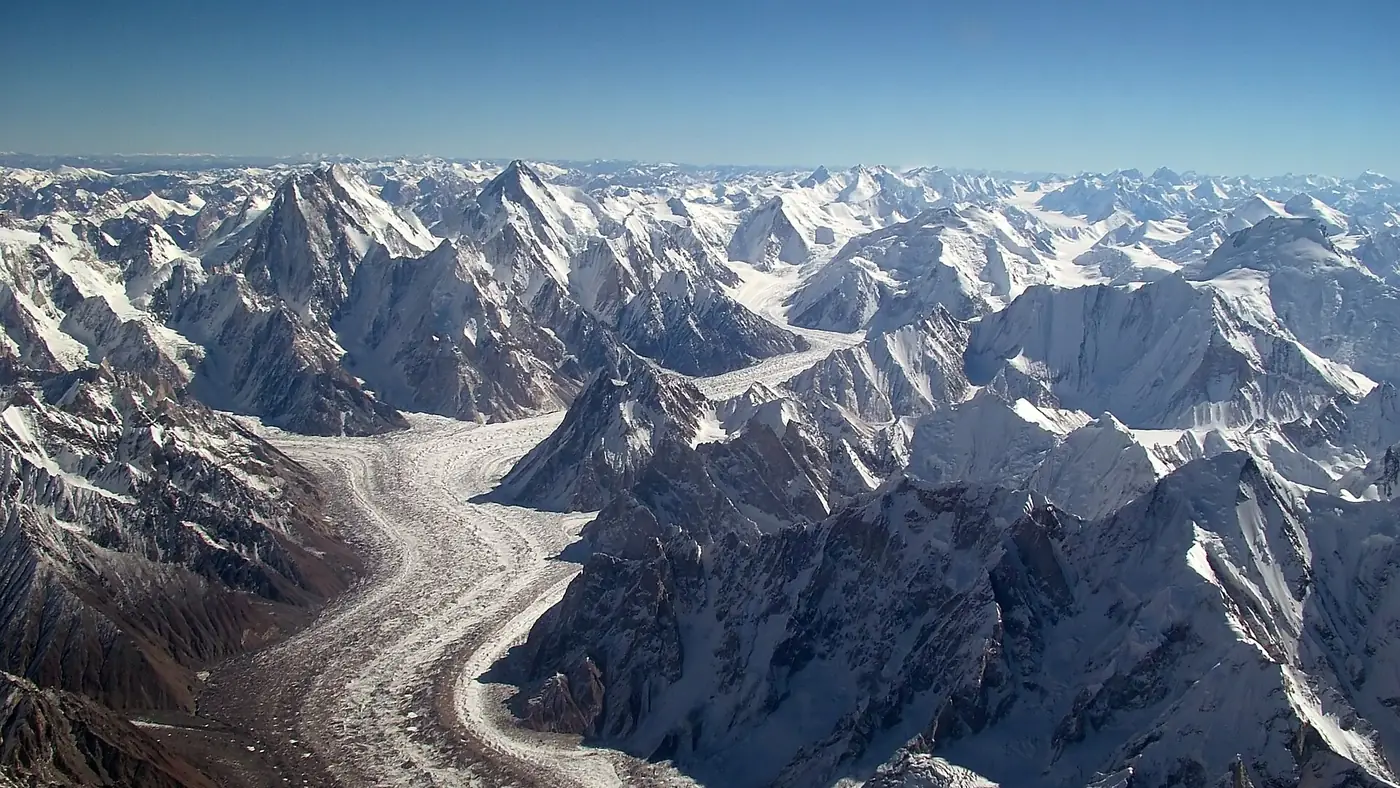

The trekking season in Gilgit-Baltistan runs from about June to September for most treks, and only from July to August for the high glacier routes to K2, Concordia and the Gondogoro La. The shorter base camp treks, such as Rakaposhi, Fairy Meadows to Nanga Parbat base camp and the Rupal valley, open from about June and stay good into September. Lower valley walks in Hunza are possible from April and into October, and from November to March there is no real trekking at all.
Three things set the calendar: snow on the high ground, heat in the low valleys, and the floods and landslides of July and August. This guide goes through the year month by month and ends with the best month for each kind of trek.
| Month | What is realistic | Watch out for |
|---|---|---|
| December to February | Low valley walks only | Deep cold, snow, short days |
| March and April | Low walks in Hunza and Gilgit | Rain, snow above the villages |
| May | Low and mid-level walks; base camps opening late in the month | Snow on upper paths, camps not yet open |
| June | Base camp treks; Fairy Meadows and Rupal | Snow high up early in the month |
| July | Everything, including the Baltoro and Gondogoro La | Heat low down, floods and landslides |
| August | Everything, still the main high season | Floods, rockfall, rescue teams leaving late in the month |
| September | Base camp treks, Hunza, Rupal | Colder nights, first autumn storms |
| October | Low and mid-level walks | Freezing nights, camps closing |
| November | Low valley walks only | Snow on the passes |
Why is the season so short?
Most treks in Gilgit-Baltistan climb above 3,000 metres, and the high glacier routes spend days above 4,000. At that height the snow lies from roughly November to May, and later on the glaciers and passes. The pastures where you camp are only occupied, and the seasonal camps only open, once it clears.
At the other end, the valleys where treks begin can be very hot. Gilgit averages about 36°C on July afternoons, and Chilas, lower down the Indus, reached 48.5°C on 5 July 2025. The first day of the K2 trek, along the Braldu river beyond Askole, can be baking in July.
And July and August, the only months when the highest routes are open, are also the months of glacier melt, monsoon storms and flash floods. Every trekking plan in high summer has to allow for a road being closed on the way in or out.
Winter and early spring: December to April
From December to February there is no trekking in the usual sense. Paths above the villages are under snow, nights are well below freezing, and the seasonal camps are empty. What remains are low walks: the water channels and villages of Hunza on a bright day, or a guided winter visit to the ice caves at the foot of the Chogo Lungma glacier near Arandu, which is an outing rather than a trek.
March and April bring blossom to the valleys and the first comfortable walking weather low down. This is also the wettest time of year in Gilgit, with showers and fresh snow on the peaks. The higher paths are still snowbound, so keep to valley-floor walks and short hikes around Karimabad, Gulmit and Passu.
May and June: the season opens
May is a month of transition. Low and mid-level walks in Hunza and Nagar are pleasant, but snow still lies on upper paths, and seasonal camps at places like Tagaphari and Beyal may not have opened. Late May can work for Rakaposhi base camp in a settled year.
June opens the main season for the shorter treks:
- Rakaposhi base camp from Minapin, with the seasonal camps running.
- Fairy Meadows, and from late June the path beyond Beyal to Nanga Parbat base camp as the snow clears.
- The Rupal valley from Tarishing, once the road from Astore is reliable.
- Rush Lake, possible but with snow still around the upper camps; July onwards is more settled.
The Babusar Pass, the summer route to Chilas and Fairy Meadows from Islamabad, usually reopens between late May and June; it reopened in late May in 2026. The long glacier treks in Baltistan are still early in June, with more snow on the upper Baltoro.
July and August: the high season
These are the only months when every trek is open, including the longest and highest:
- K2 base camp and Concordia, up the Baltoro glacier from Askole. Our K2 base camp trek guide goes through the route.
- The Gondogoro La, from mid-July to mid-August in its main window, when the fixed ropes are in place and the rescue team from Hushe is present. Our Gondogoro La guide covers the crossing.
- Snow Lake and the Biafo and Hispar glaciers, for experienced parties.
- Rush Lake and the other high treks in Nagar and Hunza; see our Rush Lake trek guide.
It is also the riskiest time on the roads. Glacier and snow melt peak, and storms that hardly touch Gilgit can drop heavy rain on a single side valley. On 21 and 22 July 2025 a flash flood on the Babusar road killed tourists and closed the road. By late July 2026 Gilgit-Baltistan had recorded 89 flood incidents in the season, and around 23 July the Karakoram Highway, the Skardu road and the Babusar road were all blocked at the same time.
High summer is not stable in the mountains either. In 2026 heavy July snow made the climbing routes on the Baltoro peaks slow and dangerous, and on 30 July an avalanche on Broad Peak killed ten climbers; unusual heat in early August then added to the avalanche and rockfall risk. Trekkers stay far below the climbing routes, but hotter summers bring more rockfall and meltwater onto the glaciers they walk on.
September to November: the season closes
September is one of the best trekking months. The air is clearer, the floods have usually passed, and the base camp treks are still open: Rakaposhi, Fairy Meadows and Nanga Parbat base camp, the Rupal valley and the higher walks in Hunza. Nights turn cold, and seasonal camps begin to close towards the end of the month. On the Baltoro, September is possible but colder, with the first autumn storms and the climbing teams gone.
October has the sharpest views of the year and golden poplars in the valleys, but the high treks are over. Mid-level walks such as Ultar Meadow and the lower Rupal valley still work in settled weather, with freezing nights.
November is for valley walks only. Snow settles on the passes, and Babusar usually closes during the month.
Planning around snow, heat and floods
A few habits make a trek in any month safer:
- Keep spare days. One at the start for the road or the Skardu flight, one on the trek for weather.
- Start early. Walk in the cool of the morning in low valleys, and cross glaciers and side streams before the midday melt raises them.
- Check the roads before you set off. The Gilgit-Baltistan tourism department posts road and weather advisories, and local news reports closures quickly.
- Don't camp on the fan of a side stream or close to a river in July and August.
- Ask locally about snow early and late in the season. The guesthouse in the village where the trek starts knows more than any website.
Our Gilgit-Baltistan weather by month guide has temperature and rainfall figures for Gilgit and Skardu, and our seasons guide shows how trekking fits alongside the rest of a trip to the north.
Which month for which trek?
- K2 base camp and Concordia: July and August; June and September only with flexibility.
- Gondogoro La: mid-July to mid-August.
- Rush Lake: July to September.
- Rakaposhi base camp: June to September, with late May and early October possible.
- Fairy Meadows and Nanga Parbat base camp: late June to September.
- Rupal valley: June to September, with clear but cold days in October.
- Hunza day walks: April to October, higher routes from June.
If you are new to trekking, September is often the best choice: settled weather, open camps, fewer floods and quieter paths. Our guide to easy treks in Gilgit-Baltistan suggests where to start.
Frequently asked questions
What is the best month for trekking in Gilgit-Baltistan?
For the high glacier treks, July and August. For base camp treks such as Rakaposhi and Nanga Parbat, September is often best, with clearer air and fewer floods than high summer.
Can you trek in Gilgit-Baltistan in winter?
Not in the usual sense. From December to February the trekking paths are under snow and the camps are closed, leaving only low valley walks and guided outings such as the Chogo Lungma ice caves.
When does the K2 trekking season start?
The main season is July and August. June is possible but with more snow on the upper Baltoro, and September brings colder nights and the first storms.
Does the monsoon affect trekking in Gilgit-Baltistan?
Less than in the rest of Pakistan, since the valleys get little rain. But July and August storms, combined with glacier melt, cause flash floods and landslides that close roads to trek starting points, so keep spare days.
Is October good for trekking in Gilgit-Baltistan?
For low and mid-level walks, yes, with very clear views and autumn colour. The high treks and most seasonal camps have closed, and nights are freezing.
When do the treks around Fairy Meadows open?
Fairy Meadows is usually reachable from June, and the path beyond Beyal to Nanga Parbat base camp is usually clear of snow from late June or July to September.