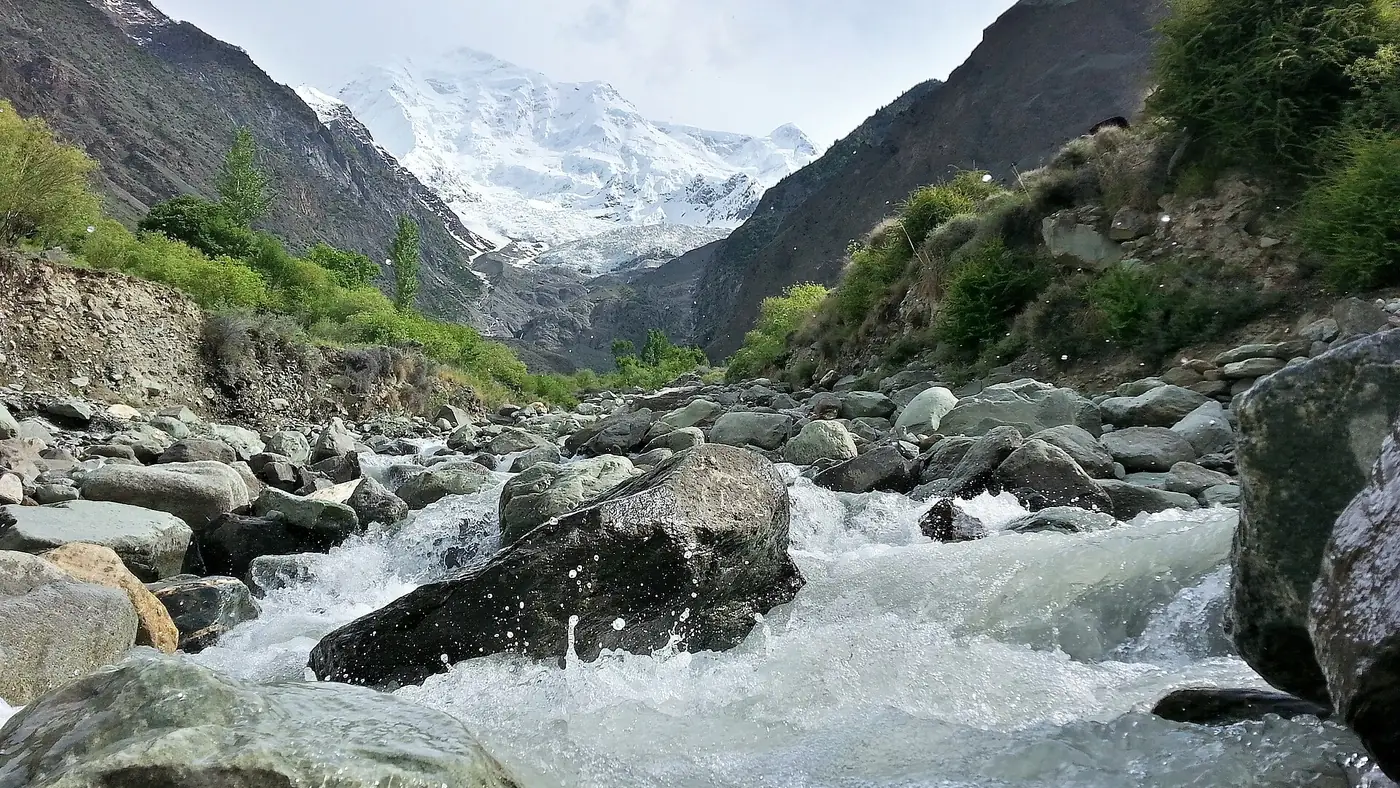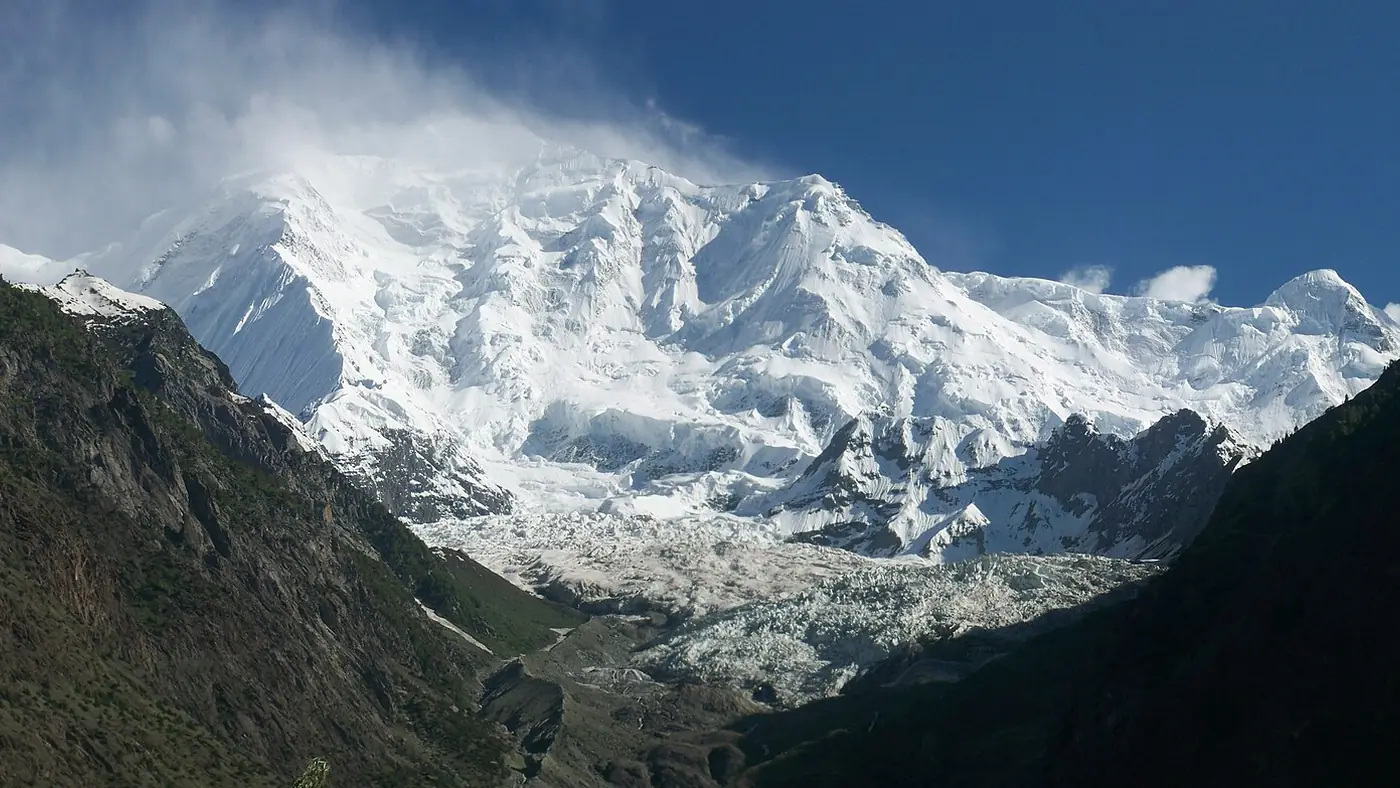
Gilgit-Baltistan weather by month swings much further than most visitors expect. In January, Skardu averages about 3°C in the afternoon and −8°C at night, and Gilgit about 10°C and −3°C; in July the same two towns reach around 32°C and 36°C. The valleys are dry for most of the year, but the high passes keep their own calendar: shut by snow from roughly December to April, and all open together only from about late June to September.
Below is a month-by-month table for the two main towns, then what each season means on the ground: how cold the nights get, when rain turns into landslides, and which passes are open. Hunza, at around 2,500 metres, is higher than Skardu, so expect temperatures there closer to Skardu's than to Gilgit's.
| Month | Gilgit, day / night | Skardu, day / night | Rain and snow, mm (Gilgit / Skardu) | High passes |
|---|---|---|---|---|
| January | 10°C / −3°C | 3°C / −8°C | 5 / 28 | All closed |
| February | 13°C / 0°C | 6°C / −4°C | 7 / 26 | All closed |
| March | 18°C / 5°C | 12°C / 2°C | 12 / 37 | All closed |
| April | 24°C / 9°C | 19°C / 7°C | 24 / 31 | All closed |
| May | 29°C / 12°C | 23°C / 10°C | 25 / 25 | Khunjerab usually opens; Babusar late in the month at best |
| June | 34°C / 15°C | 29°C / 13°C | 9 / 9 | Babusar open in most years; Deosai opening |
| July | 36°C / 18°C | 32°C / 16°C | 15 / 10 | All open; flood closures possible |
| August | 35°C / 18°C | 31°C / 16°C | 15 / 12 | All open; flood closures possible |
| September | 32°C / 12°C | 27°C / 11°C | 8 / 9 | All open; Deosai season ending |
| October | 26°C / 6°C | 20°C / 4°C | 6 / 7 | Deosai closed; others open, with early snow |
| November | 18°C / 0°C | 13°C / −2°C | 2 / 6 | Babusar closes; Khunjerab a gamble |
| December | 12°C / −2°C | 7°C / −6°C | 5 / 16 | All closed |
Temperatures and rainfall are long-term averages from the Pakistan Meteorological Department stations in Gilgit and Skardu. Pass dates vary every year with the snow.
How to read these numbers
The two towns in the table are at very different heights. Gilgit sits at about 1,500 metres, Skardu at about 2,230, and Karimabad in Hunza at around 2,500. As a rough rule, the air cools by six to seven degrees for every thousand metres you climb, and that matters more than the month on most days of a trip.
It explains why a trip can hold two climates at once. On a July afternoon you can be hot in Gilgit or Chilas and, the same evening, close to freezing on the Deosai plateau at over 4,000 metres. The Khunjerab Pass, at 4,693 metres, is cold and windy at the top even in high summer.
Two more things the averages hide:
- The day–night gap is large. The difference between afternoon and night is between 10 and 20 degrees in every month, so a warm day is no guide to the evening.
- Averages are not extremes. Skardu's lowest recorded temperature is below −24°C, and Gilgit has touched 46°C in July.
Winter: December to February
Winter in the valleys is cold, dry and bright between spells of snow. January is the coldest month everywhere: Skardu drops to −8°C on an average night and Gilgit to about −3°C. Skardu gets several times as much winter precipitation as Gilgit, most of it as snow, while Gilgit's winters are cold but very dry.
Every high pass is closed: Khunjerab to visitors, Babusar, Deosai and Shandur. The Karakoram Highway stays open as the only road in from Islamabad, but snow and rockfall can close stretches for hours or days. After heavy snow in late January 2026, the tourism department advised visitors to put off non-essential trips to the higher areas.
Winters have also been getting milder and drier in recent years, which has made frozen lakes and snow cover less predictable. Our guide to Gilgit-Baltistan in winter covers what stays open and how to travel then.
Spring: March to May
Spring warms up quickly in the valleys. Gilgit goes from about 18°C in March afternoons to 29°C by May, and Skardu from 12°C to 23°C. Nights stay cold into April, and above the valley floor it is still winter.
This is the wettest part of the year in the valleys. At the Gilgit station, April and May bring more rain than any other months, and in Skardu March is the wettest month of all. Expect showers, fresh snow on the peaks and the odd day when low cloud grounds flights.
The high passes stay closed until late in the season. Khunjerab normally reopens to visitors at the start of May, while Babusar and Deosai stay shut through most of the month. Apricot and cherry blossom moves up the valleys through April.
Summer: June to August
Summer is hot in the low valleys and pleasant higher up. Gilgit averages 34°C to 36°C in the afternoon from June to August, and Chilas, lower down the Indus, is hotter still: it reached 48.5°C in a heatwave on 5 July 2025. Skardu is milder at 29°C to 32°C, and Hunza, higher up, is cooler again.
Very little rain falls in the valleys themselves, but summer is when the serious hazards come. Meltwater from glaciers and snow peaks through July and August, rivers run high and muddy, and storms that barely register in Gilgit can drop heavy rain on a single side valley. That combination causes flash floods, glacial lake outbursts and landslides.
Everything is open in summer: Khunjerab, Babusar, Deosai, Shandur and the trekking routes. Nights on Deosai and at Fairy Meadows are still cold, so pack warm layers however hot the drive up was.
Autumn: September to November
September is one of the most settled months of the year: dry, clear, and warm by day, with Gilgit around 32°C and Skardu around 27°C in the afternoon. Nights start to cool quickly. The Deosai season winds down as the month goes on.
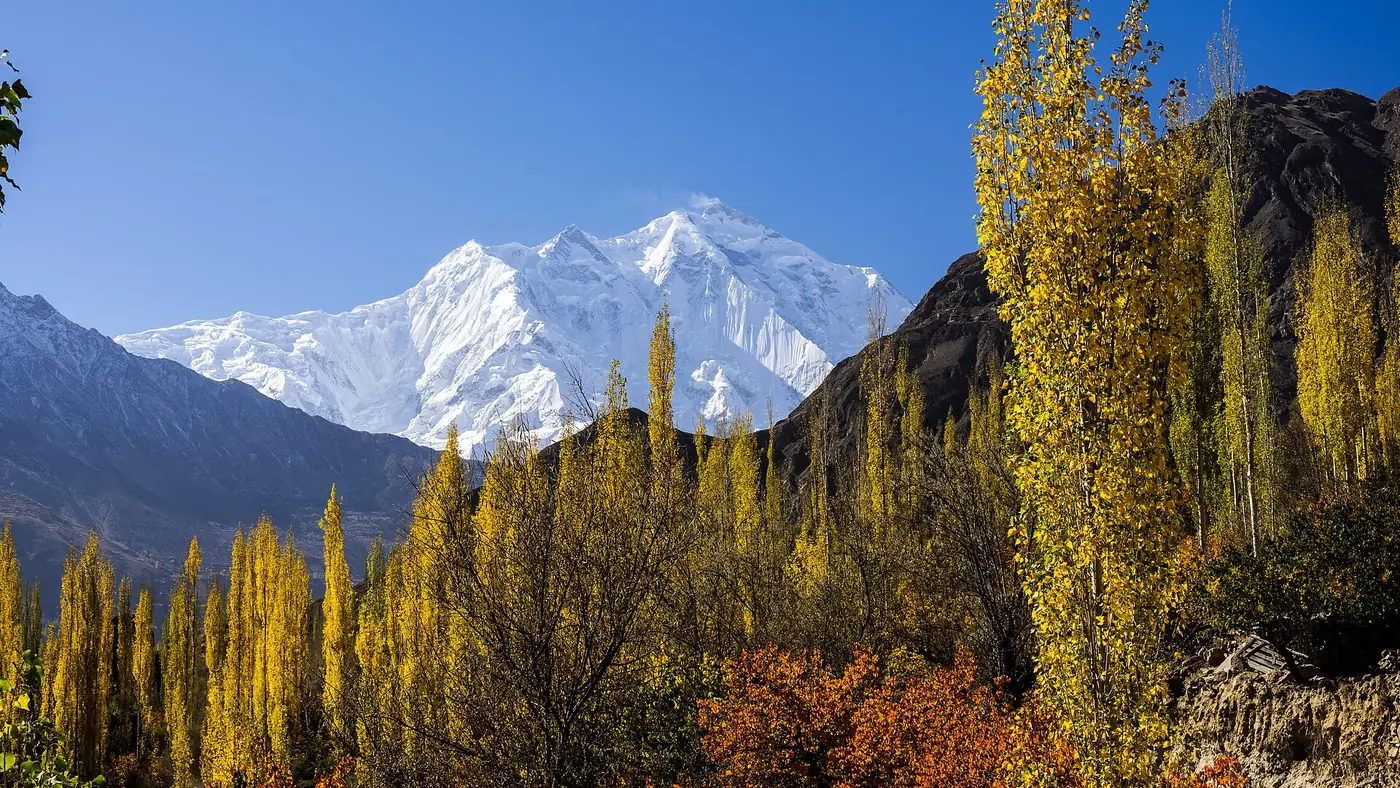
October is cool and bright. Afternoons are around 26°C in Gilgit and 20°C in Skardu, but nights in Skardu drop to about 4°C. The poplars and orchards turn through the month, and the first snow settles on the passes.
By November, nights are at or below freezing in both towns. Babusar usually closes some time in the month; in 2025 the Kaghan side shut on 6 November and the road was closed to all traffic from the Diamer side on 29 November. Khunjerab stays open to visitors into November in most years, but a closure can come at any time.
When do the high passes open and close?
| Pass or plateau | Height | Usually open | Notes |
|---|---|---|---|
| Khunjerab Pass | 4,693 m | Early May to November | Kept open for trade through winter since December 2024; not a winter day trip |
| Babusar Pass | 4,173 m | About late May or June to November | Reopened in late May in 2026; closed for about a week after the July 2025 flood |
| Deosai plateau | About 4,100 m | Roughly June to September | Snowbound the rest of the year |
| Shandur Pass | About 3,700 m | Summer only | The polo festival is usually in early July, but was held in June in 2026 |
All of these dates move with the snow. Treat them as a guide, and check locally in Chilas, Skardu or Sost before setting out.
Rain, floods and landslides
Most road closures in summer are not caused by rain in the town you are staying in. They happen when a storm or a burst of meltwater sends debris down a side stream and across the road.
Recent seasons show the pattern:
- July 2025, Babusar. A flash flood on the Thak–Babusar road on 21 and 22 July swept away vehicles and killed tourists. The Diamer administration closed the road, and more than 200 tourists were moved to Chilas.
- Late August 2025, Ghizer. A glacial lake outburst hit the village of Talidas in the Ishkoman valley, and cloudburst floods struck nearby villages.
- July 2026, Skardu road. Flooding damaged the Jaglot–Skardu road, which reopened on 27 July over a temporary steel bridge.
- March 2026, Karakoram Highway. Landslides after heavy rain closed the highway between Pattan and Bursin, with vehicles stranded on both sides.
What this means for planning:
- Keep a spare day on any trip in July or August.
- Start early. Glacier-fed streams usually run highest late in the day, after the sun has been on the ice, and storms often build in the afternoon.
- Don't stop or camp on the fan of a side stream, and don't try to drive through water flowing across the road.
- Check before long drives. The Gilgit-Baltistan tourism department posts road and weather advisories, and the Tourist Police can be reached on 1422 within the region.
Planning around the weather
For most travellers, the weather points to May to October, and to June to September if the trip includes Deosai, Khunjerab, Babusar or Fairy Meadows. September is the best bet for clear skies and stable roads. July and August have everything open but carry the highest flood risk. April and October are cool, quiet and beautiful, but the passes are either closed or near closing.
Winter suits travellers who want snow and empty valleys and can live with cold nights, long power cuts and closed passes. For a month-by-month view of which valley to choose, see our guide to the best time to visit Gilgit-Baltistan, and our when to go page compares the seasons across the whole of the north.
Frequently asked questions
What is the weather like in Gilgit-Baltistan in July?
Hot in the low valleys and warm higher up. Gilgit averages about 36°C in the afternoon and Skardu about 32°C, while Deosai and Khunjerab are cold at night. July also has one of the highest risks of flash floods and landslides.
Which is the coldest month in Gilgit-Baltistan?
January. Skardu averages about −8°C at night and Gilgit about −3°C, and the high valleys are colder still.
When does it snow in Gilgit-Baltistan?
Mainly from December to March, with the most in Skardu and the higher valleys. Snow can fall on the passes in any month outside high summer.
Does it rain a lot in Gilgit-Baltistan?
Not in the main valleys. Gilgit's weather station records only around 110 mm of rain and snow in an average year, and Skardu somewhat more, most of it in winter and spring. The danger is not steady rain but sudden storms and meltwater in summer, which cause flash floods and landslides.
What is the weather like in Hunza in October?
Clear, dry and cool. Expect pleasant afternoons and cold nights, colder still in upper Hunza, with the poplars and orchards turning.
When is the Babusar Pass open?
Usually from about late May or June until snow closes it in November. It closed in November 2025 and reopened in late May 2026.