The best Hunza photography spots are Eagle's Nest above Duikar for sunrise on Rakaposhi and Diran, the roof of Baltit Fort and the cliffs of Altit in the morning, Ganish's pond and carved mosques in soft light, Attabad Lake in the first hour of the day, and the Passu Cones and Hussaini bridge in the late afternoon. For the night sky, get away from Karimabad's lights to Duikar, Borith Lake or Passu, and go in the week either side of a new moon.
This guide works through the day, from sunrise to the stars, with where to stand and why the light works there. It also covers the seasons, the kit that copes with the cold, and what you should not point a camera at.
| Spot | Best time | Notes |
|---|---|---|
| Eagle's Nest, Duikar | Sunrise; sunset a close second | Jeep up in the dark; cold before dawn |
| Baltit Fort roof | Morning tour | Photograph where your guide allows |
| Altit Fort and village | Mid-morning | Ask before photographing people |
| Ganish | Early morning or late afternoon | With a guide from the village |
| Attabad Lake | First hour of light | Calm water and an empty landing |
| Hussaini bridge | Late afternoon | Shoot from the ends, not the middle |
| Passu Cones | Late afternoon to sunset | Pull right off the highway |
| Borith Lake | Dawn and after dark | Reflections, then a dark sky |
Sunrise: where to be when the peaks light up
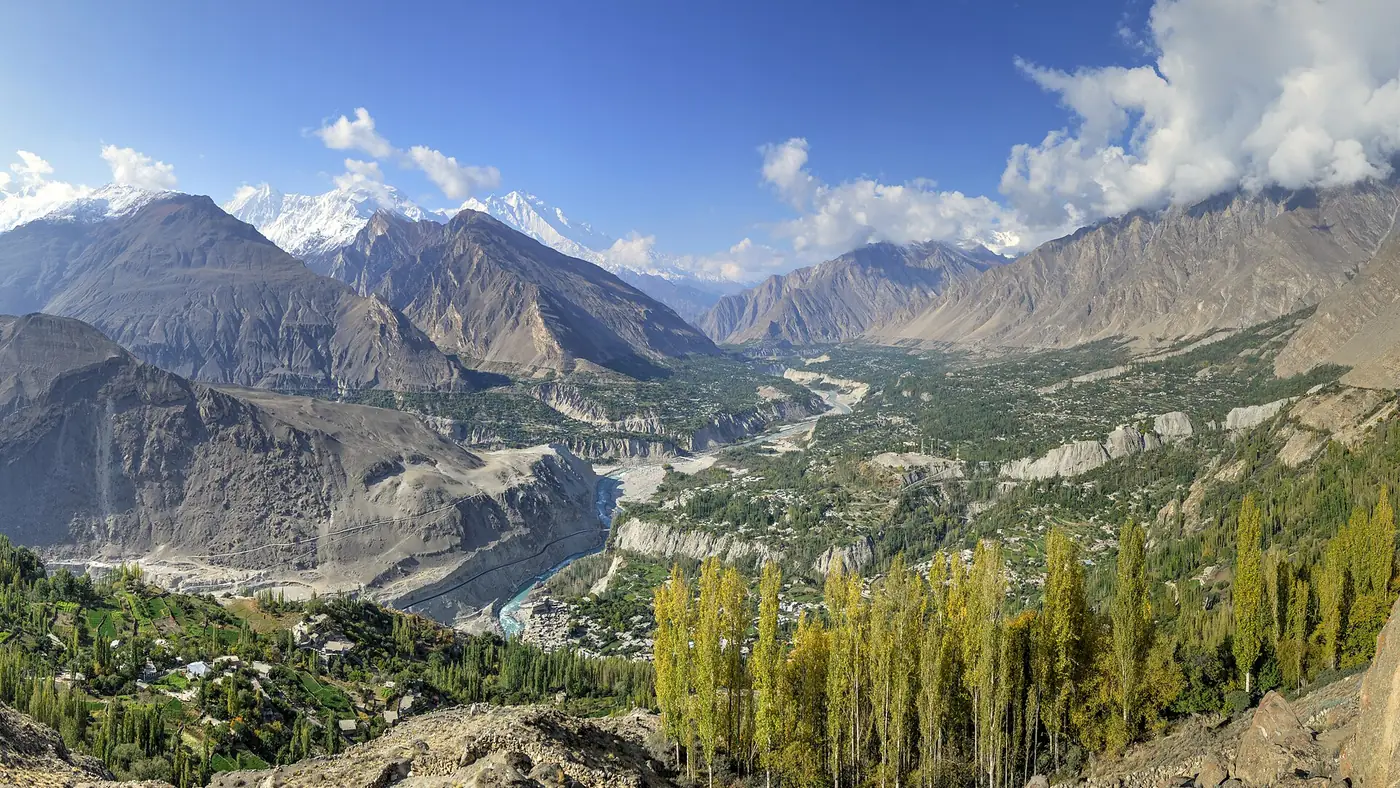
Central Hunza's great subject is the ring of high peaks around it: Rakaposhi (7,788 m) and Diran across the river to the south, Ultar Sar and the spire of Ladyfinger behind Karimabad. At sunrise the summits catch the light first, turning pink and then gold, while the valley below is still in blue shadow. That contrast lasts only a few minutes, so be in place early.
Eagle's Nest, above Duikar, is the place for it. From the rocky knoll above the village you see the whole of central Hunza, with Baltit and Altit below and the peaks all round. It is 30 to 45 minutes by road from Karimabad on a steep, narrow road, so most people go up with a local jeep in the dark. Our Eagle's Nest guide has sunrise and sunset times by month.
If you can't face the 4 am start, a hotel terrace high in Karimabad facing Rakaposhi does a smaller version of the same thing. In Gojal, a night in Passu or Gulmit gives you the first light on the Cones, which you cannot reach from Karimabad in time.
Morning in central Hunza: forts, villages and channels
Once the sun is up, the low morning light suits the stone and timber of the old buildings.
- The roof of Baltit Fort. The first tour of the day puts you on the roof with Karimabad, Altit and Rakaposhi below and fewer people in the frame. Inside, photograph only where the guide says.
- Altit Fort and old Altit. The fort stands on a cliff above the Hunza river, and the morning light falls across the lanes of the old village.
- Ganish. The four carved wooden mosques of Hunza's oldest settlement stand beside the village pond, which reflects them on a still morning. Go with a guide from the village, and ask before photographing inside the mosques. Our Ganish village guide covers the walk and the etiquette.
- The water channels above Karimabad. The paths beside the irrigation channels run almost level across the hillside, with the whole valley and Rakaposhi in front of you. Good for wide views and for the terraces below.
By late morning in summer the light turns flat and hazy, and cloud often gathers on the high peaks. Use the middle of the day to drive, eat or rest.
Afternoon in Gojal: Attabad, Hussaini and the Cones
Upper Hunza works best in the second half of the day, because of the way its main subjects face.
Attabad Lake is at its most photogenic at either end of the day. In the first hour of light the water is usually calm, the mountains reflect in it and the landing is empty. Its colour changes a great deal by season; see our guide to the best time to visit Attabad Lake.
The Hussaini suspension bridge is photographed with the Passu Cones rising behind it. Take your pictures from the ends, where you can stand still, rather than halfway across, and be patient with other people crossing.
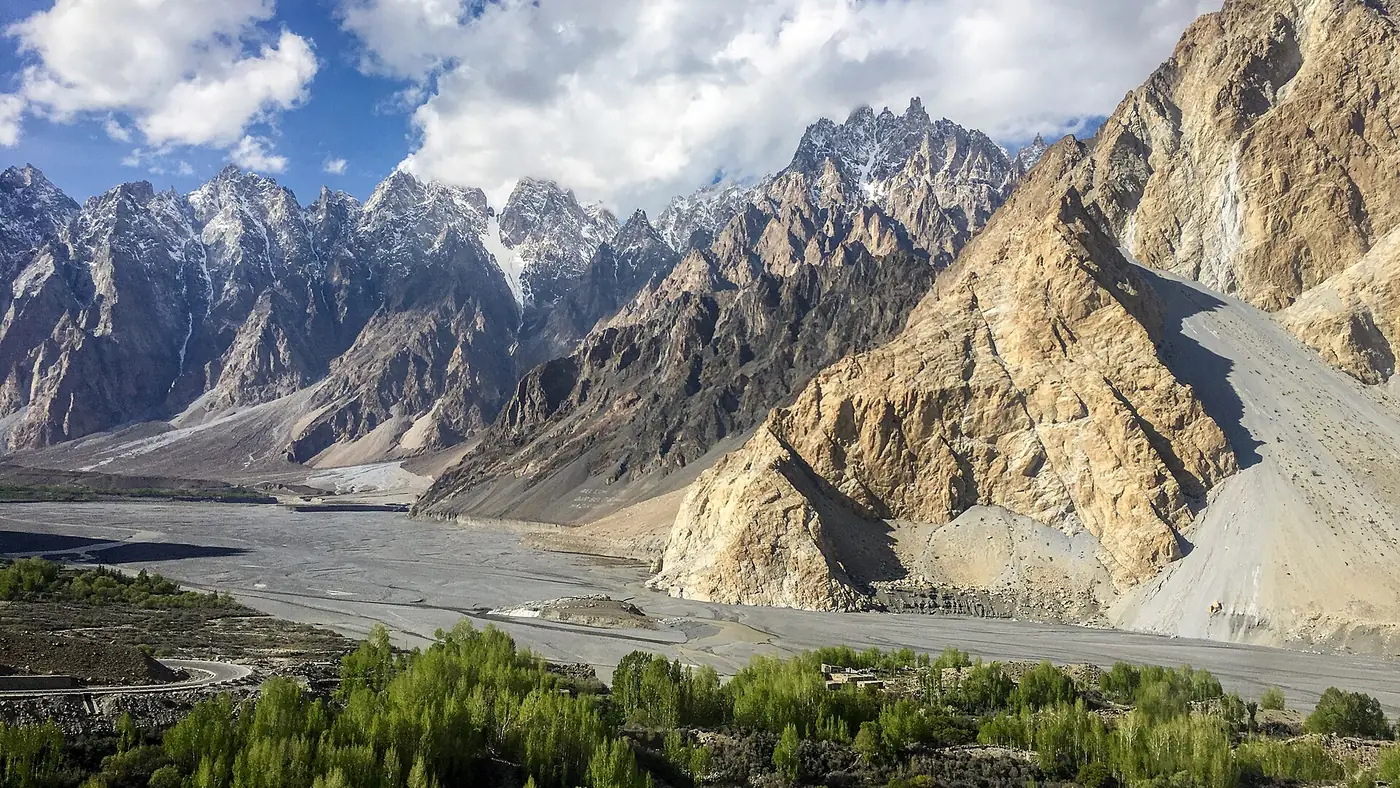
The Passu Cones (Tupopdan, 6,106 m) rise on the east side of the river, north-north-east of the classic viewpoint on the highway just south of Passu. In the late afternoon the sun comes from the west, behind you, and lights the face you are looking at; the spires hold the last light after the valley falls into shade. Pull well off the road: this is the main route to China and trucks come through fast. Our guide to the Passu Cones covers every viewpoint.
Borith Lake, above Hussaini, is best at dawn and dusk, when the wind drops and the surrounding hills reflect in the water. In spring and autumn, migrating ducks rest on it; keep your distance and don't chase them for a picture.
Blue hour
For about half an hour after sunset, the sky turns deep blue while the snow still glows faintly and the first lights come on below. It is easy to miss if you pack up at sunset. From Eagle's Nest, the lights of Karimabad, Altit and Aliabad come on beneath the dark bulk of the mountains; at Attabad, the water goes steel-blue and the cliffs turn to silhouettes. Use a tripod or a steady wall, since the light fades quickly.
The night sky
Hunza's air is dry and clear, and away from the town lights the stars are very bright.
Where to go. Karimabad and Aliabad have enough lights to wash out the fainter stars. Duikar, Borith Lake and Passu are much darker, and a few minutes' walk from any hotel usually helps.
The Milky Way. Its bright core lies in the southern sky. Seen from Karimabad and Duikar, due south is Diran, with Rakaposhi a little to the west of it, so the core crosses the sky above those two peaks. It is well placed at night from about April to September: highest in the south around midnight in late June, and in the evening by August.
Star trails. From the Passu viewpoints you face north-north-east towards the Cones. The pole star sits above the ridge and a little to its left, so a long exposure pointed at the Cones shows the stars wheeling around it.
The moon. A full moon lights the snow peaks beautifully but hides most of the stars. For the Milky Way, go in the week either side of a new moon; for moonlit mountains, the nights around a full moon.
The cold. Even in summer the nights are cold at Duikar and Passu, and from late autumn they are well below freezing. Take a warm jacket, hat, gloves and a headtorch, and keep spare batteries in an inside pocket, because they drain fast in the cold.
Seasons for photographers
- Late March to April: apricot and cherry blossom, central Hunza first and Gojal in the second half of April, with snow still on the peaks.
- May to August: long days and green terraces, but hazier air, cloud building on the summits by midday, and the busiest viewpoints.
- Mid-October to early November: the clearest air of the year and golden poplars, starting in Gojal. Many photographers' favourite; our guide to Hunza in autumn has the timing by village.
- Winter: snow to the valley floor, crisp clear days and no crowds, but very cold dawns and nights and short days.
What not to photograph, and other etiquette
Official advice for visitors to Pakistan is not to photograph military establishments, airports or infrastructure such as bridges and dams, and not to photograph people without permission first. In Hunza that means:
- No pictures of checkpoints, police or army posts, including the security posts at the tunnels and the border at Khunjerab, beyond what the soldiers on duty say is fine.
- Ask before photographing anyone, and don't photograph women without permission. Don't point a lens into homes or courtyards.
- Follow the guide at the forts and in Ganish about where cameras are allowed.
- Leave the drone in its bag unless you have checked what permission is currently needed. Over villages it is intrusive, and near the highway, the tunnels and the border it draws the wrong kind of attention.
- Never stand in the road for a shot. Use proper pull-offs, and keep tripods off the tarmac.
Which spots if you only have a day or two?
One day in Karimabad: Eagle's Nest at sunrise, Baltit Fort on the first tour, Ganish in the late afternoon, and blue hour over the valley from your hotel.
One day in Gojal: Attabad in the first light, the Hussaini bridge and Borith around midday, and the Passu Cones from mid-afternoon to sunset. If you can stay the night in Passu, add the stars.
On a short trip, two well-timed places give better pictures than eight rushed ones. Our Gilgit and Hunza page shows how the valley fits together.
Frequently asked questions
Where is the best sunrise spot in Hunza?
Eagle's Nest, above Duikar village, 30 to 45 minutes by road from Karimabad. At sunrise Rakaposhi, Diran and the Ultar peaks catch the first light while the valley is still in shadow.
When is the best time to photograph the Passu Cones?
Late afternoon to sunset, when the sun comes from the west and lights the face you see from the highway south of Passu. Early morning is second best; midday light is flat.
Can you see the Milky Way in Hunza?
Yes, on clear nights away from town lights, from about April to September. From Karimabad and Duikar its core crosses the southern sky above Diran and Rakaposhi; go near a new moon.
Which month is best for photography in Hunza?
Late October for the clearest air and autumn colour, and April for blossom with snow on the peaks. Both give better light than hazy midsummer.