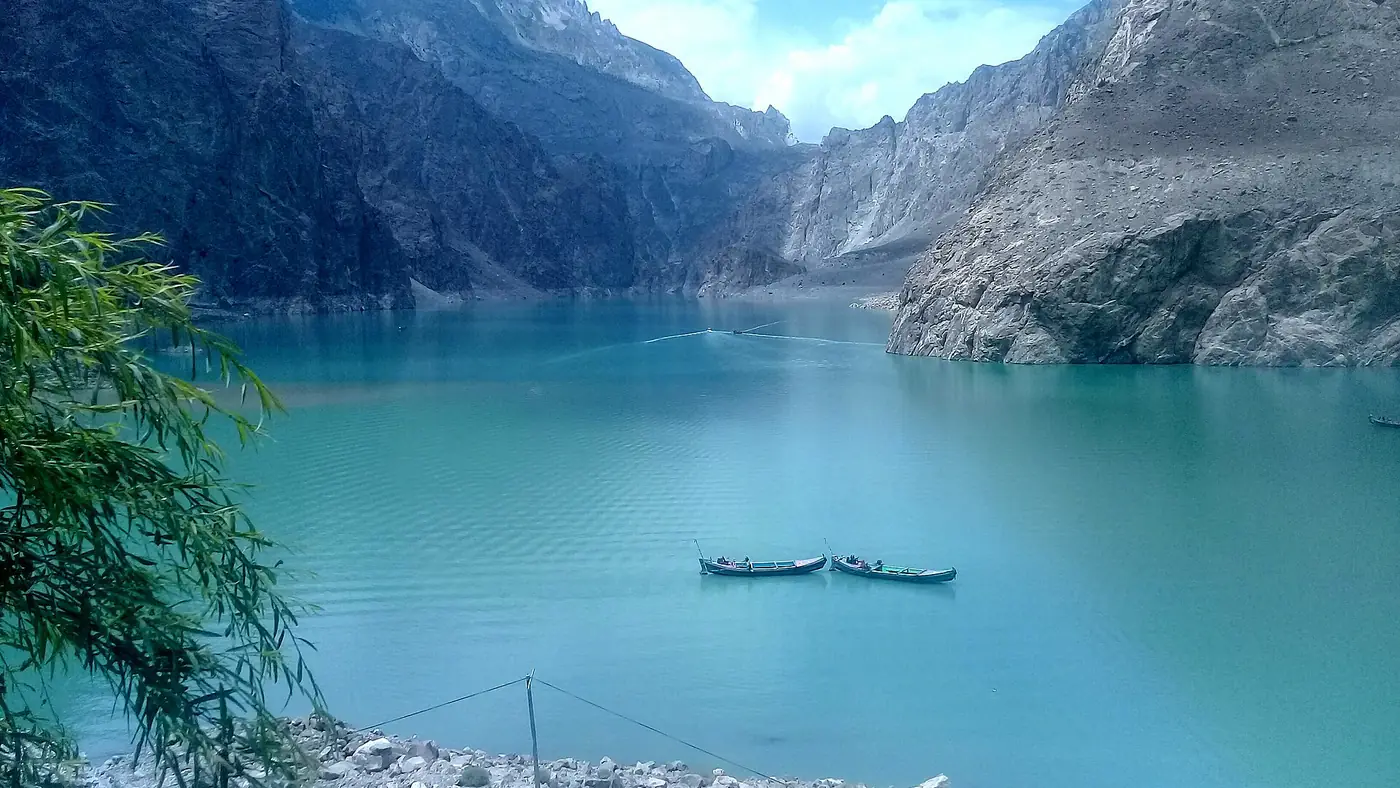
The best time to visit Attabad Lake is April to May or September to October. In those months the water is usually at its clearest and most deeply coloured, the boats are running, the highway is reliable and the landing is far quieter than in high summer. June to August brings the warmest weather and the busiest crowds, with silty patches in parts of the lake, and from December to February the boats stop and, in a cold year, much of the lake freezes in January.
This guide goes through the year season by season: what the water looks like, whether you can get out on it, how busy it is and what the road is doing. It ends with the best time of day, which matters almost as much as the month.
| Season | The water | Boats and jet skis | Crowds | Road and weather |
|---|---|---|---|---|
| March to May | Usually clear and deep blue | Starting up as it warms | Light; busier in blossom weeks | KKH open; Babusar closed until late May or June |
| June to August | Bright, with silty patches near the inflows | All running | Heaviest, especially at Eid and weekends | Warm; floods and landslides can close roads |
| September to October | Clearing again | Running, winding down in October | Moderate; busy on colour weekends | Settled, clear air |
| November | Dark and still | Few | Very few | Cold; first snow on the peaks |
| December to February | Dark water or ice | Mostly stopped | Very few | KKH open but icy; flights often cancelled |
Why does Attabad change colour?
Attabad is young. It formed on 4 January 2010, when a landslide blocked the Hunza river, and within five months it was about 21 km long and over 100 metres deep. It is fed by the river and by glacial streams, and what those streams carry decides the colour on the day you arrive.
The blue comes from rock flour, the fine silt that glaciers grind from the mountains, which hangs in the water and scatters sunlight. When the glaciers melt hardest in summer, the streams also bring down heavier, muddier sediment, which shows as brown or milky plumes where they enter the lake. In the cooler months, with less meltwater coming in, the silt settles and the water clears.
So the lake you see depends on the month, the weather of the past few days and the time of day. Our Attabad Lake guide covers the viewpoints and why the lake looks different from photographs taken a few years ago.
Spring: March to May
The colour. Spring is often the lake at its best: clear, still and deep blue, with snow still on the peaks around it and very little silt coming in.
On the water. Boats and jet skis start up again as the weather warms; the earlier in spring, the fewer operators are out. The air on the water is cold, so bring a warm layer even on a sunny day.
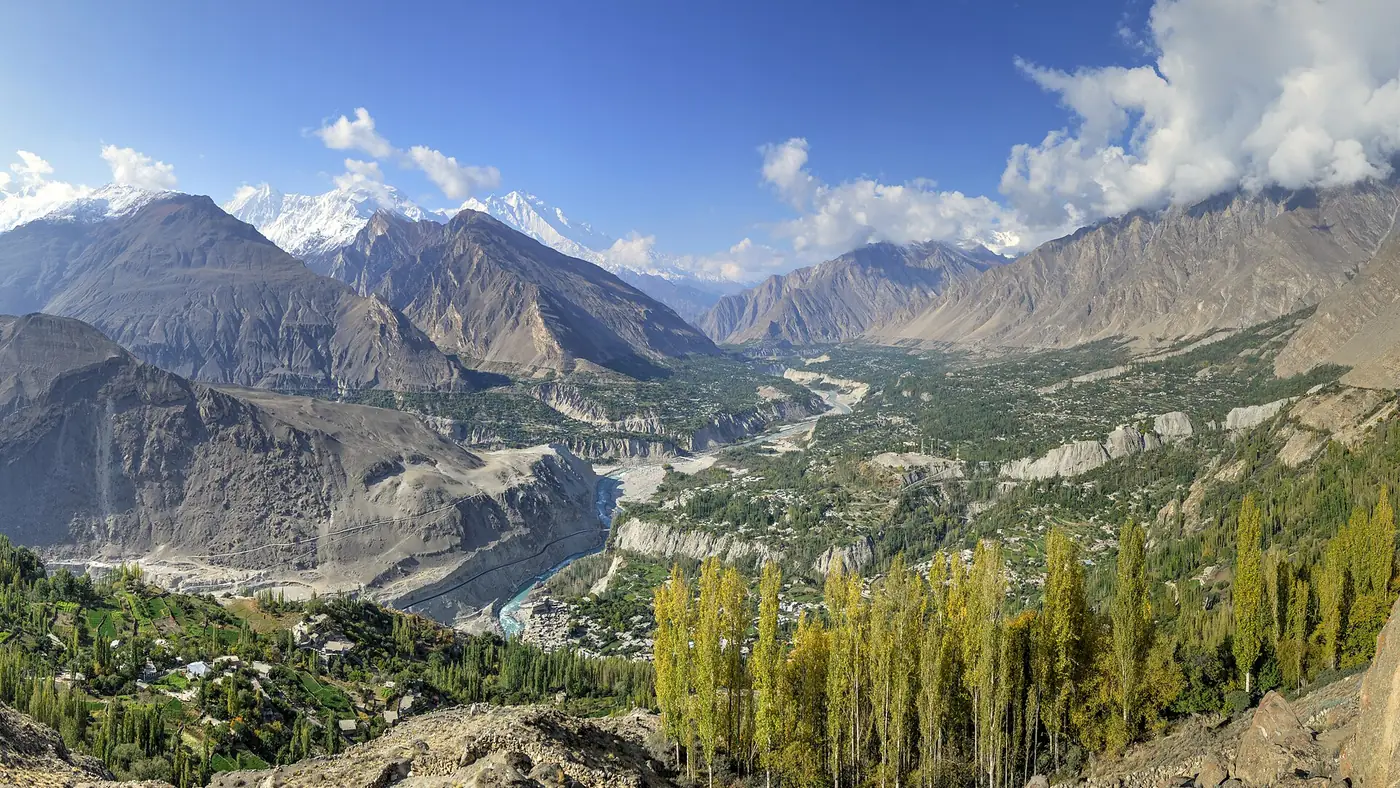
The crowds. Quiet in March, busier in April when people come up for the blossom, and busier again around Eid. In Gojal, the villages around the lake usually flower in the second half of April; our guide to the Hunza blossom season has the timing village by village.
Weather and road. Days warm from cold in March to mild in May, and May is the wettest month in central Hunza, though that still means only a few showers. The Karakoram Highway along the lake is open, but the Babusar Pass is usually closed until late May or June, which matters if you are driving up from Islamabad (see below).
Summer: June to August
The colour. Bright and strong in full sun, but the glaciers are melting fast and the side streams run heavy with silt. Expect brown or pale patches where they enter, more after rain. It is still a beautiful lake, just less even in colour than the postcards.
On the water. Everything runs: slow boats, speedboats and jet skis, at jetties along the southern end and towards Gulmit. This is the easiest time to enjoy the water, since it is warm on the shore even if the lake stays very cold. Our Attabad Lake boating guide covers 2025–26 prices and life jackets.
The crowds. Heaviest of the year, particularly at weekends, over Eid and from late morning to mid-afternoon, when the landing's car park fills and the jet skis are loud.
Weather and road. Gulmit, at the northern end, averages about 22 °C in July, pleasant by day and cool at night. July and August are also when glacial floods and landslides are most likely to close stretches of the highway for hours or days, so keep a spare day in any summer trip.
Autumn: September to November
The colour. The streams quieten as the melt slows, and the lake clears again through September and October. With the clearest air of the year and fresh snow on the peaks, many people think this is its finest season.
On the water. Boats keep running through September and into October, winding down as the days cool. By November few operators are out.
The crowds. Moderate in September, then busy again on the weekends when the poplars turn. In Gojal the colour usually comes in mid to late October, a week or so before Karimabad; our guide to Hunza in autumn covers where it comes first. After that the lake is very quiet.
Weather and road. Settled and dry, with cold mornings by late October. November is cold, the light is low and the trees are bare, but the lake is still easy to reach.
Winter: December to February
The colour. The water turns dark and still, and ice starts to form at the edges and in sheltered bays. In a cold winter large parts of the lake freeze, usually in January; in January 2014, ice trapped a passenger boat at the southern end. How much freezes changes a great deal from year to year, so treat a frozen lake as a bonus rather than a promise.
On the water. The boats and jet skis mostly stop, and some lakeside cafés close for the season. When the ice is thick enough, local people skate on it, and the lake has hosted winter sports festivals.
The crowds. Almost none, which is the point for photographers and couples who come in winter.
Weather and road. Gulmit averages about −5.5 °C in January. The highway beside the lake is kept open, but it can be icy on bridges and shaded bends, and snow or rockfall can close it for hours. Our guide to Attabad Lake in winter covers the ice, the drive and heated rooms on the shore.
What time of day is best?
On any day of the year, the hour matters as much as the season.
- Early morning, 7 to 9 am. Calm water, soft light, reflections of the mountains and an empty landing. The best time for photographs and the smoothest boat ride.
- Late morning to early afternoon. The strongest colour, when the sun is high on the water, but also the busiest landing in summer and the harshest light.
- Afternoon. In the mountains the valley wind usually strengthens after midday, and the lake can turn choppy enough to make a speedboat uncomfortable.
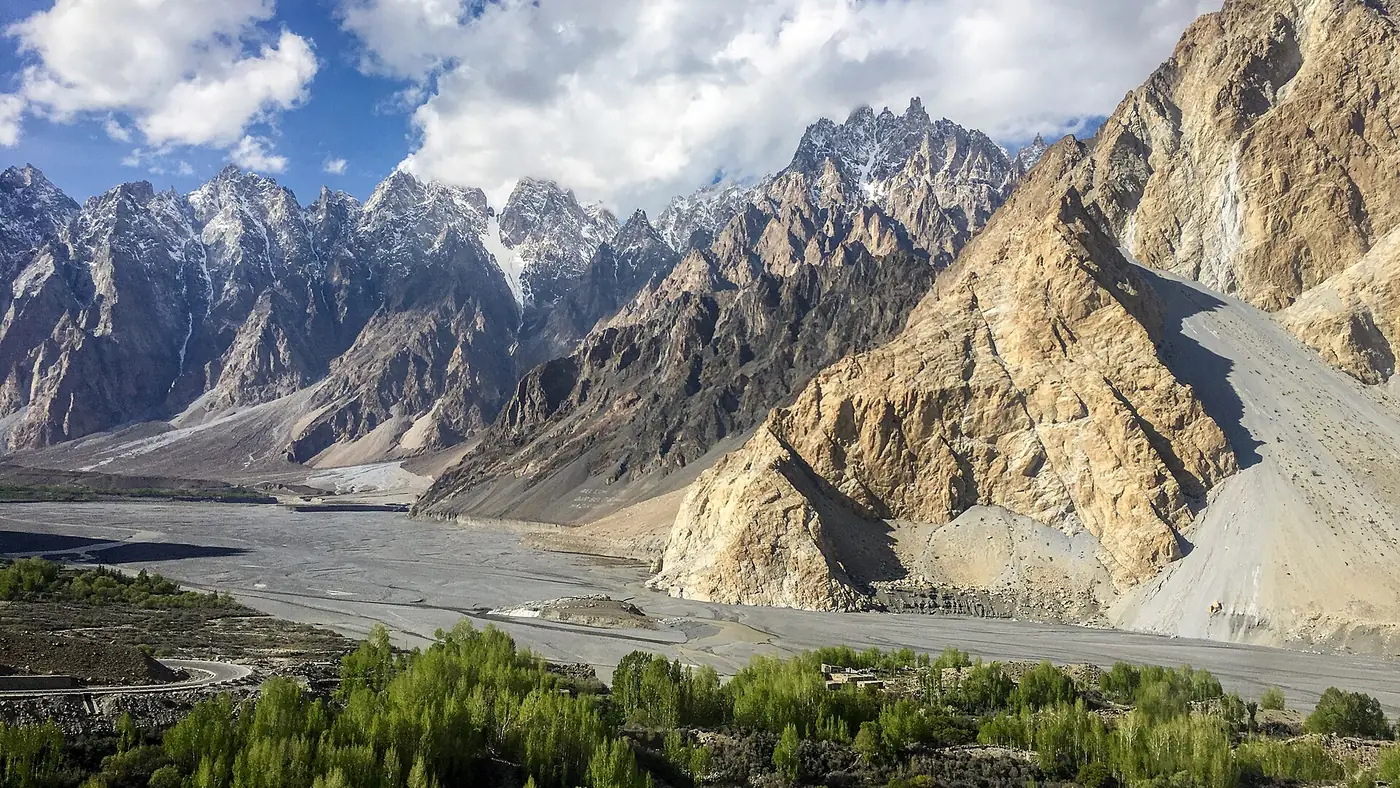
- Late afternoon to sunset. The crowds thin, the light warms, and the water often calms again. A good time to stop on the way back from Passu or Khunjerab.
Getting there in each season
The lake is about 30 to 40 minutes north of Karimabad on the Karakoram Highway, which runs beside it through five tunnels opened in 2015. That stretch stays open all year.
Getting to Hunza is what changes with the season. From late May or June to about October you can drive from Islamabad over the Babusar Pass through Naran. For the rest of the year the only road is the Karakoram Highway through Besham and Dasu, and the UK government's travel advice (updated September 2026) advises against all travel on the KKH between Mansehra and Chilas. Pakistani travellers still use it, but check current news and police advice before setting out; overseas visitors should know that their own government's advice can affect their travel insurance. Flights to Gilgit are the alternative, but they are often cancelled in bad weather, especially in winter.
When should you go?
- For the bluest water and a calm landing: late April to May, or late September to October.
- For boating and warm weather with children: June or early September, starting early in the day.
- For autumn colour around the lake: mid to late October.
- For the lake to yourself, and perhaps ice: January, if you can live with the cold and an uncertain road in.
- To avoid: midday on July weekends and Eid holidays, unless you like a crowd.
For the rest of the north, our guide to when to go compares the seasons across Gilgit-Baltistan, Swat and Kashmir.
Frequently asked questions
Which month is best for Attabad Lake?
May and October are the safest single choices. The water is usually clear and blue, the boats are running, and the landing is much quieter than in July and August.
Is Attabad Lake blue all year?
No. It is usually bluest in spring and autumn. In summer, silt-laden glacial streams leave brown or pale patches in parts of the lake, and in winter the water turns dark or freezes.
When does Attabad Lake freeze?
In a cold winter, large parts of it freeze in January, starting from the edges and sheltered bays in December. It does not freeze to the same extent every year.
Are boats available at Attabad Lake in winter?
Mostly not. The boats and jet skis largely stop between December and February, and run again from spring into October.
Is Attabad Lake crowded in summer?
Yes, at the main landing from late morning to mid-afternoon, especially at weekends and over Eid. Arrive by 8 am or after 4 pm for a quieter visit.