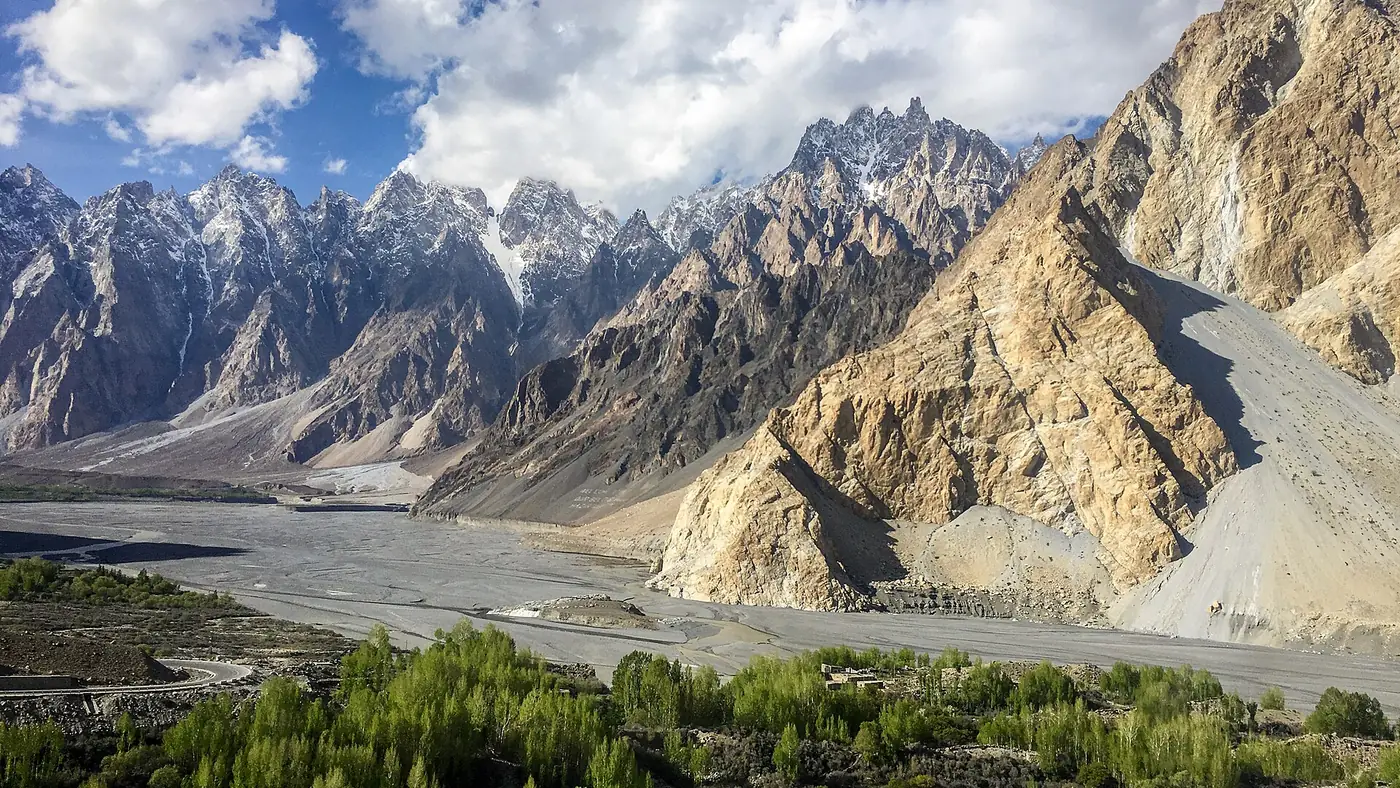
The best places to visit in Pakistan in summer are the ones high enough to be properly cool: Hunza, Skardu and the Deosai plateau, Fairy Meadows, the Naran and Kaghan valley, Kalam and upper Swat, Kumrat, the Neelum valley and, for a short break, Nathia Gali and the Galiyat. Everything in the north is open from June to August, so the real choice is between altitude, the length of the drive, and how many other people have had the same idea.
This guide sorts the summer destinations by how cool they are and how crowded they get, explains why some northern towns are no escape from the heat at all, and covers the two things that shape a summer trip more than the scenery: the holiday rush and the monsoon.
| Place | Rough altitude | Summer access | Crowds, June to August |
|---|---|---|---|
| Nathia Gali and the Galiyat | 2,400 to 2,500 m | Paved, 2 to 3 hours from Islamabad | Very heavy at weekends |
| Naran | 2,409 m | Open; Babusar from late May or June | The busiest valley in the country at Eid |
| Kalam | About 2,000 m | Open; Mahodand track from about June | Heavy at weekends and Eid |
| Kumrat | About 2,400 m in the forest | Road to Thal, then jeep | Heavy at Eid, calmer midweek |
| Neelum (Sharda to Arang Kel) | 1,981 to 2,554 m | Open; high lakes from late June | Busy at weekends |
| Hunza (Karimabad) | About 2,500 m | KKH or flight to Gilgit | Busy; Attabad crowded at midday |
| Skardu and Deosai | 2,200 m; Deosai over 4,000 m | Flights, or two days by road | Busy; flights sell out |
| Fairy Meadows | About 3,300 m | Jeep, then on foot | Limited rooms, book early |
Which places are actually cool in summer?
Altitude decides it, and the north is not uniformly cool. Several towns you pass through on the way are as hot as the plains:
- Chilas, on the Karakoram Highway at about 1,265 metres, averages around 35 °C on July afternoons and reached 48.5 °C in a heatwave on 5 July 2025.
- Gilgit, at about 1,500 metres, averages 34 to 36 °C in the afternoon from June to August.
- Mingora, Chitral town and Muzaffarabad sit low and are hot in June and July.
Higher up, the picture changes. Skardu, at about 2,200 metres, averages 29 to 32 °C by day but cools to comfortable nights. Karimabad in Hunza, at about 2,500 metres, stays in the high 20s with nights around 15 °C. Naran, Kalam, Kumrat and the Galiyat are cooler still in the evenings, and the high places, Deosai, Fairy Meadows and the Khunjerab Pass, are cold at night even in July.
The practical rule: sleep high, pass through the low towns in the morning, and don't plan to spend an afternoon in Chilas or Gilgit in July. Our Gilgit-Baltistan weather guide gives the monthly averages town by town.
Short breaks from Islamabad and Lahore: the Galiyat, Naran and Swat
Nathia Gali and the Galiyat
The Galiyat are the quickest escape, two to three hours from Islamabad, and the easiest mountain weekend from Lahore. At 2,400 to 2,500 metres the afternoons are mild and the evenings need a jumper. The trade-off is people: weekend traffic through Murree and the ridge road can double the journey, and rooms fill before the heat has even peaked. Go midweek if you possibly can.
Naran and the Kaghan valley
Naran, at 2,409 metres, is the classic family summer trip by road, with Saif-ul-Malook above it and the Babusar Pass beyond. It is also the most crowded valley in the country when the holidays and Eid coincide: during Eid in June 2024 more than 300,000 tourists came into the valley, and the Balakot to Naran road jammed for hours. June is usually the best month; July and August bring the monsoon. Our guide to the best time to visit Naran goes month by month.
Kalam and upper Swat
Upper Swat is the easiest large valley to reach from Peshawar and Islamabad. Stay in Kalam, at about 2,000 metres, or further up towards Ushu, rather than in hot Mingora. The Mahodand track usually opens between late May and June, depending on the snow. Weekends and Eid are heavy, and the road above Bahrain is still slow and damaged in places from the 2022 floods.
Quieter valleys: Kumrat, Neelum and Chitral
Kumrat
Kumrat, at the head of the Panjkora valley in Upper Dir, is forest, river and camps rather than hotels. The road ends at Thal, about 375 km from Islamabad, and a jeep takes you on into the forest. It is crowded at Eid and on long weekends, and far calmer midweek. It suits people who are happy with huts and tents; our Kumrat Valley guide covers the road and where to stay.
The Neelum valley
The Neelum in Azad Kashmir climbs gently from Keran at 1,524 metres to Sharda at 1,981 metres and Arang Kel at 2,554 metres, so the altitude is easy on children and older parents. It is green and wooded all summer, and the high lakes at Ratti Gali clear of snow from about late June. It is busy at weekends but rarely as jammed as Naran. Our Neelum Valley Escape follows the river over five days.
Chitral and the Kalash valleys
Chitral town is hot in summer, but the Kalash valleys above it, at over 2,000 metres, are cooler, and Upper Chitral and the Shandur Pass are open only in summer. The Shandur polo festival is usually held in June or July; in 2026 it ran from 11 to 13 June. The Kalash harvest festival, Uchal, falls around 20 August. Outside those dates Chitral is one of the quieter summer choices, largely because it takes a full day to reach.
The big mountains: Hunza, Skardu, Deosai and Fairy Meadows
Summer is when all of Gilgit-Baltistan is open together, including the places that shut for most of the year.
- Hunza is at its easiest: warm days, cool nights, the Khunjerab Pass open, and the Karakoram Highway at its most reliable apart from monsoon slides. It is busy, especially at Attabad Lake around midday.
- Skardu is the base for the Shangrila and Kachura lakes, Shigar and Khaplu, and in summer for Deosai, the plateau above 4,000 metres that usually opens in June and is most reliable from late June to mid-September. Our guide on whether Deosai is open or closed explains the dates.
- Fairy Meadows, at about 3,300 metres under Nanga Parbat, is reachable only from about June to September, by jeep from Raikot Bridge and then on foot. Rooms are limited, so book first and plan the rest around them.
The catch for families from the plains is the time it takes. Driving to Hunza or Skardu is two long days each way, and the flights to Gilgit and Skardu sell out in the holidays and are cancelled in bad weather. A week is the realistic minimum.
Crowds: when summer is busiest
The heat in the plains sends families north as soon as schools close, and in 2026 that was early: Punjab closed its schools from 22 May to 23 August, and Sindh from 1 June to 31 July. The whole summer is busy, but some dates are much worse than others:
- Eid holidays, the busiest days of the year anywhere reachable by road. Eid ul Adha fell on 27 May in 2026 and is expected in mid-May in 2027, so for the next few years it lands just before the summer proper.
- 14 August, when the long weekend jams every hill road in the north.
- Summer weekends, especially in the Galiyat, Naran and Swat.
- The 9th and 10th of Muharram, public holidays that fell on 25 and 26 June in 2026. Mobile services are often suspended in sensitive districts on those days, so plan to stay put rather than drive.
The quieter windows are midweek in June, and the last week of August once the monsoon eases and before the Punjab schools reopen. For the whole year at a glance, see our guide to the seasons.
The monsoon: July and August
Summer in the north is not only warm; it is when the monsoon reaches the mountains and the glaciers melt fastest. Most flood-related road closures happen in July and August.
- Rivers rise without warning. On 27 June 2025, a family group having breakfast on the bank of the Swat River near Mingora was swept away when the water rose suddenly after rain upstream; at least nine people died. District administrations ban bathing and going near the river in the monsoon. Keep children well back from the water everywhere, even where it looks calm.
- Roads close for a day or several. In July 2025 a flash flood on the Babusar road near Chilas killed tourists and stranded hundreds, and in July 2026 flooding damaged the Jaglot–Skardu road. Most closures are shorter, but they happen every summer.
- Keep a spare day on any trip in July or August, and don't drive when heavy rain is forecast for the area you are heading into.
Which summer trip suits you?
- A weekend, with the least driving: Nathia Gali, midweek if possible.
- A family week by road: Naran in June, or Kalam, avoiding Eid and 14 August.
- Green, gentle altitude for young children or older parents: the Neelum valley.
- Forest and camping, fewer hotels: Kumrat, midweek.
- Big mountains and a proper holiday: Hunza or Skardu for a week or more, flying at least one way.
- Something few of your friends have done: Chitral and the Kalash valleys, or Deosai in July when the flowers are out.
If your dates are fixed to the busiest weeks, choose somewhere further away rather than somewhere famous: a longer drive to a quieter valley is usually a better holiday than a short drive into a traffic jam.
Frequently asked questions
Which is the coolest place in Pakistan in summer?
Of the places families actually stay, Deosai, Fairy Meadows and the upper Hunza valley are the coldest, with near-freezing nights at Deosai even in July. Among the easy hotel towns, Naran, Kalam, Karimabad and the Galiyat all have cool evenings.
Is it too hot in the northern areas in June?
Not in the valleys where people stay, but the low towns on the way are very hot. Gilgit averages 34 to 36 °C in summer afternoons and Chilas is hotter, so pass through them in the morning and sleep higher up.
Which month of summer is best for the northern areas?
June has the best balance of open roads, long days and less monsoon risk. July and August have everything open, including Deosai, but carry the highest risk of floods and road closures.
Where can I go in summer to avoid the crowds?
Chitral, the Kalash valleys and Kumrat midweek are the quieter choices, as is the upper Neelum on weekdays. Avoid Eid, 14 August and weekends in the Galiyat, Naran and Swat.
Is it safe to travel north during the monsoon?
Yes, with care. Keep a spare day, check road updates each morning, stay away from riverbanks, and don't drive into areas where heavy rain is forecast.