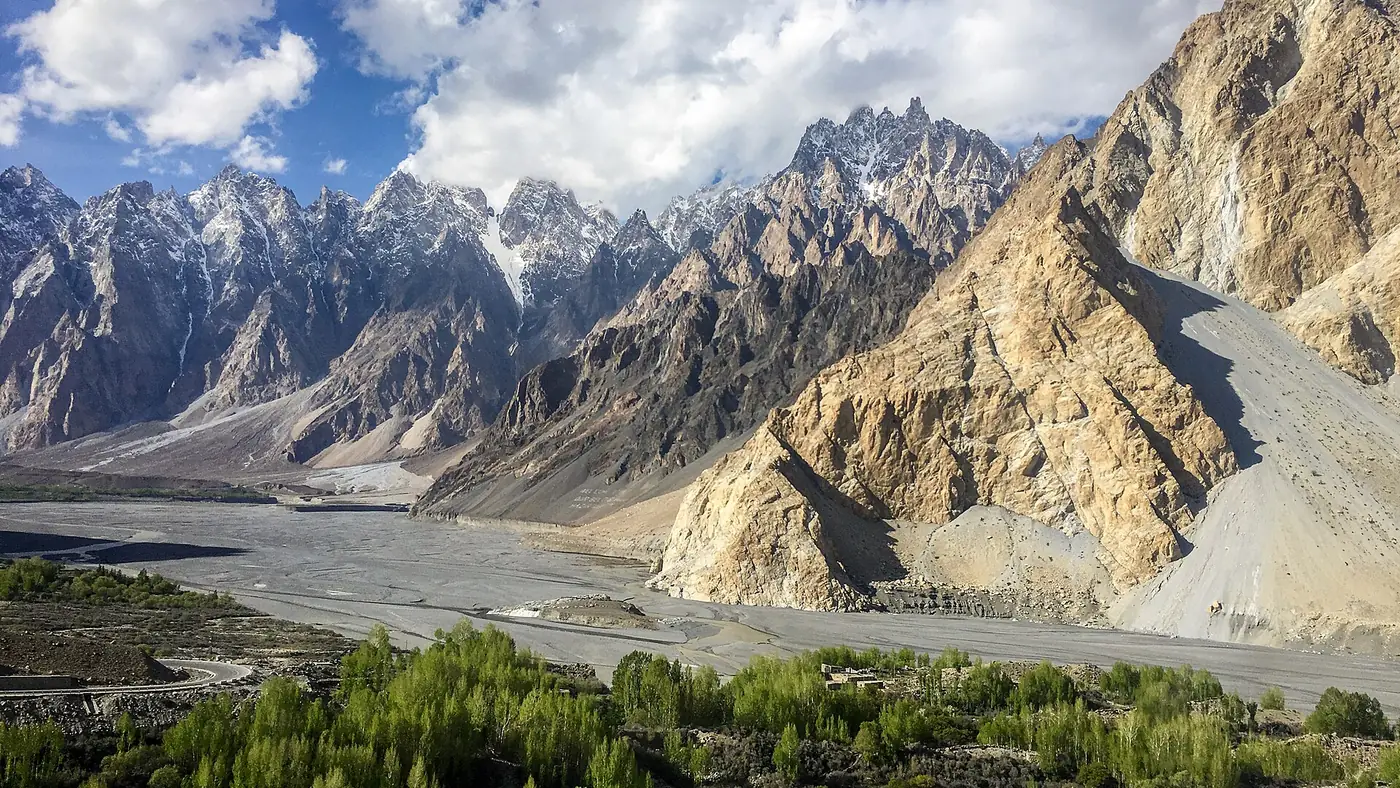
Where to see snow in Pakistan without flying or trekking? The realistic places are Murree and the Galiyat above Islamabad, Malam Jabba and Kalam in Swat, Pir Chinasi above Muzaffarabad, Ziarat near Quetta, and, for a bigger trip, Skardu, Hunza and Naltar in Gilgit-Baltistan. Snow falls mainly between late December and February, but no winter is reliable any more, so the best snow trips are planned around a forecast rather than a date.
This guide goes region by region: how high each place is, what the road is like once snow falls, and who each trip suits. It also lists the famous names that are simply shut in winter, and ends with how to drive to snow without becoming one of the stories on the news.
| Place | Region | Altitude | Getting there in winter | Best for |
|---|---|---|---|---|
| Murree and the Galiyat | Punjab and KP | About 2,300 to 2,500 m | Paved roads from Islamabad; closed or rationed in heavy snow | A weekend, on a weekday if you can |
| Malam Jabba | Swat, KP | About 2,800 m | About 40 km from Saidu Sharif; chains after fresh snow | Skiing and a hotel at the snow |
| Kalam | Swat, KP | About 2,000 m | 99 km beyond Mingora on a damaged road | Deep snow and winter festivals |
| Pir Chinasi | Azad Kashmir | About 2,900 m | About 30 km from Muzaffarabad; narrow and icy | A day trip from Muzaffarabad |
| Ziarat | Balochistan | About 2,500 m | About 130 km from Quetta; blocked after heavy falls | Snow in juniper forest |
| Skardu | Gilgit-Baltistan | About 2,200 m | Flights, or two to three days on the KKH | Frozen lakes and snow on Katpana |
| Hunza and Naltar | Gilgit-Baltistan | About 2,500 to 3,000 m | Flight to Gilgit, or the KKH via Chilas | Frozen Attabad, ice hockey, skiing |
When does it snow in Pakistan?
The snow comes with western weather systems between December and February, with falls sometimes running into early March. January is the most likely month across most of the north. The Pakistan Meteorological Department publishes forecasts and snowfall warnings at weather.gov.pk, and it is worth checking every day in the week before you travel.
The pattern has become less predictable. The winter of 2025–26 was dry across much of the north until late January, which spoiled plenty of New Year trips. Then the storms arrived all at once: Murree had its heaviest snowfall in about twenty years in the fourth week of January 2026, with up to five feet in places, and Ziarat, Swat and the Galiyat were all cut off by snow within a few weeks.
So the practical rule is this: book somewhere flexible, watch the forecast, and go in the two or three days after a fall, when the snow is fresh and the roads have been cleared. Going during the storm itself is how people get stuck. For what else in the north is open in the cold months, see our guide to the seasons.
Closest to Islamabad: Murree and the Galiyat
Murree, at 2,291 metres, and the Galiyat beyond it are the snow most Pakistanis see first. Nathia Gali, Dunga Gali, Ayubia and Changla Gali sit along the same ridge at around 2,400 to 2,500 metres, and in good conditions you can be in the snow two hours after leaving Islamabad. What you get is snow on thick pine forest, easy walks on cleared roads and a proper hotel at the end of the day.
The problem is that everyone else has the same idea. In January 2022, twenty-three people died in their cars near Murree when a blizzard trapped a traffic jam that should never have been allowed to form; more than 157,000 vehicles had come up during the storm. Some died of cold and some of carbon monoxide when snow blocked their exhausts.
The authorities now act much sooner. In a heavy fall they restrict or stop tourist traffic, close the Murree Expressway at the toll plaza, and advise four-wheel drives only. That is what happened in January 2026, when about 5,000 stranded vehicles had to be moved and tourists were banned from entering Murree.
To make the Galiyat work:
- Go on a weekday, and avoid the first weekend after a big fall.
- Book your room before you leave Islamabad, and aim to arrive by early afternoon.
- Turn back if the police say so. Entry bans are temporary, and the snow will still be there.
The Galiyat on the KP side, Thandiani and the walks around Nathia Gali are covered in more detail in our guide to snowfall places in KPK.
Swat: Malam Jabba and Kalam
Malam Jabba is the most organised snow trip in the country. The resort sits at about 2,800 metres, around 40 km from Saidu Sharif, with a ski slope, a chairlift and a Pearl-Continental hotel at the top. You can drive to your hotel at the snow line, ski or sledge, and be in Mingora for dinner. After fresh snow the final climb needs chains or a 4x4.
Kalam, at about 2,000 metres at the head of the valley, gets some of the heaviest snow in Swat, and in a good winter the town and the forest towards Ushu are deep in it. The catch is the road: Kalam is 99 km beyond Mingora, the stretch above Bahrain is still damaged from the 2022 floods, and heavy snow can block it for days at a time. Treat Kalam as a trip for people with a spare day and a vehicle that can cope.
Swat is roughly five hours from Islamabad by motorway and the Swat Expressway in normal conditions, and longer in snow.
Gilgit-Baltistan: Skardu, Hunza and Naltar
The biggest winter scenery in the country is in Gilgit-Baltistan, and so are the hardest logistics. The Babusar Pass is closed in winter, so the only road is the Karakoram Highway through Besham, Dasu and Chilas, driven in short winter daylight. The alternative is to fly to Skardu or Gilgit, and winter flights are the ones most often cancelled for weather.
Skardu is drier than people expect. Snow in town comes in a handful of falls rather than a deep, lasting cover, but when it does fall, the Katpana dunes turn white under the mountains, and the Satpara and Kachura lakes freeze. Our guide to Skardu in winter covers the cold, the heating and what stays open.
Hunza in January means a frozen Attabad Lake when the ice allows, ice hockey and skating, and snow on the villages, heavier further up in Gojal. Nights are well below freezing and power cuts are long, so heated rooms and generators matter more than views. See our guide to Hunza in winter.
Naltar, about 34 km from Gilgit, is the most reliable deep snow near the city. The Pakistan Air Force runs a ski resort there that hosts competitions in winter. The road up is narrow and often snowbound after storms, so go by 4x4 with a local driver, and check before you set off that the slopes are running.
A snow trip to Gilgit-Baltistan needs at least a week and two spare days, one for the flight or road in and one for the way out. Our wider guide to Gilgit-Baltistan in winter sets out what is reachable and what is not.
Azad Kashmir: Pir Chinasi, but not the upper Neelum
Pir Chinasi, the shrine-topped ridge about 30 km east of Muzaffarabad at around 2,900 metres, gets heavy snow and is the easiest snow in Azad Kashmir to reach. It works best as a day trip from Muzaffarabad after a fall has been cleared. The road is narrow and steep, and it ices over in the shade, so this is a job for a 4x4 or a local driver, not for a first attempt at snow driving in a family sedan.
The upper Neelum valley is a different matter. From December to February the road beyond the lower valley is snowbound for long stretches, and Kel, Arang Kel and Taobat are cut off. The valley is also prone to avalanches: in January 2020 a series of them killed at least 74 people. The Neelum is a summer and autumn trip; don't plan a snow holiday around it.
Balochistan: Ziarat
Ziarat, about 130 km from Quetta at around 2,500 metres, is the snow trip for people in Quetta, and for Karachi families willing to fly to Quetta first. It sits in one of the largest juniper forests in the world, some of whose trees are thought to be thousands of years old, and the Quaid-e-Azam Residency, where Jinnah spent some of his last weeks, is in the town.
Snow usually comes between December and February. Heavy snow on the eve of New Year 2026 covered the valley and drew crowds of visitors; a month later, on 24 January 2026, the Quetta–Ziarat road was blocked at several points, temperatures fell to around −12 °C, and tourists were barred from travelling to Ziarat for 24 hours.
Balochistan also carries security advisories that change with events. Check current advice before you travel, drive only in daylight, stay on the main road, and follow instructions at checkposts. Foreign nationals should check NOC requirements for Balochistan before planning anything.
Famous places that are closed in winter
Several of the best-known names in the north cannot be reached once the snow comes, however good they look in winter photographs:
- Naran, Saif-ul-Malook, Lulusar and Babusar Top, closed beyond Kaghan and Paras from about November to late spring.
- Deosai, under deep snow from October or November until June.
- Fairy Meadows, where the jeep track and the meadow are snowbound.
- Kumrat and the valleys above Kalam, closed by snow.
- The upper Neelum beyond the lower valley, as above.
For snow in the Kaghan valley, Shogran, reached by jeep from Kiwai, is the usual alternative to Naran.
How to drive to snow safely
Almost every winter disaster on a hill road has the same ingredients: a storm everyone was warned about, too many cars, and nowhere booked to sleep.
- Check the forecast and any closure notices the evening before and again in the morning. If the police or district administration say don't travel, don't.
- Book a room. Never plan to sleep in the car, and don't set out hoping to find somewhere on arrival.
- Carry snow chains and practise fitting them at home. After fresh snow, the last climb to most of these places needs chains or a 4x4.
- Fill the tank, and carry water, food, blankets, a torch and a charged power bank.
- Be off the mountain roads before dark. Slush refreezes after sunset, and a stranded car is much harder to reach at night.
- If you are stuck, keep the exhaust clear of snow, open a window slightly, and run the engine only in short bursts for heat.
Save the local helplines before you lose signal: Rescue 1122, the motorway police on 130 for the Murree Expressway and motorways, and the tourism helpline 1422 in KP and Gilgit-Baltistan. Our travel guide has more on winter roads across the north.
Which snow trip suits you?
- A weekend from Islamabad or Lahore, with children: Nathia Gali or Murree, midweek, with a room booked and a plan to turn back.
- Skiing, or snow with a proper hotel: Malam Jabba.
- Deep snow and a spare day to spend: Kalam.
- From Muzaffarabad: Pir Chinasi, by jeep, once the road is clear.
- From Quetta: Ziarat, after checking both the road and the security situation.
- The big mountains in winter: Skardu or Hunza, for a week, flying if you can and keeping two days in hand.
With only a weekend and a dry forecast, don't chase snow further than you can comfortably drive back from.
Frequently asked questions
Which is the nearest place to Islamabad to see snow?
Murree and the Galiyat, about two hours away in good conditions. In heavy snow the roads can be closed or rationed, so check before you leave and go on a weekday if you can.
Which month is best to see snow in Pakistan?
January is the most likely month, with December and February close behind. Recent winters have started dry and then brought heavy falls in late January, so watch the forecast rather than fixing a date months ahead.
Can I see snow in Pakistan without going to the northern areas?
Yes. Murree and the Galiyat are in Punjab and KP within a couple of hours of Islamabad, Pir Chinasi is above Muzaffarabad, and Ziarat is in Balochistan near Quetta.
Do I need a 4x4 to see snow in Pakistan?
Not always. Ordinary cars reach Murree, the Galiyat and Malam Jabba once roads are cleared, but you need chains for fresh snow, and a 4x4 is much safer for Pir Chinasi, Naltar, Kalam and anywhere in Gilgit-Baltistan in midwinter.
Is it safe to go to Murree in snowfall?
It is safe if you avoid the storm itself, book a room, carry chains and follow police instructions. Most problems happen when too many cars go up during heavy snow with nowhere to stay.