
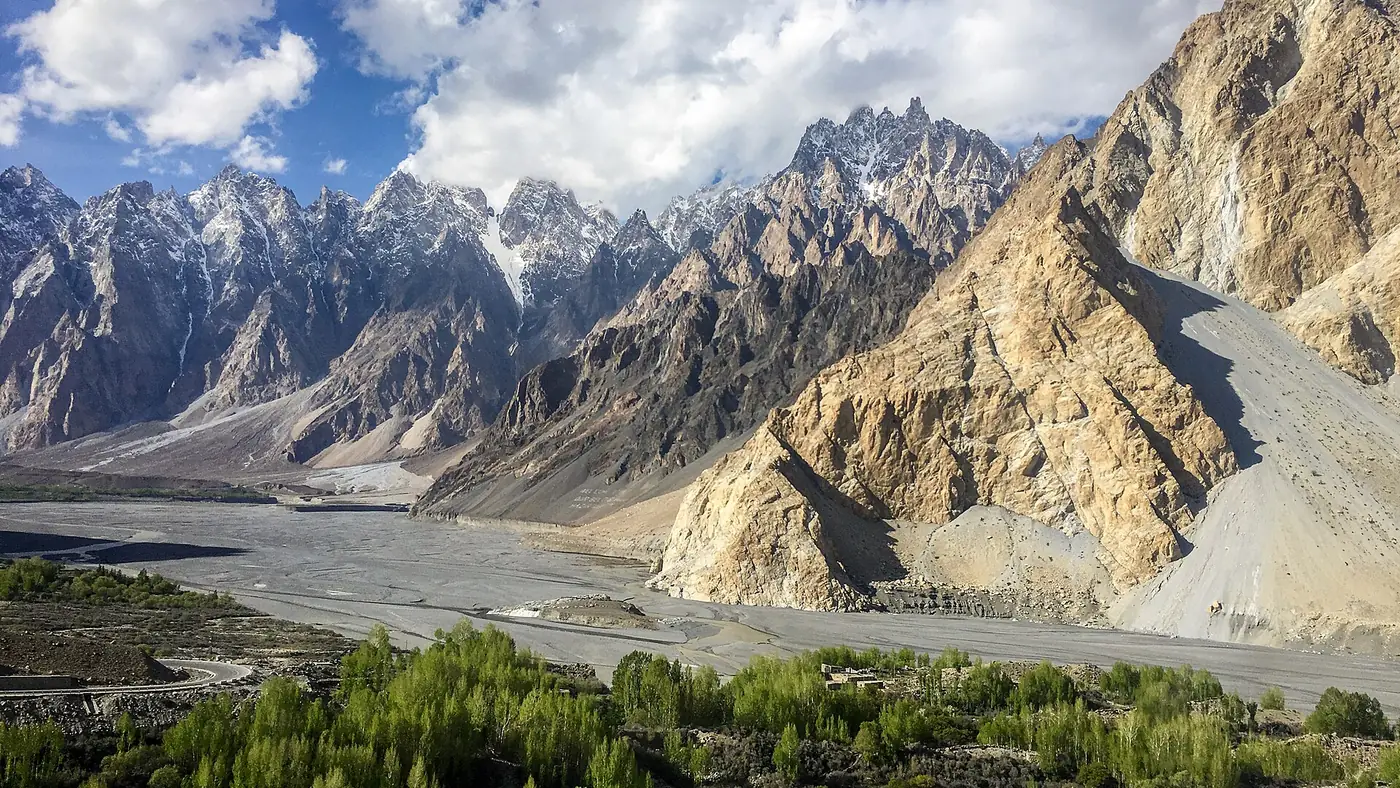

Hunza, Gilgit and Chitral stay open and reachable through winter, while Deosai, Babusar, Shandur and the upper Kaghan and Neelum valleys close almost completely under snow. Skardu sits in between: the town itself is usually reachable, by road when conditions allow and by air when they don't, but the routes beyond it are unreliable.
This is a valley-by-valley answer, because "the northern areas" close unevenly. Some places stay open because a specific piece of infrastructure, a tunnel, a lower-altitude road, keeps them connected; others close simply because their whole appeal is a high-altitude landscape that's under snow for months.
| At a glance | |
|---|---|
| Generally open | Hunza, Gilgit, Chitral (via the Lowari tunnel) |
| Open with disruption | Skardu (road closures common; flights fill the gap) |
| Mostly closed | Deosai, Babusar top, Shandur, upper Kaghan beyond Naran, upper Neelum beyond Kel |
| Why it varies | Altitude, and whether a lower-elevation road or tunnel bypasses the usual winter closure point |
| Best winter base | Hunza, for reliable access and things to actually do |
Hunza and Gilgit: the reliable core
The Karakoram Highway between Islamabad and Gilgit, continuing on to Hunza, generally stays open through winter, with periodic short closures for snow clearance or landslides rather than a full seasonal shutdown. This makes Hunza the most dependable winter base in the region: Karimabad has hotels and restaurants operating through the cold months, even if some close or reduce hours, and the valley under snow is a genuine attraction in its own right rather than a compromise.
Expect occasional closures of a day or so after heavy snowfall, particularly on the sections north of Gilgit, so build a spare day into a winter itinerary rather than a tight fixed schedule.
Chitral: open thanks to the tunnel
Chitral used to be cut off from the rest of Pakistan for up to five months a year, when the only road access crossed the high Lowari Pass. The Lowari Tunnel, completed in 2017, bypasses that pass and keeps Chitral connected by road throughout the year, which makes the district genuinely open in winter in a way it never used to be. The Kalash valleys, reached from Chitral, are accessible through the tunnel too, though winter road conditions within the valleys themselves can still be difficult after heavy snow.
Skardu: open, but less predictably
Skardu town is usually reachable in winter, either by the Gilgit-Skardu road when conditions allow, or by flight when they don't, but the road specifically often closes for stretches from late November into February because of snowfall and black ice on exposed sections. Flights become the more dependable option in these months, though they carry their own weather risk from fog and wind and are cancelled more often in winter than in summer. Our post on flights to Gilgit and Skardu covers how that works in practice. Once in Skardu, though, routes beyond the town, towards Deosai or Khaplu's higher approaches, are far less reliable in winter than the town itself.
What closes completely
Deosai closes to all traffic by late autumn and doesn't reopen until the following June; there is no winter access to the plateau. Babusar Top, linking the Kaghan valley to Chilas, closes by late November most years and stays shut until the road is cleared, typically in the second half of May. Shandur Pass, between Chitral and Gilgit, is impassable through winter and generally reopens in late April. Naran, beyond the town itself, and the upper Kaghan valley close with the same seasonal pattern. See our guide to when Pakistan's mountain passes open for the typical dates on each.
Azad Kashmir and Neelum valley in winter
The lower Neelum valley, from Muzaffarabad up towards Kel, generally stays open in winter, though snow and cold affect road conditions. Beyond Kel, Sharda and Taobat and the upper valley are typically closed from November to March under heavy snowfall, with the connecting link roads to Gurez, Shounthar and Surgan also shut for the same months.
Is it safe? Most of the Neelum valley currently falls within a UK government advisory against all travel within 10 miles of the Line of Control (updated September 2026), and the wider Azad Kashmir region carries an advisory against all but essential travel. Pakistani visitors do travel to the lower valley; check current local news and police advice before setting out, and if you're visiting from abroad, be aware your own government's guidance can affect your travel insurance.
Naltar and Malam Jabba: winter destinations in their own right
A handful of places in the north are actually built around winter rather than closed by it. Naltar valley, a side trip from Gilgit, has Pakistan's main ski resort and stays open through the snow season specifically because that's when it operates; the approach road is shorter and lower than routes to Deosai or Shandur, so it's more manageable in winter conditions. Malam Jabba, above Swat, works the same way for skiers coming from Peshawar or Islamabad. Both are worth treating as winter destinations rather than places to squeeze into a summer itinerary.
Driving conditions in winter
Even on roads that stay officially open, winter driving in the north is a different undertaking from a summer trip. Black ice forms on shaded sections of the Karakoram Highway and the Gilgit-Skardu road well before any snow is visible, and temperatures well below freezing are normal overnight even where the day feels mild. A vehicle with good tyres, a driver experienced on mountain roads in winter, and a realistic view of how much ground you can cover in a shortened daylight window all matter more here than in summer. Hiring a local driver rather than self-driving is worth considering for a first winter trip to Hunza or Skardu.
Planning a winter trip
If your priority is reliable access and things to actually do once you arrive, Hunza is the strongest choice, followed by Chitral for a different, quieter winter landscape. If Skardu is the destination, plan around the possibility of a flight rather than assuming the road will be open, and don't build a tight itinerary around a same-day arrival and departure. Anything built around Deosai, Babusar, Shandur or the upper Kaghan and Neelum valleys should be planned for the open season instead; there's no winter workaround for a road that's genuinely under several feet of snow.
Frequently asked questions
Is Hunza accessible in winter?
Yes, generally. The Karakoram Highway stays open with occasional short closures for snow clearance, and Karimabad has hotels and restaurants operating through the cold months, though some reduce their hours or close for parts of the season.
Can I drive to Skardu in winter?
Sometimes; the road closes for stretches from late November into February due to snow and black ice. Flights are a more dependable backup, though they're also more weather-affected in winter than in summer.
Is Chitral cut off in winter?
No, not since the Lowari Tunnel opened in 2017. It bypasses the old high pass and keeps Chitral connected by road year-round, unlike the five-month seasonal isolation the district used to experience.
Is Deosai open at all in winter?
No. The plateau is closed to all traffic from late autumn until the road reopens the following June; there's no winter access.
Is the Neelum valley open in winter?
The lower valley, from Muzaffarabad to around Kel, generally stays open, though snow affects the roads. Sharda, Kel's upper reaches and Taobat are typically closed from November to March.