The essential places to visit in Lahore are the Lahore Fort and the Badshahi Mosque, the old Walled City from Delhi Gate, the Shalimar Gardens, Jahangir's tomb at Shahdara, the Lahore Museum on the Mall, and the flag ceremony at the Wagah border, with evenings on Fort Road and at Lakshmi Chowk for food. Most of the great sights are Mughal, from the 16th and 17th centuries, with a Sikh layer from Ranjit Singh's court and a colonial one along the Mall. Three days covers the list comfortably; one full day covers the fort, the mosque and the old city.
This guide groups the places by area, so that you can plan each day around one part of the city and spend less time in traffic, with a realistic time for each.
| Place | Area | Time to allow |
|---|---|---|
| Lahore Fort | Old city, north-west | 2 to 3 hours |
| Badshahi Mosque and Iqbal's tomb | Old city, north-west | 45 minutes to 1.5 hours |
| Walled City walk, Delhi Gate to the fort | Old city | 3 to 4 hours |
| Minar-e-Pakistan and Greater Iqbal Park | Beside the fort | 30 to 45 minutes |
| Data Darbar | Outside Bhati Gate | 30 to 45 minutes |
| Lahore Museum and Anarkali | The Mall | 2 to 3 hours |
| Shalimar Gardens | East, on the GT Road | 1 to 1.5 hours |
| Jahangir's tomb and the Shahdara tombs | North, across the Ravi | 1.5 to 2 hours |
| Army Museum Lahore | Cantonment | 1.5 to 2 hours |
| Wagah border ceremony | 30 km east | 3 to 4 hours with the drive |
| Fort Road or Lakshmi Chowk for dinner | Old city / McLeod Road | An evening |
How Lahore is laid out
For a visitor, Lahore's sights sit in a rough line from north to south. The old walled city in the north, with the fort and the Badshahi Mosque on its north-western corner, holds the Mughal and Sikh monuments. Just south of it, the Mall (Shahrah-e-Quaid-e-Azam) is the colonial centre, with the museum, the old colleges and the courts. Further south are the Cantonment, Gulberg and DHA, where most of the hotels and restaurants are.
Two important places lie off that line: the Shalimar Gardens to the east, on the GT Road towards Wagah, and Shahdara, across the Ravi to the north-west, with Jahangir's tomb. The Orange Line metro runs north-east from the south-west of the city, through Anarkali, the GPO, Lakshmi and the railway station to a station at the Shalimar Gardens, which makes it useful for visitors.
Around the fort and the Badshahi Mosque
This is the heart of historic Lahore, and a half day here is the best start to any trip.
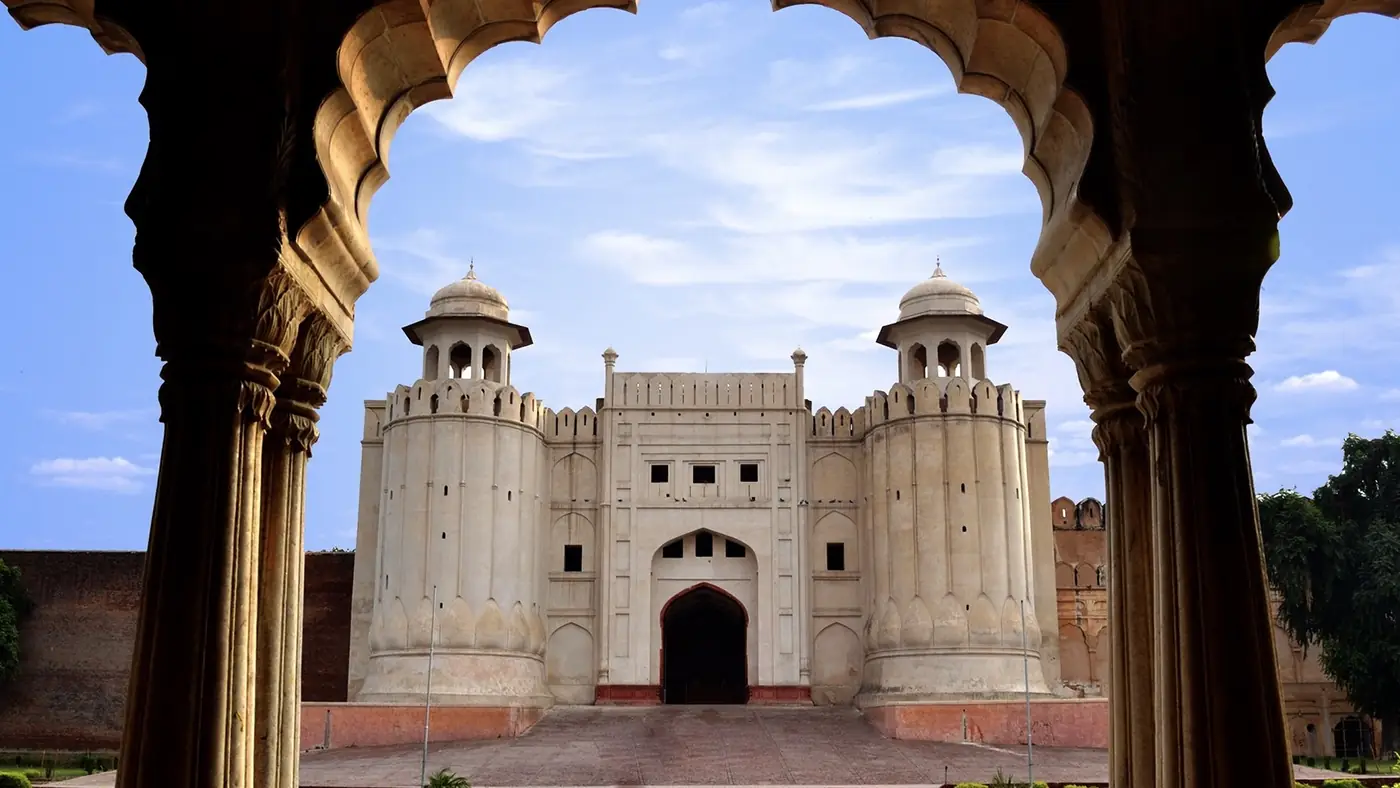
Lahore Fort. The Shahi Qila, a UNESCO World Heritage Site, built and rebuilt by four Mughal emperors and added to under Ranjit Singh. Don't miss the Sheesh Mahal, the Naulakha Pavilion and the tiled Picture Wall on the fort's outer walls. Our guide to Lahore Fort tickets and timings has the 2026 prices and a route through the highlights.
Badshahi Mosque. Aurangzeb's great mosque of 1671–73, facing the fort across the Hazuri Bagh garden, with a courtyard that holds around 100,000 worshippers. Free to enter; remove your shoes and dress modestly. Go in the late afternoon, after the fort.
Hazuri Bagh and Allama Iqbal's tomb. The garden between the fort and the mosque has a white marble pavilion from Ranjit Singh's time, and the tomb of Allama Iqbal stands beside the mosque steps.
Gurdwara Dera Sahib and the Samadhi of Ranjit Singh. The Sikh shrines beside the Badshahi Mosque, including the tomb of Maharaja Ranjit Singh. Access is for Sikhs; others need permission from the Evacuee Trust Property Board.
Minar-e-Pakistan. The tower in Greater Iqbal Park, across the road from the mosque, marks the spot where the Lahore Resolution was presented on 23 March 1940. The top has been closed to visitors for years, so enjoy it from the park.
Inside the Walled City
The old city is where Lahore lived for centuries, and the best way into it is on foot from Delhi Gate along the restored Royal Trail. On the way you pass the Shahi Hammam of 1635, a restored Mughal bathhouse; the Wazir Khan Mosque, covered in some of the finest Mughal tile work anywhere; Kashmiri Bazaar and the gilded Sunehri Masjid; and Masjid Maryam Zamani, opposite the fort. Allow three to four hours, walk in the morning, and consider a guided walk.
Just outside Bhati Gate is Data Darbar, the shrine of the 11th-century saint Ali Hujwiri and one of the most visited shrines in South Asia. Dress modestly and expect crowds, especially on Thursday evenings.
Our guide to the Walled City of Lahore covers the walk step by step, with the bazaars, guided tours and safety tips.
The Mall: colonial Lahore
The Mall runs south-east from the old city, lined with the red-brick buildings of the British period. It is a good half day, and a relief from the crowds of the old city.
Lahore Museum. The most important museum in Pakistan, with the famous Fasting Buddha from Gandhara, Mughal and Sikh galleries, miniature paintings and coins. Outside stands the Zamzama gun, Kipling's "Kim's gun". The museum is open 9 am to 5 pm in summer and 9 am to 4 pm in winter, and is closed on Fridays and on the first Monday of each month. Tickets in 2026 are PKR 50 for adults, PKR 20 for students and children and PKR 1,000 for foreigners, according to the Lahore Museum website. Allow one and a half to two hours.
Anarkali Bazaar. A short walk from the museum, one of the oldest bazaars in the city. Old Anarkali is good for cheap street food and juice.
Along the Mall. The old campus of Punjab University, Government College with its tower, the GPO, the High Court and the Cathedral are all on or near the Mall. Most are working buildings, so admire them from the street.
Bagh-e-Jinnah. The former Lawrence Gardens, a large, shady park further along the Mall with the Quaid-e-Azam Library in a colonial hall. Good for a walk on a winter afternoon.
Further out: Shalimar, Shahdara, Wagah and the Cantonment
Four more places lie outside the old centre. Each takes half a day or less, and two of them, Shalimar and Wagah, sit on the same road east.
Shalimar Gardens
Shah Jahan's terraced garden of 1641–42, about 5 km east of Delhi Gate on the GT Road, is the finest Mughal garden in Pakistan and part of the same UNESCO listing as the fort. It is at its best in spring and on clear winter days, and the Orange Line stops outside. Allow an hour to an hour and a half. Our guide to the Shalimar Gardens covers the terraces, the evening events and the Mela Chiraghan.
Shahdara: Jahangir's tomb
Across the Ravi, on the north-western edge of the city, is the Shahdara complex: the Tomb of Jahangir, set in a large walled garden, the Tomb of Asif Khan, Noor Jahan's brother, and the Akbari Sarai, the courtyard between them. The Tomb of Noor Jahan is close by, cut off from the others by a railway line built in the British period.
Jahangir's tomb is decorated with inlaid marble, tile work and painted ceilings, and is far less crowded than the fort. Allow one and a half to two hours for the group, and go in the morning. The drive from central Lahore takes about half an hour, depending on traffic at the Ravi bridges.
Wagah border
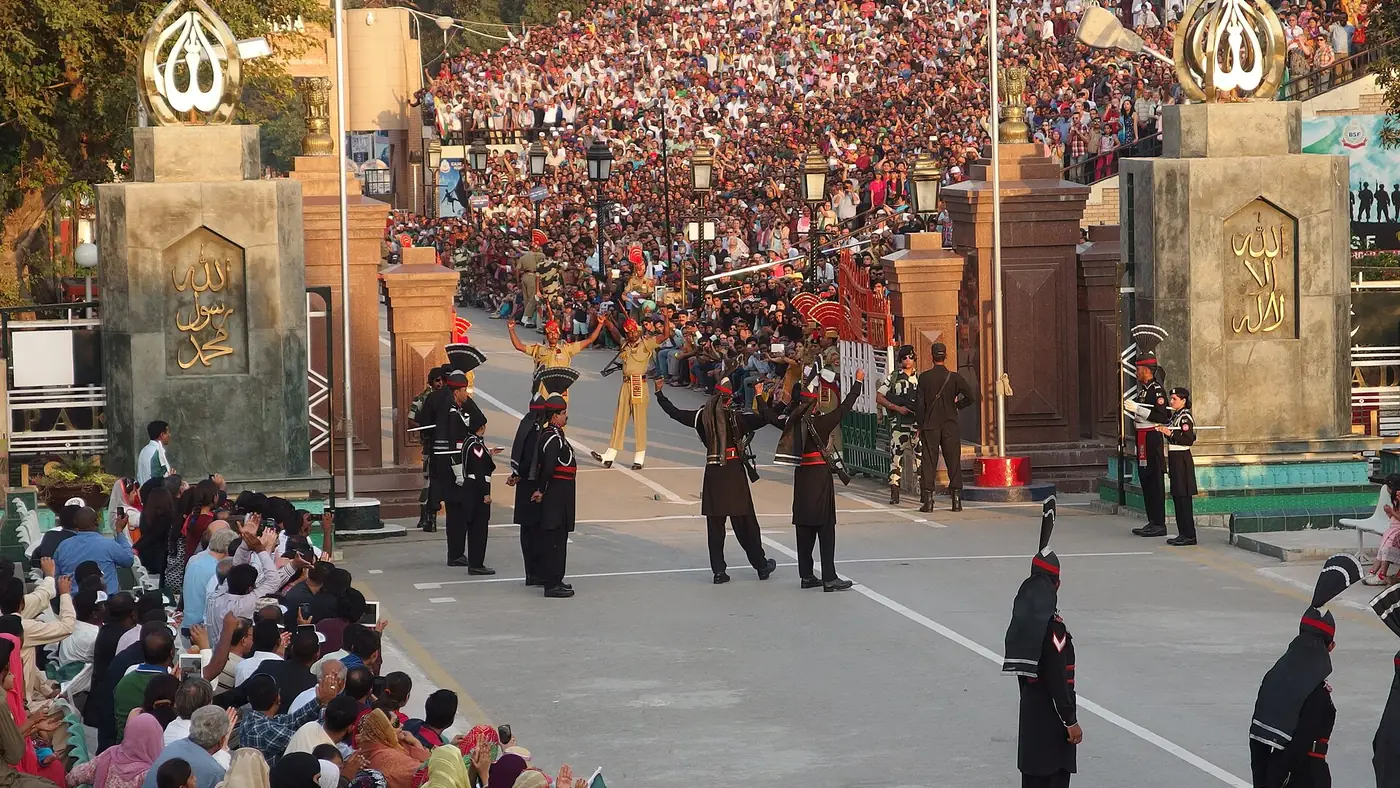
The daily flag-lowering ceremony at the Wagah border, about 30 km east of central Lahore, is one of the most popular outings from the city. It is free, loud, patriotic, and much more comfortable since the new arena opened in January 2026. It starts in the late afternoon, earlier in winter, and you should arrive well ahead of time. Allow three to four hours including the drive.
The Cantonment and Gulberg
Army Museum Lahore, in the Cantonment, covers Pakistan's military history with galleries and outdoor displays, including a helicopter and an aircraft. It is closed on Mondays, and an adult ticket was PKR 200 in 2026. It is a good choice for families with older children.
Gulberg, and MM Alam Road in particular, is where modern Lahore eats and shops. It has no sights as such, but it is where many visitors stay, and its restaurants and cafés are an easy evening out.
Food streets
Food is one of the reasons to come to Lahore, and a couple of evenings should be planned around it. Fort Road Food Street has rooftop restaurants facing the floodlit Badshahi Mosque. Lakshmi Chowk is the classic place for late-night karahi. Old Anarkali is cheap and lively, and the paye shops near Taxali Gate are the famous breakfast. Our comparison of Lahore's food streets weighs them up.
How to fit it all in
- One day: the Walled City walk in the morning, the Lahore Fort in the afternoon, the Badshahi Mosque at sunset and dinner on Fort Road.
- Two days: add the Lahore Museum and Anarkali, then the Shalimar Gardens and Wagah on the second afternoon.
- Three days: add Shahdara, Data Darbar, Minar-e-Pakistan and an evening at Lakshmi Chowk.
Our three-day Lahore itinerary sets this out hour by hour, with food stops. Lahore is at its best from October to March. From May to September, sightseeing is only comfortable early in the morning and after sunset, and in November and December smog can make the air unpleasant on some days.
Who Lahore suits
Lahore suits travellers who like history, architecture, food and cities. It is Pakistan's great Mughal city, and nowhere else in the country puts so much of it within a few kilometres. It is also an easy trip for families: the main sights are close together, the food is excellent, and there is plenty for children in the fort, at Wagah and in the parks.
It suits people less well in the heat of June, when walking outdoors is hard work, and if you are looking for mountains, quiet or open space. Lahore is also a natural start or end to a trip north: if you would like the city built into a longer journey, tell us your dates.
Frequently asked questions
What is Lahore most famous for?
Its Mughal monuments, above all the Lahore Fort, the Badshahi Mosque and the Shalimar Gardens; its old walled city; and its food, from Fort Road Food Street to the late-night karahi of Lakshmi Chowk.
How many days are enough for Lahore?
Three days covers the main sights at a comfortable pace. One full day is enough for the fort, the Badshahi Mosque and a walk through the old city.
Which places in Lahore are free to visit?
The Badshahi Mosque, Data Darbar and the Wagah border ceremony have no entry ticket. The Lahore Fort, the Lahore Museum, the Shalimar Gardens and the Shahi Hammam charge small fees for Pakistani visitors.
Is the Lahore Museum open on Friday?
No. The Lahore Museum is closed on Fridays and on the first Monday of each month. It is open 9 am to 5 pm in summer and 9 am to 4 pm in winter.
What is the best time to visit Lahore?
October to March, when the days are mild and sightseeing on foot is comfortable. February and March are especially pleasant.