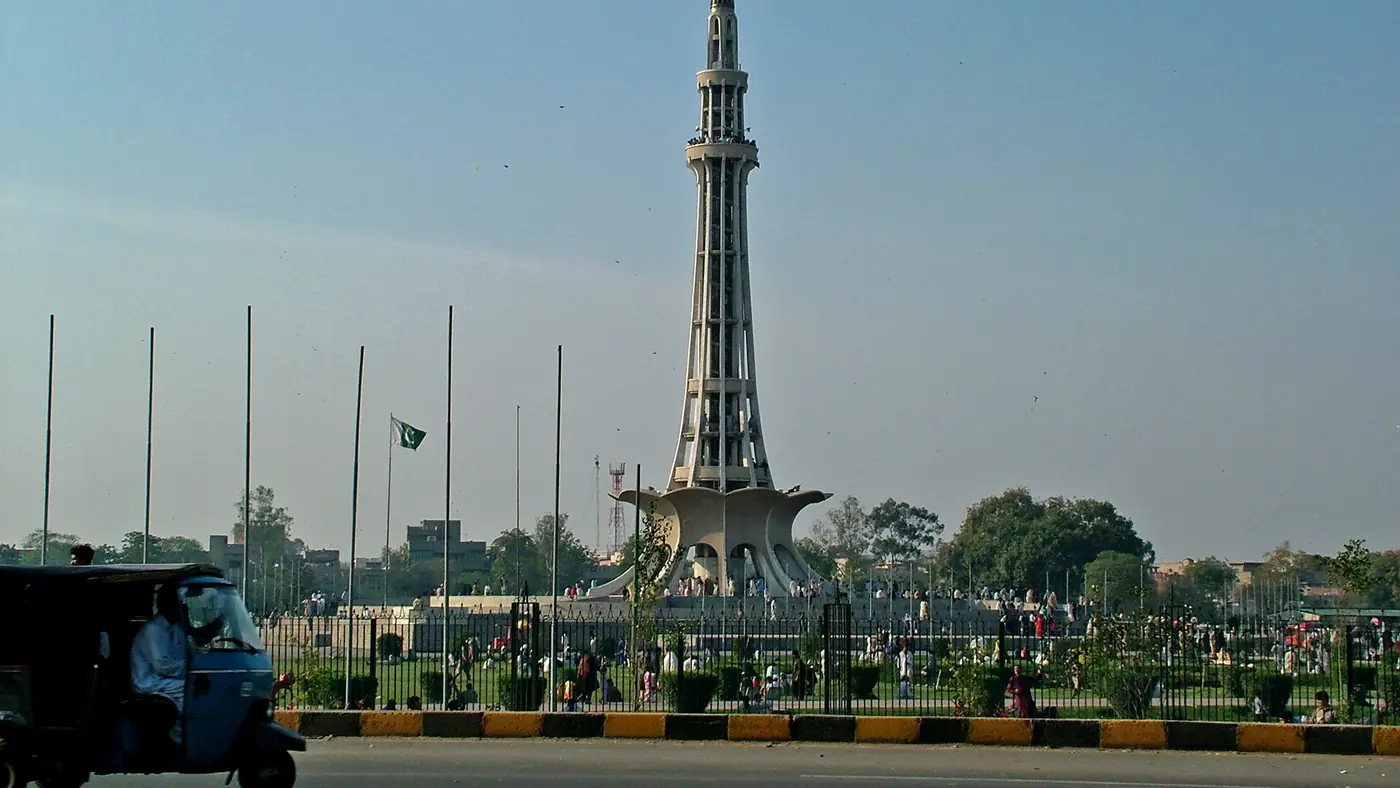
Minar-e-Pakistan is the 70-metre tower in Lahore's Greater Iqbal Park that marks the spot where the 1940 Lahore Resolution, the political milestone behind the demand for Pakistan, was passed. The park is free to enter and open from early morning until late evening, but the tower itself has been closed to the public for climbing since the early 2000s. Most visitors come for the monument, the park and, in the evening, a musical fountain show.
| At a glance | |
|---|---|
| Height | About 70 metres (230 feet) |
| Built | 1960–1968 |
| Park entry | Free |
| Tower access | Closed to the public; you view it from ground level |
| Park hours | Roughly 6 am to 10–11 pm, varies seasonally |
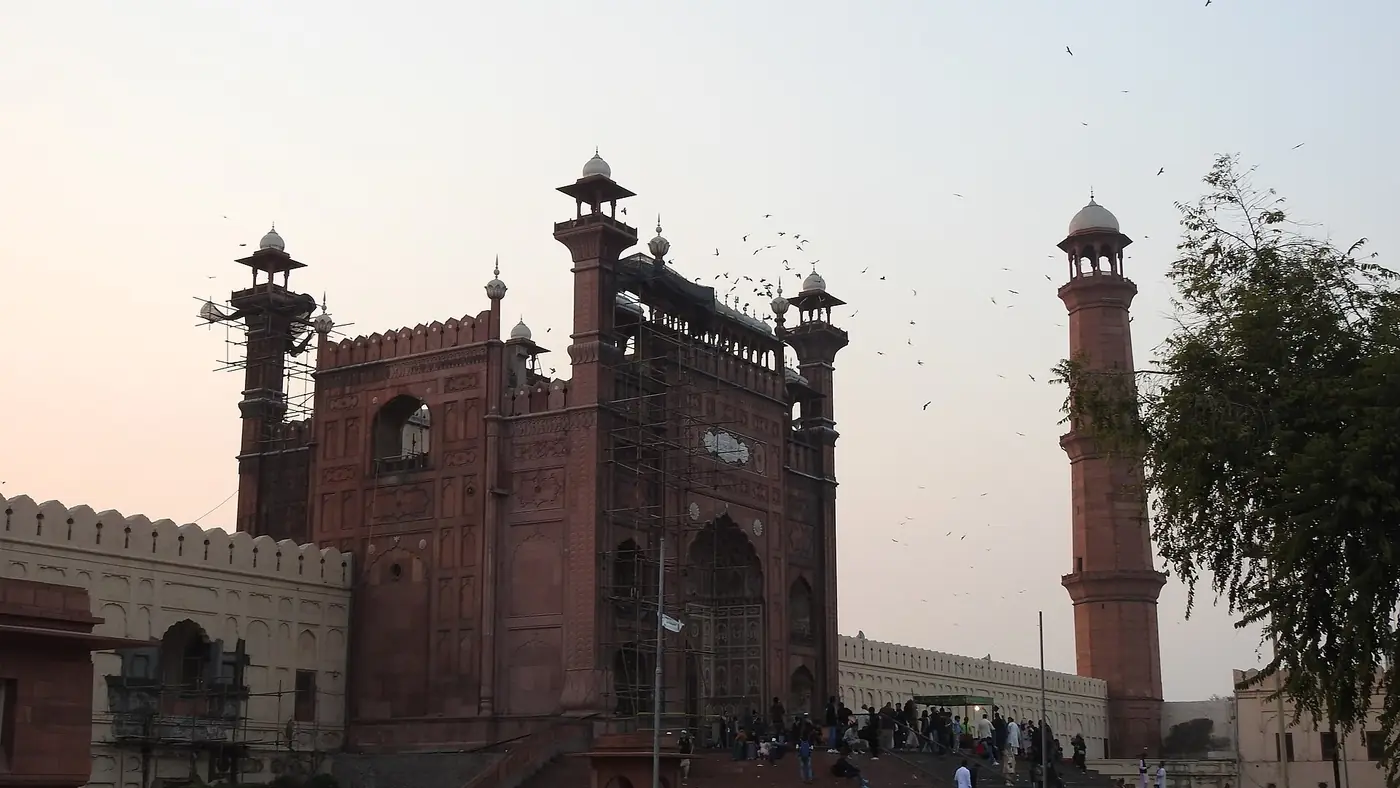
| Nearby | Badshahi Mosque, Lahore Fort, both visible from the park |
What Minar-e-Pakistan commemorates
On 23 March 1940, the All-India Muslim League passed a resolution at this site calling for separate, independent states for India's Muslim-majority regions, a milestone widely seen as the political foundation for the creation of Pakistan in 1947. The tower was built to mark the spot, with its foundation laid on 23 March 1960 and construction finishing on 22 March 1968, designed by the Russian-born Pakistani civil engineer Nasreddin Murat-Khan in a style that blends Mughal, Islamic and modern elements. The base is built in the shape of a ten-petalled flower, each petal nine metres high, opening out from a platform inscribed with the resolution's text and verses from Allama Iqbal, after whom the surrounding park is named.
The base and its symbolism
The design layers meaning into the materials themselves. The base rises through four platforms of progressively finer stonework: the first uses uncut stone from Taxila, the second hammer-dressed stone, the third chiselled stone, and the fourth polished white marble, a sequence meant to trace the movement for Pakistan from its early, rough beginnings to its eventual success. The whole structure sits on a five-pointed star-shaped platform flanked by two crescent-shaped pools facing each other, one lined in red marble and the other in green, echoing the colours of the national flag.
Can you go up the tower?
No, not currently. Visitors could once reach the top by a spiral staircase or lift for panoramic views over the old city, but that access was withdrawn after safety incidents, including at least one fatality, and has stayed closed for well over a decade. Treat any listing that suggests otherwise as outdated, and expect to view the tower from the park rather than from its top.
Greater Iqbal Park
The park surrounding the tower was redeveloped and expanded into Greater Iqbal Park, now one of the largest green spaces in Lahore, with walking paths, formal lawns, food stalls and, in the evening, a musical fountain show timed to run in short sessions after dark. Times for the fountain show shift, so check locally or ask at the park on the day rather than planning around a fixed schedule. The park also gives one of the better ground-level views of the Badshahi Mosque and Lahore Fort in the distance, particularly striking at sunset when both are lit.
Entry to the park itself is free, and it stays open well into the evening, making it a natural stop to combine with a Fort Road dinner or the sunset over the old city. The 125-acre park also has a roughly 4-km walking and cycling track, a food court, an open-air gym and a small library, so it works as an easy break from sightseeing rather than only a monument stop.
The National History Museum
Within the park, close to the tower, is the National History Museum, opened in 2018 as Pakistan's first fully digital museum. It uses holograms, virtual reality displays, cinema screens and a large collection of digitised photographs to walk visitors through the events leading up to 1947, from the Lahore Resolution itself to Partition and independence, across five themed sections. It is a useful, fairly quick add-on if you want more context on the history the tower commemorates than the monument alone provides, and it suits families and children better than a purely historical plaque-and-monument visit.
Getting there
Greater Iqbal Park sits just north of the Walled City, within walking distance of Badshahi Mosque and the fort for those happy to walk fifteen to twenty minutes, or a short rickshaw ride otherwise. Several gates give access to the park, and parking is available near the main entrances, though it fills up on weekends and public holidays.
When to visit
Late afternoon into the evening works best: the heat has eased, the monument and mosque are lit after dark, and the fountain show, when running, adds to the evening. Avoid the middle of the day in summer, when the open lawns offer little shade. For how this fits with the rest of Lahore's calendar, see our best time to visit Lahore guide.
Combining it with the rest of the old city
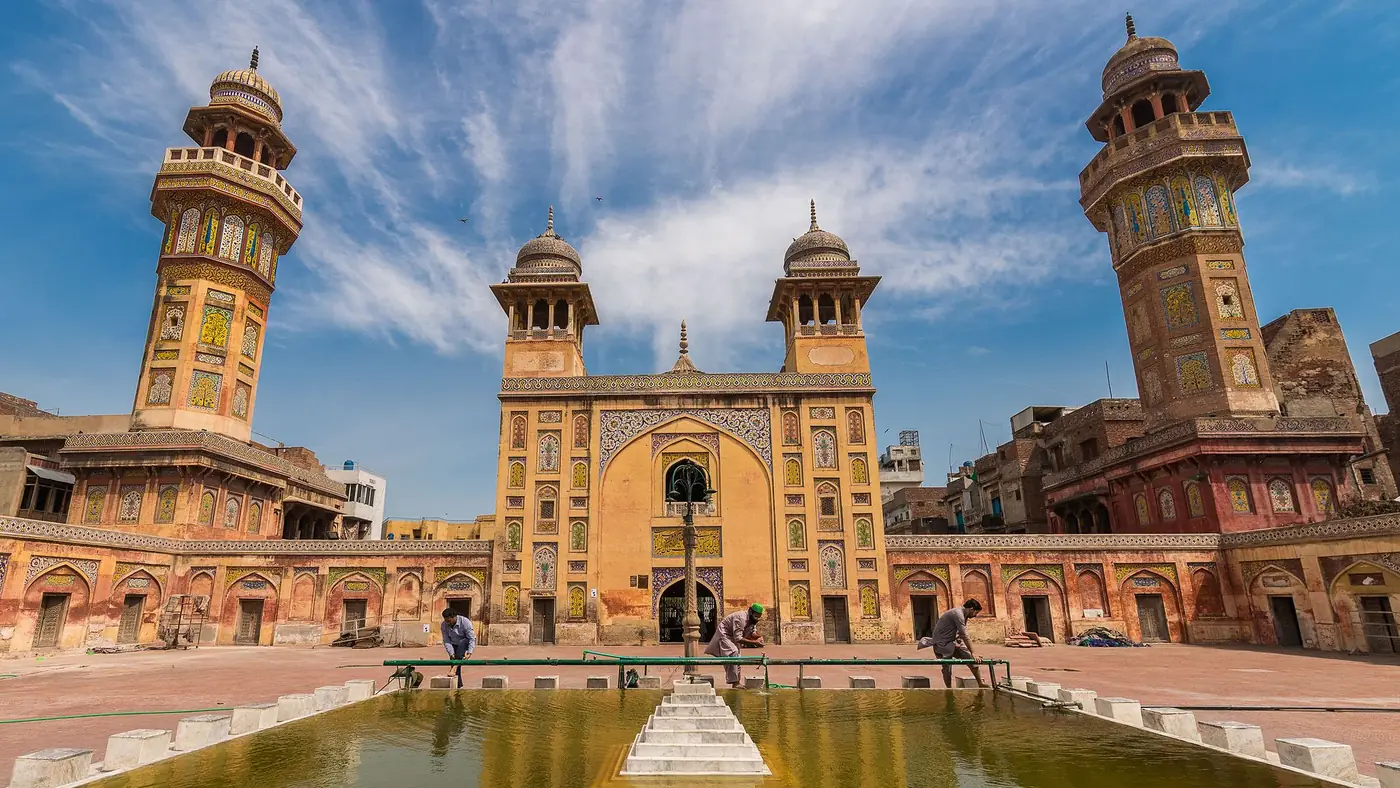
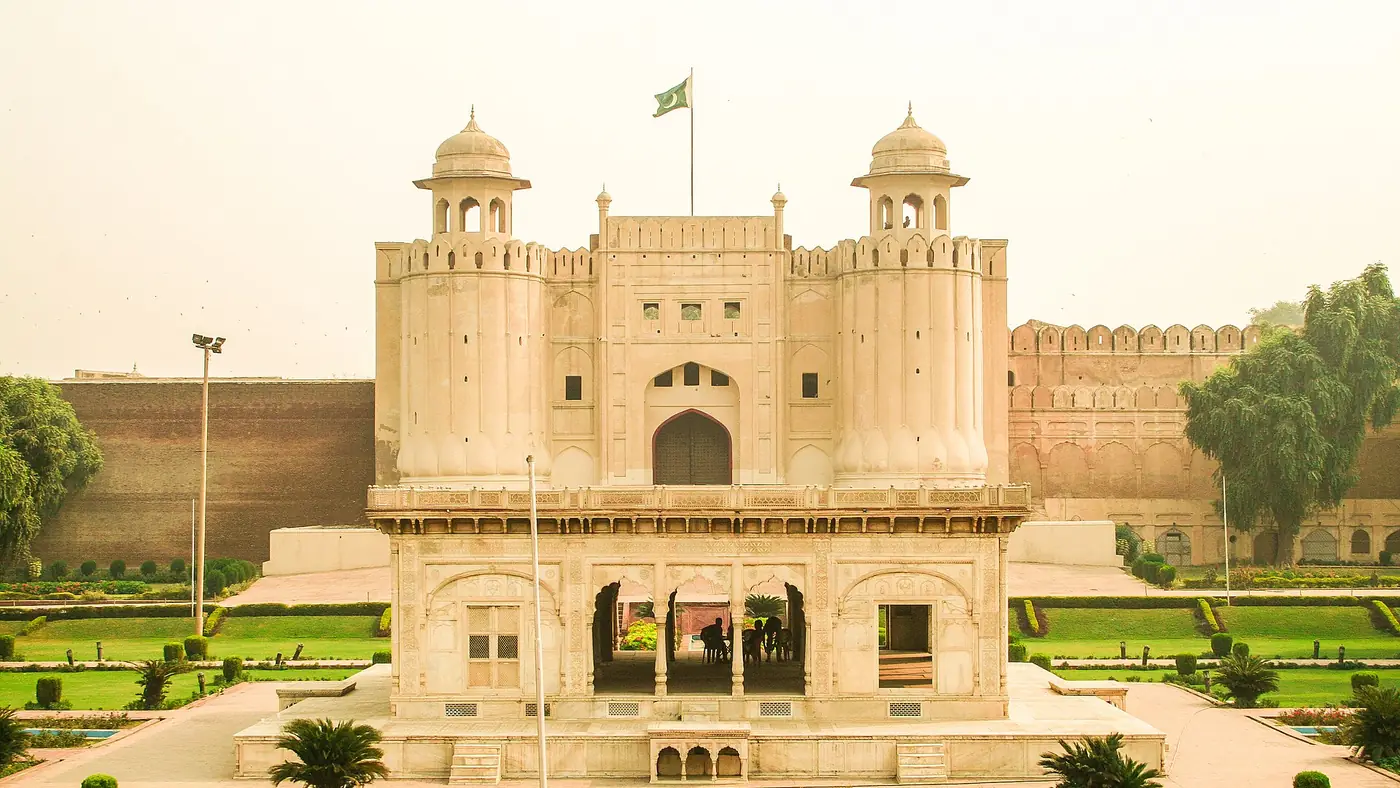
Minar-e-Pakistan works well as a bookend to a day that starts in the Walled City. A typical route runs from Delhi Gate through Wazir Khan Mosque and the bazaars, on to the Lahore Fort and Badshahi Mosque, and finishes at Greater Iqbal Park as the light fades. Our places to visit in Lahore guide sets out the fuller list, and our Lahore itinerary shows how to fit it into a multi-day plan.
Is it worth visiting?
For most first-time visitors, yes, mainly for the historical significance and the view of the mosque and fort from the park rather than the tower itself, since you cannot climb it. If your time in Lahore is very short and you have to choose, prioritise the fort, the Badshahi Mosque and the old city first; Minar-e-Pakistan is a strong add-on for an evening rather than a stop that needs a dedicated half-day.
Frequently asked questions
Is there an entry fee for Minar-e-Pakistan or Greater Iqbal Park?
No, the park and the view of the monument are free.
Can visitors climb Minar-e-Pakistan?
No. Public access to the top was withdrawn after safety incidents and has been closed for well over a decade. You view the tower from ground level in the park.
What are the park's opening hours?
Roughly early morning until late evening, with the exact closing time varying by season; it is generally open well into the night.
Is there a fountain show at Greater Iqbal Park?
Yes, a musical fountain runs in the evening on most days, though exact timings shift, so check locally on the day.
What historical event does Minar-e-Pakistan mark?
The 1940 Lahore Resolution, passed at this site by the All-India Muslim League, calling for separate states for India's Muslim-majority regions, widely seen as the political basis for Pakistan's creation.
Is Minar-e-Pakistan close to the Lahore Fort and Badshahi Mosque?
Yes, it is within easy walking distance, and the park gives a clear view toward both from ground level, especially attractive after dark when they are lit.