
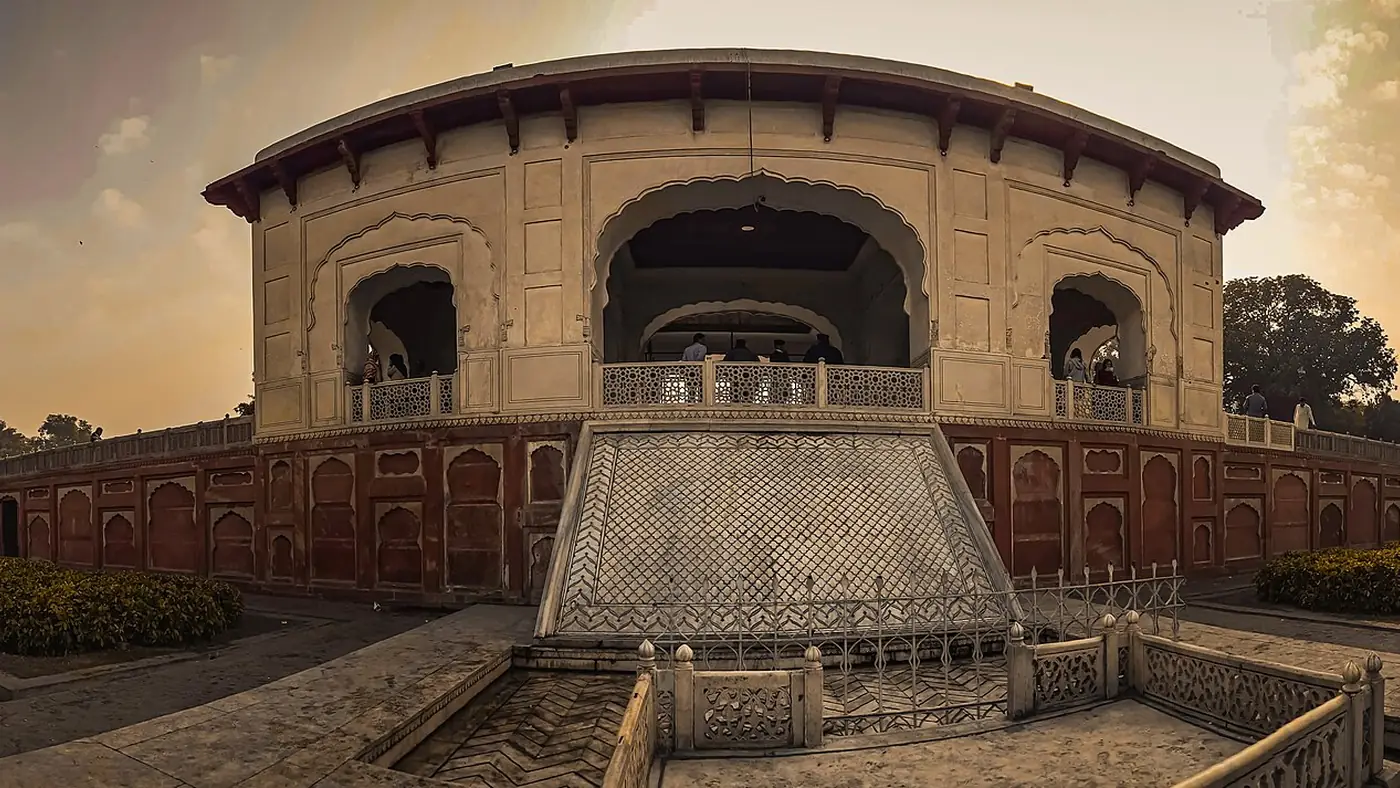
The Shalimar Gardens in Lahore are Shah Jahan's terraced Mughal garden of 1641–42, about 5 km east of Delhi Gate on the GT Road, with their own stop on the Orange Line. They are open daily from around 8 am until early evening, entry is a small fee at the gate, and an hour to an hour and a half is enough to walk all three terraces. Come on a clear morning between October and March, or in February and March when the flower beds are at their best.
The gardens are run by the Walled City of Lahore Authority and share a UNESCO World Heritage listing with the Lahore Fort. This guide covers entry, getting there, a walk through the terraces, the evening events, the best season, and the gardens' long link with the Mela Chiraghan.
| At a glance | |
|---|---|
| Built | 1641–42, for Shah Jahan |
| Location | GT Road, Baghbanpura; about 5 km east of Delhi Gate |
| Open | Daily, from about 8 am to early evening |
| Entry | Small fee for Pakistanis, higher for foreigners; pay at the gate |
| Time needed | 1 to 1.5 hours |
| Getting there | Orange Line to Shalamar Garden station, or by car |
| Best months | October to March; February and March for flowers |
| Evening event | Chandni Raatain, Saturdays 7 to 9 pm, PKR 3,000 (2026) |
| Mela Chiraghan | Late March or early April; dates vary each year |
Tickets and timings
The gardens are open every day from around 8 am into the early evening. Aim to arrive by mid-afternoon in winter so that you have the terraces in good light before the gates close.
There is a small entry fee for Pakistani visitors and a higher one for foreign nationals, paid in cash at the gate. The figures quoted online vary widely and many are years out of date, so bring small notes and pay what is posted. Keep your CNIC with you, and a student card if you have one.
A few extras are run by the Walled City of Lahore Authority (WCLA):
- Chandni Raatain, an evening programme with lit fountains, music and performances, on Saturdays from 7 to 9 pm, at PKR 3,000 per person (2026). It pauses in the hottest weeks of summer and during Muharram.
- Guided walks, including a Shalimar tour, bookable through WCLA.
- Photo shoots, including bridal shoots, which are booked and paid for through WCLA rather than arranged at the gate.
- Electric carts, which WCLA has provided for older visitors and children.
How to get there
The gardens are on the GT Road in Baghbanpura, east of the old city, on the way to Wagah.
- Orange Line. The metro's Shalamar Garden station is right outside, which makes this one of the easiest sights in Lahore to reach without a car. Coming from Anarkali, the GPO or Lakshmi, it is a direct ride.
- By car or ride-hailing. From the Mall allow 25 to 40 minutes, and more in the evening rush on the GT Road. Parking is outside the gardens.
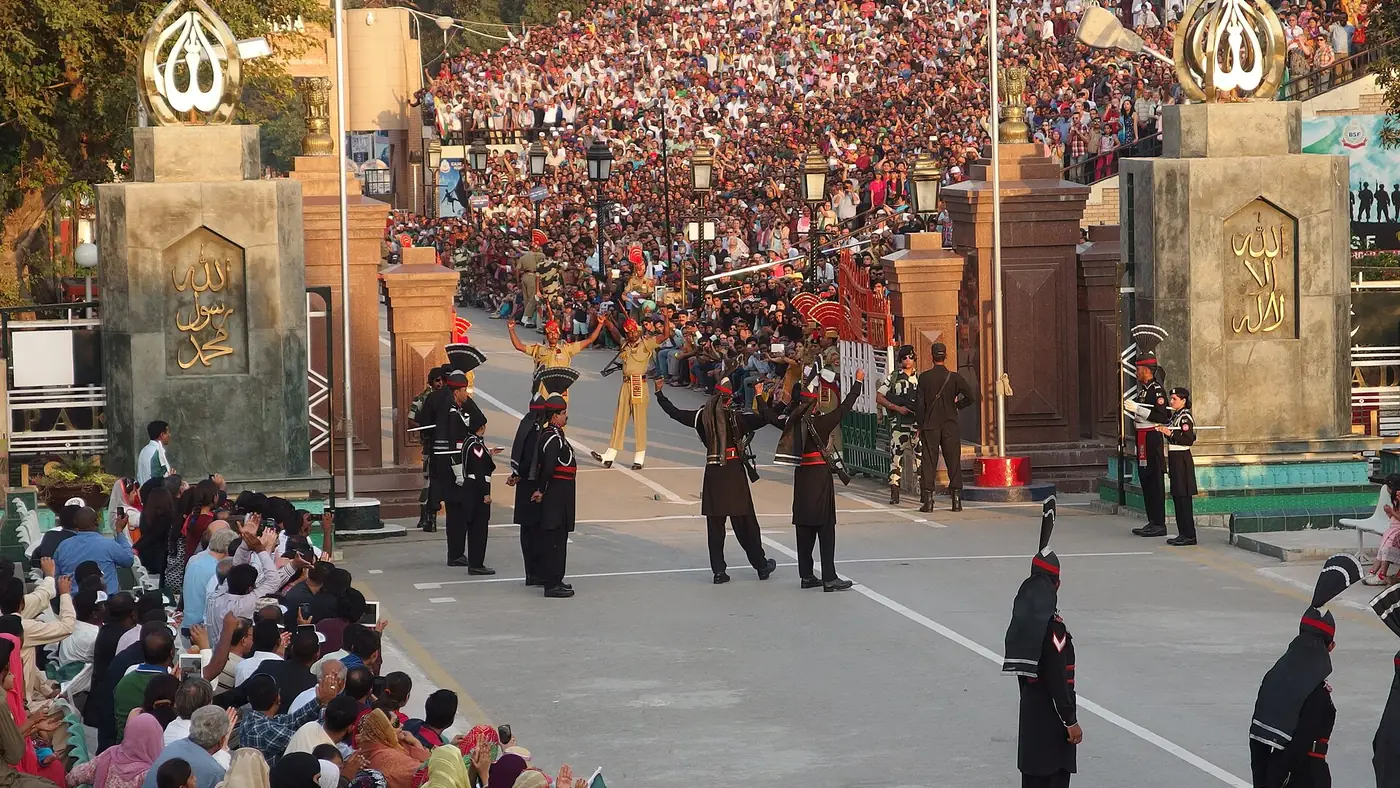
- With Wagah. The Wagah border is further east along the same road, so the gardens make a natural stop on the way to the evening flag ceremony. Allow at least an hour between leaving the gardens and the parade start. Our guide to Wagah border parade timings has the seasonal times.
A walk through the three terraces
The garden is a Persian-style charbagh laid out on three terraces, each a few metres higher than the next. Water once came by a long Mughal canal and ran through the garden in channels, tanks and more than 400 fountains. It measures roughly 658 by 258 metres, so the full walk is not long, but there is little shade in the middle of the day.
The names usually given to the terraces are:
- Farah Baksh, the upper terrace. "Bestower of Pleasure", reserved for the emperor's household. Today's main entrance is here, through a building that was once Shah Jahan's aramgah, or resting place; in Mughal times visitors came in from the lowest terrace. It is a square garden divided by raised walkways and water channels into four quarters, with pavilions along the walls.
- Faiz Baksh, the middle terrace. "Bestower of Goodness", the emperor's own garden and the finest of the three. At its centre is a great tank with rows of fountains. On one side, water spilled over a marble cascade carved into a rippled surface to make it shimmer, with a marble seat for the emperor above it. Along the edges stand the Sawan Bhadun pavilions, built so that water fell in front of them like monsoon rain, and the pavilions where the court sat through the heat.
- Hayat Baksh, the lower terrace. "Bestower of Life", the most open of the three, laid out again in quarters with walkways and fountains, where the nobility and on occasion the public were admitted.
Walk down through the terraces and back along the side walls, and look out for the gateways and pavilions on the outer edge, including the Naqar Khana, where drums once announced arrivals.
The fountains are not always running, and on an ordinary day many channels are dry. If fountains matter to you, ask at the gate, or go on a Chandni Raatain evening, when they are lit.
When is the best time to visit?
- February and March. The best months. The days are mild, the beds are planted with seasonal flowers, and spring comes to the garden before the heat.
- October and November. Clear, warm days and soft evening light, and a good time for photographs.
- December and January. Pleasant in the afternoons, but mornings can be foggy and some days smoggy, which flattens both the light and the views.
- April to September. Go at opening time or late in the day. The terraces offer little shade, and at midday in June they are hard work. The monsoon, in July and August, turns the lawns green but makes the air heavy.
Weekday mornings are the quietest. Sunday afternoons and public holidays are the busiest, especially around Eid, when families picnic on the lawns.
History: Shah Jahan to the present
Work on the gardens began in June 1641 on Shah Jahan's orders and was finished in 1642, in under a year and a half. The noble Ali Mardan Khan, who had a canal built to bring water to the site, is credited with much of the construction. The emperor and his court used it as a pleasure ground outside the city.
The gardens suffered after the Mughal decline. In the Sikh period much of their marble was stripped and taken to Amritsar, and an ornamental gate was sold off, although Maharaja Ranjit Singh ordered repairs in 1806. In 1981 UNESCO listed the gardens, together with the Lahore Fort, as a World Heritage Site. In 1999 the garden's historic hydraulic tanks were destroyed when the GT Road outside was widened, and from 2000 the site spent twelve years on UNESCO's list of World Heritage in Danger before conservation work brought it off in 2012.
The Mela Chiraghan connection
The Mela Chiraghan, the "festival of lamps", marks the urs of Shah Hussain (1538–1599), the Sufi saint and Punjabi poet whose kafis are still sung across Punjab. His shrine, where he is buried beside his disciple Madho Lal, is in Baghbanpura, right next to the gardens, which is why the festival is also called Mela Shalimar.
For generations the mela spilled into the Shalimar Gardens themselves, with lamps, music and crowds among the terraces. In 1958 President Ayub Khan stopped it from being held inside the gardens, and for 67 years it stayed at the shrine and in the streets around it. In April 2025 the Walled City of Lahore Authority brought it back into the gardens, with talks on Shah Hussain's poetry, kafi recitals, qawwali and Heer in the evenings, food stalls and a crafts bazaar.
The date moves from year to year. In 2025 the mela ran from 11 to 13 April, and in 2026 the urs was observed in the last weekend of March. If you want to go, watch the news from early March. Expect big crowds and heavy security at the shrine, and go to the gardens for the cultural programme rather than the crush.
Is it worth it?
Yes, if you like Mughal architecture or simply want a calm hour in green space in a crowded city. It is the finest Mughal garden in Pakistan, the Orange Line puts it within easy reach, and it combines neatly with a trip to Wagah the same afternoon.
Set your expectations, though. The gardens are hemmed in by the city, the fountains are often dry, parts of the pavilions are worn, and on a hot afternoon it is a long walk in the sun. If your time in Lahore is short, the Lahore Fort and the Badshahi Mosque come first; our guide to Lahore Fort tickets and timings covers the essentials. For how the gardens fit with the rest of the city, see our list of places to visit in Lahore and our three-day Lahore itinerary, or tell us your dates and we will plan it for you.
Frequently asked questions
What are the Shalimar Gardens timings?
The gardens are open daily from around 8 am until early evening. Arrive by mid-afternoon in winter to see the terraces in good light before closing.
How much is the Shalimar Gardens ticket?
There is a small entry fee for Pakistanis and a higher one for foreign nationals, paid in cash at the gate. Published figures vary, so pay what is posted on the day.
Which metro station is near Shalimar Gardens?
The Orange Line's Shalamar Garden station is directly outside the gardens on the GT Road.
Who built the Shalimar Gardens in Lahore?
The Mughal emperor Shah Jahan, in 1641–42. The noble Ali Mardan Khan is credited with much of the work, including a canal to bring water to the garden.
How many fountains are there in Shalimar Gardens?
More than 400 fountains were built across the three terraces, though they are not all running on an ordinary day.
When is Mela Chiraghan held?
It marks the urs of Shah Hussain and usually falls in late March or early April; the date moves each year. Since 2025 part of the festival has been held inside the Shalimar Gardens again.
.jpg)