The Walled City of Lahore, or Androon Shehr, is the old city inside the line of the Mughal walls, and the best way to see it for the first time is on foot along the Royal Trail: in at Delhi Gate, past the Shahi Hammam and the Wazir Khan Mosque, through Kashmiri Bazaar to the Sunehri Masjid, and on to the Lahore Fort. It is a walk of under two kilometres that fills a morning. Start early, dress modestly, and consider a guided walk on your first visit.
The old city covers about 256 hectares and is home to around 200,000 people, so it is a living neighbourhood of homes, workshops and wholesale markets, not a museum. This guide covers how it is laid out, the walk, the mosques and havelis, the bazaars, the guided tours and how to stay comfortable and safe.
| At a glance | |
|---|---|
| Size | About 256 hectares; around 200,000 residents |
| Best first walk | Delhi Gate to the Lahore Fort along the Royal Trail |
| Time needed | 3 to 4 hours for the walk; a full day with the fort |
| Best time of day | 8 to 11 am; late afternoon in winter |
| Best months | October to March |
| Guided walk | WCLA's weekend walk from Delhi Gate, PKR 2,500 (2026) |
| Avoid | Friday midday; the first ten days of Muharram |
| Wear | Comfortable closed shoes; modest clothes |
How the old city is laid out
The walled city is a rough oval with the Lahore Fort and the Badshahi Mosque on its north-western edge. The walls themselves have almost all gone, replaced by a ring road and a strip of garden, but the gates mark the old boundary, and Lahoris still name parts of the old city by the gate nearest to them: "Androon Bhati", "Androon Mochi".
Originally there were thirteen gates. After 1857 the British demolished all but one, and some were later rebuilt. Today six survive, including Delhi Gate on the east side, the natural starting point for visitors, and Bhati, Lohari, Kashmiri, Roshnai and Shairanwala. Roshnai Gate, between the fort and the Badshahi Mosque, is the one most visitors walk through without noticing.
Inside, the lanes are narrow, crooked and full of motorbikes. There are few street signs, and map apps lose their way among the tall houses. That is part of the pleasure, but it is also why the Royal Trail, a single well-used route, is the right way to start.
The Royal Trail: Delhi Gate to the fort
The Shahi Guzargah, or Royal Trail, was the route the Mughal emperors took from Delhi Gate to the fort. Between 2012 and 2015 the Walled City of Lahore Authority restored its first stretch, from Delhi Gate to the Wazir Khan Mosque, clearing encroachments, restoring facades and putting the tangle of overhead cables underground. It is the easiest walk in the old city and takes in most of its great buildings.
- Delhi Gate. Start here at about 8:30 or 9 am, before the lanes fill. The gate faces the road to Delhi, hence the name.
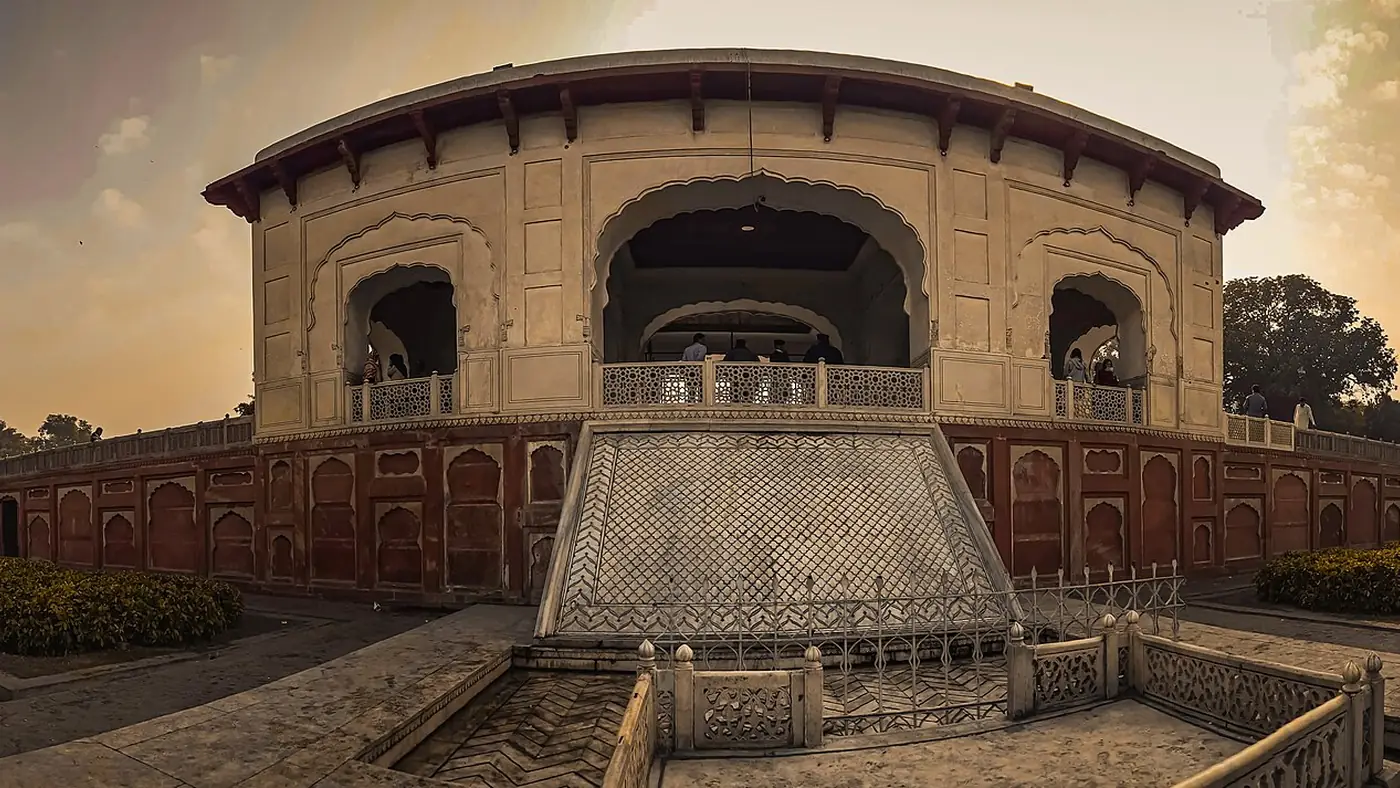
- The Shahi Hammam. Just inside the gate is the royal bathhouse built in 1635, in Shah Jahan's reign. Restored in the 2010s, it is a warren of domed, frescoed chambers once used for hot and cold baths, with a small entry ticket. Allow 30 to 45 minutes.
- Wazir Khan Chowk and Mosque. The trail opens into a square in front of the Wazir Khan Mosque, built between 1634 and 1641 by Hakim Ilmuddin Ansari, the governor of Lahore known as Wazir Khan. It is covered inside and out in some of the finest Mughal tile work and fresco anywhere. It is a working mosque: remove your shoes, cover your head if you are a woman, and avoid prayer times. Allow 45 minutes.
- Chitta Gate and Kashmiri Bazaar. Beyond the mosque, pass under the old Chitta Gate and follow the bazaar west, through lanes of cloth, trimmings and household goods.
- The Sunehri Masjid. The small "golden mosque" of 1753, raised above the shops, with gilded domes. Look from the street or climb up outside prayer time.
- Towards the fort. Continue west through the bazaars around Rang Mahal and Kotwali to Masjid Maryam Zamani, built in 1611–14 for Jahangir's mother, which stands opposite the fort's east side.
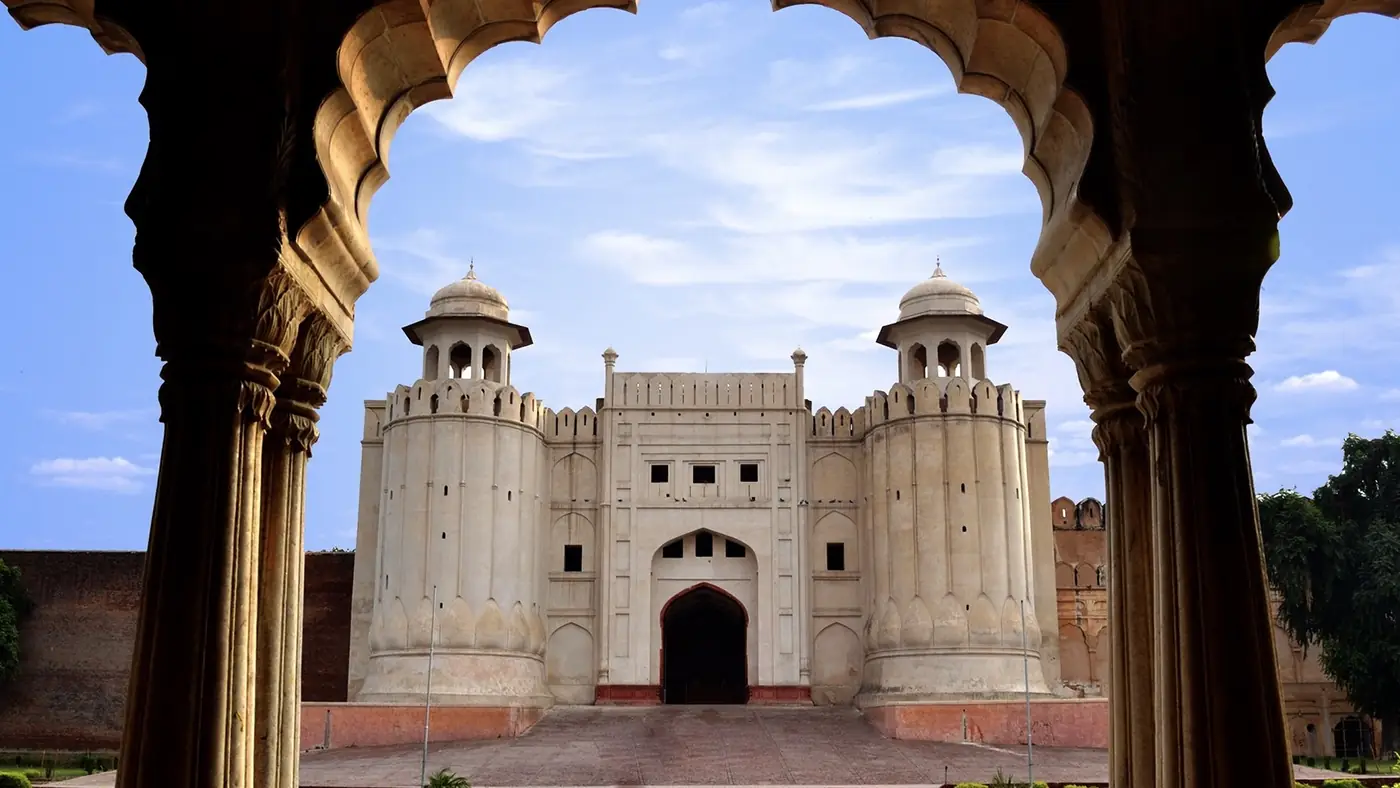
- The Lahore Fort and the Badshahi Mosque. From here, walk round to the fort's main entrance on the west side, facing Hazuri Bagh. Our guide to Lahore Fort tickets and timings takes it from there.
The first half, as far as Wazir Khan, is restored and easy to follow. The second half is a working bazaar and busier, so a guide or a good offline map helps. In 2025 the Punjab government set up a new body, the Lahore Authority for Heritage Revival, with plans for further work from Delhi Gate to the fort and the rebuilding of several lost gates, so expect some stretches to be under repair.
Mosques, shrines and havelis
Beyond the Royal Trail, the old city is dense with buildings worth a look, though many are private or poorly signed.
- The Badshahi Mosque, at the old city's north-west corner, needs no introduction; see our Badshahi Mosque visitor guide for dress, shoes and timings.
- Gurdwara Dera Sahib and the Samadhi of Ranjit Singh, beside the Badshahi Mosque. Visits are open to Sikhs; others need permission from the Evacuee Trust Property Board.
- Data Darbar, the shrine of the 11th-century saint Ali Hujwiri, stands just outside Bhati Gate and is one of the busiest shrines in South Asia. Thursday evenings are especially crowded.
- The havelis. The old city's merchants' and nobles' houses, with carved wooden balconies and courtyards, are its most fragile treasure. Most are private homes. WCLA's "Havelis of Lahore" walk takes you inside a few, and several restored havelis on Fort Road now serve as restaurants.
- The Fakir Khana Museum, near Bhati Gate, is a private family collection in a family haveli; it is run by the family, so arrange your visit in advance.
The bazaars
The old city is still Lahore's great wholesale market, and much of the fun is simply watching trade happen. Shops open late in the morning, and many close on Friday afternoons.
- Kashmiri Bazaar, along the Royal Trail, for cloth and household goods.
- Azam Cloth Market, one of the largest cloth markets in the country, busy with traders from across Punjab.
- Kinari Bazaar, for the lace, ribbons, gota and trimmings of wedding clothes.
- Shah Alami, a dense wholesale market selling almost everything.
- Papar Mandi, for spices, dried fruit and grain.
For food, the old city has Fort Road Food Street, the breakfast paye shops near Taxali Gate and many small places in the lanes. Our comparison of Lahore's food streets covers where to go and when.
Guided walks and tours
For a first visit, a guided walk turns a confusing maze into a story. The Walled City of Lahore Authority runs several, bookable on the Walled City of Lahore Authority website:
- Wekh Androon Lahore, the main weekend walk, on Saturdays and Sundays from 10 am to 2 pm, starting at Delhi Gate. It covers the Shahi Hammam, havelis, the Wazir Khan Mosque and the bazaars, with a rickshaw ride, a Lahori brunch and a cultural performance, for PKR 2,500 per person (2026).
- Themed walks on particular corners of the old city, including Taxali Gate, Bhati Gate, Lohari Gate and the havelis.
- History by Night, the evening tour of the Lahore Fort and Hazuri Bagh.
Schedules change and some tours pause in the hottest months, so check the dates before you plan around one. Freelance guides wait at Delhi Gate and near the fort; if you hire one, agree the route, the time and the price before you set off.
Safety and etiquette
The old city is generally safe by day for families and for visitors who use ordinary care. The main risks are crowds, traffic and heat rather than crime.
- Watch your pockets and phone in the crowded bazaars. Keep your bag in front of you.
- Watch for motorbikes. They come fast down lanes barely wider than the bike. Step into a doorway and let them pass.
- Dress modestly. The old city is conservative. Men should wear long trousers; women will be most comfortable in loose clothes with a dupatta or scarf.
- Ask before photographing people, especially women, and don't photograph inside homes without permission.
- Avoid Friday midday, when the mosques fill and many shops close.
- Muharram. In the first ten days of Muharram, and especially on Ashura, the main processions pass through the old city, many lanes are closed, and security is tight. Plan your visit for another time.
- After dark, stay on the main routes and around Fort Road, where there are people and light. The back lanes are quiet at night and easy to get lost in.
- Heat. From May to September, walk before 11 am, carry water, and rest in the mosques and the Shahi Hammam.
- Parking. Don't try to drive into the lanes. Park outside, near Delhi Gate or the Minar-e-Pakistan side of the fort, or come by rickshaw or ride-hailing car.
Who it suits
The old city suits anyone curious about how Lahore lived before it spread south. It is the heart of any trip to the city, and a morning here does more for your sense of the place than a day of driving between monuments.
It is harder going for people with limited mobility, parents with pushchairs, and anyone uneasy in crowds: the lanes are uneven and busy, and there is nowhere to sit for long stretches. For them, the fort, the Badshahi Mosque and Fort Road give a taste of the old city with less effort. If you would like somewhere to sleep nearby, a few restored houses now take guests; our guide on where to stay in Lahore weighs them against the hotel districts. And if you would like a guide and a plan built around your dates, get in touch.
Frequently asked questions
How many gates does the Walled City of Lahore have?
It originally had thirteen gates. Six survive today, including Delhi, Bhati, Lohari, Kashmiri, Roshnai and Shairanwala gates.
How long does it take to walk the Walled City?
The Royal Trail from Delhi Gate to the Lahore Fort takes three to four hours with stops at the Shahi Hammam, the Wazir Khan Mosque and the bazaars. Add the fort and the Badshahi Mosque and it is a full day.
Is the Walled City of Lahore safe for tourists?
Yes, by day, with ordinary care. Watch for pickpockets and motorbikes in the bazaars, dress modestly, and avoid the first ten days of Muharram, when processions close many lanes.
Are there guided tours of the Walled City?
Yes. The Walled City of Lahore Authority runs a weekend walking tour from Delhi Gate, costing PKR 2,500 in 2026, plus themed walks and a night tour of the fort.
What is the best time to visit the Walled City of Lahore?
October to March, in the morning between about 8 and 11 am, before the lanes become crowded. Avoid Friday midday and the heat of summer afternoons.