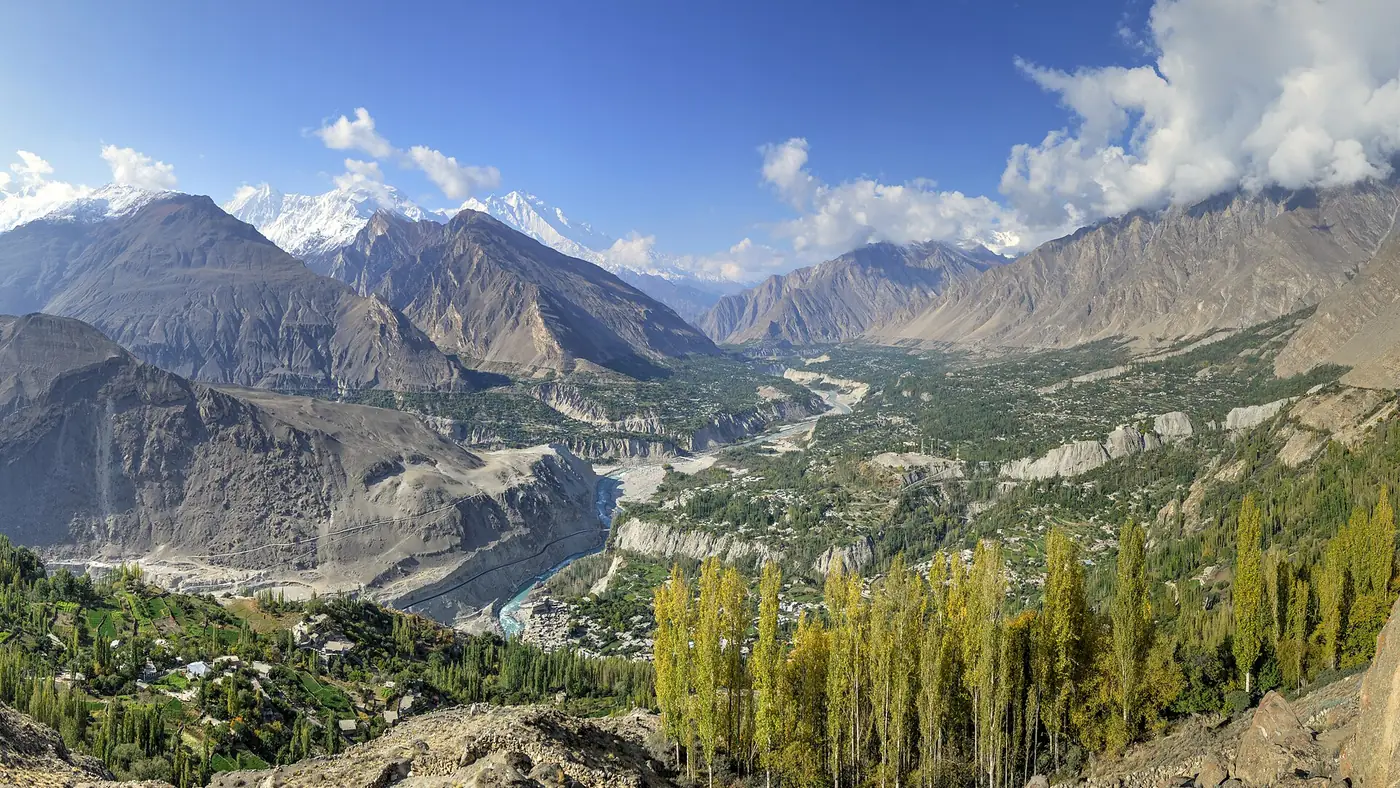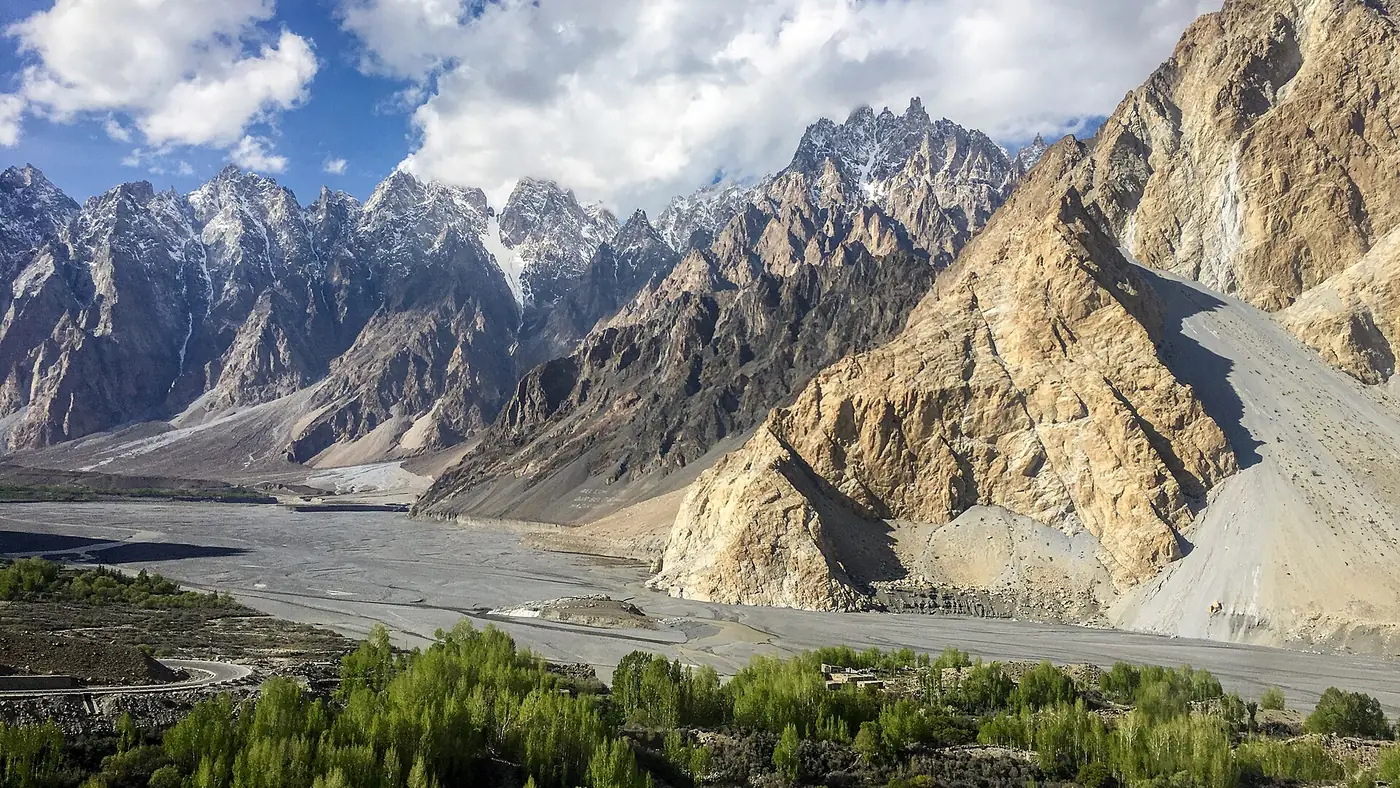
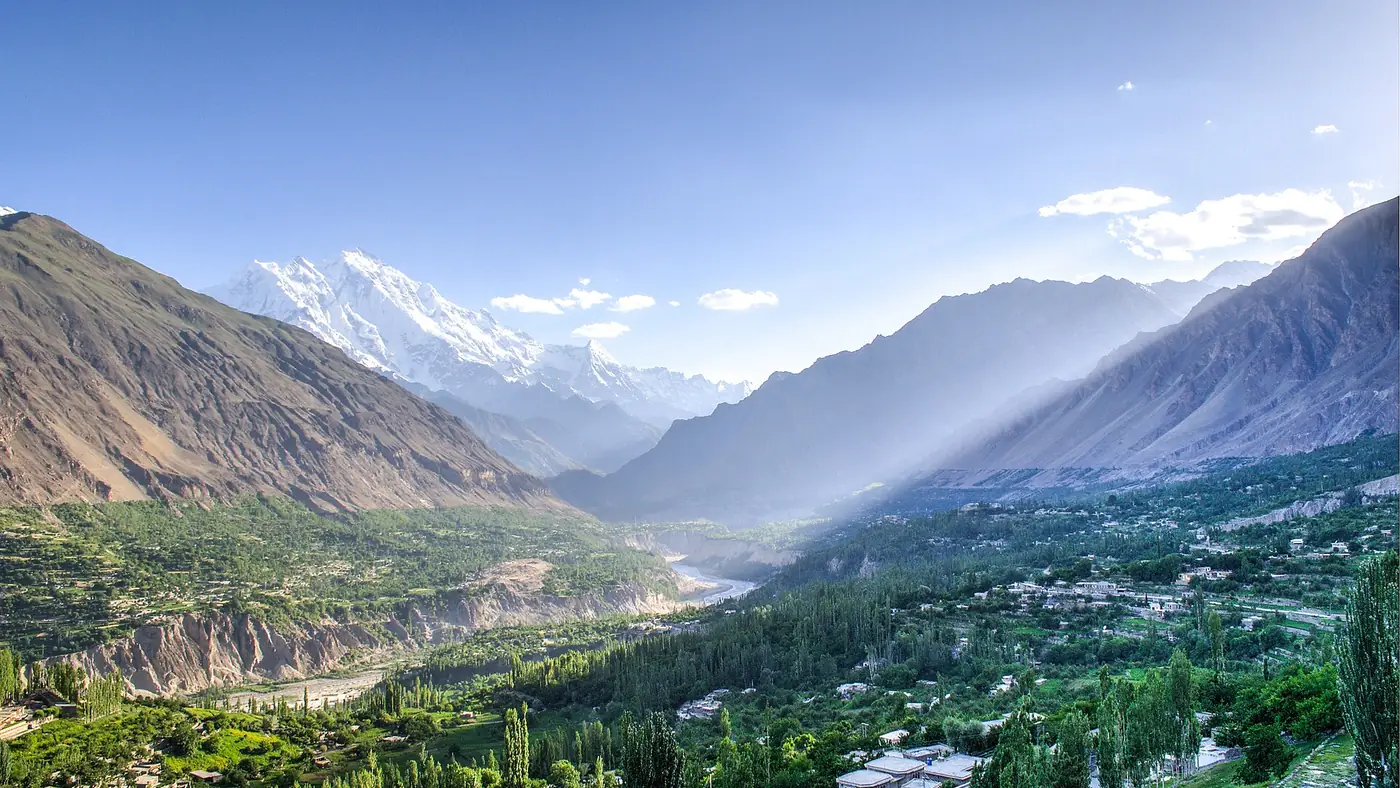
The lakes in Hunza that you can drive to are Attabad, beside the Karakoram Highway in Gojal, and Borith, up a short side road above Hussaini. Everything else is a walk: Rush Lake, at 4,694 metres above Hopper in Nagar, is a trek of several days, Kacheli Lake lies in the Miacher valley of Nagar, and the high ground above Shimshal has lakes of its own. Several names on online lists are not lakes you visit at all: Snow Lake is a glacier basin, and the lakes behind the Shishper and Khurdopin glaciers are hazards.
This guide goes through each one, with how you get there and when to go, and sorts out which lakes often listed under Hunza are actually somewhere else.
| Lake | Where | Altitude | Getting there | Best season |
|---|---|---|---|---|
| Attabad | Gojal, on the KKH | Valley floor | By car, 30 to 40 min from Karimabad | April to May, September to October |
| Borith | Above Hussaini, Gojal | About 2,600 m | By car on a 2 km side road, or on foot from Gulmit | April to October |
| Rush | Above Hopper, Nagar | 4,694 m | Trek of several days | Summer |
| Shimshal lakes | High pastures above Shimshal | Above the 3,113 m village | Multi-day trek | Summer |
Attabad Lake: the one everyone sees
Attabad is the big lake in the middle of Hunza, filling the valley between the site of Attabad village and Gulmit. It formed on 4 January 2010, when a landslide blocked the Hunza river, and within five months it was about 21 km long and more than 100 metres deep. The Karakoram Highway runs along it through five tunnels opened in 2015, so you cannot miss it on the way north.
Access: by car or shared van, 30 to 40 minutes from Karimabad, with boats, jet skis and cafés at the landing at the southern end.
When: it is bluest and calmest in spring and autumn, siltier in patches in high summer, and partly frozen in a cold January. Our guide to the best time to visit Attabad Lake goes through the seasons, and the Attabad Lake guide covers the viewpoints.
Borith Lake: small, saline and quiet
Borith sits on a shelf of land about 2 km north of Hussaini village in Gojal, at about 2,600 metres, between the Ghulkin and Passu glaciers. It is saline rather than fresh, green-blue rather than turquoise, and much quieter than Attabad. Its real draw is the migrating ducks, which stop here between March and June on their way north and again from September to November on the way south.
Access:
- By car: a paved 2 km road climbs from the highway at Hussaini, a few kilometres short of Passu.
- On foot from Gulmit: two to three hours, crossing the end of the Ghulkin glacier. Take a local guide for the glacier.
Walks from the lake: about an hour to the Hussaini glacier, or four to five hours to the Passu glacier by way of the deserted settlement of Shahabad.
When: April to October for easy access; spring and autumn for the birds. There is a family-run hotel on the shore for anyone who wants the lake at dawn. Our Borith Lake guide covers the road, the birds and the walks in detail.
Rush Lake: the high one
Rush Lake lies at 4,694 metres beneath Rush Peak (5,098 m) in the Hopper valley of Nagar, and is one of the highest alpine lakes in the world. It is the lake most people mean when they talk about trekking to a lake in Hunza.
Access: the route starts in Hopper, about an hour from Karimabad by road across the river, and crosses the Hopper (Bualtar) and Miar glaciers on the way up. It takes several days there and back, with time built in to adjust to the altitude. On a clear day the trek gives views of Spantik, Malubiting, Miar Peak, Phuparash and Ultar Sar.
When: the summer months, once the snow has gone from the approach. In winter heavy snow makes the area very hard to reach.
Who it suits: fit, experienced walkers with a local guide and proper camping arrangements. The lake is about as high as the Khunjerab Pass, but you reach it on foot and camp high, which is a real consideration even for strong trekkers. If you only want to see Hopper and its glacier, that is an easy half day by road; our list of day trips from Karimabad has the plan.
Kacheli Lake and the Nagar meadows
The Gilgit-Baltistan tourism department lists Kacheli Lake among Nagar's sights, beside the Kacheli meadows in the Miacher valley, away from the usual Hunza routes.
Reliable, current route information is thin, so don't set out on your own. Ask in Nagar Khas or Hopper for a local guide who knows the way, and go in summer, when the meadows are clear of snow. The department's site, Visit Gilgit-Baltistan, lists lesser-known spots like this district by district.
The high lakes above Shimshal
Shimshal, at 3,113 metres the highest village in Hunza district, is reached by a 56 km jeep road from Passu, completed only in 2003. Local 4x4s take about two and a half hours on a narrow track cut into the cliffs. The village's herds summer on high pastures several days' walk away, towards the Shimshal Pass at 4,735 metres, and lists of Hunza's lakes often include the small lakes of this high ground.
This is trekking country, not a sightseeing trip. Go with a guide from Shimshal, allow several days, and plan for summer; the herders' festival at the pass is held in the last week of July or the first week of August.
Lakes that are not for visiting
Some names turn up on lists of Hunza's lakes that no one should plan a day around.
- Snow Lake (Lukpe Lawo) is not a lake at all. It is a glacier basin at about 4,877 metres, some 16 km across, where the Hispar glacier, flowing down into Nagar, meets the Biafo glacier from Baltistan. Reaching it is a serious glacier expedition with a mandatory guide.
- The Shishper glacier lake, above Hassanabad just west of Aliabad, forms behind the surging glacier and has burst several times. In May 2022 its flood swept away the Karakoram Highway bridge at Hassanabad. Look at the glacier from a distance and take flood warnings seriously in early summer.
- The Khurdopin glacier lake formed in the Shimshal valley when the glacier surged in 2016 and 2017 and blocked the river. It is a hazard that the valley watches, not a destination.
Lakes often listed with Hunza that are elsewhere
- The Naltar lakes, including Satrangi, Blue Lake and Pari Lake, are about 13 km beyond Naltar Bala in Gilgit district, reached from Gilgit rather than through Hunza.
- Karambar, Khalti and Phander are in other districts of Gilgit-Baltistan, west of Gilgit and Hunza.
Our guide to the lakes in Gilgit-Baltistan covers all of these, valley by valley.
Which lakes should you visit?
On a normal Hunza trip, Attabad and Borith, which fit into the same morning on the way to Passu. Together they show you the big, bright lake and the small, quiet one.
With children or older parents, Attabad from the landing or a slow boat, and Borith from the shore. Both are at altitudes most people handle without trouble.
For birdwatchers, Borith in April or October, early in the morning.
For trekkers, Rush Lake is the one, but only with a guide, time to acclimatise and a proper plan. It is not something to add to a sightseeing trip.
Skip the idea of a lake tour of Hunza. Beyond Attabad and Borith, every lake here is a walking trip of a day or more, and the landscapes you drive through, the glaciers, forts and villages, are the bigger reason to come. Our Gilgit and Hunza page gives the wider picture.
Frequently asked questions
How many lakes are there in Hunza?
The two you can drive to are Attabad and Borith. Beyond those, Rush Lake and Kacheli Lake in Nagar and the lakes above Shimshal are reached only on foot, and several glacier-dammed lakes are hazards rather than places to visit.
Which is the highest lake in Hunza and Nagar?
Rush Lake, at 4,694 metres below Rush Peak in the Hopper valley of Nagar. Reaching it takes a trek of several days.
Can you reach Borith Lake by car?
Yes. A paved 2 km road climbs from the Karakoram Highway at Hussaini to the lake. You can also walk from Gulmit across the Ghulkin glacier in two to three hours.
Is Snow Lake a real lake?
No. Snow Lake, or Lukpe Lawo, is a snow-covered glacier basin at about 4,877 metres where the Hispar and Biafo glaciers meet, reached only on a long glacier trek.
Are the Naltar lakes in Hunza?
No. Naltar valley and its lakes, including Satrangi, are in Gilgit district, reached from the Gilgit side rather than through Hunza.