Is Hunza safe? Yes. For Pakistani families, couples, groups of friends and women travelling alone, Hunza is one of the safest places to travel in the country, and crime against visitors is rare. The real risks are natural and practical: the long road in, landslides and glacier floods in summer, the altitude on the day trip to Khunjerab, and ice in winter. Plan around those and most trips are uneventful.
This guide takes each risk in turn, specifically for Hunza, from Aliabad and Karimabad up through Gojal to the border. For the wider region, including Gilgit, Skardu and Diamer, see our guide to whether Gilgit-Baltistan is safe for tourists.
| Risk in Hunza | How serious | What to do |
|---|---|---|
| Crime and harassment | Low | Normal care with valuables; agree prices first |
| The road to Hunza | The main risk | Daylight driving, a rested driver, a spare day |
| Landslides and glacier floods | Real in July and August | Check the road each morning; stay off streambeds |
| Earthquakes | Occasional | Follow local advice after a tremor |
| Altitude | Mild in the valley; serious at Khunjerab | Short visit at the top, move slowly |
| Winter ice | High from December to February | Winter tyres or chains; experienced driver |
| Help | Tourist Police 1422, Rescue 1122 | Larger hospitals in Gilgit, 2 to 3 hours away |
Crime and personal safety
Hunza has a long-standing reputation as one of the calmest places in Pakistan, and it holds up. Theft, muggings and harassment of visitors are uncommon, and people are used to helping tourists who are lost, broken down or stuck. Most of the valley is Ismaili, communities are close-knit, and in a village everyone knows who is who.
Normal care still applies: lock your car, keep cash and phones out of sight, and don't leave bags unattended at busy viewpoints. Agree jeep fares, boat rides and guide fees before you set off.
For women, Hunza is one of the easiest places in Pakistan to travel alone. Women work in shops, cafés and fields and move about freely, and a woman on her own attracts little attention. Our guide to solo female travel in Gilgit-Baltistan covers transport and where to stay.
Is there any security risk in Hunza?
Hunza is not one of the places that travel warnings for Pakistan single out. As of September 2026, the UK government's travel advice does not list Gilgit-Baltistan among the places it warns against, and Pakistani tourists visit Hunza in large numbers every year.
Two things are worth knowing:
- The road in passes through riskier places. The Karakoram Highway from Mansehra to Chilas runs through Kohistan and Diamer, where there have been attacks, and the UK advises against all travel on that stretch. From late May to autumn the Babusar road through Naran avoids Kohistan, and you can also fly to Gilgit or Skardu.
- Events elsewhere can reach you. Every road traveller passes through Gilgit, and unrest there in March 2026 brought curfews and a shutdown of mobile services. If trouble starts while you are in Hunza, the usual effect is that you stay where you are for a few days. Keep a buffer of cash and medicine, and check the news for Gilgit before driving down.
The road: the risk most likely to affect you
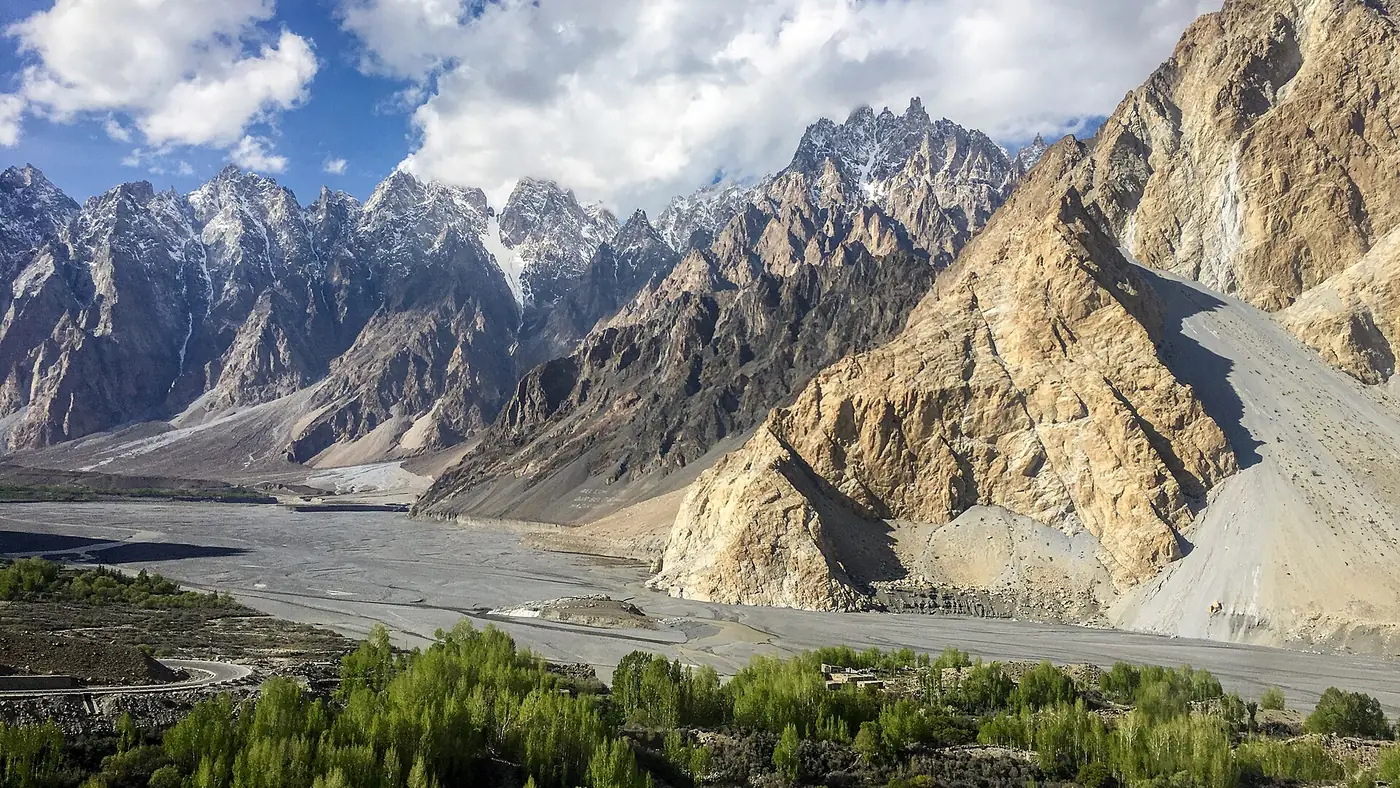
Inside Hunza, the Karakoram Highway is paved and well kept, and the drive from Gilgit to Karimabad takes two to three hours. What makes it risky is what makes any mountain road risky: long drops, rockfall, heavy Chinese trucks heading to and from the border, tired drivers and night driving.
- Drive in daylight. Rockfall and unlit trucks are far harder to deal with after dark.
- Rest after the long drive up before tackling side roads. Tired drivers cause many accidents.
- Use low gear on descents, especially coming back from Khunjerab and down from Duikar.
- Take local jeeps and drivers on the side roads. The road to Duikar is steep and narrow, and the jeep roads to Shimshal and Chipursan are rough and exposed.
For the drive in, our guide to Karakoram Highway road status explains where the road closes most often and who to ask.
Landslides, glacier floods and earthquakes
Hunza's mountains are young and still moving, and the valley has seen what that means. On 4 January 2010 a landslide at Attabad killed 20 people, dammed the Hunza river and displaced about 6,000 people as the lake rose behind it. The highway around it now runs through tunnels opened in 2015.
The hazard most likely to disrupt a summer trip is the glaciers. When they melt fastest, in July and August, streams can flood suddenly and glacial lakes can burst. The Shishper glacier above Hassanabad, just below Aliabad, has flooded repeatedly since 2019, and in May 2022 it swept away the highway bridge, cutting Hunza off from Gilgit until a temporary crossing was built. In Gojal, streams crossing the road beyond Attabad can bury it in debris after heavy rain.
Most of the time this means a few hours' delay. To stay on the right side of it:
- Keep a spare day, ideally at the end of the trip, so a closed road doesn't mean a missed flight.
- Drive early, before the afternoon melt raises the streams.
- Never stop on the fan of a side stream or try to drive through flowing water.
- Stay off riverbanks and gravel bars, especially with children.
Earthquakes happen here too. On 19 January 2026 a magnitude 5.6 earthquake struck upper Hunza, killing two people and destroying around 300 homes, mostly in the Chipursan valley, which was still rebuilding in September 2026.
Altitude
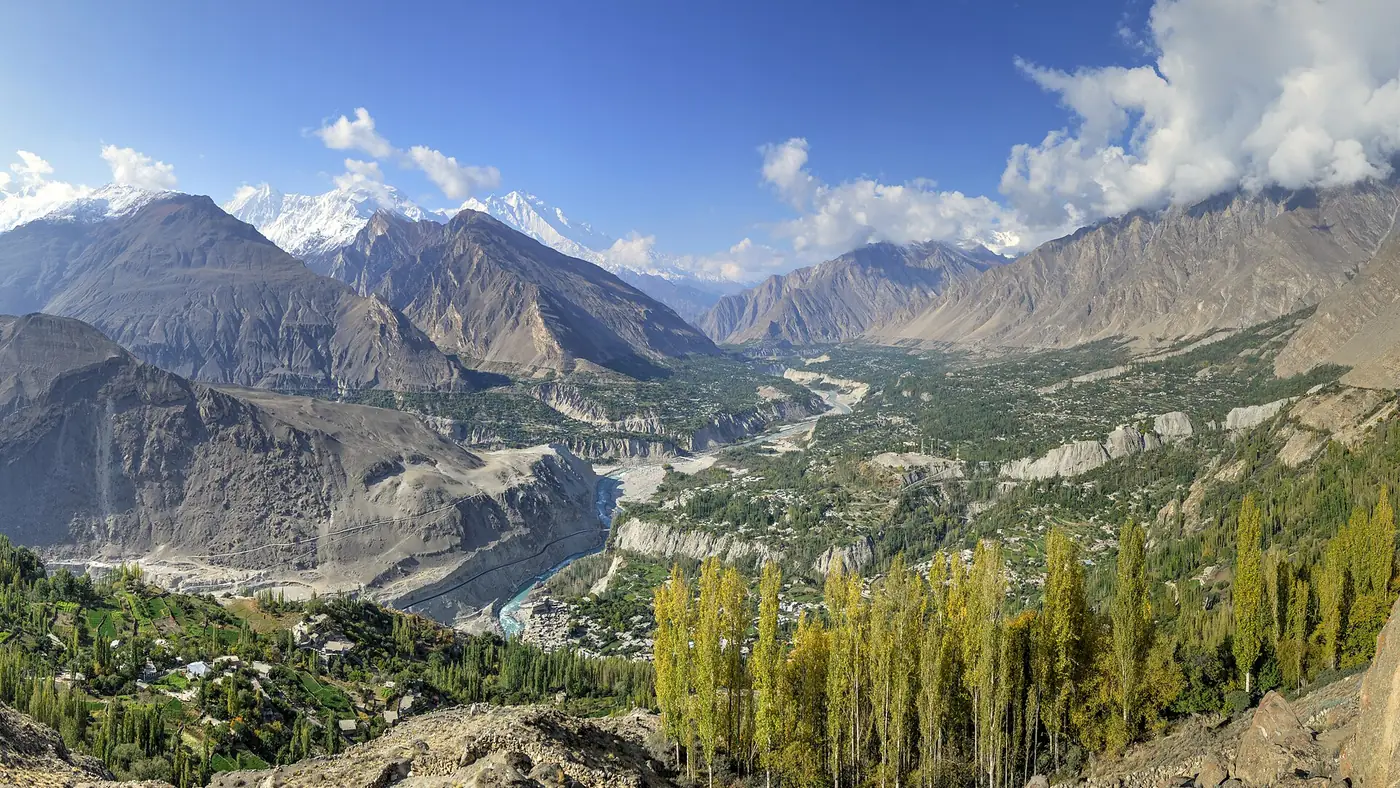
The Hunza valley is not high enough to worry most people. Aliabad sits at about 2,200 metres and Karimabad at about 2,500, which most visitors notice only on stairs and steep lanes on the first day.
The day trip to the border is different. The Khunjerab Pass is at 4,693 metres, and you drive up more than 2,000 metres in a few hours. Keep the visit at the top short, move slowly, and go straight down if anyone develops a bad headache, vomiting or confusion. Anyone with a heart or lung condition should ask a doctor first. Our Khunjerab Pass guide explains how to plan the day safely.
Is Hunza safe in winter?
Yes, if you prepare for it. From December to February the highway is often icy on shaded bends, and snow can close it for a day or more. Drive with chains or winter tyres, or with a local driver used to ice, and don't set off late in the day.
The frozen Attabad Lake draws winter visitors, but lake ice is never uniformly safe; our guide to Attabad Lake in winter covers how to judge it. Ask hotels about heating and backup power before booking.
How local people see visitors
Visitors are genuinely welcome in Hunza, where tourism supports many families. The welcome comes with expectations, and people are increasingly open about what heavy tourism costs them: litter, loud music late at night, reckless driving through villages and concrete hotels on fragile slopes.
A few habits keep you on the right side of it:
- Dress modestly, as you would anywhere in Pakistan outside the big cities.
- Ask before photographing people, and don't photograph women without permission.
- Keep the noise down in villages and at night.
- Take your rubbish with you. Bins are few, and what is left stays.
- Respect the jamat khanas, the Ismaili prayer halls, and don't wander in uninvited.
If something goes wrong
- Tourist Police: dial 1422 from inside Gilgit-Baltistan.
- Rescue 1122 operates in the region for accidents and emergencies.
- Hospitals: for anything serious, expect to be taken down to Gilgit, two to three hours from Karimabad, where the larger hospitals include the Aga Khan Medical Centre.
- Signal is good in central Hunza but patchy in the side valleys and above Sost. Tell someone your plans before heading to Khunjerab, Shimshal or Chipursan.
Carry a first-aid kit, your regular medication and enough cash for a few days, as card machines stop working when the network does.
Who should think twice
For most visitors the answer is simple: go, and plan around the roads and the weather rather than crime. Think harder if your trip is in July or August with no spare days, if you would be driving through Kohistan late in the day, or if the news that week shows unrest in Gilgit. Then fly in, use the Babusar road in season, or move your dates.
Overseas visitors should read their own government's advice, as it affects travel insurance. The UK's Pakistan travel advice advises against the KKH between Mansehra and Chilas and against all travel within 10 miles of the Afghan border, which takes in parts of Chipursan in the far north-west of Hunza.
Our Gilgit and Hunza page covers how to reach the valley.
Frequently asked questions
Is Hunza safe for tourists in 2026?
Yes. Hunza is calm and crime against visitors is rare. The main risks are road accidents, summer floods and landslides, and altitude on the Khunjerab day trip, so drive in daylight and keep a spare day.
Is Hunza safe for families?
Yes. Keep children away from riverbanks and cliff edges, and keep the visit to Khunjerab short.
Is Hunza safe for a solo female traveller?
Generally yes. Women are visible in public life in Hunza and women travelling alone attract little attention. Arrive in daylight and stay in family-run guesthouses or established hotels.
Is the road to Hunza safe?
Inside Hunza the highway is paved and well kept, but expect rockfall and floods in summer and ice in winter. The stretch through Kohistan carries security warnings, so many travellers use the Babusar road in season or fly.
Is Hunza safe for foreigners?
Many foreign visitors travel in Hunza without trouble. Check your government's advice, which may warn against the KKH through Kohistan and against areas near the Afghan border, and make sure your insurance covers your route.
What is the emergency number in Hunza?
Dial 1422 for the Tourist Police from inside Gilgit-Baltistan, or 1122 for Rescue. The larger hospitals are in Gilgit, two to three hours away.