
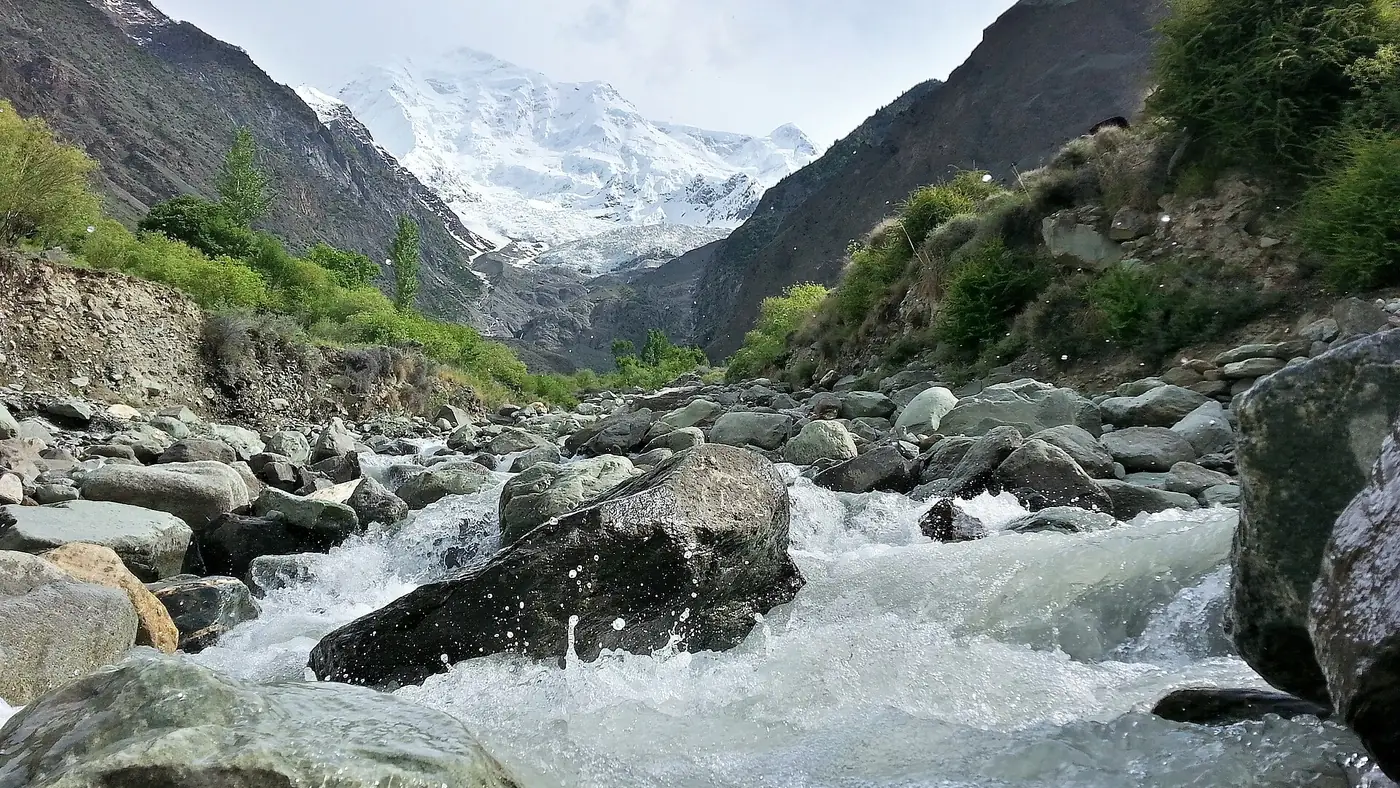
Solo female travel in Gilgit-Baltistan is more manageable than many women expect. Hunza especially is one of the easiest places in Pakistan to travel alone as a woman, because women there work, run businesses and move about freely. The harder parts are practical rather than personal: long road journeys, arriving somewhere after dark, and a few conservative districts where a woman on her own stands out.
This guide is for Pakistani women, and overseas Pakistanis, planning a first trip north alone: where you will feel most comfortable, how to get there and around, where to stay, and the habits that keep a solo trip simple.
| At a glance | |
|---|---|
| Easiest area | Hunza and Gojal: Karimabad, Altit, Gulmit, Passu |
| More conservative | Gilgit bazaar, Skardu town, and above all Chilas and Diamer |
| Best way up | By air to Gilgit or Skardu, with a spare day for cancellations |
| By road | Coach from Rawalpindi, a long day or a night; ask for a seat beside another woman |
| Getting around | A car and driver arranged through your hotel |
| Tourist police | Dial 1422 inside Gilgit-Baltistan |
| Dates to avoid | 9 and 10 Muharram, when roads close and mobile service is often cut |
Is Gilgit-Baltistan safe for a woman travelling alone?
For most women, yes. Street crime in the valleys is low, and the region's hospitality to guests is real. Women travelling alone report being looked after rather than bothered, particularly in Hunza, where it is normal to see women running cafés and shops.
What you will get, especially outside Hunza, is curiosity. People will ask where your husband or brother is and whether your family knows. It is almost always well meant, and a short answer ("my family knows exactly where I am") ends the conversation.
The risks that actually hurt travellers up north are the same for everyone: road accidents, landslides, rivers and altitude. Our guide to whether it is safe to travel to the Northern Areas goes through them region by region. On top of those, a woman alone should think about two things men rarely consider: where she will be at nightfall, and who knows her plans.
Where you will feel most at ease
Gilgit-Baltistan is not one society, and the difference between a Hunza village and a bazaar in Chilas is large.
- Hunza and Gojal. The easiest part of the region. The valley is mainly Ismaili, literacy is high, and women are visible everywhere: in the fields, behind shop counters and in cafés. Karimabad and Altit have women-run businesses, including the carpentry workshops and cafés that grew out of Aga Khan-supported enterprises. Gulmit and Passu are quieter and just as relaxed.
- Nagar. Across the river from Hunza, mainly Shia and more reserved; fine for day trips.
- Gilgit town. A busy trading town with a male-dominated bazaar. Fine in daylight; most women treat it as a place to change transport.
- Skardu and Baltistan. Calm and welcoming, but more conservative than Hunza, and you will see fewer women in the bazaar. Dress more modestly here than you might in Karimabad.
- Chilas and Diamer. The most conservative part of the region, where women are rarely seen in public. You will pass through on the Karakoram Highway; do it in daylight and don't plan to explore alone.
Getting there: fly or take the coach?
Flying is the simpler choice for a solo trip. Flights from Islamabad take about an hour and land you with the whole day to settle in. Skardu has jets from PIA, Airblue and AirSial, including direct flights from Lahore and Karachi, while Gilgit has PIA turboprops from Islamabad only. Both are cancelled whenever the weather closes in, so keep a spare day and don't book a non-refundable onward trip on the same day. Our guide to flights to Gilgit and Skardu covers the routes and how to book.
By road, NATCO, the Gilgit-Baltistan government transport company, and several private companies run coaches from Rawalpindi to Gilgit, Hunza and Skardu. The journey takes most of a day or a night. A few things make it easier:
- When you book, ask for a seat beside another woman or near the front.
- Choose a service that arrives in daylight, or have someone meet you at the stop.
- Keep your phone charged, your CNIC and cash on you, and a warm layer to hand for the night-time stretches.
Whichever way you travel, avoid the 9th and 10th of Muharram. In 2025 the Gilgit-Baltistan tourism department advised visitors not to travel on those days, as main roads were closed for processions and mobile networks suspended in many areas. In 2027 they fall in mid-June.
Getting around once you arrive
Public transport inside the region is mostly shared vans between towns: crowded, with no fixed schedule, and not where you want to be with luggage late in the day.
For most solo women the best answer is a car and driver arranged through your hotel or guesthouse. The hotel knows the driver, the driver knows the hotel, and that accountability is worth more than any discount. Settle the price for the day before you set off, and send the driver's name and the car's number plate to someone at home.
For Fairy Meadows, Deosai and other jeep tracks you will be in a local jeep with a driver, often shared with other visitors. That is normal and usually sociable. Ask your hotel to find you a place in a family's jeep if you would rather not share with a group of men.
We would not recommend hitchhiking. The roads are long, signal is patchy, and it takes away what keeps a solo trip safe: someone knowing exactly where you are.
Where to stay
Family-run guesthouses and small hotels suit solo women best: there is always someone around, and the owners notice who comes and goes. Our guide to where to stay in Hunza explains the differences between the villages.
A few habits help:
- Book the first night before you arrive, especially if you are landing late or coming off a coach.
- Expect to show your CNIC at check-in; hotels record guest details. Overseas visitors show their passport.
- Ask for a room inside the main building rather than a detached cottage at the far end of the garden.
- Read reviews from other women about how a place treats solo guests.
If you are considering a backpacker hostel, ask directly whether it has a women-only dorm or private rooms before you book.
What to wear and how to handle attention
Loose shalwar kameez with a dupatta is right almost everywhere in Gilgit-Baltistan. Hunza is the most relaxed; in Skardu and Chilas, cover more. Keep a shawl or a jacket with you, which is useful for the cold anyway.
Staring happens, and it is usually just that. If someone goes further, speak up clearly and in public; shopkeepers and other families nearby will usually back you up. Report anything serious to the police.
Ask before photographing local women, and say no firmly to a stranger's selfie request if you want to.
Everyday safety habits
- Arrive before dark. This matters more than anything else on the list. The Gilgit-Baltistan tourism department also advises against travelling after dark.
- Share your plans. Send a daily message with where you are sleeping and where you are going next.
- Expect to lose signal. Coverage is good in the towns and patchy to absent in the valleys, on Deosai and at Fairy Meadows. Agree a time to check in before you go out of range.
- Carry cash. Cards work in few places and ATMs are unreliable; draw what you need before you leave Islamabad.
- Save the tourist police number. Inside Gilgit-Baltistan, 1422 connects you to the Gilgit-Baltistan tourist police. The general police emergency number, 15, also works.
- Be honest with yourself about altitude. Deosai and the Khunjerab Pass are both above 4,000 metres. If you start to feel unwell somewhere high on your own, go down rather than waiting to see.
Our travel guide has more on money, signal, packing and etiquette across the north.
Alone, with a women's group, or with a guide?
Go independently if you have travelled alone in Pakistan before, are comfortable negotiating with drivers and hotels, and will spend most of your time in Hunza. It is the cheapest option.
Join a women-only group if this is your first trip north and you want company without having to organise it. Several Pakistani operators run women-only departures in summer. Check that the operator is licensed, that the itinerary doesn't involve night driving, and what the room-sharing arrangement is.
Travel with a guide and your own car if you want Skardu, Deosai or the long drives without the logistics, or if your family will simply worry less. Our set trips to Gilgit, Hunza and Khunjerab and to Skardu and Deosai include a driver and a guide for the whole route, and if you would prefer a female guide, tell us when you plan the trip so we can arrange it.
Frequently asked questions
Is Hunza safe for a girl travelling alone?
Yes. Hunza is one of the easiest places in Pakistan for a woman on her own, with low crime and women visible in every part of daily life. Arrive in daylight and let someone know your plans.
Can a woman stay alone in a hotel in Gilgit-Baltistan?
Yes. Hotels and guesthouses take solo women, and you show your CNIC, or passport if you are an overseas visitor, like any other guest.
Is it safe to take the bus to Gilgit or Skardu as a woman?
Many women do. Book with an established company, ask for a seat beside another woman, and choose a service that arrives in daylight. Flying is quicker and easier if your budget allows.
Who do I call for help in Gilgit-Baltistan?
Dial 1422 for the tourist police inside Gilgit-Baltistan, or 15 for the police. Your hotel is often the quickest source of practical help.
.jpg)