Hunza vs Swat is a choice between the far north and the near north. Swat is a morning's drive from Islamabad on the motorway, green and settled, with Buddhist ruins in the lower valley, forest and snow higher up, and something open in every month. Hunza is two days up the Karakoram Highway, or an hour's flight to Gilgit, but it puts you among 7,000-metre peaks, glaciers and centuries-old forts. For a long weekend or a winter trip, Swat. For a week or more with the high mountains as the point, Hunza.
The two valleys differ in almost everything: distance, landscape, people and language, what a trip costs and when to go. This guide compares them one by one, and is frank about the security situation in Swat in 2026.
| At a glance | Hunza | Swat |
|---|---|---|
| Province | Gilgit-Baltistan | Khyber Pakhtunkhwa |
| Altitude | Karimabad about 2,500 m | Mingora about 980 m; Kalam about 2,000 m |
| From Islamabad | Two days by road, or fly to Gilgit | Mingora 4 to 5 hours; Kalam 7 to 9 |
| Days for a good trip | 7 or more by road | 2 to 5 |
| People and languages | Burusho and Wakhi; Burushaski, Wakhi, Shina | Pashtun; Pashto |
| Headline sights | Baltit and Altit forts, Attabad Lake, Passu, Khunjerab | Swat Museum, Buddhist sites, Malam Jabba, Kalam and Mahodand |
| Best months | Mid-April to early June; September to early November | March to May and September to November; June to September for Kalam |
| Winter | Open, cold and quiet | Snow and skiing at Malam Jabba |
| Main concern | The long road in | Security in 2026; river floods |
The short answer
Swat is the better short trip. You can leave Islamabad after breakfast and be in Mingora for lunch, spend a day at the Buddhist sites and the museum, a day at Malam Jabba, and go up to Kalam if you have two more. It is the easier choice for a long weekend, for families who don't want long days in the car, and for anyone travelling in winter who wants snow.
Hunza is the bigger trip and, for most people, the more memorable one. The drive takes two days each way, but the valley rewards a week: forts and old villages to walk through, Attabad Lake, the Passu Cones, glaciers you can walk up to, and the road to the Chinese border at Khunjerab. If you have eight days or more and want to see the Karakoram, go to Hunza.
Getting there: a morning or two days?
Swat is one of the easiest mountain valleys in Pakistan to reach. From Islamabad you take the M-1 towards Peshawar and the Swat Motorway to Chakdara, then the N-95 up through Mingora. Mingora is about four to five hours away. Above Mingora the road gets slower: Kalam is only about 99 km further, but three to four hours, and the stretch above Bahrain is still badly damaged from the 2022 floods. Almost everyone drives. PIA resumed flights to Saidu Sharif in 2021 after a 17-year gap, starting with two a week, so check whether any are running before planning around one.
Hunza is 650 to 700 km from Islamabad and 14 to 16 hours of driving, so the road trip is two days each way with a night in Chilas. The hardest part is the Kohistan gorge between Besham and Chilas, slow and prone to landslides. Our Islamabad to Hunza road guide goes through it stage by stage. The alternative is PIA's flight to Gilgit, about an hour, then two to three hours up the Karakoram Highway. The small turboprops need clear weather, so keep a spare day.
On a five-day holiday, Swat gives you four days on the ground. Hunza by road gives you one.
Culture: two very different valleys
This is the difference people often don't expect, and it is one of the best reasons to see both in time.
Swat is a Pashtun valley, Pashto-speaking, with a long and layered history. For centuries before Islam it was a centre of Buddhism in the Gandhara world, and the lower valley is full of its remains: the Butkara stupa in Mingora, the great rock-carved Buddha at Jahanabad, and the sculpture in the Swat Museum in Saidu Sharif. It was later a princely state under its own Wali until it was merged into Pakistan in 1969, and the white marble summer palace built for the first Wali at Marghazar in 1940 is now a hotel. Days in lower Swat have a lot of history in them.
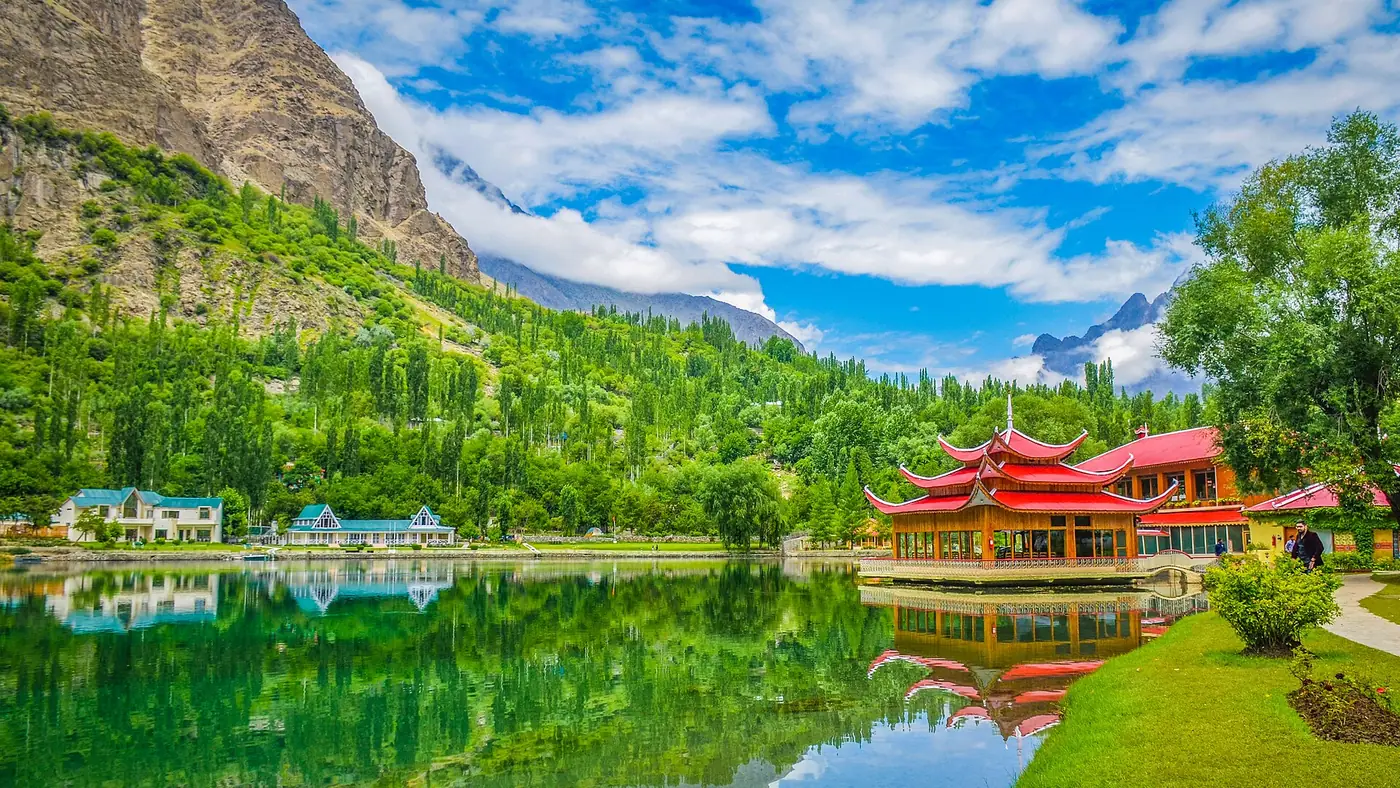
Hunza was a princely state too, ruled by its Mirs until 1974, the last in Pakistan to be abolished. Baltit Fort above Karimabad was their palace, and the older Altit Fort stands on a cliff above the river a few kilometres away; both have been restored. Most people in Hunza are Ismaili Muslims. In central Hunza they speak Burushaski, a language unrelated to any other; in Gojal, north of Attabad Lake, they are Wakhi, with their own language and villages.
If you want archaeology and museums, Swat has more. If you want living village culture set among the mountains, Hunza is the one.
Scenery
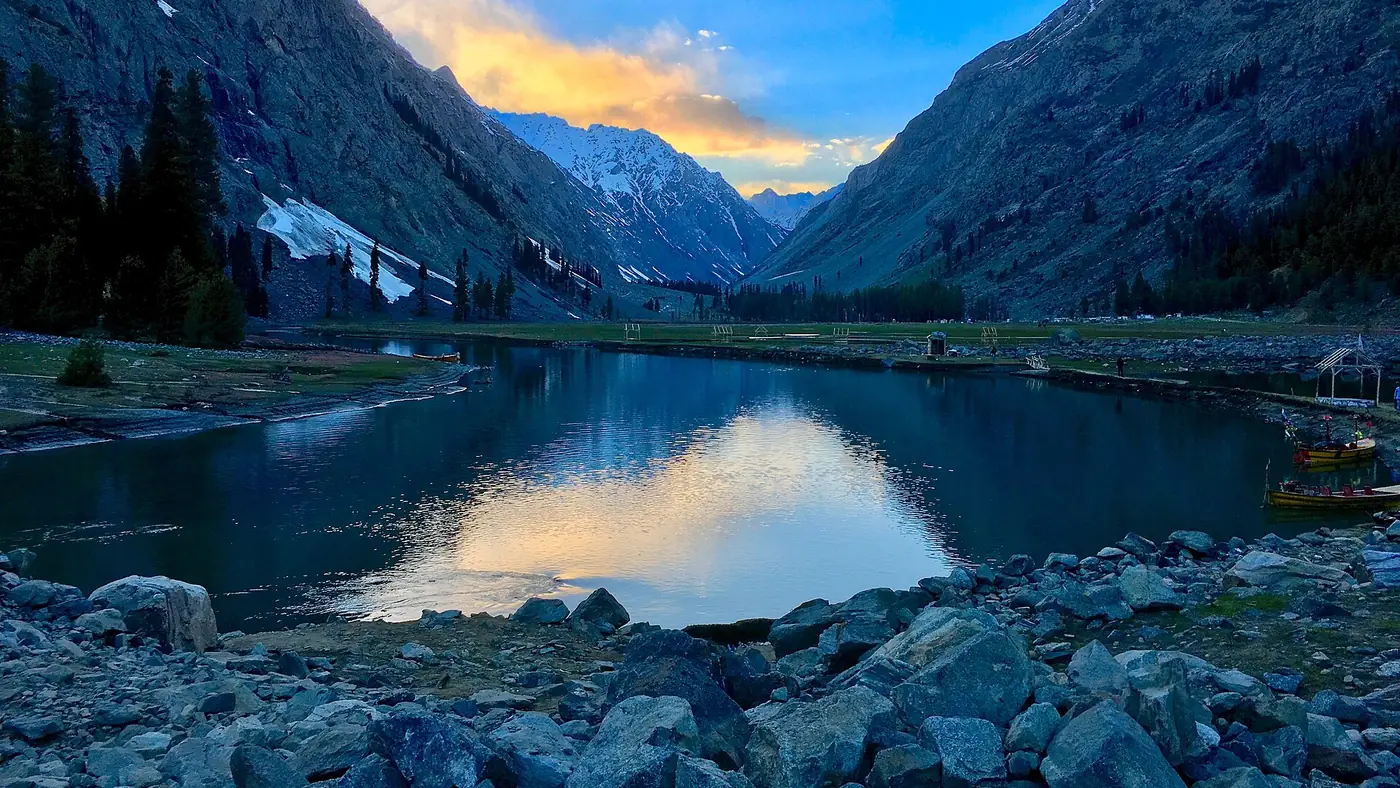
Swat changes as you climb. The lower valley around Mingora is wide, farmed and warm, with orchards and rice fields. From Madyan and Bahrain it narrows and the river gets louder, and above Kalam the Ushu road runs through deodar forest towards Matiltan and Falak Sar, at 5,918 metres the highest peak in Swat. Mahodand Lake, a rough jeep ride beyond, is the classic high point. It is green, wooded country, and at its best in spring and autumn.
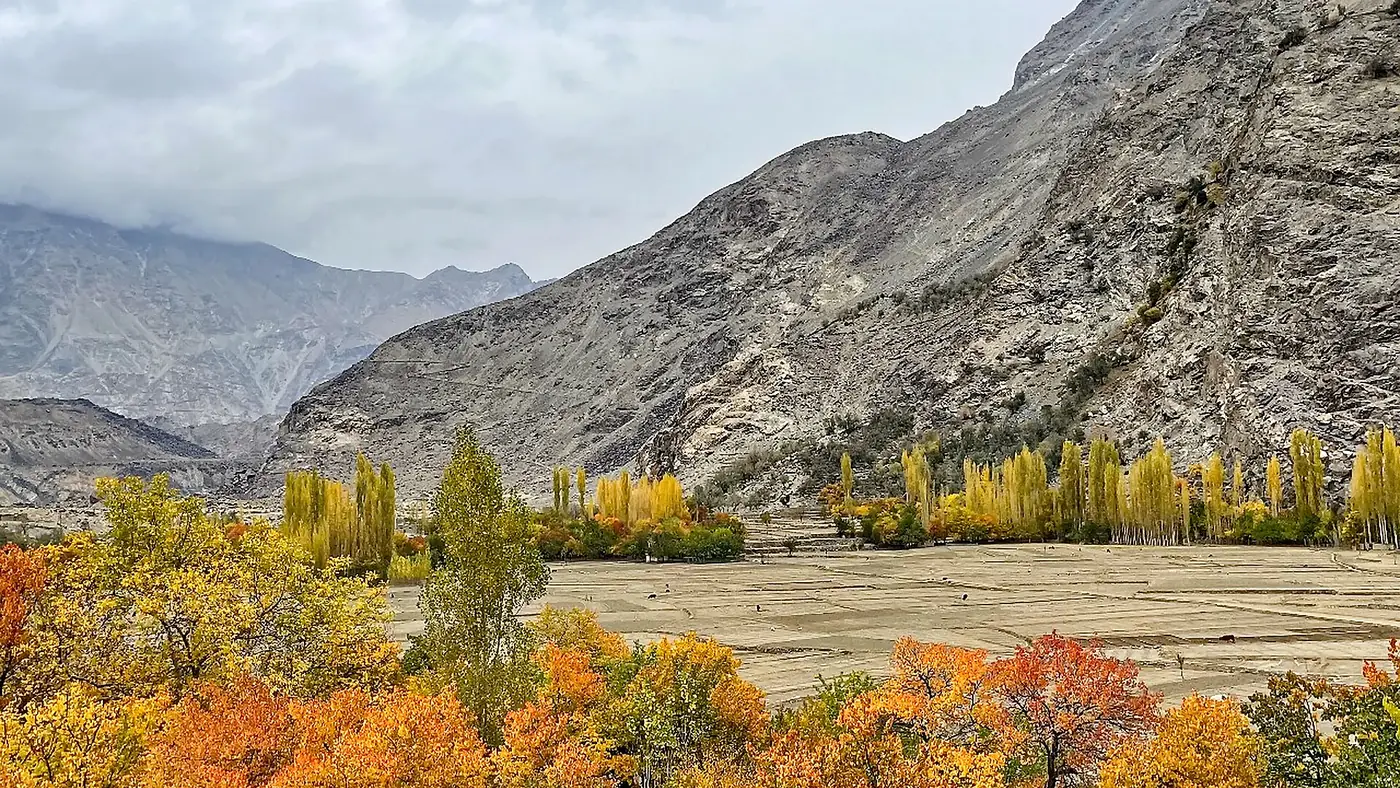
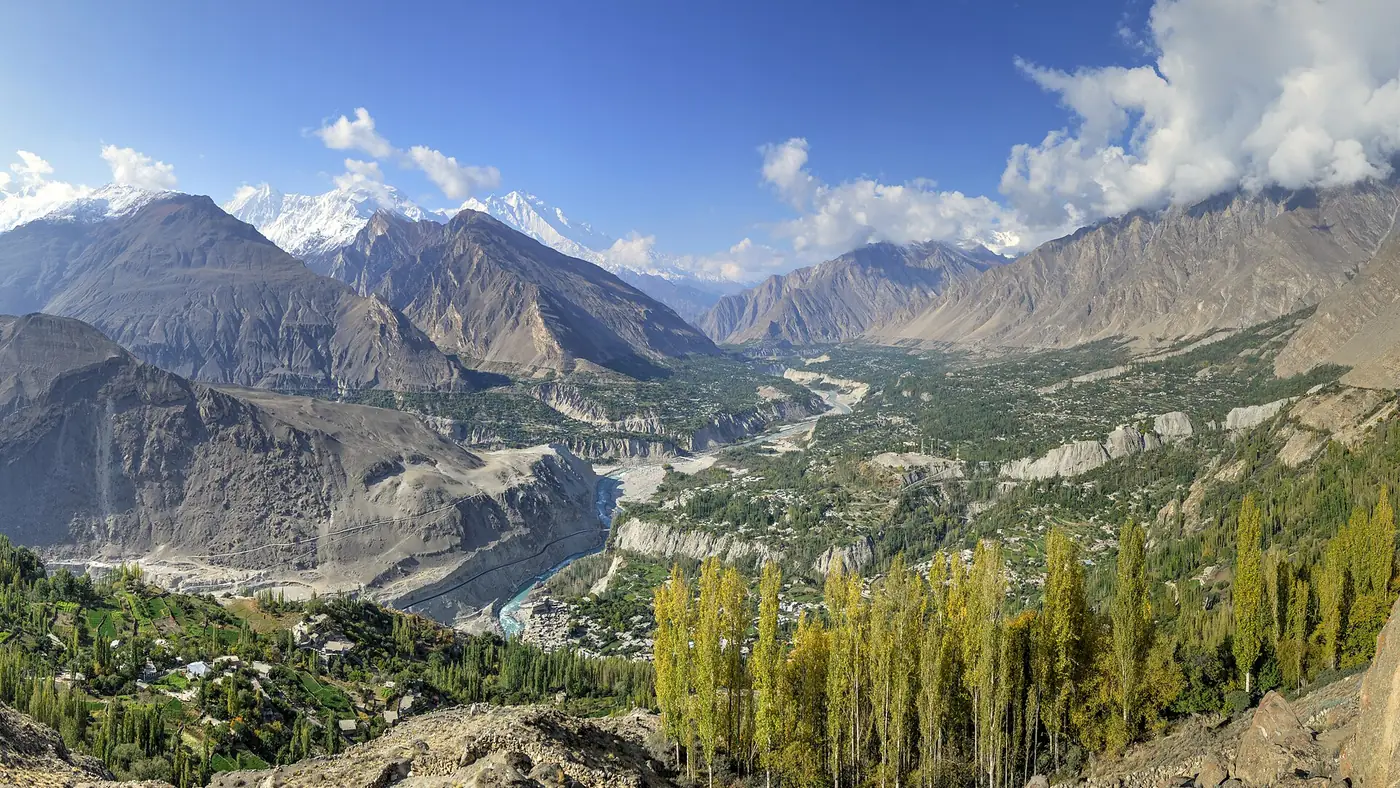
Hunza is bigger and barer. The valley is dry rock and scree with green only where the irrigation channels reach, which makes the orchards and poplars stand out all the more. The mountains are very close and very high: Rakaposhi at 7,788 metres from the highway at Ghulmet, the Ultar peaks above Karimabad, the Passu Cones in Gojal. Attabad Lake, formed by a landslide in 2010, is an unreal turquoise in summer. At the top of the valley the Khunjerab Pass reaches 4,693 metres.
In short: Swat for forest and river, Hunza for rock, ice and scale.
What each trip costs
Swat is almost always the cheaper trip, for one simple reason: it is closer, so you drive less and need fewer nights.
- Fuel. A four or five day trip from Islamabad to Mingora, Malam Jabba and Kalam covers roughly 800 km. At about PKR 390 a litre in September 2026, a sedan doing 12 km a litre uses about PKR 26,000 of petrol, by our rough estimate. A five-day Hunza trip covers about 1,800 km, or PKR 60,000 to 70,000 of petrol for the car.
- Nights on the road. A Hunza road trip usually needs two nights in Chilas, one each way. Swat needs none.
- Rooms and food. Both valleys have everything from simple rooms to good hotels, and in both the rates climb sharply at Eid and on summer weekends. Night for night the difference is small.
- Extras. In Swat, Malam Jabba charges for entry and for the chairlift separately, and Mahodand needs a jeep from Kalam. In Hunza, the forts charge entry, and the Khunjerab day includes a park fee at Dih.
For Hunza, our Hunza trip cost guide puts a five-day road trip at roughly PKR 30,000 to 45,000 per person on a budget in 2026, with four sharing a car. Prices change often, so treat all these figures as a guide.
Best months for each
- December to February: Swat, for snow at Malam Jabba and Kalam, with skiing at Malam Jabba when the snow allows. Hunza is open but very cold, and the high passes are shut.
- March and April: both. Lower Swat is green and the orchards flower; Hunza has its apricot and cherry blossom from late March to mid-April.
- May and June: both, with Hunza especially good before the summer crowds. Mingora is very hot by June, so stay higher in Swat.
- July and August: Hunza, or upper Swat. Both are busy and in the monsoon, and the roads into both suffer landslides and floods.
- September and October: both are at their best. Swat's monsoon is over and Kalam is still open; Hunza's autumn colour arrives through October.
- November: Hunza's last golden weeks in Karimabad; lower Swat is cool, quiet and cheap.
Our guides to the best time to visit Swat and the best time to visit Hunza go into each month in detail.
Safety: what to know in 2026
Swat has been one of the busiest domestic destinations in Pakistan for years, but the security picture worsened in 2026. On 2 August a suicide bomber struck outside the police station at Kabal, across the river from Mingora, as an anti-militancy rally was ending, killing 17 people. The UK government advises its nationals against all travel to Swat. Pakistani tourists still visit in large numbers, but check the news in the week before you go, stay on the main valley road and the well-visited side trips, and drive in daylight.
Swat's other danger is its river. In June 2025 a group of tourists having breakfast on the bank near the Mingora bypass was swept away by a sudden surge, and most of them died. Stay off gravel bars and low banks in any weather.
Hunza itself is one of the calmest places in the country for visitors. The concern is the road to it. The Karakoram Highway through Kohistan and Diamer closes after landslides, especially in July and August, and in December 2023 a passenger bus was attacked near Chilas. Flying to Gilgit avoids that stretch.
Which should you pick?
- A long weekend from Islamabad or Peshawar: Swat.
- A week or more: Hunza.
- Winter snow: Swat, at Malam Jabba or Kalam.
- Blossom in April or autumn colour in late October: Hunza, though lower Swat is lovely in spring too.
- History and archaeology: Swat, for the Buddhist sites and the museum.
- High mountains and glaciers: Hunza.
- Worried about security: Hunza, ideally flying in to Gilgit.
- Tight budget: Swat.
If you choose Swat, our Swat Valley page covers the valley from Mingora to Kalam. If you choose Hunza, our nine-day Gilgit, Hunza and Khunjerab tour takes the whole Karakoram Highway from Gilgit to the border, starting from PKR 90,000 per person.
Frequently asked questions
Which is better, Hunza or Swat?
Hunza is the better trip for high mountains, glaciers and a week-long holiday. Swat is better for short trips, winter snow, Buddhist history and families who want to keep drives short.
How far is Swat from Hunza?
There is no direct road. You have to drive back down towards Islamabad or through Kohistan on the Karakoram Highway, which makes it two long days. Treat them as separate trips.
Is Swat cheaper than Hunza?
Usually, yes. Swat is closer, so you spend less on fuel and need no nights on the road. Hotel and food prices are similar night for night.
Can I visit Swat in winter?
Yes. Lower Swat is open and cool all winter, and Malam Jabba and Kalam get snow from about December to February. Heavy falls can close the road above Bahrain for a day or more.
Is Swat safe for tourists in 2026?
Pakistani tourists still visit in large numbers, but there was a deadly bombing at Kabal in August 2026 and some foreign governments advise against all travel to Swat. Check current news and advice before you go.
How many days do I need for Hunza?
Seven days by road from Islamabad is the minimum for a relaxed trip, since four of them are spent driving. Flying to Gilgit lets you see the main sights in four or five days, if the weather lets the flights run.