The best time to visit Hunza for most people is mid-April to early June or September to early November. Those two windows give you blossom or autumn colour, clear views, open roads and fewer crowds than high summer. If you want Khunjerab and every side valley open, go from June to September. Winter, December to February, is cold, quiet and cheap, but it suits a particular kind of trip.
There is no bad month to see the valley itself, because the Karakoram Highway into Hunza is kept open all year. What changes is what is in bloom, which passes are open, how full the hotels are, and how likely the road south of Gilgit is to close. This guide goes through the four seasons on exactly those points.
| At a glance | |
|---|---|
| Blossom | Late March to mid-April in Karimabad; later in Gojal |
| Khunjerab Pass open | Roughly May to November |
| Babusar Pass open | Usually late May or June to around November |
| Busiest | June to August, the blossom weeks and long weekends |
| Highest landslide risk | July and August, on the KKH south of Gilgit |
| Autumn colour | Mid-October in Gojal to early November in Karimabad |
| Cheapest and quietest | December to February |
Hunza month by month
| Month | What you see | Crowds | Roads and passes |
|---|---|---|---|
| March | Bare trees, first blossom late in the month | Very quiet | KKH open; Babusar closed; Khunjerab often snowbound |
| April | Apricot and cherry blossom, snow on the peaks | Busy in the blossom weeks | KKH open; Babusar closed; Khunjerab uncertain |
| May | Green terraces, fresh snow high up | Moderate | Khunjerab reliably open from about now; Babusar late May or June |
| June | Long days, first cherries | Busy from mid-month | Everything open |
| July | Warm, green, hazier views | Busiest | Everything open; monsoon closures south of Gilgit |
| August | As July, with fruit harvest | Busy | As July |
| September | Clear air, harvest, settled weather | Moderate | Everything open |
| October | Poplars turning gold, crisp nights | Busy at weekends late in the month | Everything open; high passes can close for a day or two |
| November | Last colour early in the month, then bare | Quiet | Khunjerab and Babusar closing |
| December to February | Snow, frozen ponds and lakes | Very quiet | KKH open but weather-dependent |
Spring: the blossom season
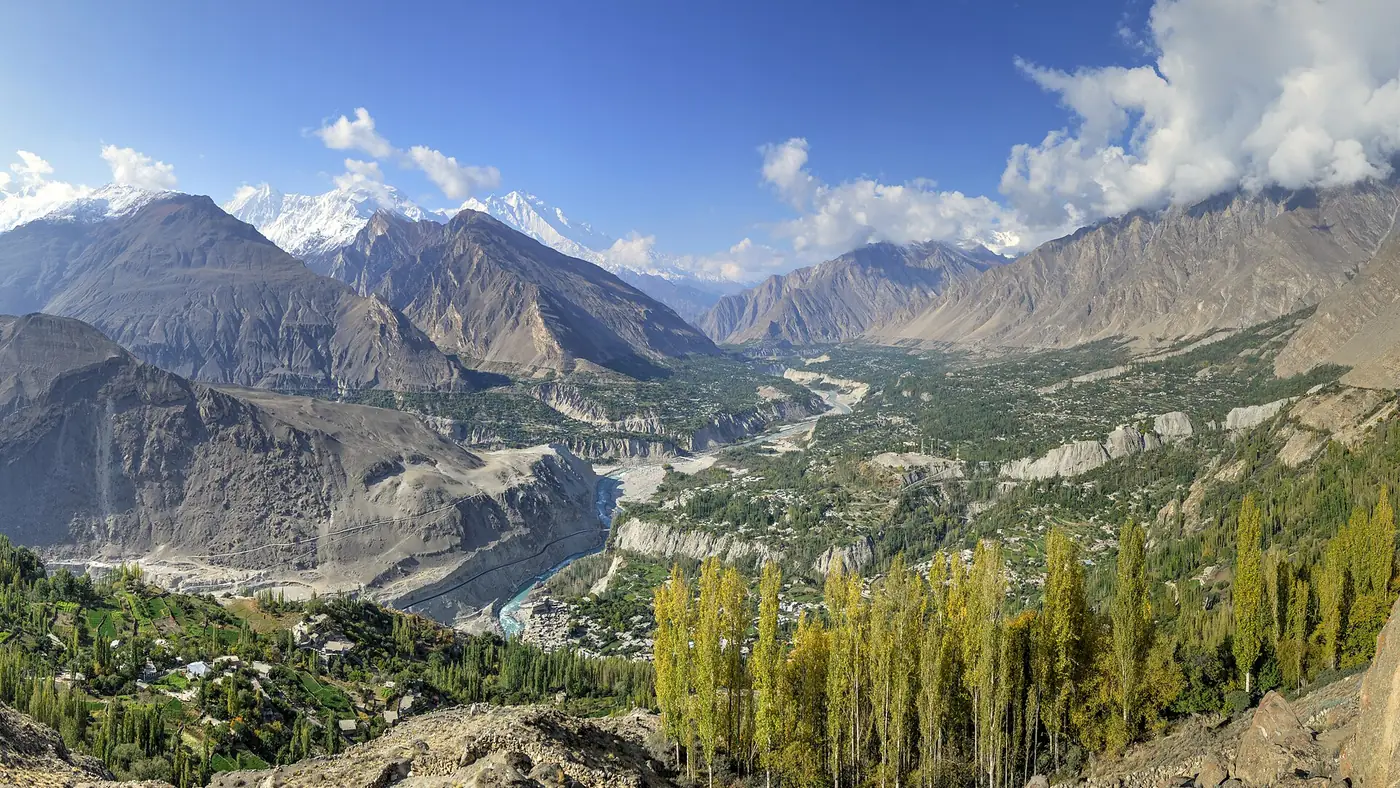
Blossom is what most people picture when they think of Hunza. The valley floor turns white and pink with apricot, cherry, almond and pear, against mountains still covered in snow. It moves up the valley with the season: lower Hunza first, Karimabad and Altit from late March into early April, and Gulmit and Passu one to three weeks later.
Views: the best of the year for photographs, with blossom below and snow above. The air can be hazy some days.
Crowds: the blossom weeks are now popular, particularly the first half of April, and hotels in Karimabad fill at weekends. The weeks either side are quiet.
Roads: the KKH is open, but the road up to Khunjerab is often snowbound until around early May and Babusar stays shut until late May or June, so the drive north is on the KKH through Chilas.
Prices: rooms cost more during the peak blossom weeks and book up early.
The catch is timing. The blossom lasts only a couple of weeks in any one place and can be shortened by a cold snap or a windy spell. If your dates are fixed, aim for the first ten days of April in Karimabad, and be ready to drive up to Gulmit and Passu if the lower valley is past its best.
Summer: everything open
From June to September every road in Hunza is open, including Khunjerab, the Shimshal road and the trekking routes. The days are long, the terraces are green, and the cherries and then the apricots ripen on the trees.
Views: green and full, but summer brings haze, and clear views of Rakaposhi are less reliable than in autumn.
Crowds: June to August is the busiest time of year, with school holidays and long weekends bringing large numbers of families from the plains. Attabad Lake is crowded at midday, and the road through Karimabad bazaar can jam in the evening.
Roads: this is when you can do everything, including the Babusar route and the Khunjerab Pass. It is also monsoon season. Hunza itself gets little rain, but July and August bring the highest risk of landslides and flash floods on the KKH south of Gilgit and on the Babusar side. Keep a spare day.
Prices: at their highest in July and August, particularly for hotels with a view.
June and September are the sweet spots of summer: everything is open, and the crowds and the monsoon risk are both lower than in July and August.
Autumn: colour and clear air
From late September the air clears, the harvest comes in, and in October the poplars and apricot trees turn gold and orange. It reaches Gulmit and Passu first, around mid-October, and central Hunza in the last week of October and the first days of November.
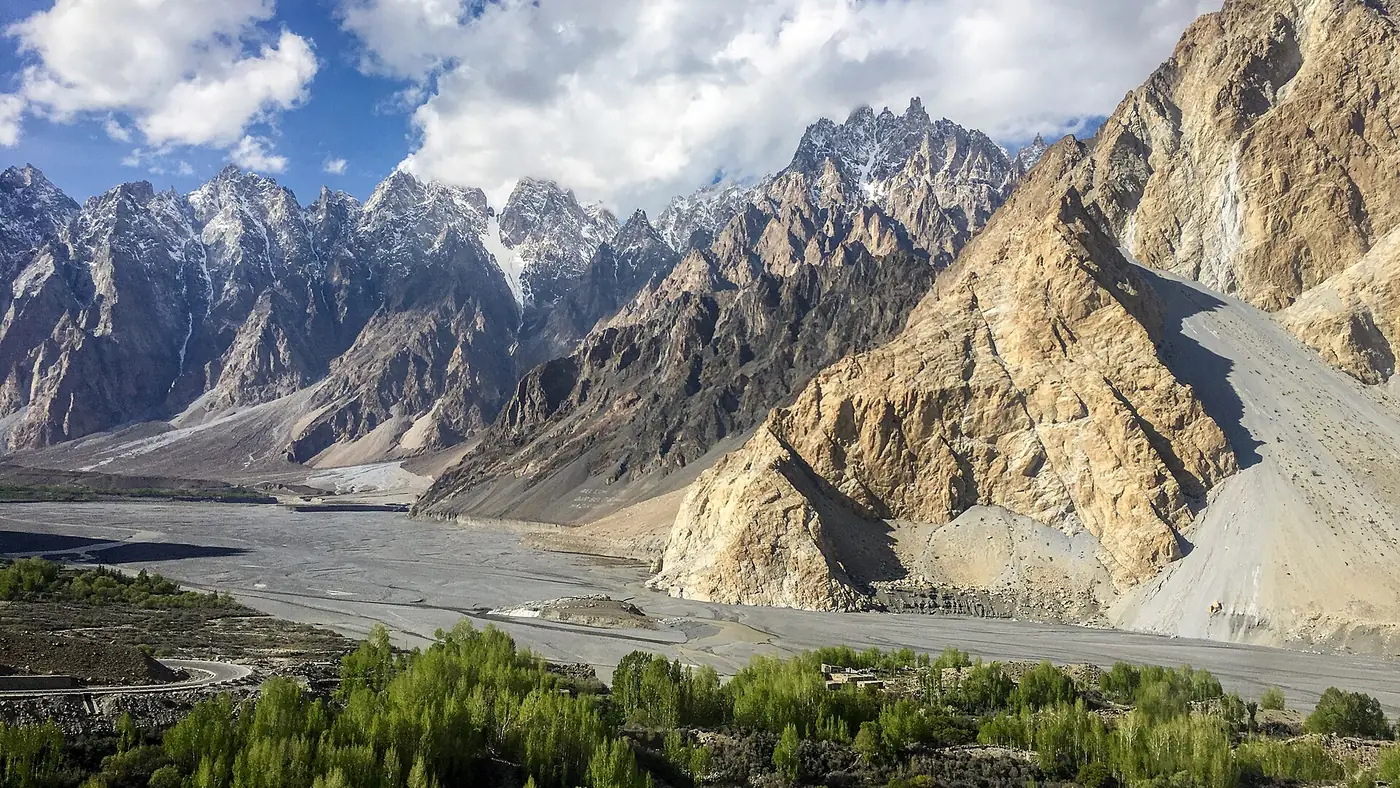
Views: the clearest of the year. Rakaposhi, Ultar and the Passu Cones stand out sharp against a deep blue sky, and the light is soft all day.
Crowds: September is quiet. The late-October colour weekends have become busy, though nothing like July.
Roads: everything is open into October, with the monsoon over. Khunjerab stays open to visitors into November in most years, but snow can close it for a day or two at a time.
Prices: moderate in September, rising for the peak colour weekends, then dropping in November as the visitors thin out.
Autumn is the season we would choose for a first visit if blossom is not the point. The weather is settled, the roads are at their most reliable, and the valley looks its best.
Winter: snow and silence
From December to February Hunza is cold, quiet and very beautiful under snow. The ponds and parts of the lakes freeze, and local clubs play ice hockey and skate when the ice allows.
Views: sharp and clear on good days, with snow down to the valley floor after storms.
Crowds: almost none, apart from a few weekends around winter festivals.
Roads: the KKH stays open but can close for hours after rockfall or heavy snow, Babusar is shut, Khunjerab is often snowbound and not something to plan around, and flights to Gilgit are cancelled more often. Power cuts of most of the day are common, so heating and backup power at your hotel matter.
Prices: the lowest of the year, where hotels are open at all.
Our guide to Hunza in winter covers what is open, how to get there and what to pack.
How prices and bookings change through the year
Hunza hotels don't publish seasonal rates in any consistent way, but the pattern is clear. Rooms cost most, and the better hotels in Karimabad fill first, in four periods: the peak blossom weeks in early April, Eid holidays, July and August, and the late-October colour weekends. In those weeks, book the hotel before you book anything else.
September, May and the first half of June are the best value for a full-season trip: everything is open and rooms are easier to find than in the peak weeks. From November to February prices drop further, but so does the choice, because not every guesthouse stays open through the cold months.
Getting there follows the same pattern. The Gilgit flight is busiest in summer and at Eid, and cancelled for weather most often in winter and early spring. By road, the Babusar route is only an option from about late May, which puts more traffic on the KKH through Chilas in April and in the blossom weeks. Our Islamabad to Hunza road guide covers both routes.
Which season suits you?
- First visit, and you want the classic Hunza: late September to late October. Settled weather, clear views, the whole valley open.
- Photography: the first half of April for blossom, or the last week of October for colour.
- Families with children on school holidays: June, or the second half of August, with a spare day for the road. Avoid the busiest weeks of July if you can.
- Khunjerab and the high valleys: June to September.
- Quiet and cheap, and happy with the cold: December to February, with flexible dates.
- Short trip, fixed dates: avoid July and August, when a single landslide south of Gilgit can take a day out of a short holiday.
Attabad Lake changes with the seasons too; our Attabad Lake guide covers its colours through the year. For a wider view of the north, including Skardu and Kashmir, see our guide to when to go. Our Gilgit, Hunza and Khunjerab tour runs in the months when the pass is open.
Frequently asked questions
Which month is best for Hunza?
For most people, October: clear skies, autumn colour, and every road open. April is best for blossom, and June or September if you want Khunjerab with fewer crowds than midsummer.
When is cherry blossom season in Hunza?
Blossom reaches Karimabad and Altit from late March into early April, and Gulmit and Passu in mid to late April. Most of it is apricot blossom, with cherry, almond and pear among it.
Is Hunza open all year?
Yes. The Karakoram Highway into Hunza is kept open year-round, though it can close for hours or days after landslides or heavy snow. The Babusar route is closed in winter, and a winter trip to Khunjerab depends on the snow.
When is the rainy season in Hunza?
Hunza itself is dry for most of the year. The risk comes in July and August, when monsoon rain causes landslides and flash floods on the roads south of Gilgit, including the KKH through Kohistan and the Babusar route.
Is Hunza crowded in summer?
June to August is the busiest time, particularly at Attabad Lake and in Karimabad bazaar in the evenings. Start early and visit the busiest places in the morning.
Is winter a good time to visit Hunza?
It is good for snow, frozen lakes and empty hotels, but it is very cold, power cuts are common and some places are closed. It suits flexible travellers more than a first visit.