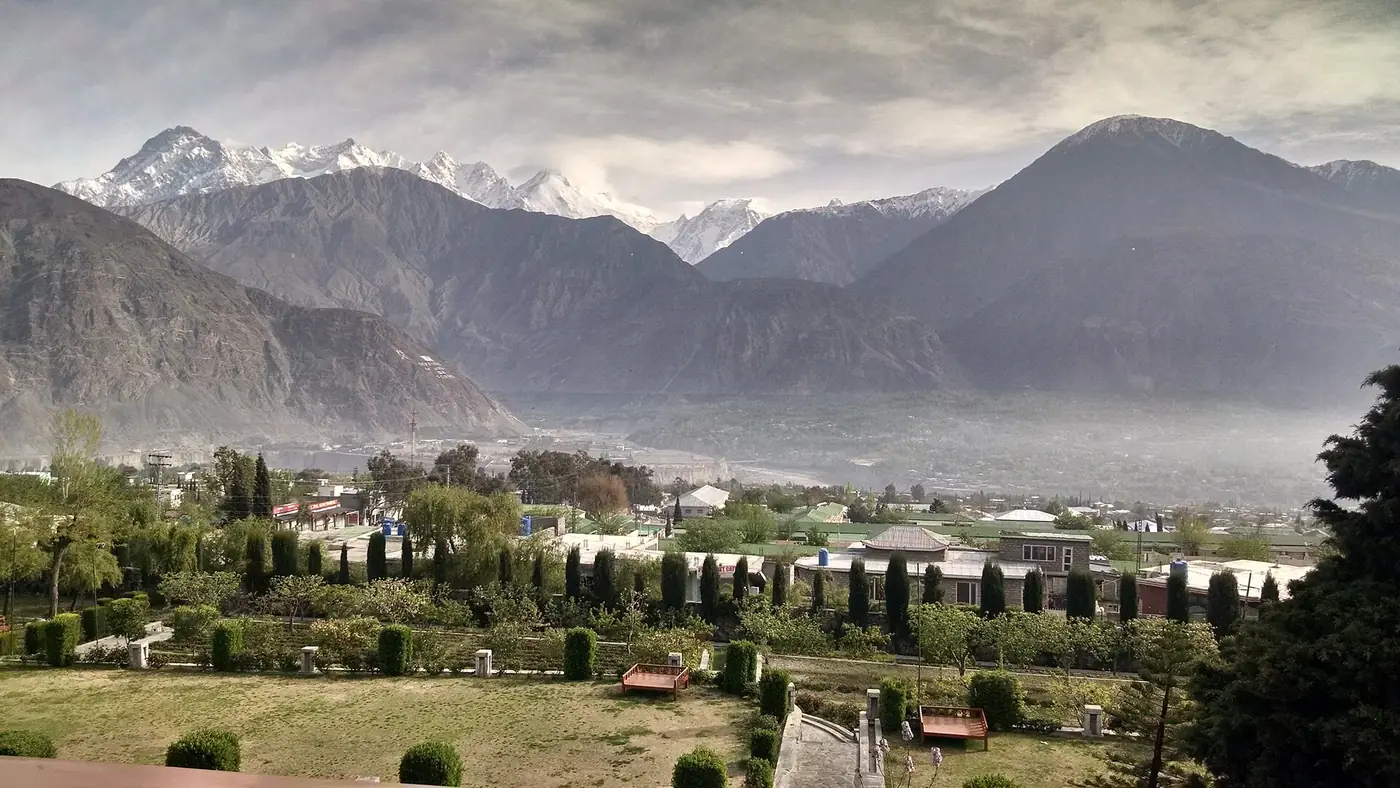
The best day trips from Gilgit are the Naltar lakes and Bagrot Valley, each a full day, and three shorter outings that fit into a morning: the Kargah valley and its Buddha, 10 km west of town; the Hanzal stupa, 16 km west on the Ghizer road; and the junction of three mountain ranges near Jaglot, about an hour south-east. With one spare day, choose Naltar in summer or Bagrot if you want somewhere quiet. With half a day, do Kargah and Hanzal together.
This guide sets out how far each place is, how long it really takes, which vehicle you need, and how to combine them into half-day and full-day plans.
| Day trip | Distance from Gilgit | Drive each way | Length of trip | Vehicle |
|---|---|---|---|---|
| Naltar lakes | About 40 km to Naltar Bala, then 12 to 13 km of jeep track | 2 hours, plus 1 to 1.5 by jeep | Full day | Local jeep for the lakes |
| Bagrot Valley | About 17 km to the valley mouth; 35 to 40 km to the upper villages | 1.5 to 2 hours to the top | Full day | Jeep or 4x4 for the upper valley |
| Kargah Buddha and valley | About 10 km west | A short drive | 1 to 3 hours | Any car or taxi |
| Hanzal stupa | About 16 km west, on the Gilgit–Ghizer road | About half an hour | An hour | Any car |
| Junction of three ranges | About 40 to 45 km south-east | About 1 hour | Half day, with Talechi | Any car |
Naltar lakes: the classic full day
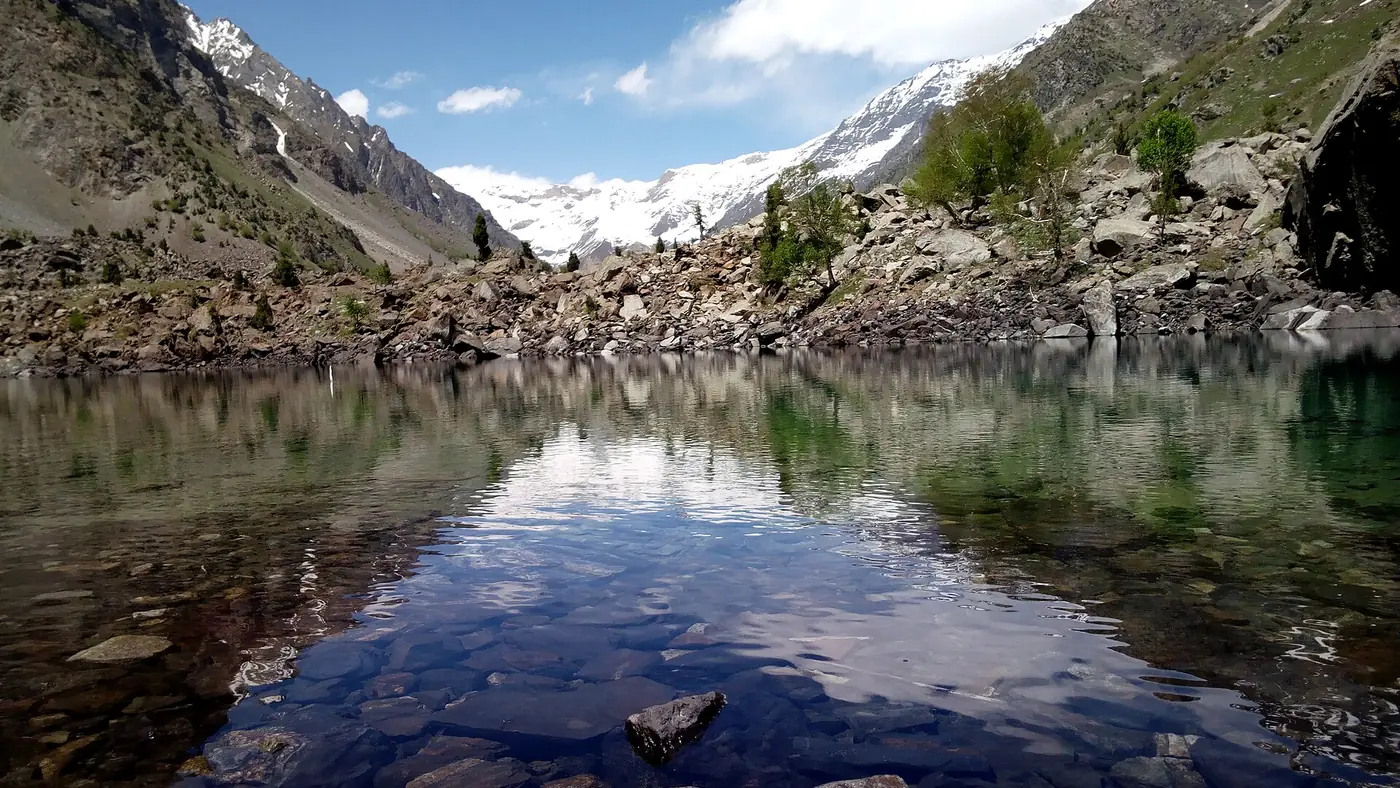
Naltar is the day trip most people have heard of: pine forest, the Air Force ski slopes and a chain of coloured lakes above the village of Naltar Bala. The road leaves the old Hunza road at Nomal, about 25 km from Gilgit, and climbs up the valley to Naltar Bala, about two hours from town. From there a rough jeep track runs 12 to 13 km to Satrangi Lake and the lakes beyond it, another hour to an hour and a half each way.
As a day trip it is long but manageable if you leave by 7 in the morning. The simplest way is to hire a local jeep with its driver in Gilgit or Nomal for the whole day; the other is to drive to Naltar Bala yourself and hire a jeep there just for the lakes. Our Naltar Valley guide covers the road, the lakes and where to stay.
A plan for the day:
- Leave Gilgit at 7. Naltar Bala by about 9.
- Jeep to the lakes, reaching Satrangi by about 10:30.
- Two hours at the lakes, including Blue Lake and Pari Lake a short way beyond.
- Start back by early afternoon. The streams across the track rise as the day warms.
- Back in Gilgit by 5 or 6.
Go between late May and October. Take the summer floods seriously: in August 2025 floods swept away part of the Naltar road and trapped visitors, and in August 2026 a cloudburst in the upper valley blocked the road again. In July and August, check conditions the evening before.
Bagrot Valley: the quiet full day
Bagrot climbs east from the Gilgit river towards Diran and the eastern side of Rakaposhi. The drive goes through Danyor and along the highway to Oshikhandass, then up a road that is metalled for much of the way and a rough jeep road near the top. The upper villages are 35 to 40 km from Gilgit, one and a half to two hours by jeep.
There are no lakes and almost no facilities, but there are working villages, orchards, the Hinarchi glacier and views of two 7,000-metre peaks, with hardly any other visitors. Take a packed lunch. Our Bagrot Valley guide covers the road, the villages and a walk towards the glacier.
Choose Bagrot over Naltar if you dislike crowds, if the Naltar road is having trouble, or if you have already seen Naltar.
Kargah valley and the Buddha: a short morning
The Kargah Buddha, a standing figure carved into a cliff around the 7th century, is about 10 km west of Gilgit in the Kargah valley. It takes a short drive and an hour at most to see, and the valley beyond it, with its stream and shade, is where Gilgit families go for a picnic on hot days.
This is the easiest outing from Gilgit and works with any car or a taxi from town. It fits into a morning with time to spare, and pairs well with the Hanzal stupa, which lies further west on the Ghizer road. Our guide to places to visit in Gilgit has more on the Buddha and the monastery ruins upstream.
Hanzal stupa: a short stop on the Ghizer road
The Hanzal stupa stands in the village of Hanzal, about 16 km west of Gilgit on the main road to Ghizer. It dates from Gilgit's Buddhist period, probably around the 4th to 5th century, and has long since been robbed; what survives is a mound about 8 metres high, with parts of the old facing walls at its base.
It is a site for people interested in Gilgit's history rather than a spectacle, and 20 minutes is plenty. Combine it with the Kargah Buddha for a half-day on Gilgit's Buddhist past, or stop on the way out if you are heading west towards Gupis and Phander.
The junction of three ranges and Nanga Parbat: a half-day south
About 40 to 45 km south-east of Gilgit, near Jaglot, a monument on the Karakoram Highway marks the point where the Himalaya, the Karakoram and the Hindu Kush meet, above the confluence of the Gilgit and Indus rivers. About 20 km further south, at Talechi, a roadside viewpoint looks straight across the Indus at Nanga Parbat.
Together they make a good morning out: an hour to the junction, 15 minutes there, on to Talechi for Nanga Parbat and tea, and back to Gilgit by lunch. Mornings are clearer, and the valley is hot by midday in summer. Our guide to the junction of three mountain ranges explains what you are looking at. If you are arriving or leaving by road, you pass both anyway, so there is no need to make a separate trip.
Half-day and full-day plans
With half a day
- West: the Kargah Buddha, the Kargah valley and the Hanzal stupa, back in Gilgit by lunchtime.
- South: the junction of three ranges and the Nanga Parbat viewpoint at Talechi, best done in the morning.
With one full day
- Summer, with energy: the Naltar lakes.
- Quiet and scenic: Bagrot Valley with a packed lunch.
- Easy: Kargah and Hanzal in the morning, a rest through the heat, and the junction viewpoint in the late afternoon.
With two days
Spend a night in Naltar Bala instead of rushing the lakes in a day, and use the other day for Bagrot or for the Kargah and Hanzal half-day plus the city sights.
Getting around for day trips
Gilgit has taxis for short hops, and a taxi can take you to the Kargah Buddha and back. For anything further, you need a car with a driver for the day, and for Naltar's lakes and upper Bagrot a jeep with a local driver. Public vans run to some villages but on no useful timetable for sightseeing.
Hotels in Gilgit can arrange a car or jeep for the day. Agree the full route, the waiting time and whether fuel is included before you set off. Our guide to renting a car in Gilgit compares the options.
A few habits make every trip easier:
- Start early. Mornings are clearer and cooler, and in summer the afternoons in Gilgit can pass 40°C.
- Carry water, snacks and cash. Outside Gilgit there is little to buy, and hardly anywhere takes cards.
- Check the road after rain. Flash floods in July and August close side-valley roads without much warning.
- Save the number 1422, the Gilgit-Baltistan Tourist Police helpline.
Which day trip is right for you?
For most first-time visitors, Naltar is the one to do: the lakes and the forest are unlike anything else near Gilgit. It is less suited to anyone with a bad back or small children, because the jeep track is three hours of jolting in total.
Bagrot suits people who want mountain villages and quiet more than sights, and it is the better choice if Naltar's road is closed. The Kargah and Hanzal half-day suits families, older travellers and anyone short of time. The junction and Talechi suit anyone who has flown in and would otherwise miss the Indus valley.
If you are heading on to Hunza, a day trip from Gilgit is also a good way to break the journey after a flight or a long drive. Our Gilgit and Hunza page covers the region beyond, and our Gilgit, Hunza and Khunjerab tour gives a day to Gilgit's sights, the Kargah Buddha among them, and another to the Naltar lakes.
Frequently asked questions
What is the best day trip from Gilgit?
For most visitors, the Naltar lakes: pine forest and coloured lakes about two hours from Gilgit plus a jeep ride. Bagrot Valley is the quieter alternative.
Can Naltar be done as a day trip from Gilgit?
Yes, if you leave by 7 in the morning. Allow two hours to Naltar Bala and an hour to an hour and a half each way by jeep to the lakes.
How far is the Kargah Buddha from Gilgit?
About 10 km west of the city, a short drive. The visit takes under an hour.
Where is the Hanzal stupa?
In the village of Hanzal, about 16 km west of Gilgit on the Gilgit–Ghizer road. What remains is a large mound from the Buddhist period.
Do I need a jeep for day trips from Gilgit?
Only for the Naltar lakes and the upper part of Bagrot. Kargah, Hanzal and the junction of three ranges are on paved roads and fine in any car.
What can I do in Gilgit with half a day?
Visit the Kargah Buddha and the Hanzal stupa in the morning, or drive to the junction of three mountain ranges and the Nanga Parbat viewpoint at Talechi.