
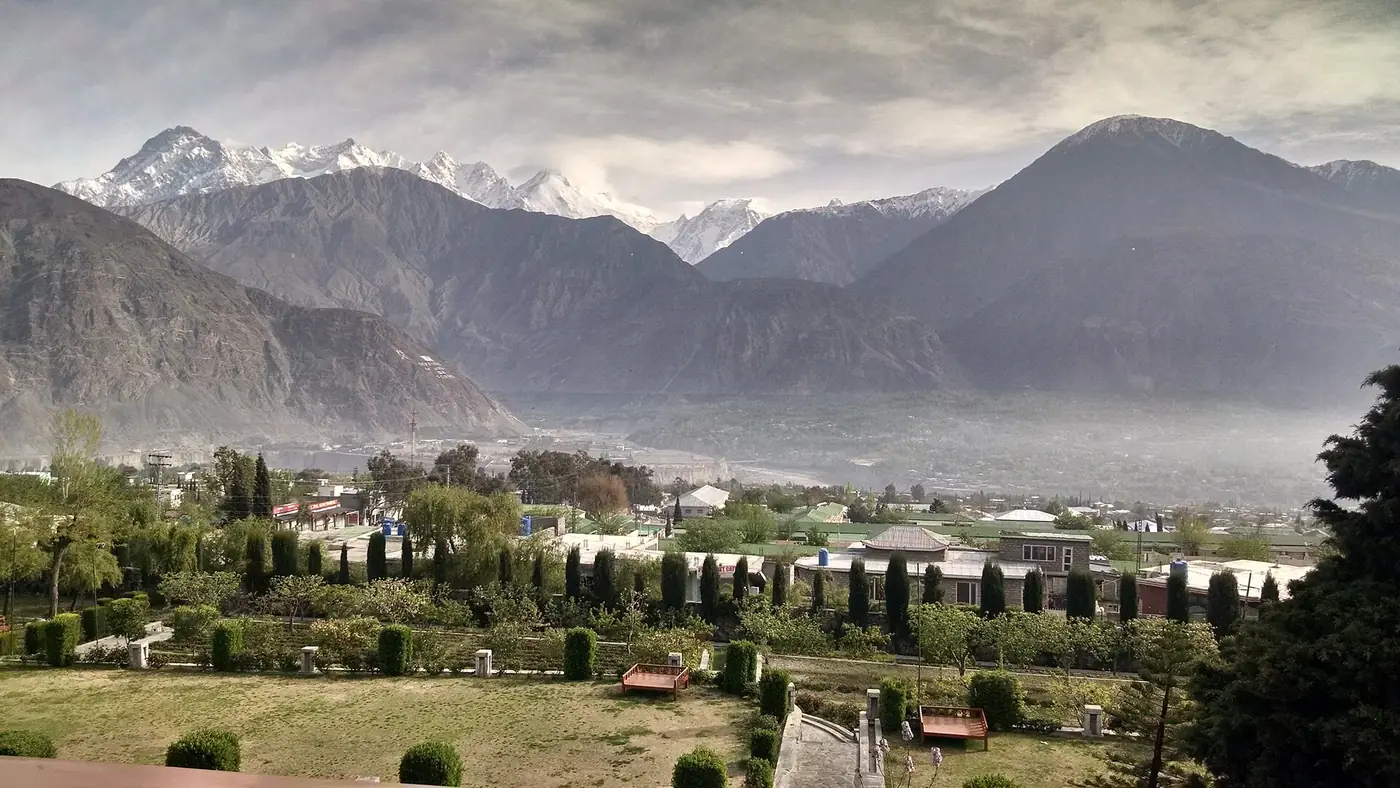

Gilgit is famous as the capital of Gilgit-Baltistan and the gateway through which almost every trip to Hunza, Naltar, Skardu and the Khunjerab Pass passes. Beyond that role, it is known for a long Buddhist and Silk Road history, a lively trade in local gemstones, freestyle mountain polo, and food built around trout and apricots. Most visitors treat it as a place to change transport, and that undersells it.
This guide is a quick answer to what the city is actually known for, not a sightseeing itinerary. For that, see our places to visit in Gilgit city guide.
| At a glance | |
|---|---|
| Role | Capital of Gilgit-Baltistan |
| Altitude | About 1,500 m |
| Known for | History, gemstones, polo, trout and apricots, gateway to the north |
| Best months | April, May, September and October |
| Summer heat | Afternoon highs can pass 40°C |
| Getting there | By air from Islamabad, or by road up the Karakoram Highway |
A Silk Road and Buddhist history
Gilgit sat on the old trade routes linking Kashmir, Tibet and Central Asia, and for centuries it was a Buddhist centre of real importance. Chinese pilgrims travelling to India passed through it, and from the 6th to the 8th century it was the seat of the Patola Shahi kings, whose name survives in the Kargah Buddha carved into a cliff west of the city and in the Danyor rock inscriptions across the river.
That history ended abruptly in November 1947, when the locally raised Gilgit Scouts rose against Dogra rule shortly after partition, a rebellion the city still marks every year. Our guide to Chinar Bagh and the Yadgar-e-Shuhada memorial covers that story in full.
The gem trade
Gilgit-Baltistan is one of the world's more productive sources of coloured gemstones, and Gilgit city is where much of that trade is done. Rubies, aquamarine, topaz and other stones mined across Hunza, Nagar and the wider region are cut, set and sold in the city's bazaars, alongside dried fruit and local handicrafts. Buying gemstones as a tourist is a specialist business with plenty of fakes in circulation, so treat any stall as a place to look rather than a place to buy on trust unless you know what you are doing.
Freestyle polo
Gilgit-Baltistan plays polo by rules that have barely changed in a century: no umpires, few restrictions and a pace that makes the game played elsewhere look cautious. Gilgit's own polo ground hosts tournaments through spring and summer, including the Jashn-e-Baharan festival matches, and the region is also home to the Shandur Polo Festival, the best known fixture of all. Our guide to polo in Gilgit-Baltistan covers where and when to watch.
Trout, apricots and mountain food
The Gilgit river and its tributaries run cold and clear, and trout, usually grilled or barbecued whole, is the dish most associated with the region. Apricots are the other signature: the trees are everywhere from June through autumn, and dried apricots turn up in soups, desserts and simply as a snack sold by weight in the bazaar. Walnuts, mulberries and other dried fruit follow the same pattern. Our guide to where to eat in Gilgit has the practical detail.
The gateway to the north
Almost nobody comes to Pakistan's north without passing through Gilgit, by road up the Karakoram Highway or by air from Islamabad. It is the last sizeable town before Hunza and the Khunjerab Pass, the turn-off for Naltar's forests and lakes, and the junction for the road east to Skardu. Fuel up, change money and buy anything you have forgotten here, because the choice thins out fast once you head into the valleys. Our guide to Gilgit and Hunza covers the wider region this gateway opens onto.
Is Gilgit worth stopping for?
For most itineraries, yes, at least for a night. The city itself is not a scenic destination in the way Hunza or Skardu are, and the through-traffic feel is real. But a day here covering the Kargah Buddha, Danyor and the bazaars gives context to everything that follows, and it costs little against a longer trip. If your schedule is very tight, it is reasonable to treat Gilgit purely as a transit stop and press on to Hunza the same day.
Frequently asked questions
What is Gilgit best known for?
As the capital of Gilgit-Baltistan and the transport hub for the whole region, plus its Buddhist-era history, its gem trade, freestyle polo and food built around trout and apricots.
Is Gilgit worth visiting, or just a stopover?
Most travellers pass through on the way to Hunza. A single extra day is enough to see the Kargah Buddha, Danyor and the bazaars if you want more than a stopover.
What is the famous stone or gem from Gilgit-Baltistan?
Rubies, aquamarine and topaz are the best known, mined across Hunza, Nagar and neighbouring districts and traded in Gilgit's bazaars. Buy carefully, since fakes are common.
Is Gilgit the capital of Gilgit-Baltistan?
Yes. Gilgit is the administrative capital of the Gilgit-Baltistan region and the largest town along the Karakoram Highway north of Chilas.
What food should I try in Gilgit?
Grilled or barbecued trout and dried apricots are the two dishes most associated with the city, alongside the walnuts and other dried fruit sold throughout the bazaar.