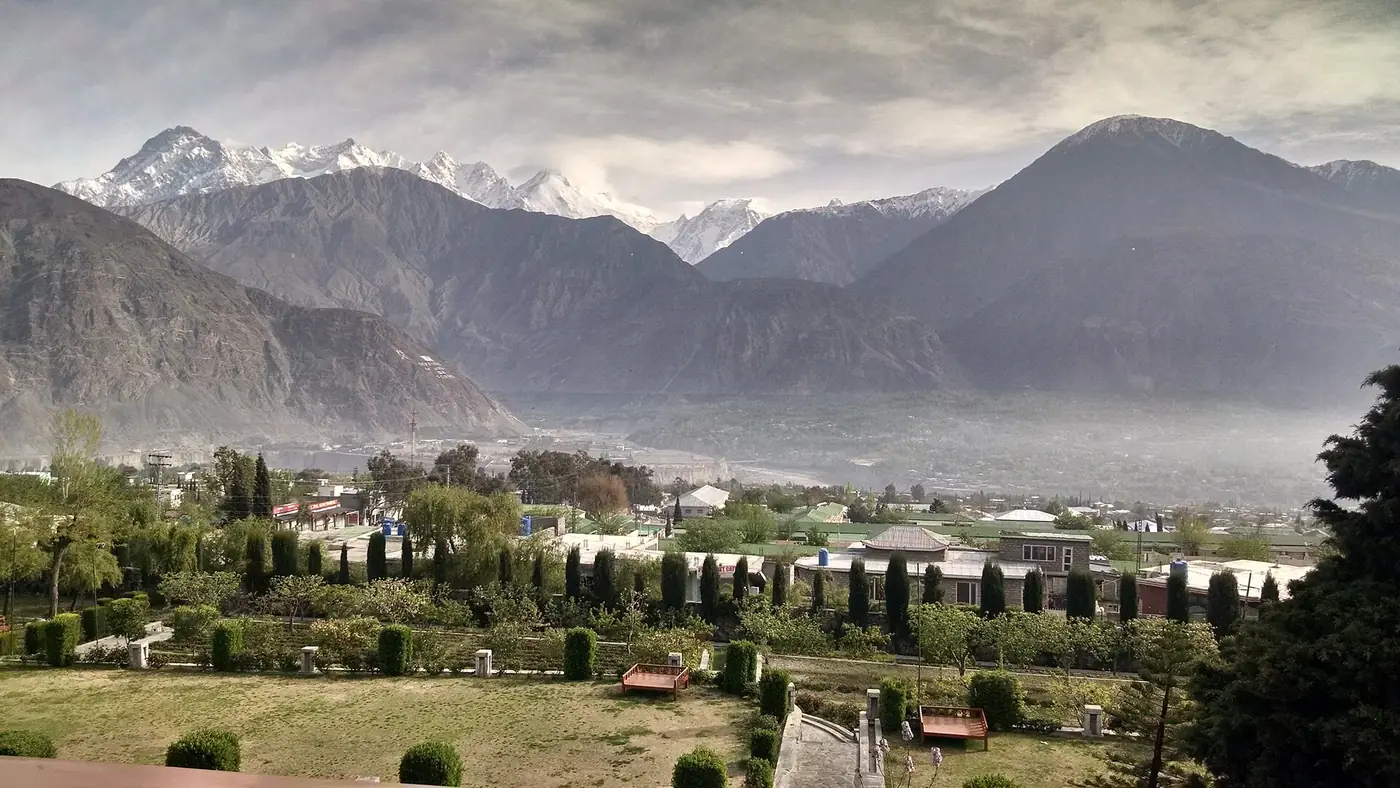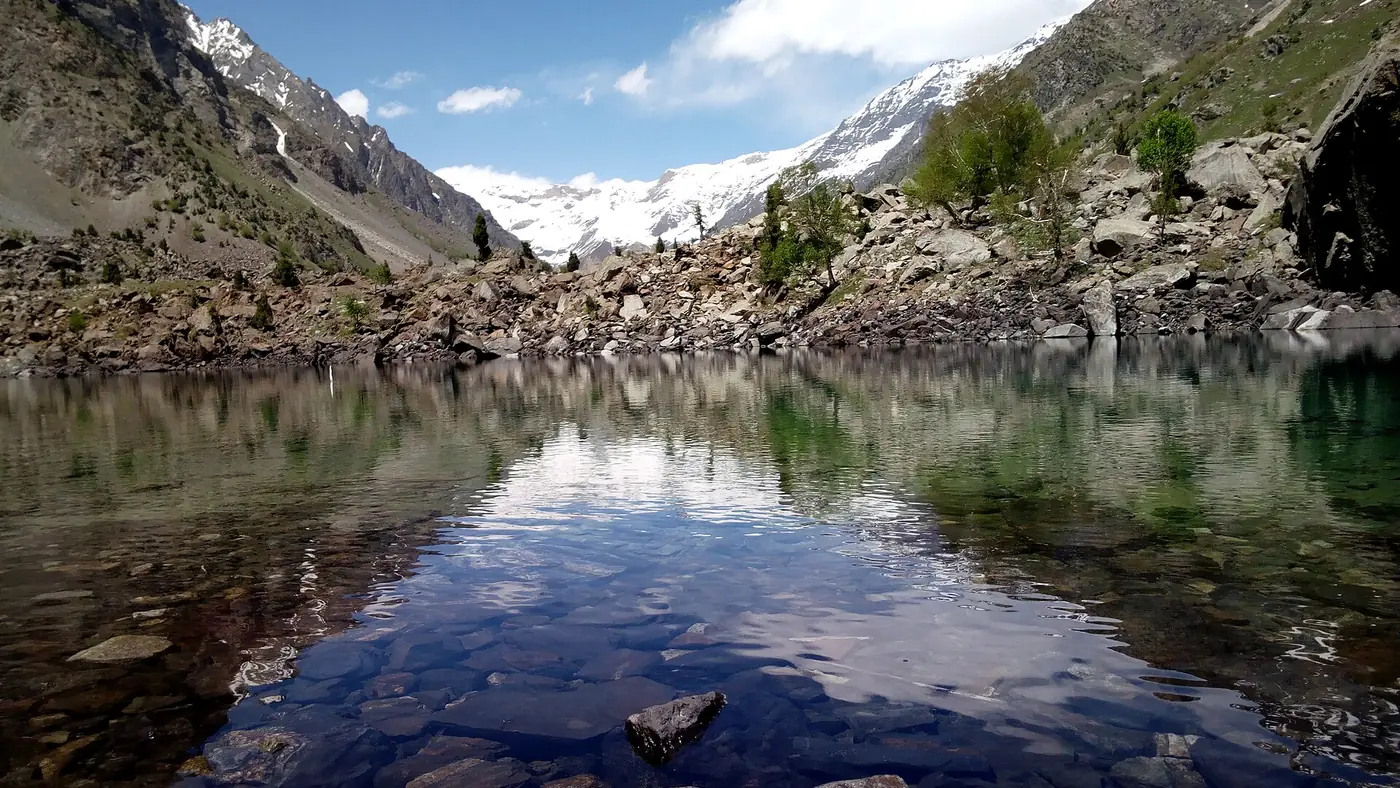
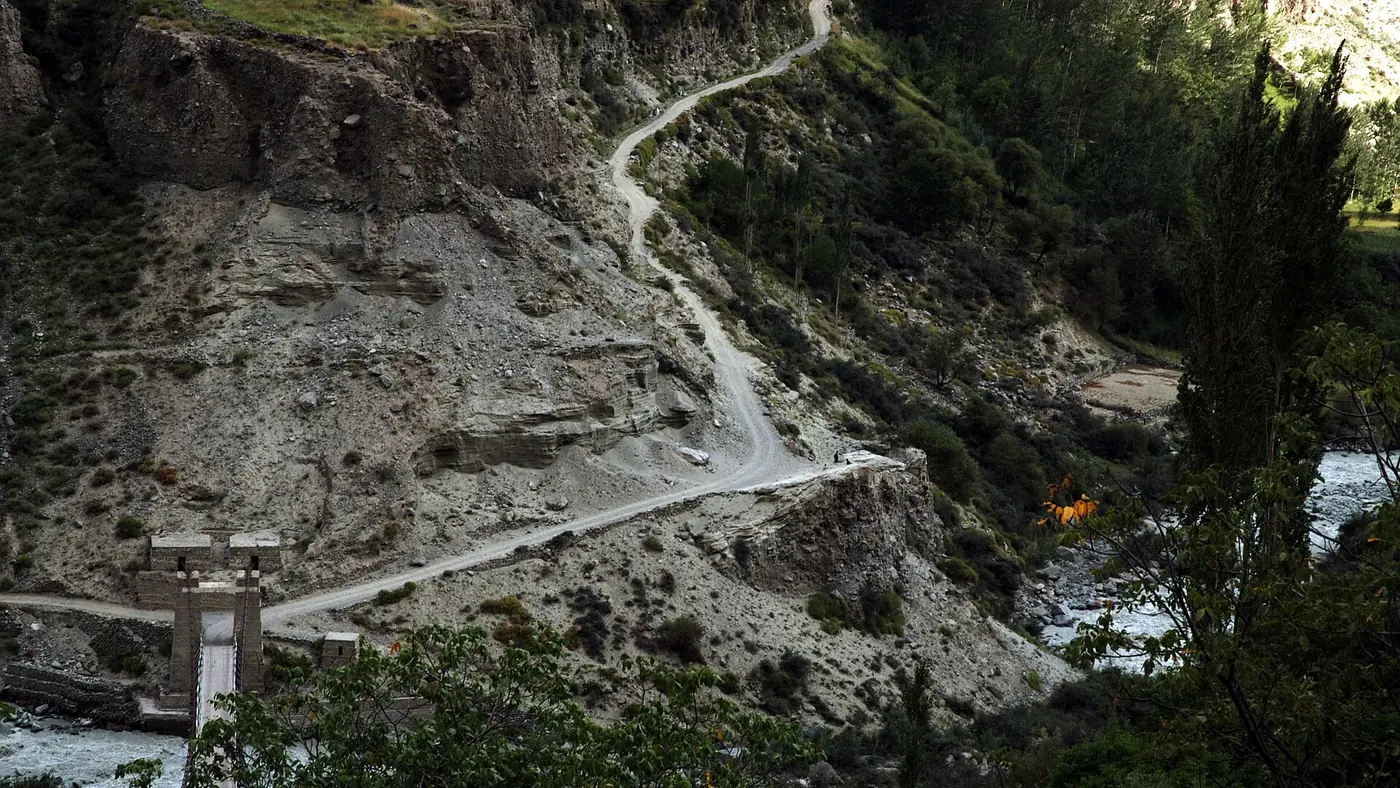
Bagrot Valley is a farming valley that climbs east from the Gilgit river towards Diran and the eastern side of Rakaposhi, and it makes one of the best day trips from Gilgit. The valley mouth is about 17 km from town and the upper villages are roughly 35 to 40 km away, one and a half to two hours by jeep. Go between May and October, leave early, and take your own lunch, because there is almost nothing to buy once you are up there.
Bagrot sees far fewer visitors than Naltar or Hunza. This guide covers the road, the villages, where the big peaks appear, how a day there runs and what to bring.
| At a glance | |
|---|---|
| Where | Side valley east of Gilgit, reached through Danyor and Oshikhandass |
| Valley mouth | About 17 km from Gilgit |
| Upper villages | About 35 to 40 km, 1.5 to 2 hours by jeep |
| Road | Metalled for much of the way, rougher in the upper valley |
| Peaks | Diran (7,266 m), Rakaposhi (7,788 m), Dobani |
| Best months | May to October; April for blossom lower down |
| Facilities | Very few: no restaurants to speak of, basic guesthouses |
| Time needed | A full day from Gilgit |
Where is Bagrot Valley?
Bagrot runs up from the Gilgit river a short way east of the city. From Gilgit you cross the river to Danyor and follow the Karakoram Highway towards Oshikhandass and Jalalabad, where the Bagrot river comes down from the mountains to join the Gilgit river. The Bagrot road turns off here and follows the river up the valley.
It is a valley of about 10,000 people, most of them farmers, and Shina is the language you will hear. The terraces grow wheat, maize and potatoes, and the orchards apricots, apples and pears. At the head of the valley are the glaciers that feed the river, among them the Hinarchi glacier, which comes down from Diran.
The upper valley lies inside Central Karakoram National Park, and the trekking routes to the Diran and Rakaposhi base camps start here.
The road: can a car get to Bagrot?
The first part of the road, through the lower villages, is metalled and a car can manage it in dry weather. Higher up, the road becomes narrower and rougher, and the last stretches to the upper villages are a jeep road with loose stones and some steep bends.
For a day trip to the top of the valley, the simple answer is a jeep or 4x4 with a local driver, hired in Gilgit for the day. A driver who knows the valley also knows which side tracks are passable after rain and where to stop for the views. Our guide to jeep rent in Gilgit-Baltistan explains how day fares are worked out.
If you have your own sedan, drive it as far as the lower villages, look around, and turn back where the road gets rough rather than pushing on.
The villages and the views
The valley has a string of villages along the river, including Sinakar, Datuchi, Bulchi, Farfu and Chira. There is no single sight to tick off. The pleasure of Bagrot is the drive up through working villages, with water channels, poplars and terraced fields, and the mountains getting closer at every bend.
Diran, 7,266 metres, is the peak that fills the upper valley, a broad white mountain above the Hinarchi glacier. Rakaposhi, 7,788 metres, shows its eastern side from the upper valley, a very different view from the famous one across the Hunza river at Ghulmet. Dobani, a sharp peak of a little over 6,100 metres, rises on the eastern side of the valley.
The clearest views come in the morning. By early afternoon in summer, cloud often gathers on the high peaks, so the earlier you are in the upper valley, the more you will see.
How the day works
A typical day from Gilgit runs like this:
- Leave Gilgit by 8 in the morning. Cross to Danyor and head along the highway to the Bagrot turn-off, about half an hour away.
- Up through the lower villages. Stop where the orchards and fields open out. In April the apricot trees are in blossom here.
- The upper valley, about two hours after leaving Gilgit. This is where Diran and Rakaposhi appear properly. Find a spot by the fields or the river for lunch.
- A walk towards the glacier, if everyone is fit. From Chira, paths lead up alongside the Hinarchi glacier. Even an hour's walk out and back gives you a closer view of the ice and the peaks above it. Turn back at a fixed time, and don't go onto the glacier itself.
- Head down by mid-afternoon, so you are back on the highway before dark.
Allow eight to nine hours for the whole day. If you want more, the Diran base camp trek from the upper valley takes two to three days and needs a local guide, porters and camping gear, which is a different trip altogether.
When to go
May to October is the season for the upper valley. June to September are the warmest and greenest months, and the time for walking towards the glaciers.
April is blossom time in the lower villages, lovely for a short drive, though the upper valley can still be cold and muddy.
September and October bring clearer air, the harvest and autumn colour, and they are often the best months for mountain views.
Winter brings heavy snow to the upper valley. The lower villages can be reached, but it is not a sensible time for the full day trip.
What to pack for the day
There are no proper restaurants in the valley and only a few small shops, so treat it as a picnic day:
- A packed lunch and plenty of water, bought in Gilgit
- A warm layer, because the upper villages are much cooler than Gilgit, and shade by the river is cold even in summer
- Sunglasses, a hat and sunscreen
- Shoes you can walk in over stones and moraine
- Cash, since you can't count on finding an ATM beyond Gilgit
- A bag to take your rubbish back to Gilgit
Don't count on mobile signal in the upper villages, and tell your hotel roughly when you expect to be back.
Visiting the villages respectfully
Bagrot is not a resort. It is a farming valley where visitors are still unusual, and people are welcoming when you are considerate. Dress modestly, ask before photographing anyone, particularly women, and stay out of fields and orchards unless you are invited in. If someone offers you tea, it is a real invitation; accepting briefly is fine.
Basic guesthouses and homestays exist in the valley, but they are simple and best arranged in advance through someone in Gilgit. For most visitors, Bagrot works best as a day out with a night back in town.
Is Bagrot worth it?
Yes, if you have a spare day in Gilgit and want mountain villages and big peaks without the crowds. It is a good contrast with Naltar: Naltar has forest, coloured lakes and hotels; Bagrot has farms, glaciers and very few other visitors. Our Naltar Valley guide covers the other option.
It is less suited to anyone who wants cafés and a proper lunch, anyone who hates rough roads, or families with very young children. With only one day in Gilgit, the Kargah Buddha and Danyor make a better use of it, as our guide to places to visit in Gilgit explains. Our round-up of day trips from Gilgit compares Bagrot with the other valleys nearby, and if you want help fitting it into a longer trip, start on our trip planning page.
Frequently asked questions
How far is Bagrot Valley from Gilgit?
The valley mouth is about 17 km from Gilgit, and the upper villages about 35 to 40 km. Allow one and a half to two hours each way by jeep to reach the upper valley.
Can a normal car go to Bagrot?
A car can manage the metalled road through the lower villages in dry weather. For the upper valley, hire a jeep or 4x4 with a local driver.
What is the best time to visit Bagrot Valley?
May to October, with September and October often the clearest for mountain views. April is good for blossom in the lower villages.
Can you see Rakaposhi from Bagrot?
Yes. The upper valley looks at Rakaposhi's eastern side, with Diran above the Hinarchi glacier. Go in the morning, before cloud builds on the peaks.
Is there a hotel in Bagrot Valley?
There are a few basic guesthouses and homestays, but no hotels in the usual sense. Most people visit on a day trip and sleep in Gilgit.
Is Bagrot Valley safe to visit?
The valley is calm and used to occasional visitors. The main risks are the road after heavy rain and summer flash floods, so check conditions in Gilgit the day before.